D
Diego Fernandez
Madrid, Spain
Nov 25, 2025

The acclimatization hike to Manaslu Base Camp and Birendra Lake was stunning. Seeing the mountain up close made the extra effort worth it.
Destination
Nepal
Duration
13 Days
Best Weather
March, April, May, September, October & November
Max Altitude
5125m
Accommodation
Hotel and Guesthouse
Meals
Breakfast, Lunch, Dinner
Transportation
Private vehicle / Flights
Group
Min 1 pax
Difficulty
Easy
Activities
Trekking
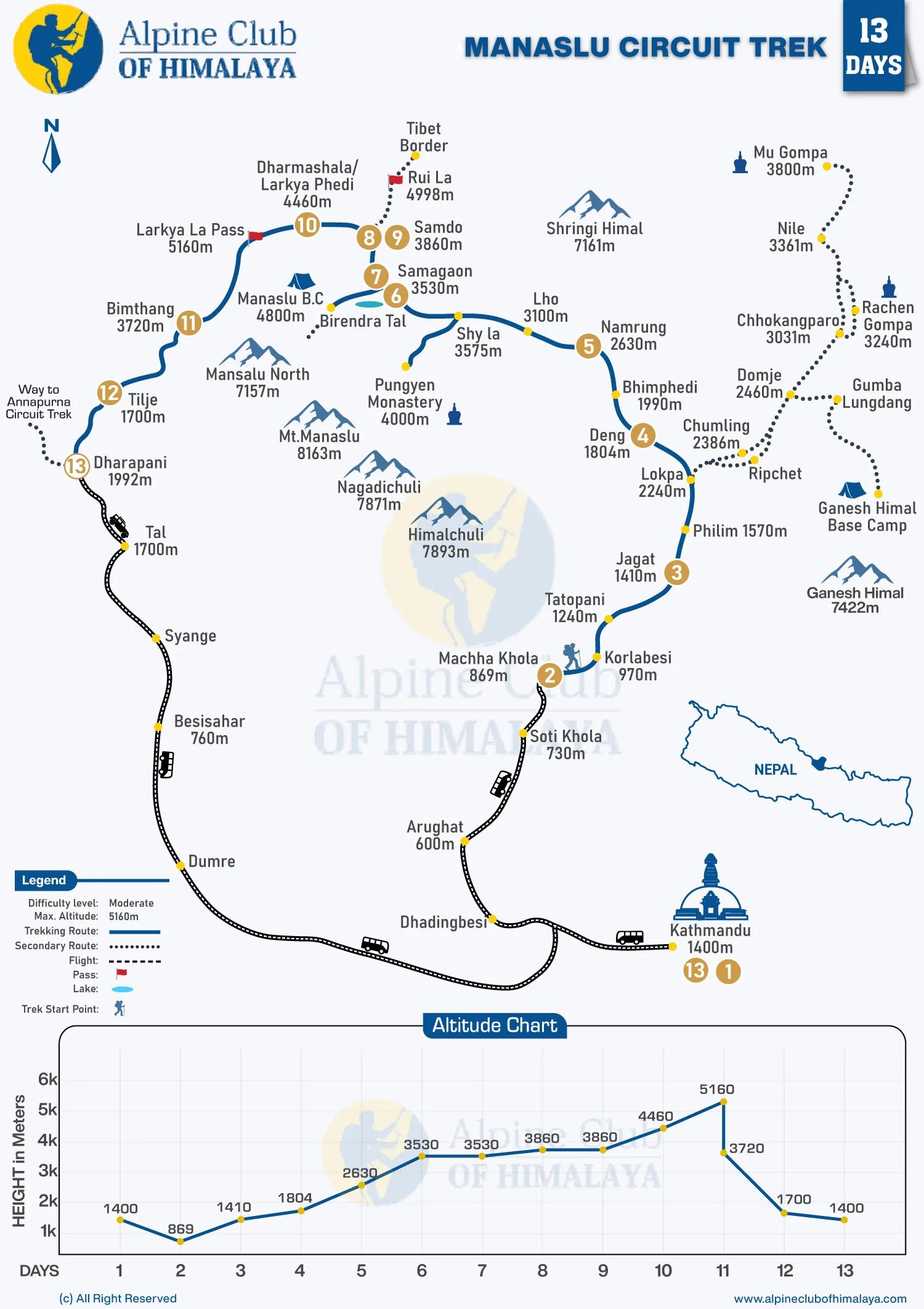
The Manaslu Circuit Trek is one of Nepal's best off-the-beaten-path adventures, circling Mount Manaslu (8,163m), the world's eighth-highest peak. Over 13 days, the trail leads from Machha Khola through Jagat, Deng, and Namrung to Samagaon, gateway to Manaslu Base Camp, with a built-in acclimatization day to hike up to the base camp and Birendra Lake.
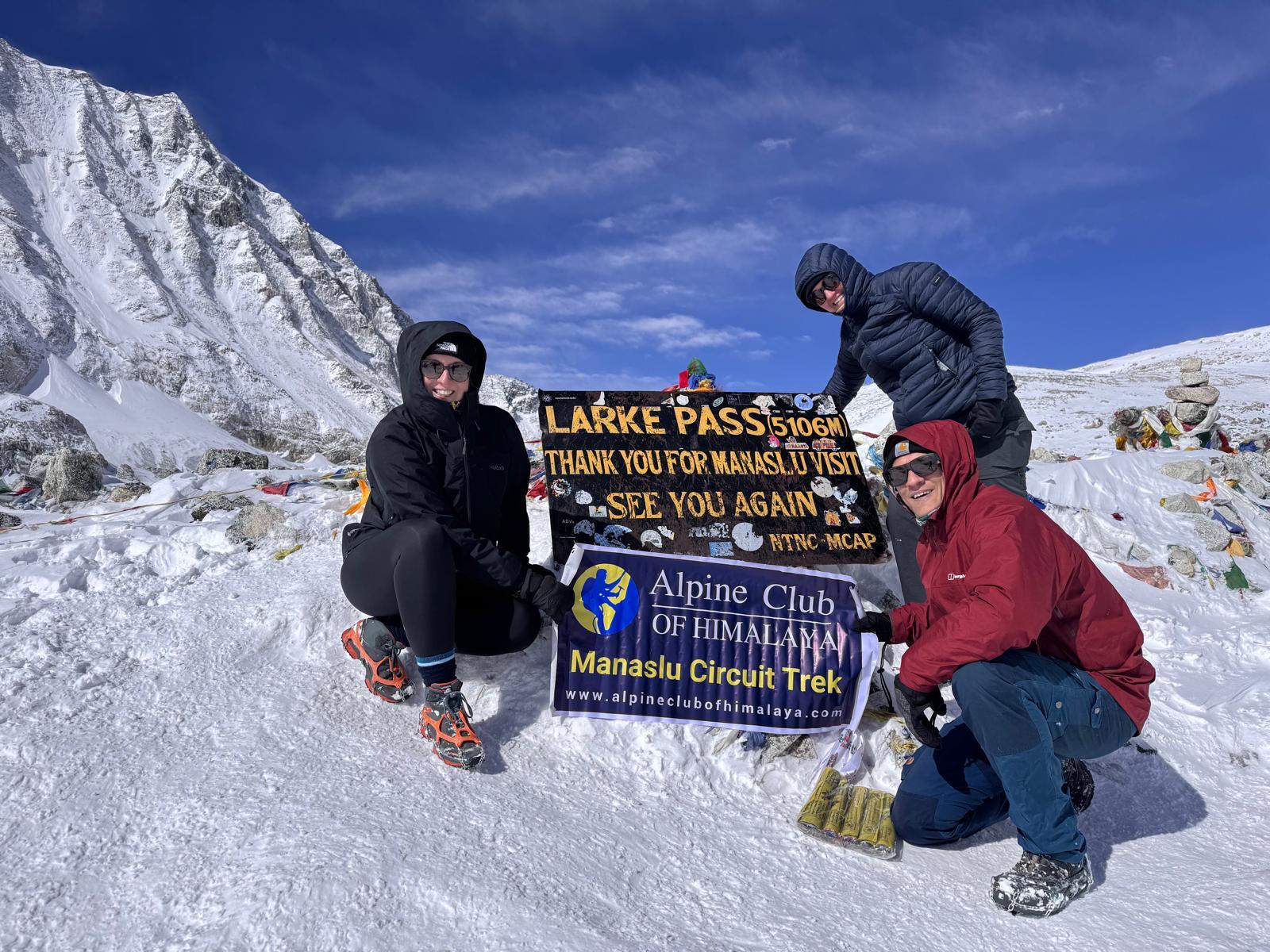
The trek's highlight is crossing Larkya La Pass (5,106m) one of Nepal's highest and most spectacular trekking passes, framed by sweeping Himalayan views. As a restricted area, the Manaslu Circuit Trek requires a Restricted Area Permit, a Conservation Area Permit, and a licensed guide, keeping the trail far quieter than Everest or Annapurna. It's rated moderately challenging, best suited to reasonably fit trekkers, with spring (March–May) and autumn (September–November) offering the clearest skies and safest pass conditions.
With Alpine Club of Himalaya, you'll trek with experienced local guides, well-paced acclimatization, and full support from Kathmandu to Kathmandu.
The Manaslu Circuit Trek generally takes around 13 to 14 days, depending on the chosen itinerary, transportation arrangements, acclimatization schedule, and walking pace. A well-planned 13-day itinerary provides a balanced combination of trekking, acclimatization, and time to experience the Himalayan villages and landscapes. Most trekking days involve approximately 5 to 8 hours of walking, although the duration varies depending on the trail section, altitude gain, weather, and individual fitness. The standard route begins around Machha Khola and passes through villages such as Jagat, Deng, Namrung, Lho, Samagaon, Samdo, and Dharamsala before crossing Larkya La Pass and descending toward Bimthang and Dharapani.
Trekkers with additional time can also combine the route with side trips such as Tsum Valley, although this requires extra days and a different itinerary.
The Manaslu Circuit Trek is considered a challenging trek because of its long walking days, significant altitude gain, remote terrain, and the crossing of Larkya La Pass at over 5,000 meters. Trekkers should be prepared for steep uphill and downhill sections, rocky trails, suspension bridges, narrow paths, and changing weather conditions. The higher sections of the route have colder temperatures, thinner air, and fewer facilities than the lower villages. You do not need technical mountaineering experience, but a good level of fitness and proper preparation are important. Regular walking, hiking, running, stair climbing, or other cardiovascular exercises before the trek can help prepare your body for long days on the trail.
The best time for the Manaslu Circuit Trek is generally during spring (March to May) and autumn (September to November). These seasons usually offer better visibility, more stable weather, and favorable trekking conditions.
|
Month |
Conditions |
Trekking |
|
January |
Very cold with possible snow at higher elevations |
Difficult |
|
February |
Cold with possible snowfall |
Difficult |
|
March |
Warmer temperatures and improving weather |
Good |
|
April |
Clear skies and stable conditions |
Excellent |
|
May |
Warm lower elevations with generally good conditions |
Excellent |
|
June |
Increasing rainfall as monsoon approaches |
Moderate |
|
July |
Heavy monsoon rain, muddy trails and landslide risks |
Difficult |
|
August |
Continued rainfall and possible trail disruptions |
Difficult |
|
September |
Weather gradually becomes more stable |
Good to Excellent |
|
October |
Clear skies and stable Himalayan weather |
Excellent |
|
November |
Clear conditions with colder temperatures |
Excellent |
|
December |
Cold with possible snowfall at high elevations |
Difficult |
March to May is especially attractive for blooming rhododendrons and pleasant trekking temperatures. September to November is popular for clear mountain views and generally stable weather.
One of the major highlights of the Manaslu Circuit Trek is the impressive collection of Himalayan peaks visible along the route. Depending on weather and your exact location on the trail, you may see:
Mount Manaslu – 8,163m
Himalchuli – 7,893m
Ngadi Chuli – 7,871m
Ganesh Himal – 7,422m
Larke Peak – approximately 6,249m
Manaslu North – approximately 7,157m
Other surrounding peaks of the Manaslu and Ganesh Himal ranges
The mountain scenery becomes particularly impressive around Namrung, Lho, Samagaon, and Samdo, where the landscape opens into dramatic high-Himalayan valleys.
Weather can change quickly in the mountains, so visibility is not guaranteed throughout the trek.
The difficulty of the Manaslu Circuit Trek is mainly influenced by altitude, daily walking distance, terrain, and the remote nature of the region. The biggest challenge is the crossing of Larkya La Pass, which reaches approximately 5,106 meters (16,752 feet) if using this elevation for the itinerary. The pass involves an early morning start, a long ascent, and a significant descent on the other side.
Other factors that contribute to the difficulty include:
Walking approximately 5–8 hours on many days
Steep ascents and descents
Rocky and uneven trails
High-altitude conditions
Cold and unpredictable mountain weather
Remote sections with limited facilities
Long travel and trekking days
Possible altitude-related symptoms
Good physical preparation, gradual acclimatization, appropriate equipment, and following your guide's advice can make the trek more manageable.
Accommodation during the Manaslu Circuit Trek is mainly provided in traditional teahouses and mountain lodges. Facilities become more basic as you travel toward the higher elevations. Most teahouses provide twin-sharing rooms with beds, mattresses, pillows, and blankets. However, trekkers should carry a good-quality sleeping bag because temperatures can become very cold, particularly at higher elevations. Bathrooms are generally shared, and hot showers may be available for an additional charge at some teahouses. Wi-Fi and charging facilities can also be available in some villages but become more limited and expensive at higher elevations. At places such as Dharamsala/Larkya Phedi, accommodation is particularly basic because of the high altitude and remote environment. Trekkers should therefore be prepared for simple facilities while appreciating the authentic Himalayan experience.
Meals during the Manaslu Trek are served mainly at local teahouses and lodges. Despite the remote environment, you can find a variety of filling meals throughout most of the route.
Common breakfast options include:
Tibetan bread
Pancakes
Porridge
Muesli
Toast
Eggs
Tea and coffee
Popular meals include:
Dal Bhat with rice, lentils and vegetables
Noodles
Fried rice
Pasta
Momo
Soups
Potatoes
Sandwiches
Seasonal vegetables
Dal Bhat is particularly popular among trekkers because it provides a good combination of carbohydrates and protein for long days of walking. At higher elevations, food choices can become more limited because of transportation difficulties. Drinking sufficient water and maintaining regular meals are important for energy and altitude management.
For drinking water, use treated, filtered, or purified water rather than drinking untreated water directly from streams.
The Manaslu Circuit Trek passes through a restricted trekking area, so trekkers need the appropriate permits before entering the region.
The main permits generally include:
Manaslu Restricted Area Permit (RAP)
Manaslu Conservation Area Permit (MCAP)
Annapurna Conservation Area Permit (ACAP) for the applicable section of the route
Permit requirements, fees, trekking seasons, and regulations can change, so the latest requirements should always be confirmed before departure. Because the Manaslu region is a restricted area, independent trekking regulations may apply. Trekkers are generally required to follow the applicable guide and group regulations, and permits must be arranged through an authorized trekking agency.
Alpine Club of Himalaya can arrange the required permits and trekking logistics as part of the organized trekking service.
Altitude sickness is one of the main safety concerns during the Manaslu Circuit Trek, particularly as the trail climbs above 3,000 meters and approaches Larkya La Pass.
Common symptoms can include:
Headache
Dizziness
Nausea
Loss of appetite
Unusual tiredness
Difficulty sleeping
Shortness of breath
The best way to reduce the risk is to ascend gradually, stay hydrated, maintain a comfortable walking pace, eat properly, and allow your body enough time to acclimatize. Avoid excessive alcohol at altitude and communicate immediately with your guide if you experience symptoms. Do not continue ascending if symptoms are becoming worse. Your guide should monitor your condition throughout the trek and help determine whether you should rest, descend, or seek medical assistance when necessary. Travel insurance covering high-altitude trekking and emergency evacuation is strongly recommended.
The Manaslu Circuit Trek passes through communities with strong Gurung and Tibetan cultural influences. The higher Manaslu region has a particularly strong Tibetan Buddhist heritage, with monasteries, chortens, mani walls, prayer flags, and prayer wheels found along the trail.
Trekkers should respect local traditions and religious practices throughout the journey.
When visiting monasteries or religious sites:
Dress respectfully.
Remove your shoes when requested.
Ask permission before taking photographs of people or religious ceremonies.
Walk clockwise around mani walls and chortens where appropriate.
Turn prayer wheels in a clockwise direction.
Avoid touching religious objects unnecessarily.
Keep noise low around monasteries and sacred places.
Respect local customs and private spaces.
Taking time to interact respectfully with local communities adds an important cultural dimension to the Manaslu Trek.
There are limited banking facilities and no reliable ATM services throughout most of the Manaslu Circuit Trek. It is therefore important to carry enough Nepalese rupees from Kathmandu or another major city before starting the trek. As a general preparation, trekkers may consider carrying around NPR 15,000–25,000 per person for personal expenses, depending on what their package already includes and their spending habits.
Possible additional expenses include:
Hot showers
Wi-Fi
Battery charging
Bottled or purified water
Tea, coffee and soft drinks
Snacks
Laundry
Personal medication
Tips for guides and porters
Souvenirs and personal shopping
Emergency or unexpected expenses
Costs can become higher at greater elevations because supplies are transported long distances. Carrying some extra cash is therefore recommended rather than relying on card payments.
Weather in the Manaslu region can change quickly, particularly at higher elevations. Proper preparation helps you stay comfortable and safe throughout the Manaslu Circuit Trek.
Proper Clothing: Wear several layers so you can adjust to changing temperatures. Bring thermal base layers, warm insulation, a waterproof jacket, gloves, and a warm hat.
Footwear: Sturdy, waterproof trekking boots with good grip are important for muddy, rocky, snowy, and uneven sections of the trail.
Rain Gear: Carry a waterproof jacket, rain pants, and backpack cover, especially during the monsoon period or when unexpected rainfall is possible.
Trekking Poles: Poles provide additional stability on steep, rocky, slippery, or snowy sections.
Hydration & Snacks: Drink plenty of water and carry high-energy snacks to maintain your energy during long walking days.
Acclimatization: Follow a gradual ascent and allow your body time to adjust to increasing altitude. Inform your guide immediately if you experience symptoms of altitude sickness.
Being prepared for changing weather and following your guide's advice can help make your Manaslu Circuit Trek safer.
All travelers must carry a valid passport with at least six months of validity from the date of entry into Nepal. Most foreign nationals require a tourist visa, which can be obtained either in advance from a Nepalese Embassy or Consulate or upon arrival at Tribhuvan International Airport (TIA) in Kathmandu.
For the most up-to-date visa information, eligibility, visa fees, and online application details, please visit the official website of the Department of Immigration, Nepal: https://www.immigration.gov.np/visa-information
With 20+ years of experience in the Himalayas, Alpine Club of Himalaya has extensive knowledge of Nepal’s trekking routes, mountain environments, local communities, and high-altitude travel. Our experienced and licensed guides provide professional support throughout the Manaslu Circuit Trek, from route planning and acclimatization to accommodation, transportation, and safety.
We take care of the required trekking permits and TIMS arrangements, allowing you to focus on enjoying the mountains, landscapes, and culture. Our team also works closely with local communities and service providers to provide a well-organized and responsible trekking experience.
With experienced guides, reliable logistics, permit assistance, and more than two decades of Himalayan experience, Alpine Club of Himalaya is committed to making your Manaslu Trek safe, comfortable, and memorable.
If you need to cancel your booking with Alpine Club of Himalaya, please submit a written cancellation request. Once the cancellation request is received, Alpine Club of Himalaya will confirm the cancellation and applicable charges based on the time remaining before the scheduled departure date.
45 to 60 days before departure: 35% of the total tour cost
30 to 44 days before departure: 50% of the total tour cost
15 to 29 days before departure: 70% of the total tour cost
7 to 14 days before departure: 85% of the total tour cost
Less than 7 days before departure: 100% of the total tour cost
For cancellations made 60 to 90 days before departure, please contact Alpine Club of Himalaya directly for the applicable cancellation terms.
If Alpine Club of Himalaya needs to cancel the trek because of unforeseen circumstances, such as extreme weather, natural disasters, or safety concerns, participants will be offered either a full refund or the option to reschedule the trip for a later date, subject to the applicable circumstances and arrangements.
Alpine Club of Himalaya is not responsible for additional costs arising from cancellations, delays, or changes caused by force majeure circumstances beyond the company's control. These may include natural disasters, political unrest, government restrictions, severe weather conditions, transportation disruptions, or health emergencies.
Any changes to the itinerary resulting from such circumstances will be made with participant safety as the priority.
unrest, or health emergencies.
Today you begin your journey toward the remote Himalayan region. The drive from Kathmandu to Machhakhola takes around 7–8 hours, passing through scenic hills, rivers, terraced farms, and rural villages. The road is a mix of paved and off-road sections, becoming more adventurous as you approach the Budhi Gandaki valley. Machhakhola is a small riverside village where you will stay overnight in a teahouse.
Max. Elevation
869m
Duration
7–8 Hours
Accommodation
Guesthouse
Meals
Breakfast, Lunch, Dinner
Pickup and drop off services with private vehicle.
Travel from Kathmandu to Machha Khola and Dharapani to Beshisahar in a sharing jeep and Beshisahar to Kathmandu via public bus.
Full board meals (breakfast, lunch, and dinner) during the trek, served in local lodges along the trail.
Comfortable stay in local lodges/teahouses along the trekking route as per the itinerary.
Necessary permits including ACAP (Annapurna Conservation Area Permit), MCAP (Manaslu Conservation Area Permit), and Manaslu Restricted Area Permits.
Sleeping bag, down jacket, and duffel bag (provided for your use, to be returned at the end of the trek).
Seasonal fresh fruit during the trek when available.
An experienced, English-speaking trekking guide and porter (1 porter per 2 trekkers) to assist with carrying your gear.
A comprehensive full-body massage in Kathmandu after completing the trek to help you recover.
An oxygen meter to check your pulse, oxygen saturation, and heart rate twice daily. This is a helpful tool to monitor Altitude Mountain Sickness (AMS) symptoms and ensure your health throughout the trek.
An assistant guide for groups of 10 or more people to ensure a safe and smooth trekking experience.
A certificate of completion of the trek and a company T-shirt.
Insurance coverage for your guide (including meals, accommodations, equipment, and transportation).
A farewell dinner in Kathmandu to celebrate the completion of your trek.
Emergency rescue operation in case of an emergency (only if you have travel insurance).
Click on map to view in fullscreen
Packing List for Manaslu Circuit Trek
Essential Trekking Gear:
Clothing:
Footwear:
Health & Safety:
Electronics & Documents:
Food & Hydration:
Optional Extras:
Note: Please note that our guide will carry medications and first aid kits during the trek. However, we recommend bringing your own personal first aid kit for additional peace of mind.
D
Diego Fernandez
Madrid, Spain
Nov 25, 2025
K
Kwamw Asante
Kumasi, Ghana
Nov 6, 2025
I
Idris Farouk
Amsterdam, Netherlands
Oct 26, 2025
F
Fatima Karimi
Oct 3, 2025
24/7 Support
Need help? we're at your service
Associated With


We Accept Cards

Office of the company registrar License: 66813/066/067 || Tourism Industry Division License:1142
All content and photography within our website is copyright & may not be reproduced without our permission.
Develop By: IT Sansaar