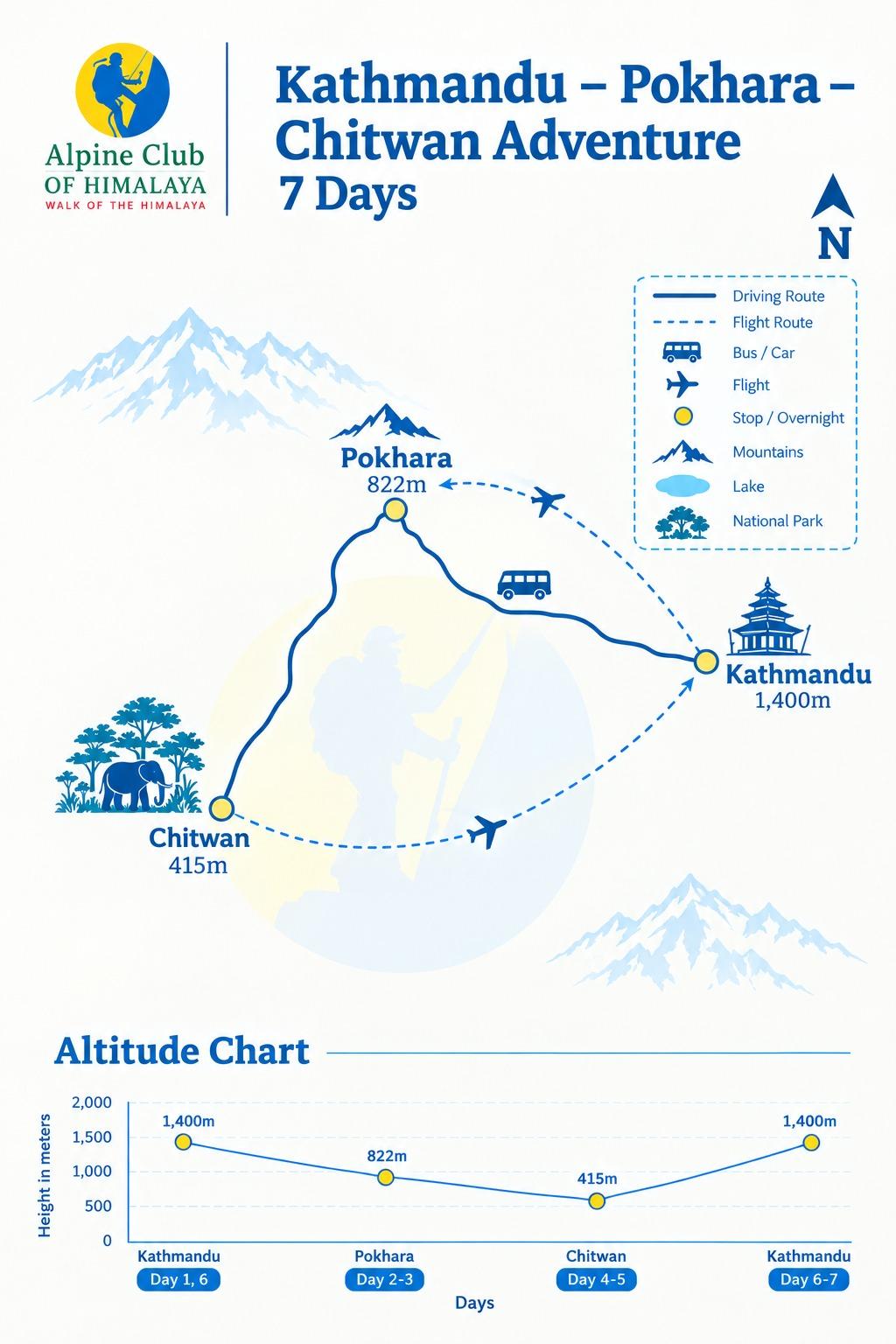
This tour covers three of Nepal's most visited places in one trip: Kathmandu for temples and old city streets, Pokhara for lake and mountain views, and Chitwan for jungle wildlife. It needs no trekking, so it suits people who want to see a lot of Nepal without spending weeks on the trail.
You start in Kathmandu, the capital, then move on to Pokhara, a lakeside city with views of the Annapurna and Dhaulagiri ranges. The last stop is Chitwan National Park in the southern lowlands, where you can look for rhinos, walk through Tharu villages and spend time in a hotter, flatter landscape than the first two cities.
Kathmandu – The Cultural Heart of Nepal
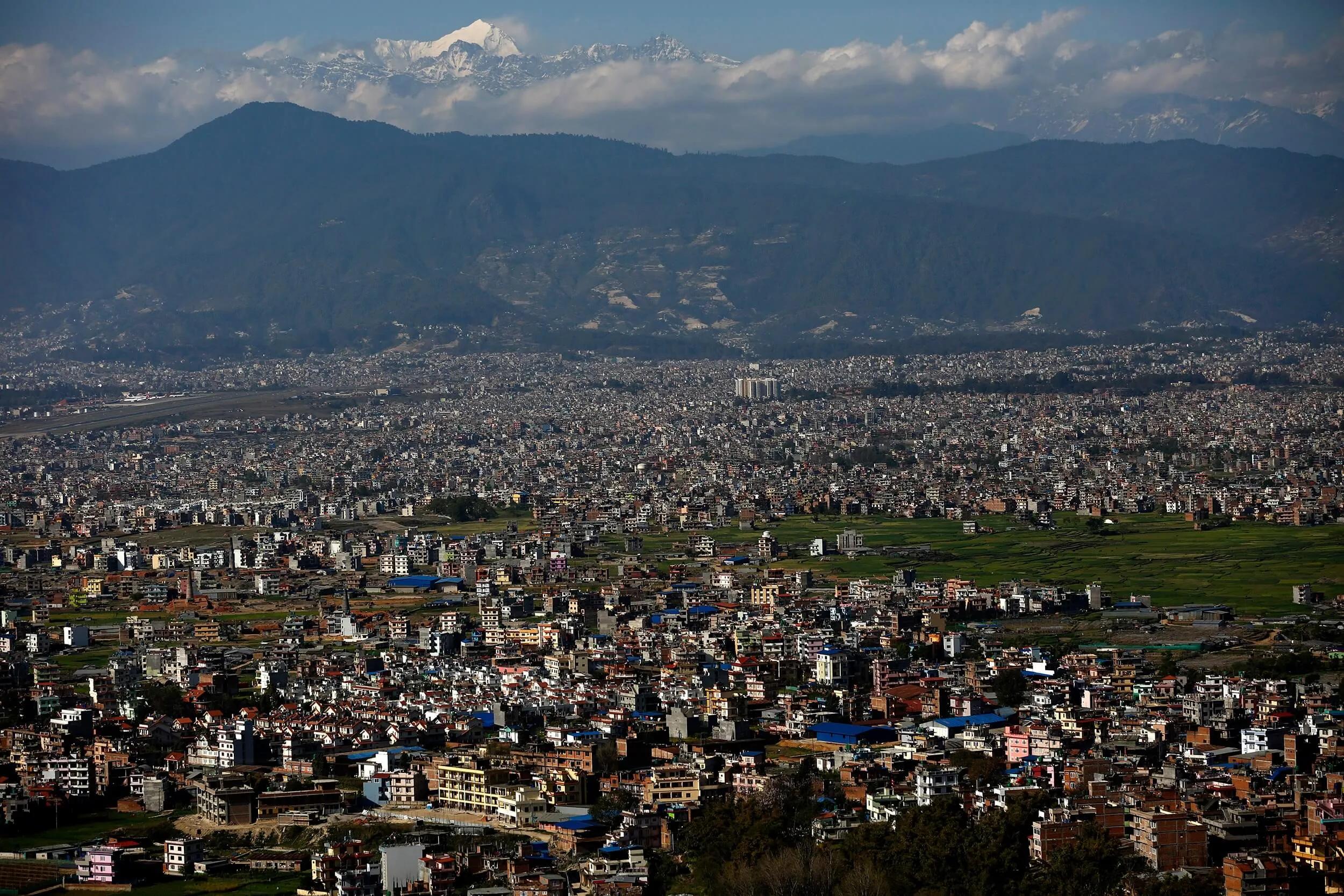
Kathmandu is Nepal's capital and the entry point for most international visitors. It sits in the Kathmandu Valley, ringed by hills, and has temples, monasteries and courtyards that are hundreds of years old.
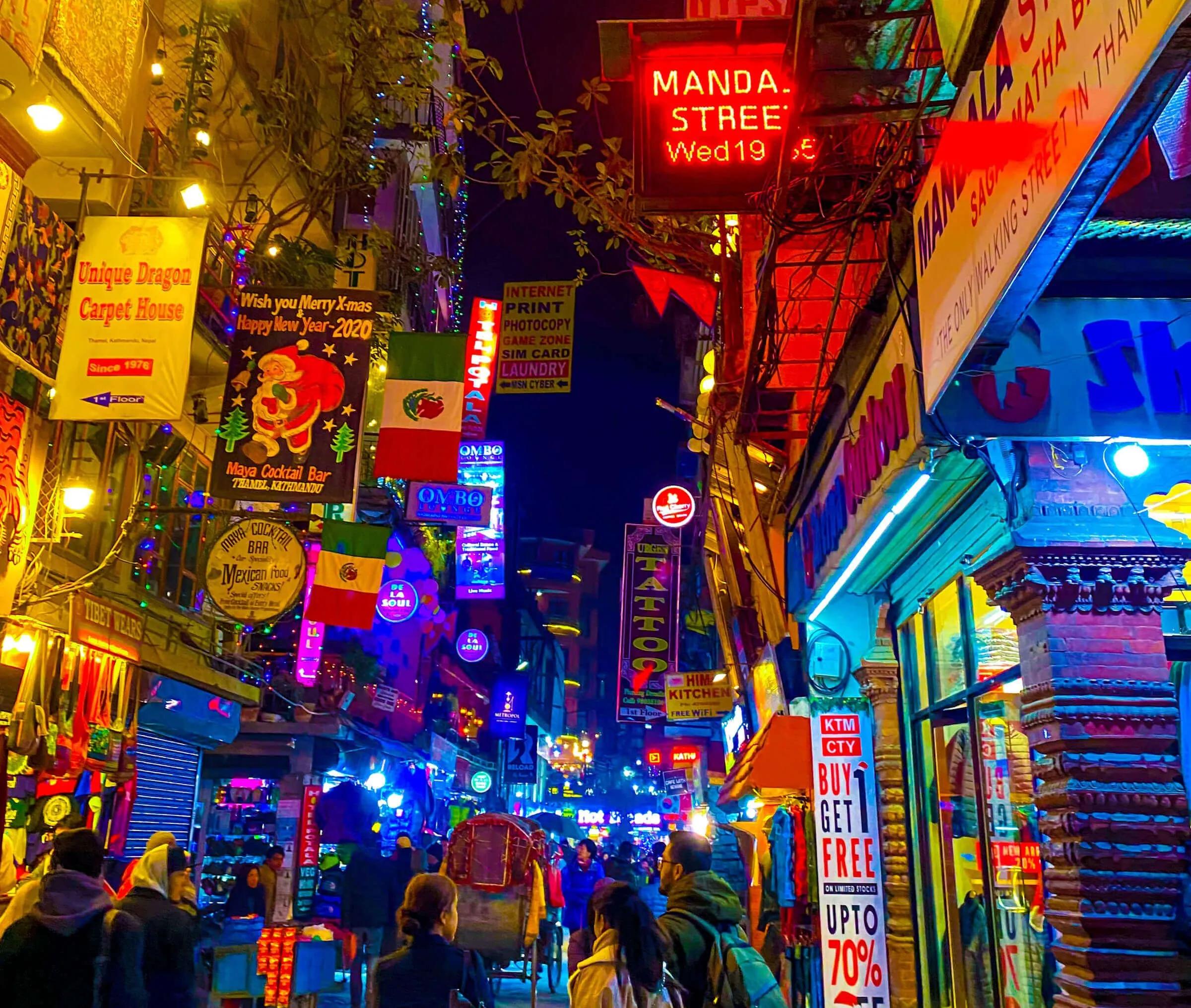
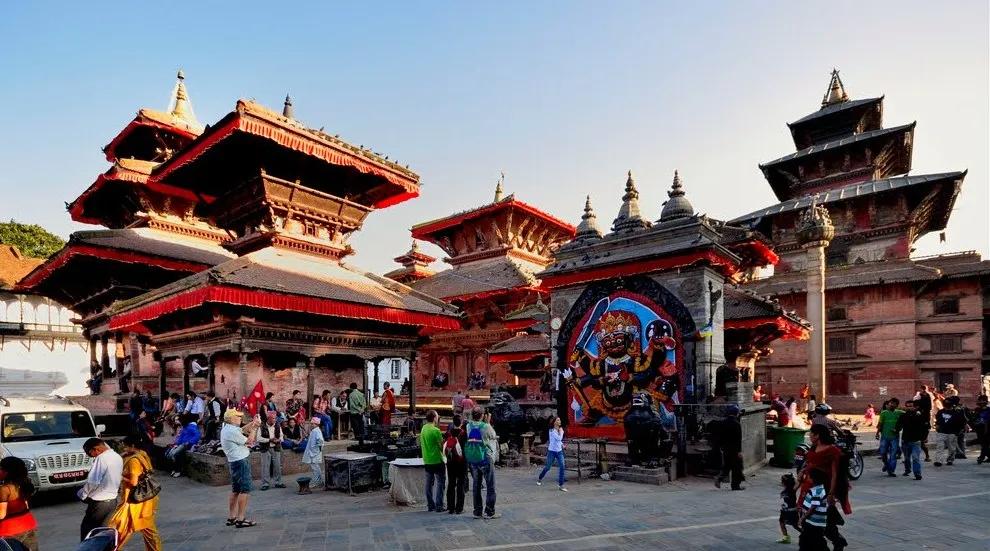
Four of its sites are UNESCO World Heritage listings: Kathmandu Durbar Square, Swayambhunath, Boudhanath and Pashupatinath. In the older neighborhoods you can see Newari brick-and-carved-wood buildings, working markets and daily religious practice. Kathmandu is also where most Nepal treks begin, but on this tour it is mainly your introduction to the country's history and culture before you head west.
Pokhara – The Gateway to the Himalayas
Pokhara is a relaxed city beside Phewa Lake. On a clear day the Annapurna and Dhaulagiri ranges are visible from the lakeshore. It is also the starting point for the Annapurna Base Camp and Annapurna Circuit treks, though you don't need to trek to enjoy it.
Most visitors row a boat on the lake, climb Sarangkot before dawn for the sunrise, and visit the World Peace Pagoda on the hill above the water. Waterfalls, caves and smaller viewpoints around town fill out the rest of the stay.
Chitwan – The Wild Heart of Nepal
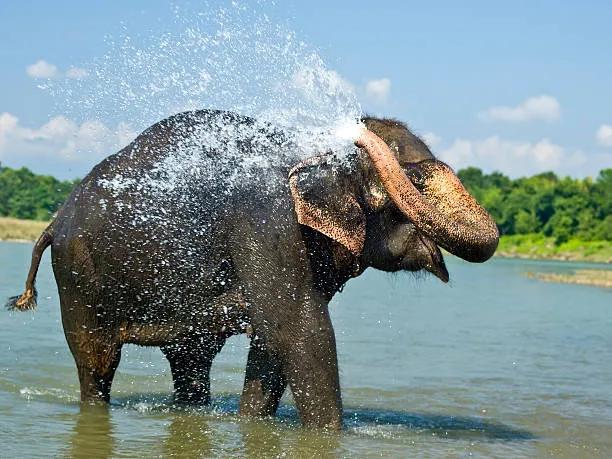
Chitwan is in the Terai, Nepal's southern lowlands, and is a different world from the other two stops. Chitwan National Park is a UNESCO World Heritage Site and home to one-horned rhinoceros, wild elephants, crocodiles, deer, monkeys and many bird species. Bengal tigers live there too, but sightings are rare and never guaranteed.
Activities include jeep safaris, guided walks, canoe trips, birdwatching and visits to Tharu villages. The Tharu are an indigenous community of the Terai, and the village visits give you a look at their houses, food and customs.
Why take this tour
Each stop gives you something the others don't. Kathmandu covers history, religion and architecture. Pokhara puts you near the Himalayas without the effort of a trek. Chitwan swaps mountains for subtropical forest and wildlife. You stay in comfortable accommodation and travel between cities by road or air, so the physical demands are low. For first-time visitors with limited time, it covers more of Nepal than a city tour would.
Best time to visit
March to May and September to November are the best months. Spring has mild temperatures and flowering trees. Autumn has the clearest skies, which matters most in Pokhara if you want mountain views.
Winter (December to February) works as well. Mornings and evenings are cold in Kathmandu and Pokhara, while Chitwan stays warmer, and skies are often clear. The monsoon runs from June to August. You can still travel, but rain can affect roads, hide the mountains and cancel some outdoor activities.
Transportation
Travel between the three cities can be arranged to suit your schedule, budget and comfort level. Tourist buses are the cheaper option. A private vehicle costs more but lets you stop along the way. You can also fly between Kathmandu and Pokhara to save several hours. Chitwan is reached by road from either city.
Alpine Club of Himalaya can book all transport as part of the itinerary.
Main attractions
Kathmandu
Kathmandu Durbar Square is the old royal center, with palaces, temples and courtyards in Newari style.
Swayambhunath, known as the Monkey Temple, is a Buddhist site on a hill, with views over the valley.
Boudhanath is one of the largest spherical stupas in Nepal and the center of Tibetan Buddhist life in the city. Monasteries, shops and cafes surround it, and prayer flags hang overhead.
Pashupatinath is a major Hindu temple complex on the Bagmati River.
Pokhara
Phewa Lake is the center of town and the main place for boating.
Sarangkot is a hilltop viewpoint used for sunrise and sunset views of the Annapurna and Dhaulagiri ranges.
The World Peace Pagoda sits on a ridge above Phewa Lake and looks over the lake and valley.
Davis Falls is a waterfall that drops into an underground channel. Gupteshwor Cave is nearby, so the two are usually visited together.
Chitwan
Chitwan National Park is the main reason to come, with wildlife viewing and nature activities.
Jungle safaris go into the park and surrounding forest by jeep or on foot, led by experienced guides.
Canoe trips on the rivers are quieter and give a good chance of seeing crocodiles and birds from the water.
Tharu village visits introduce the traditional way of life of the Tharu people.