N
Nia Rahmadani
Jan 24, 2025

Destination
Nepal
Duration
11 Days
Best Weather
March-May and Sep-Nov
Max Altitude
Annapurna Base Camp (4,130m/13,545ft)
Accommodation
2 Nights Hotel in Kathmandu, 1-night hotel in Pokhara, and 7 nights in Lodge/Guest House during trek
Meals
Full Board during Trek and Breakfasts, Welcome and Farewell meals in Kathmandu/Pokhara
Transportation
Private vehicle / Flights
Group
Min 1 pax
Difficulty
Easy
Activities
Trekking
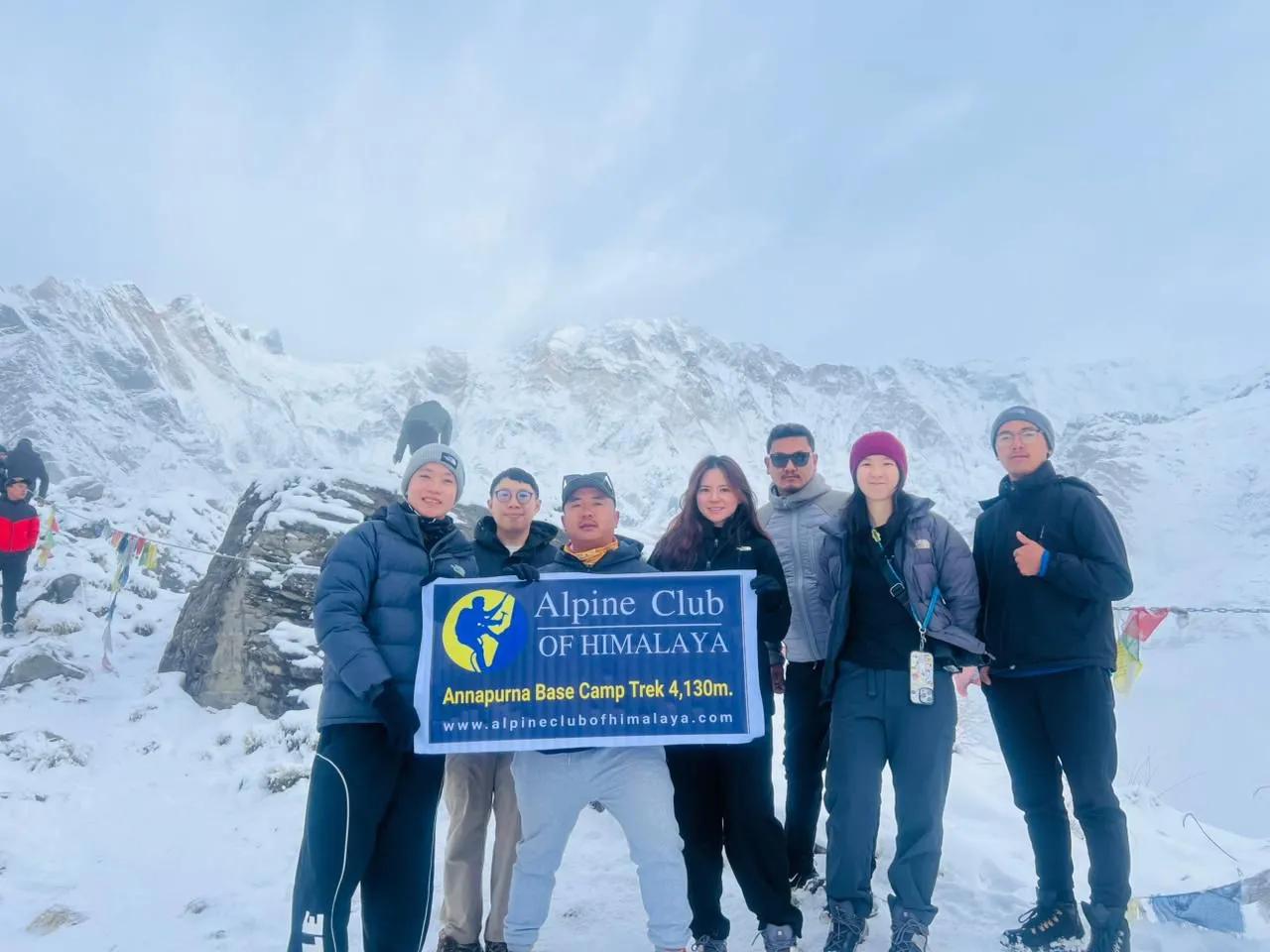
The Annapurna Base Camp Trek is a perfect adventure for travelers looking for a short yet rewarding Himalayan trekking experience. For those with more time, the longer Annapurna Sanctuary Trek – 14 Days offers an extended journey through the region.
This trek takes you to the foot of Annapurna I (8,091 m / 26,545 ft), the 10th highest mountain in the world. The Annapurna massif boasts thirteen peaks over 7,000 meters and sixteen more above 6,000 meters, providing breathtaking views at every step.
The journey begins in Pokhara, Nepal’s scenic “Lake City,” surrounded by panoramic views of peaks like Dhaulagiri, Manaslu, Machhapuchhre, and the Annapurna range. Along the way, you’ll cross terraced farmlands, cascading waterfalls, and charming traditional villages, immersing yourself in local life.
As the trek progresses, the trail winds through lush rhododendron and oak forests, offering vibrant natural scenery and chances to spot Himalayan wildlife. At Annapurna Base Camp, you’ll be rewarded with spectacular 360-degree views of towering peaks, glaciers, and snow-covered ridges, creating a truly immersive mountain experience.
The Alpine Club of Himalaya ensures your journey is safe, comfortable, and memorable, with professional guides, organized accommodations, and carefully planned itineraries. This trek is ideal for travelers seeking adventure, natural beauty, and cultural insight within a well-structured 11-day itinerary.
This trek not only showcases breathtaking natural beauty but also introduces you to the cultural heart of Nepal. Along the way, you’ll meet Gurung and Magar communities, known for their warmth, resilience, and rich mountaineering traditions.
The trail passes through the Annapurna Conservation Area, home to diverse flora and fauna, including langurs, Himalayan monals, and vibrant rhododendron forests that bloom spectacularly in spring.
The ideal time for the Annapurna Base Camp Trek is during spring (March to May) and autumn (September to November). These seasons offer stable weather, clear mountain views, and pleasant daytime temperatures, making your trek more enjoyable.
Spring: Trails are vibrant with blooming rhododendrons and fresh greenery, creating stunning scenery.
Autumn: Following the monsoon, the air is crisp and visibility of the Himalayan peaks is panoramic and breathtaking.
Winter (December to February) is possible but brings colder temperatures and occasional snow at higher altitudes. Monsoon season (June to August) is usually avoided due to slippery trails and cloud-covered mountains, though some trekkers enjoy the lush, quiet landscapes during this time.
During the trek, meals are served at local teahouses along the trail. Most dishes are freshly prepared, featuring traditional Nepali cuisine along with international options to suit all tastes.
The staple and most nourishing meal is Dal Bhat (rice, lentils, vegetables, and pickles), providing long-lasting energy for trekking. Other popular options include pasta, noodles, soups, pancakes, eggs, fried rice, and Tibetan bread.
Breakfast, lunch, and dinner are provided daily. While the variety of food may decrease slightly at higher altitudes, meals remain hearty, clean, and comforting. The Alpine Club of Himalaya team ensures hygienic dining arrangements throughout your journey.
Staying hydrated is essential while trekking in the Himalayas. Bottled water is available at most teahouses, though prices increase at higher altitudes.
For a cost-effective and sustainable option, carry a reusable water bottle and use water purification tablets or a filtration system. Most teahouses also provide boiled or filtered water for a small fee.
It’s recommended to drink at least 3 to 4 liters of water per day to stay well-hydrated at higher elevations. The Alpine Club of Himalaya encourages environmentally responsible travel, so minimizing plastic bottle usage is highly appreciated.
The Annapurna Base Camp Trek is considered a moderate trek, suitable for travelers with reasonable fitness and stamina. Trekkers can expect to walk 5–7 hours per day on varied terrain, including steep ascents, descents, stone steps, and uneven mountain trails.
No technical climbing is required, but prior hiking experience and good cardiovascular fitness will make the trek more comfortable and enjoyable. It’s recommended to do regular exercise, such as walking, jogging, or stair climbing, in the weeks leading up to your trip.
Those with pre-existing medical conditions should consult a physician before trekking. The Alpine Club of Himalaya ensures a manageable pace, with sufficient breaks and acclimatization time to make the journey safe and enjoyable for all participants.
The Annapurna Base Camp Trek is rated as moderate, making it suitable for both beginners with good fitness and experienced hikers seeking a shorter Himalayan adventure.
The trail features daily elevation gains, stone steps, and occasional steep sections, but no technical skills or mountaineering equipment are needed. The highest point is Annapurna Base Camp at 4,130 meters, so altitude is a consideration. While altitude sickness is less common due to the gradual ascent, proper acclimatization and awareness of early symptoms are important.
With the support of Alpine Club of Himalaya guides, most trekkers find the journey manageable, safe, and highly rewarding, offering a true Himalayan experience.
Weather in the Annapurna region varies with season and altitude:
Spring (March–May) & Autumn (September–November): Clear skies, mild daytime temperatures, and minimal rainfall—ideal for trekking.
Winter (December–February): Cold nights and possible snow at higher elevations.
Monsoon (June–August): Heavy rain, leeches on trails, and limited mountain visibility.
Challenges on the trek include long hiking days, steep ascents and descents, and the possibility of altitude-related symptoms. Weather can change suddenly, especially near Annapurna Base Camp (4,130 m), so trekkers need proper gear, physical fitness, and preparation for diverse trail conditions.
The Alpine Club of Himalaya team monitors weather closely and follows strict safety protocols to ensure a secure and enjoyable trekking experience.
Accommodations on the trek are carefully selected for comfort and authenticity. In Pokhara, you will stay in a well-rated 3-star hotel with twin-sharing rooms and breakfast included.
During the trek, lodging is in traditional mountain teahouses, offering basic yet cozy rooms with shared facilities. These teahouses serve home-cooked meals, provide warm hospitality, and create an authentic Himalayan atmosphere. While amenities are simple, they are clean, comfortable, and welcoming, giving you a perfect place to rest and recharge after each day’s trek.
Room upgrades or private rooms may be available upon request, subject to availability.
All transportation is carefully arranged by the Alpine Club of Himalaya to ensure comfort, safety, and efficiency throughout your journey.
Private vehicles are used for all ground transfers, with vehicle types chosen according to group size—ranging from comfortable cars and jeeps to vans or minibuses for larger groups.
Domestic flights between Kathmandu and Pokhara are included both ways, offering time savings and stunning aerial views of the Himalayas.
Every aspect of transportation is seamlessly managed, making your trek smooth, convenient, and enjoyable.
For a safe and enriching trekking experience, the Alpine Club of Himalaya provides experienced, government-licensed guides and reliable porters.
Guides ensure your safety, navigate the trail, and share insights into local culture, traditions, and the Himalayan landscape, helping you connect deeply with the region.
Porters carry your main luggage (up to 10–12 kg per trekker), allowing you to hike lightly with just a daypack, reducing physical strain and making the trek more enjoyable.
Our guides and porters are well-trained, insured, and treated ethically, receiving fair wages and proper working conditions, in line with responsible tourism standards.
WiFi and electricity are available in most parts of the trek, though access may be limited or inconsistent at higher elevations.
In lower villages like Ghandruk and Chhomrong, you can usually find reliable electricity and pay-per-use WiFi at teahouses.
As you ascend toward Bamboo, Deurali, and Annapurna Base Camp, power cuts and weaker signals are more common.
Most teahouses allow you to charge electronic devices for a small fee. It’s highly recommended to bring a portable power bank and consider a local SIM card with data for backup connectivity. The Alpine Club of Himalaya team provides guidance on where and how to stay connected throughout your journey.
To trek to Annapurna Base Camp, trekkers are required to obtain two official permits: the Annapurna Conservation Area Permit (ACAP) and the Trekkers’ Information Management System (TIMS) card. These permits help regulate visitor flow, ensure conservation efforts, and enhance trekkers’ safety.
Alpine Club of Himalaya handles all necessary trekking permits on your behalf as part of our comprehensive trekking service. Carrying these permits during the trek is mandatory, as they will be checked at various checkpoints along the route.
Travel insurance is a vital requirement for anyone trekking to Annapurna Base Camp, especially due to the potential risks associated with high-altitude trekking. Your insurance should cover emergency evacuation (by helicopter if necessary), medical expenses, trip cancellation, and loss or theft of personal belongings.
Since remote areas of the trek are inaccessible by road, helicopter evacuation is the only means of emergency transport. Alpine Club of Himalaya recommends choosing a reputable insurance provider and verifying that your policy covers trekking up to 4,500 meters. A copy of your insurance information must be submitted to the trekking agency prior to departure for safety planning.
All foreign nationals (except Indian citizens) must carry a valid passport and obtain a tourist visa to enter Nepal. Your passport should have at least six months of validity from the date of entry.
Tourist visas can be obtained on arrival at Tribhuvan International Airport in Kathmandu or in advance from a Nepalese embassy or consulate. Visas on arrival are available for most nationalities and issued for 15, 30, or 90 days.
You will need passport-sized photographs and must complete the online visa form or fill it out upon arrival. It’s important to keep a photocopy of your passport and visa with you during the trek. The Alpine Club of Himalaya team recommends ensuring your documentation is complete to avoid any delays with entry or trekking permits.
The Annapurna Base Camp Short Trek – 11 Days is a perfect blend of natural beauty, cultural richness, and adventure—all packed into a time-efficient itinerary. Here’s why this trek stands out:
This trek is the ultimate choice for adventurers who want a fulfilling Himalayan journey without committing to a longer expedition.
Experience on your Himalayan adventure with confidence by choosing Alpine Club of Himalaya, a trusted name in Nepal’s trekking and expedition scene. We specialize in providing expert-guided treks, customized itineraries, and seamless logistics to ensure your journey to destinations like Annapurna Base Camp is safe, enriching, and unforgettable.
Whether you're a seasoned trekker or setting foot in the Himalayas for the first time, our experienced team offers personalized support every step of the way—from pre-trip planning to on-trail assistance. With a deep commitment to safety, comfort, and local insight, we help you fully experience the natural beauty, culture, and spiritual essence of Nepal’s majestic mountains.
Trek smarter, safer, and more meaningfully—make your dream trek come true with Alpine Club of Himalaya.
At Alpine Club of Himalaya, we understand that not every trek is planned months in advance. The Annapurna Base Camp Trek – 11 Days can be arranged even on a last-minute basis, provided that domestic flights, permits, and accommodations along the trekking route are available. Our experienced team manages all logistics, including Pokhara airport transfers, trekking permits, professional guides, porters, and comfortable teahouse stays, ensuring a seamless and worry-free experience for last-minute travelers.
However, last-minute bookings are subject to availability, particularly during the busy spring and autumn trekking seasons. To confirm your booking swiftly, trekkers are requested to provide passport copies, travel insurance details, and payment as soon as possible.
To ensure every traveler is fully prepared, Alpine Club of Himalaya provides a detailed online briefing session before the Annapurna Base Camp Trek begins. This pre-departure session includes:
The online briefing also gives trekkers the opportunity to ask questions directly to our guides, ensuring you feel confident, prepared, and ready to enjoy one of the most iconic Himalayan trekking experiences.
1 - Devo Boutique Hotel, Thamel, Kathmandu (or similar)
2 - Tribhuvan International Airport (TIA), Kathmandu
3 - Alpine Club of Himalaya Pvt. Ltd
4 - Within Thamel, Kathmandu
Before beginning your Annapurna Base Camp Trek, it’s important to be fully prepared to enjoy a safe, smooth, and rewarding journey. This scenic trek takes you into the heart of the Annapurna Sanctuary, combining cultural experiences with stunning high-altitude mountain landscapes, all within a relatively short timeframe.
The climate varies from warm foothills to chilly alpine mornings, so packing the right gear is essential. Bring a reliable layering system for both warm and cold weather, well-broken-in trekking boots, and tested clothing, backpack, and equipment for comfort and durability.
While the trek is classified as moderate and doesn’t require technical skills, it involves several hours of uphill and downhill walking each day. Being physically fit will help you enjoy the trek and reduce fatigue.
The Alpine Club of Himalaya provides professional guidance, safety support, and personalized assistance before, during, and after your trek. Our experienced team is always available to answer questions about gear, accommodations, trail conditions, or itinerary adjustments, ensuring your journey is memorable, comfortable, and enjoyable.
If you need to cancel your booking for the Annapurna Base Camp Trek, you must inform Alpine Club of Himalaya in writing, either via official email or a signed letter. The following cancellation terms apply, based on the date we receive your cancellation notice in relation to your scheduled trek start date:
These charges reflect the upfront expenses we incur in securing domestic transport, lodge reservations, trekking permits, and staff arrangements, all of which are confirmed well in advance of your arrival.
In rare cases where Alpine Club of Himalaya must cancel the trek due to circumstances beyond our control—such as extreme weather, natural disasters, political unrest, or safety concerns—you will be offered one of the following options:
Please rest assured that cancellations on our part are only made when absolutely necessary, and your safety remains our highest priority at all times.
Alpine Club of Himalaya shall not be held liable for any delay, alteration, or cancellation of the trek due to circumstances beyond our control, also known as force majeure events. These include, but are not limited to:
In such events, we will always prioritize your safety and will make every reasonable effort to adjust your itinerary or offer suitable alternatives. However, additional costs incurred due to delays or changes caused by force majeure shall be the responsibility of the client.
No refunds shall be provided for services missed due to force majeure situations. We highly recommend that all clients purchase comprehensive travel insurance that covers trip cancellations, interruptions, and emergencies arising from unforeseen circumstances.
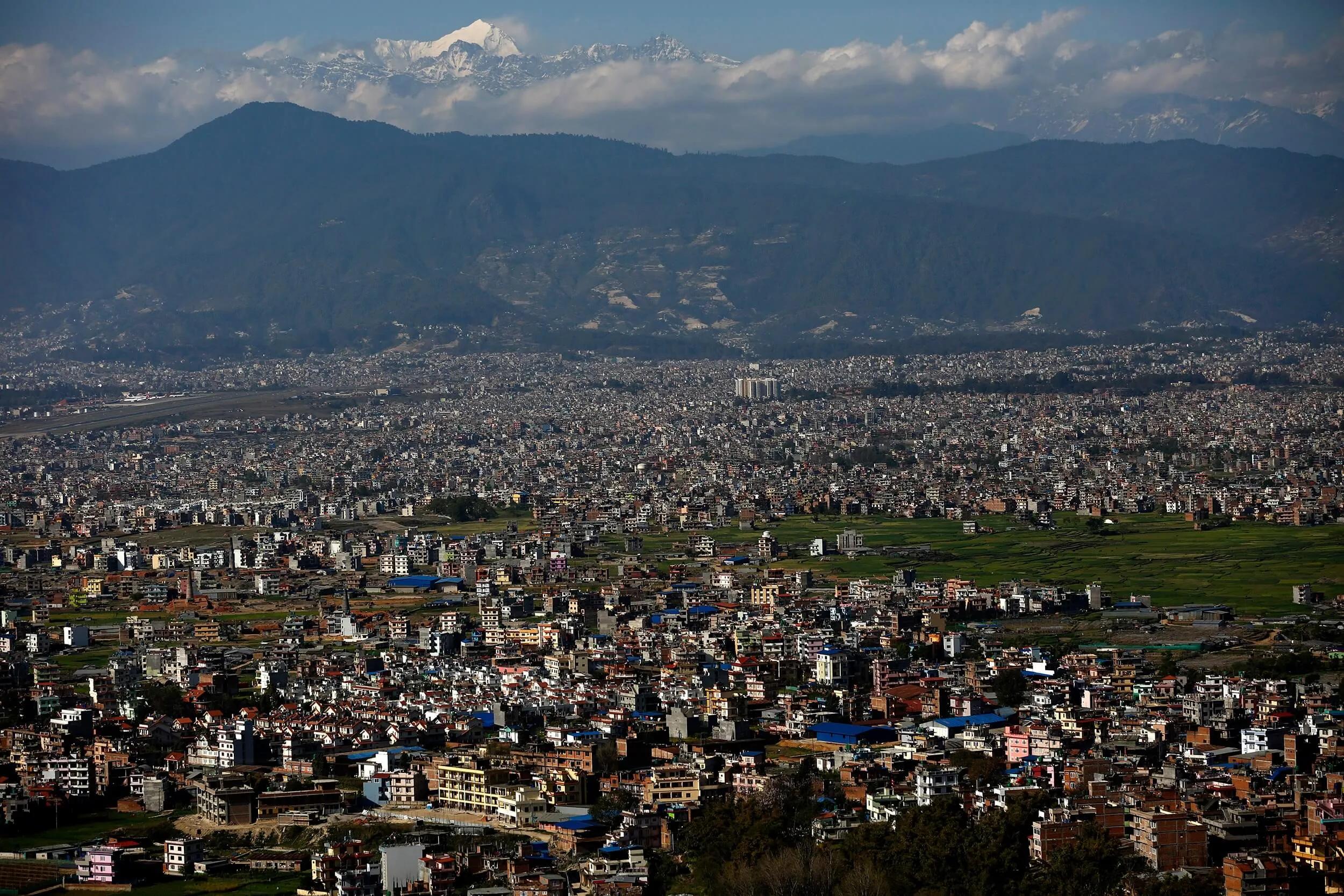
Upon arrival at Tribhuvan International Airport, Kathmandu, a friendly representative from Alpine Club of Himalaya will welcome you. The drive to your hotel offers stunning glimpses of the Himalayan ranges, giving you a first taste of Nepal’s natural beauty.
After checking in, relax and freshen up before enjoying a welcome dinner with authentic Nepalese cuisine. This introduction to Nepal’s food and culture sets the tone for your trek ahead. In the evening, your guide will provide a detailed trek briefing, answer any questions, and ensure you are well-prepared for the journey through the Annapurna region.


Max. Elevation
1400m
Accommodation
Hotel
Meals
Welcome Dinner
Private vehicle arrangements for all airport pickups and drop-offs, ensuring a smooth and comfortable start and end to your journey.
2 nights in Kathmandu at a well-rated 3-star hotel on a twin-sharing basis with daily breakfast and 1 night in Pokhara at a well-rated 3-star hotel on a twin-sharing basis with daily breakfast.
Round-trip Kathmandu–Pokhara airfare including all departure taxes.
Stay in standard teahouses or guesthouses along the trail, offering a cozy and authentic mountain experience.
Breakfast, lunch, and dinner are provided throughout the trek to keep you energized.
Enjoy a welcome dinner upon arrival and a cultural farewell dinner in Kathmandu to celebrate your trek.
Comfortable private vehicles as per the itinerary, suitable for the group size and local roads.
A highly experienced, government-licensed, English-speaking trek leader, assisted by a guide for every 10 trekkers, ensuring safety and smooth coordination.
One porter for every two trekkers to carry your main luggage and reduce physical strain.
All trekking staff costs, including salaries, insurance, food, accommodation, and equipment, are fully included.
Down jacket and sleeping bag provided for the trek to ensure warmth and comfort at high altitudes (to be returned after the trek).
Alpine Club of Himalaya duffel bag, branded t-shirt, and a detailed trekking map for use during the trek and as keepsakes.
All necessary permits, including Annapurna Conservation Area Permit (ACAP) and Trekkers’ Information Management System (TIMS) card, are included.
A comprehensive medical kit will be carried by your trek leader for minor health issues or emergencies.
All applicable government and local taxes are fully covered—no hidden charges.
SIM Card & Data: A Nepali Ncell SIM card with 20 GB data for the group (one per group).
A special farewell dinner in Kathmandu hosted by Alpine Club of Himalaya to mark the successful completion of your trek.

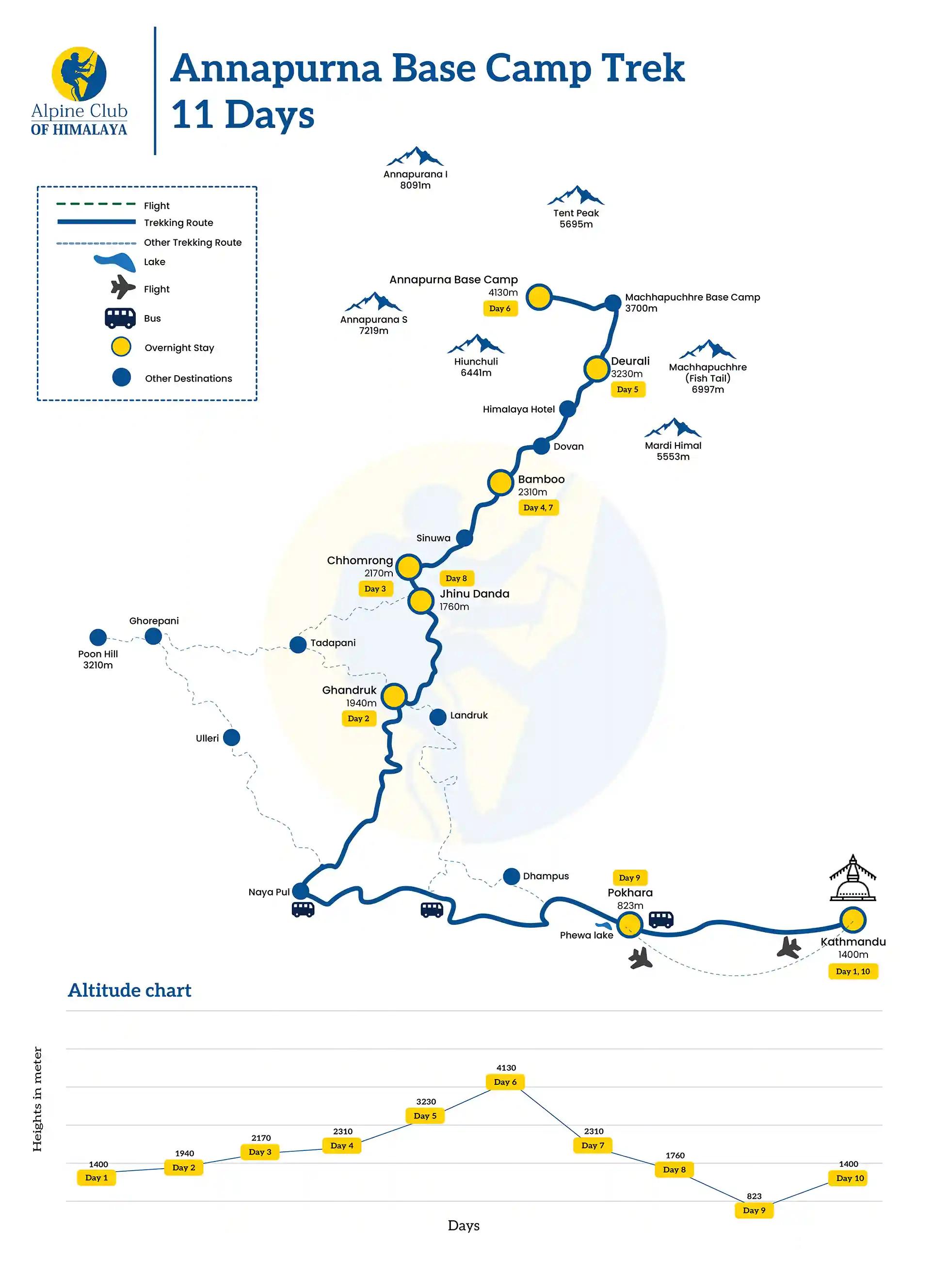
Click on map to view in fullscreen
| Departure Dates | Status | Price | Action |
|---|---|---|---|
| 2026-02-05 - 2026-02-15 | Available | USD 1199/- pp | |
| 2026-02-12 - 2026-02-22 | Available | USD 1199/- pp | |
| 2026-02-19 - 2026-03-01 | Available | USD 1199/- pp | |
| 2026-02-26 - 2026-03-08 | Available | USD 1199/- pp | |
| 2026-03-05 - 2026-03-15 | Available | USD 1199/- pp |
Proper packing is key to enjoying your Annapurna Base Camp Trek. The Himalayan weather can change quickly, so layered clothing, sturdy footwear, and essential gear will make your trek safe and comfortable. Here’s a simple guide:
Base Layers: Thermal tops and bottoms (2 sets), moisture-wicking t-shirts (2–3), lightweight trekking shirts (full-sleeved).
Insulation Layer: Fleece jacket/pullover, warm down jacket.
Outer Layer: Waterproof and windproof jacket, waterproof trekking pants.
Trekking Pants & Shorts: Convertible trekking pants (2), lightweight shorts (1).
Undergarments & Socks: Moisture-wicking underwear (4–5), sports bra (for women), warm wool/fleece socks (3–4), liner socks (2–3).
Sturdy, waterproof trekking boots (well-broken-in).
Lightweight camp shoes or sandals for evenings.
Optional gaiters for snow or dusty trails.
Warm beanie/wool hat and sun hat or wide-brimmed cap.
Buff/neck gaiter, UV sunglasses (category 3 or 4).
Inner gloves (fleece/wool), insulated waterproof outer gloves or mittens.
Daypack (25–30 L) with rain cover.
Duffel bag for porters (provided by Alpine Club of Himalaya).
Sleeping bag (-10°C / 14°F rating, can be rented).
Headlamp with spare batteries, trekking poles, reusable water bottles or hydration bladder (2–3 L).
Water purification tablets or filter, quick-dry towel, small lock.
Biodegradable soap/shampoo, toothbrush, toothpaste, wet wipes, hand sanitizer.
Sunscreen (SPF 40+), lip balm with SPF.
Feminine hygiene products (if needed), toilet paper, nail clippers.
Personal medications, blister care (moleskin, band-aids), painkillers.
Diamox for altitude sickness (consult doctor), antiseptic cream, bandages, anti-diarrheal tablets, oral rehydration salts, insect repellent.
Passport (with Nepal visa) and photocopies.
Travel insurance covering high-altitude trekking.
Cash in Nepali Rupees for snacks, drinks, and tips.
Trekking permits (TIMS and ACAP – arranged by us).
Itinerary copy, emergency contacts, pen, and small notebook.
Lightweight crampons/microspikes (for snow).
Power bank, solar charger, travel adapter (Type C, D, or M).
Snacks, waterproof stuff sacks/dry bags, lightweight reading material, small sewing kit.
Alpine Club of Himalaya can arrange rental for sleeping bags, down jackets, trekking poles, and other essentials at affordable rates.
Important Tips:
Porters carry your main duffel bag; keep essentials in your daypack (water, snacks, camera, rain jacket, personal items).
Dress in layers and always carry weatherproof gear; Himalayan weather can change rapidly.
A gear check in Pokhara before the trek is recommended. Most items can be rented or bought locally.
Packing smart ensures a safe, enjoyable, and memorable trekking experience in the majestic Annapurna region.
N
Nia Rahmadani
Jan 24, 2025
A
Anatasya Eva
Jan 23, 2025
R
Rayan R
Indonesia
Nov 8, 2024
R
Rola Rahmita
Indonesia
Aug 20, 2024
We Accept Cards
Office of the company registrar License: 66813/066/067 || Tourism Industry Division License:1142
All content and photography within our website is copyright & may not be reproduced without our permission.
Develop By: IT Sansaar