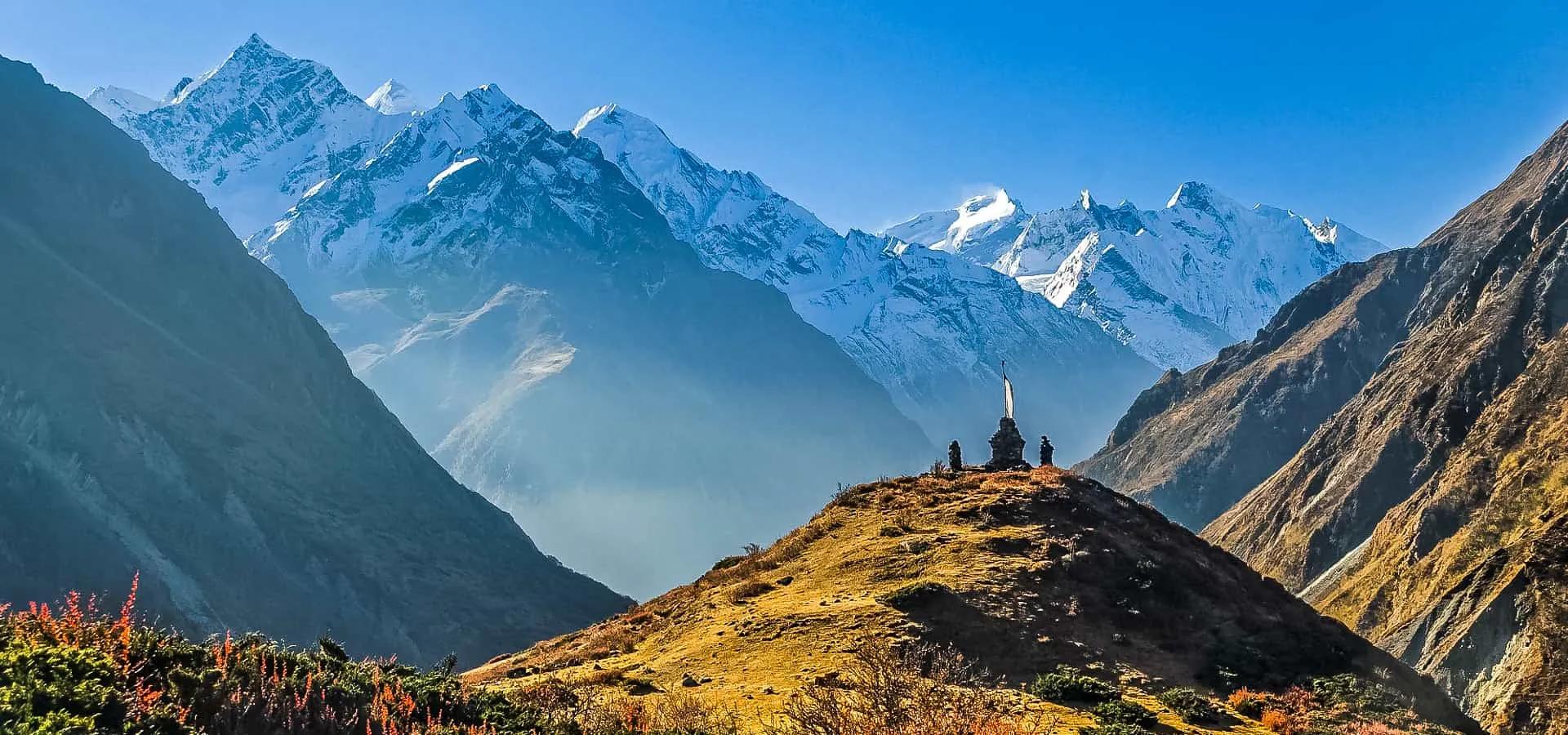
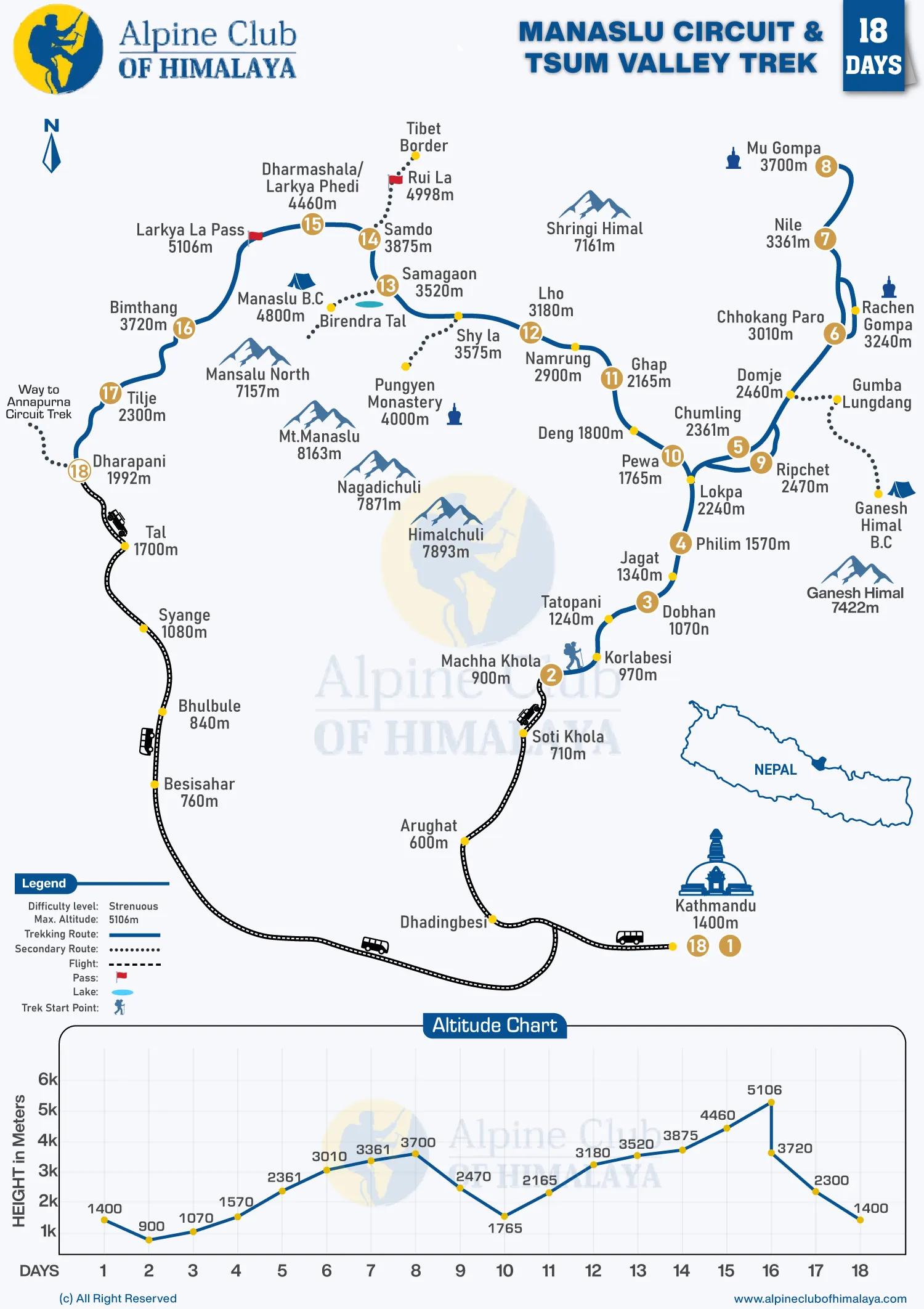
Manaslu and Tsum Valley Trek takes you across the remote Himalayan Mountains north of Nepal. One of the most isolated regions of the country clinging to the mountainside, in the frozen peaks of the Himalayas. The Manaslu and Tsum Valley Trek is a complete classic trekking destination in Nepal. Secluded, raw, and true here discover magnificent scenery, hidden wonders, and different faces of the place. A chance to miss if you do not explore the back roads are the authentic people. In a world where traditions and cultures are vanishing so quickly here witness communities of rare beauty, great strength, and extreme fragility. A trek where you will sense the entirety of landscapes and then complement that with the people living there. The Tsum Valley is one of the Himalayas’ most secluded and hidden valleys. A secret Tibetan Buddhist land only opened for visitors since 2008 yet still remains untouched. Here people of Tibetan origin still practice ancient forms of dialogue, art, culture, and religion. Where nomadic souls are surrounded by nature, in the middle of wild and unspoiled landscapes.
On Manaslu and Tsum Valley Trek explore hidden valleys, traverse lush woodlands, high alpine grounds, sheer cliffs, and cross high mountains pass on the foothills of the Himalayas. Heaven in its own term remained unseen by most people. Realms lost to the world except perhaps to the monks and the gods. The Manaslu and Tsum Valley Trek take you across some of the most beautiful locations on earth.
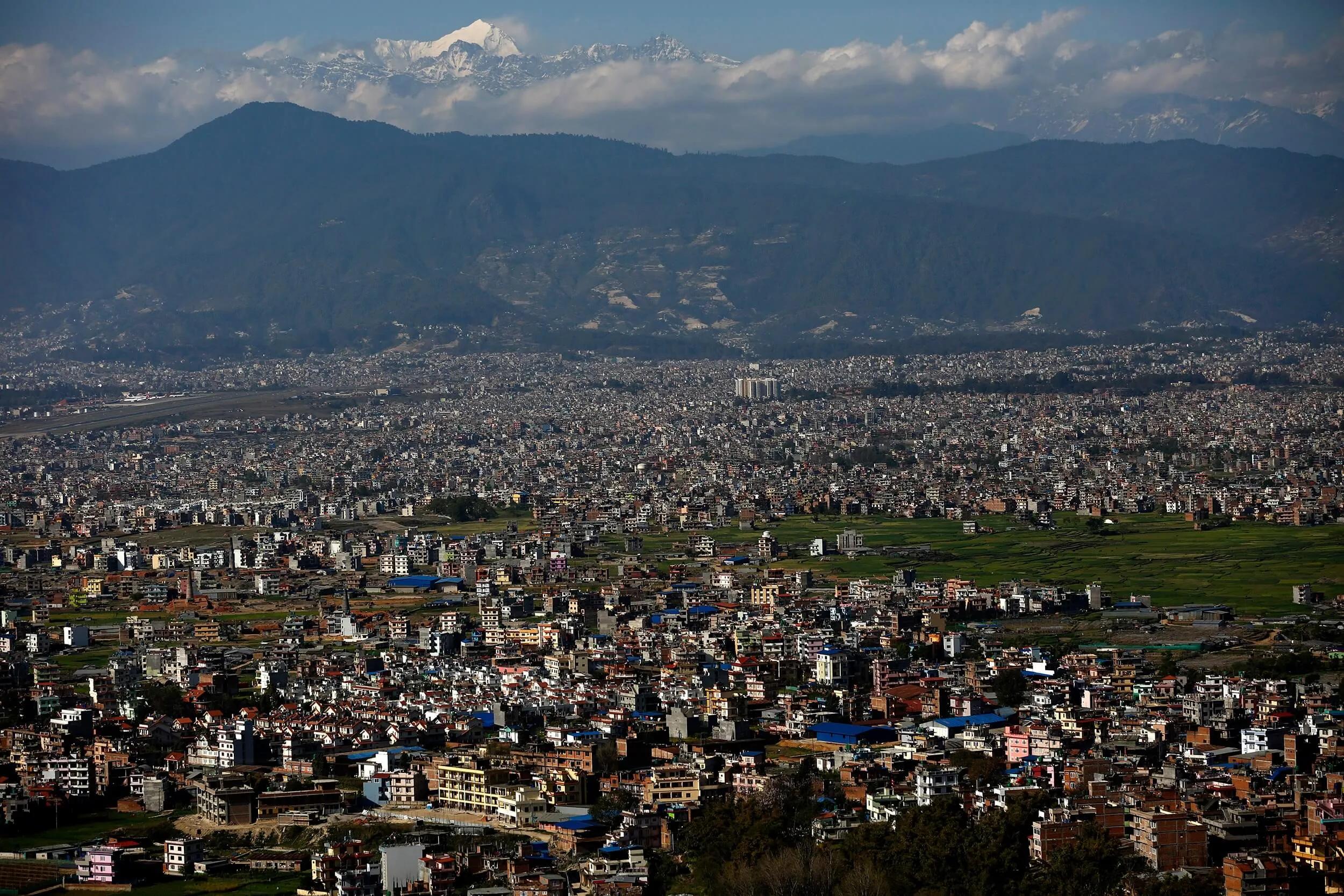
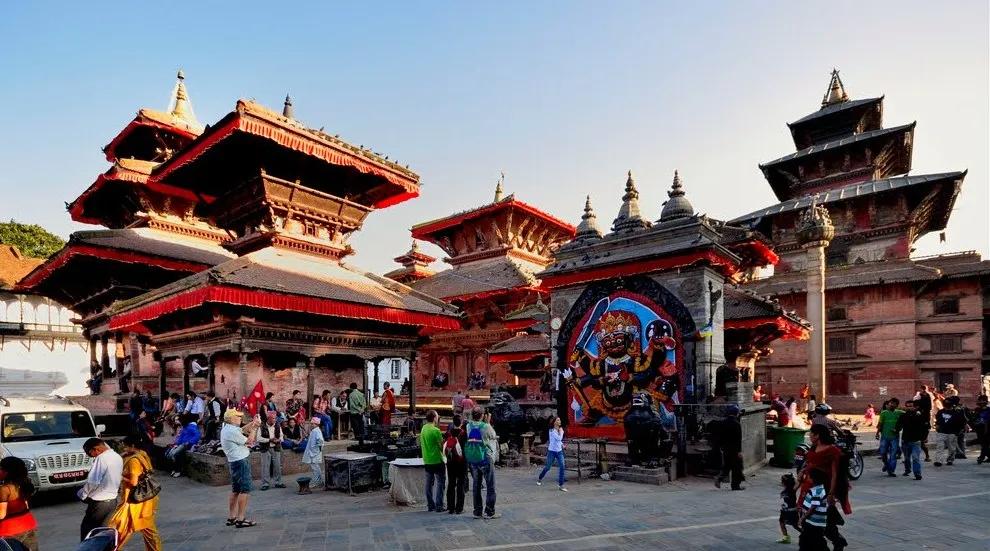
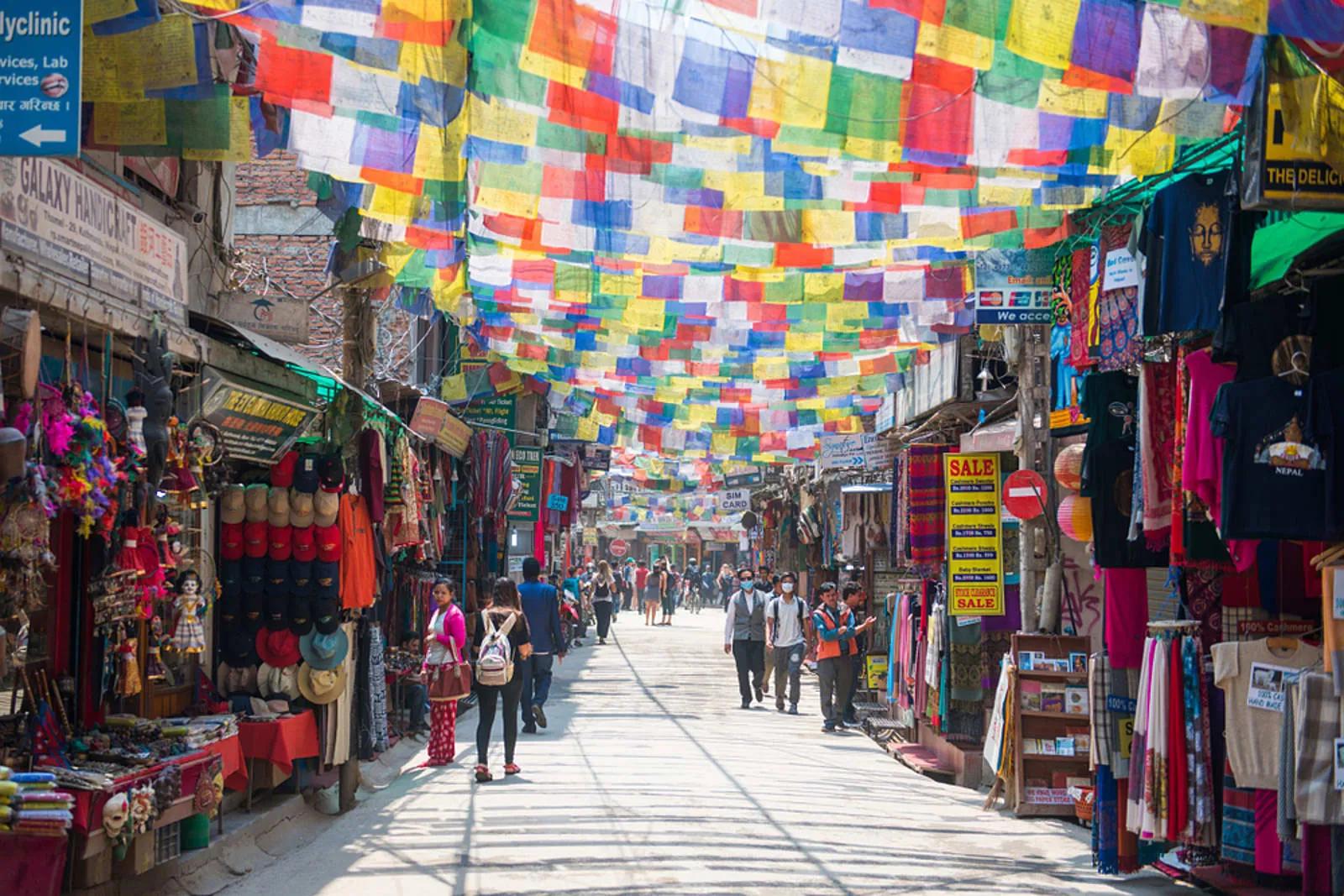
Starting of our trek from Kathmandu
The Manaslu and Tsum Valley Trek starts from Kathmandu and takes you to the small town of Machha Khola located in Gorkha. Machha Khola is the starting point of the trek. From here traversing across the central hills of the country move towards Dobhan. Next following the rapids of the Budi Gandaki river head towards the village of Philim. Then the following day the trail takes you to the Lower Tsum Valley. Traversing across the extraordinary Tsum Valley reach Chhokang Paro a village located in Upper Tsum Valley.
The following day heads deeper into the valley and reaches the village of Chhule. Here explore various monasteries and the Milarepa Cave. The Buddhist saint and philosopher are said to have meditated in these caves in the 11th century. Then head closer to the Tibetan border and reach the Mu Gompa nestled on a glacier. Here learn about the rich history and culture of the mountain people.
Trial of the Manaslu Circuit
After unraveling, the hidden secrets of the Tsum Valley retrace your steps back down towards Ripchet. From Ripchet head towards Pewa which brings you to the trial of the Manaslu Circuit. After that following the Budi Gandaki River north traversing across wide valleys and a few landslides reach the village of Ghap. From Ghap proceed towards Lho. On the way witness the grand views of the greater Himalayan range and the lush networks of hills. Also, pass by several Gompas and lush agricultural farms of barley and potatoes.
Then further the trails gain altitude and take you traversing along the wide valley and eventually to Samagaun. The following day moves towards Samdo passing through Yak grazing lands. From Samdo witness grand panoramic views of several mountains and peaks of the mighty Manaslu. After exploring around Samdo the following day proceed towards Dharamsala, the last settlement before crossing the pass.
The most awaited day of the trek finally has come. Today you will be crossing one of the highest passes of the Himalayas. Wake up before dawn and start walking with the views of the sky full of stars and the silhouette of mountains. Gradually gaining altitude reach the summit of the pass and witness extraordinary views and continue down to the other side. Descending across snow and loose rocks you will cross the Manaslu Conservation Area and traverse across the trails of the Annapurna region and to the village of Bimtang. The following day descends down several more villages and reaches Dharapani where the Manaslu circuit connects with Annapurna Circuit.
Best Season
The best time to trek the Tsum Valley and Manaslu Circuit is during spring (March to May) and autumn (September to November). In spring, the trail becomes vibrant with blooming rhododendrons, clear mountain views, and moderate temperatures, especially at lower elevations. Autumn is considered the most stable season with crystal-clear skies, excellent visibility of Himalayan peaks, and comfortable trekking conditions. Winter (December–February) is extremely cold at higher elevations and Larkya La Pass may be blocked by snow, while monsoon (June-August) brings heavy rainfall, landslides, and limited visibility, making it less suitable for trekking.
Accommodation
Accommodation during the trek is primarily in basic teahouses and local guesthouses. In Kathmandu, trekkers stay in comfortable 3-star hotels on a twin-sharing basis. Along the trekking route, facilities become simpler as altitude increases. Rooms are usually twin-sharing with basic beds, blankets, and shared bathrooms in most places. In remote areas like Tsum Valley and high Manaslu regions, amenities are minimal but clean and managed by local families. While luxury is not available, the hospitality and warm local welcome make the experience memorable and culturally enriching.
Meals
Meals during the trek are provided three times a day breakfast, lunch, and dinner, along with tea or coffee. The food is freshly prepared in teahouses and includes a mix of traditional Nepali and simple international dishes. The most common and nutritious meal is dal bhat (rice, lentil soup, vegetables, and pickles), which provides energy for long trekking days. Other options include noodles, pasta, soups, potatoes, eggs, pancakes, and basic bread items. In Kathmandu, only breakfast and a farewell dinner are included. Clean drinking water or boiled water is usually available at teahouses.
Permits
This trek passes through restricted and conservation areas, requiring several official permits. These include the Manaslu Restricted Area Permit, Tsum Valley Restricted Area Permit, Manaslu Conservation Area Permit (MCAP), and Annapurna Conservation Area Permit (ACAP). A TIMS card may also be required depending on regulations. These permits are issued by the Nepal government and must be arranged through a registered trekking agency. Solo trekking is not allowed in restricted zones, and a licensed guide is mandatory for permit validation.
Guide
A licensed and experienced trekking guide is compulsory for this trek due to its restricted area regulations. The guide ensures navigation through remote trails, manages permits, monitors altitude conditions, and provides safety support throughout the journey. Guides are also valuable for cultural interpretation, helping trekkers understand local traditions, monasteries, and village life. Porters are also used to carry luggage, typically on a 2:1 trekker-to-porter ratio, allowing trekkers to walk comfortably with a light daypack.
Drinking Water
Drinking water is available throughout the trekking route but must be treated before consumption. Teahouses provide boiled water for a small fee, which is the safest option. Alternatively, trekkers can use water purification tablets, filters, or UV sterilizers. Bottled water is available in some lower regions but becomes expensive and environmentally discouraged at higher altitudes. It is strongly recommended to carry reusable bottles and purification methods to stay hydrated safely.
Travel Insurance
Comprehensive travel insurance is mandatory for this trek. The policy must cover high-altitude trekking up to at least 6,000 meters and include emergency helicopter evacuation. Due to the remote nature of the Manaslu and Tsum regions, medical facilities are not easily accessible, making evacuation insurance essential for safety. It is highly recommended to carefully check policy coverage before arrival in Nepal to ensure it meets trekking requirements.
Transport
Transportation begins with airport pickup in Kathmandu and hotel transfers in a private vehicle. The trek includes a long drive from Kathmandu to Machha Khola via Arughat, typically in a private jeep for groups. After completing the trek, transport includes a shared jeep from Dharapani to Besisahar and onward road transfer back to Kathmandu. Depending on group size, private vehicles may be arranged for comfort. Road conditions can be rough in some sections, especially in rural mountainous areas.
Difficulty Level
The Tsum Valley & Manaslu Circuit Trek is considered a challenging trek. It involves long walking days of 6–8 hours, steep ascents and descents, and remote terrain with limited facilities. The high point at Larkya La Pass (5,160m) requires endurance and proper acclimatization. While no technical climbing skills are needed, strong physical fitness, mental preparation, and previous trekking experience are highly recommended for a safe and enjoyable journey.
Altitude Sickness
Altitude sickness is a potential risk due to elevations exceeding 5,000 meters. Symptoms may include headache, dizziness, nausea, fatigue, and loss of appetite. The itinerary is designed with gradual ascent and acclimatization to minimize risks, especially in places like Samagaun and Chhokang Paro. Staying hydrated, walking at a steady pace, and avoiding overexertion are essential preventive measures. In case of severe symptoms, immediate descent and medical attention are required.
Cancellation Policy by the Client
If you need to cancel your booking with Alpine Club of Himalaya, please submit a written cancellation request. Upon receiving your notice, we will confirm the cancellation. The following charges will apply based on how far in advance you cancel relative to the departure date:
- 45 to 60 days before departure: 35% of the total tour cost
- 30 to 44 days before departure: 50% of the total tour cost
- 15 to 29 days before departure: 70% of the total tour cost
- 7 to 14 days before departure: 85% of the total tour cost
- Less than 7 days before departure: 100% of the total tour cost
If you wish to cancel between 60 and 90 days before departure, please contact us directly to discuss the cancellation terms, as the policy does not specify charges for this period.
Cancellation by the Organizer
In the event that Alpine Club of Himalaya cancels the expedition due to unforeseen circumstances, such as extreme weather conditions, natural disasters, or safety concerns, participants will receive a full refund or the option to reschedule for a later date.
Force Majeure
Alpine Club of Himalaya is not liable for any additional costs incurred due to cancellations resulting from force majeure events, including natural disasters, political unrest, or health emergencies.