Destination
Nepal
Duration
5 Days
Best Weather
March, April, May, September, October & November
Accommodation
Hotel and Guesthouse
Meals
Breakfast, Lunch, Dinner
Transportation
Private vehicle / Flights
Group
Min. 1 Pax
Difficulty
Easy
Activities
Trekking
Overview
The Ama Yangri Trek is one of the best short trekking adventures near Kathmandu, offering a perfect blend of breathtaking mountain views, rich cultural experiences, and serene natural landscapes. This 5-day trek, carefully organized by Alpine Club of Himalaya, takes you to the summit of Ama Yangri Peak (3,771m), one of the highest peaks easily accessible from Kathmandu, providing a unique opportunity to witness the grandeur of the Himalayas without committing to a long, multi-week expedition.
Situated in the Helambu region, the newly opened Ama Yangri trekking route is ideal for both beginners and experienced trekkers seeking a quick yet rewarding Himalayan adventure. The journey begins with a 5–6-hour drive from Kathmandu through scenic roads passing Bhaktapur, Panauti, Dhulikhel, and Melamchi, reaching Timbu or Tarkeghyang, the gateway to the trek. From here, the trail gradually ascends through terraced farmlands, lush forests, and charming traditional villages, showcasing the authentic lifestyle of Sherpa and Hyolmo communities. Along the way, trekkers can explore ancient monasteries, stupas, and gompas, gaining insight into the rich Buddhist heritage of the Helambu region.
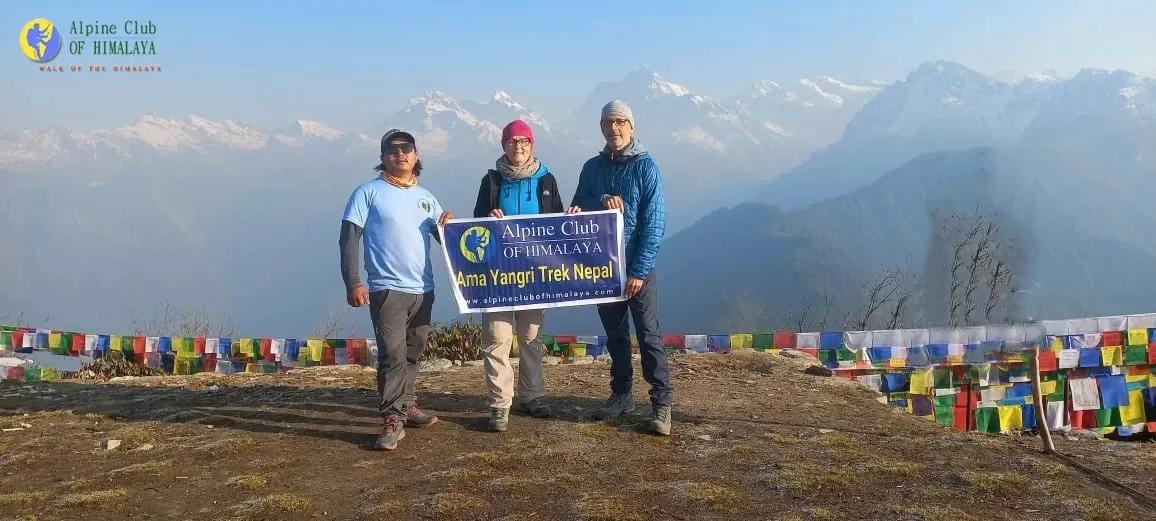
The main highlight of the trek is reaching the summit of Ama Yangri Peak, where panoramic views stretch across some of the tallest and most iconic mountains of Nepal. On a clear day, trekkers can enjoy stunning vistas of Langtang Lirung (7,246m), Dorje Lapka (6,966m), Gauri Shankar (7,134m), Ganesh Himal (7,422m), and even the world’s tallest peak, Mount Everest (8,848.86m). The trek also offers excellent opportunities for birdwatching, as the Helambu region hosts over 300 species of birds, making it a paradise for nature enthusiasts.
Beyond mountain views, the trail highlights the region’s agricultural and cultural heritage. Walking through traditional villages, trekkers can visit local apple farms in Sermathang, taste fresh seasonal apples, and experience the warm hospitality of the local communities. The combination of natural beauty, cultural richness, and spiritual heritage makes Ama Yangri Trek a highly rewarding short adventure near Kathmandu.
The trek is highly flexible and can be customized to fit limited schedules. For those short on time, the trek can be completed in as little as 3 days, focusing on the summit experience and spectacular mountain views, while a full 5-day itinerary allows for leisurely exploration, cultural interaction, and better acclimatization.
With professional guidance, logistical support, and experienced trekking leadership provided by Alpine Club of Himalaya, the Ama Yangri Trek promises a safe, comfortable, and memorable Himalayan experience. This trek is suitable for solo travelers, families, beginners, and seasoned trekkers, making it one of the best short treks near Kathmandu for panoramic Himalayan views, cultural immersion, and nature exploration.
What to Expect on the Ama Yangri Short Trek
· Short but rewarding trek near Kathmandu offering stunning Himalayan mountain views.
· Scenic 5–6 hour drive from Kathmandu through Bhaktapur, Panauti, Dhulikhel, and Melamchi to Timbu or Tarkeghyang.
· Trek ascends gradually through terraced farmlands, lush forests, and traditional Helambu villages.
· Experience authentic Sherpa and Hyolmo village life, including local monasteries, gompas, and stupas.
· Summit of Ama Yangri Peak (3,771m) reached via a moderate 3–4 hour climb, offering panoramic views of Langtang Lirung, Dorje Lapka, Gauri Shankar, Ganesh Himal, and Mount Everest on clear days.
· Enjoy nature walks, birdwatching, and apple orchards in Sermathang during descent.
· Trek balances adventure with cultural and spiritual exploration along the route.
· Daily walks of 4–7 hours at a moderate pace, with time for rest, photography, and sightseeing.
· Accommodation in comfortable lodges or teahouses, with freshly prepared meals included.
· Trek is suitable for beginners, families, and experienced trekkers, supported by expert guidance from Alpine Club of Himalaya.
Best Time to Trek
The Ama Yangri Trek can be undertaken almost year-round, but the best seasons are pre-monsoon (March to May) and post-monsoon (late September to November). During these months, the weather is stable, skies are clear, and mountain views are spectacular. Spring brings blooming rhododendrons and vibrant forests, while autumn offers crisp air, minimal rainfall, and optimal visibility for panoramic Himalayan vistas.
Winter months (December to February) are colder and may have snow on higher trails, but the trek is still possible for well-prepared trekkers. Monsoon season (June to August) is less ideal due to slippery trails, frequent rainfall, and limited visibility. Alpine Club of Himalaya provides guidance on choosing the best season to ensure a safe and enjoyable trekking experience.
Difficulty Level
The Ama Yangri Trek is moderate in difficulty, making it suitable for beginners, families, and experienced trekkers. Although the trek reaches Ama Yangri Peak (3,771m), the trail is well-marked and does not involve technical climbing.
Trekkers should be prepared for steady uphill climbs, long walking hours, and occasional uneven terrain. The route includes forest trails, terraced farmlands, and small village paths, providing a mix of gentle and moderately challenging sections. Daily trekking durations range from 4 to 7 hours, allowing adequate time for acclimatization and exploration. Guidance from Alpine Club of Himalaya ensures safety, proper pacing, and support throughout the trek.
Physical Fitness and Trekking Requirements
While the trek is accessible to most travelers, a basic level of physical fitness and stamina is required. Recommended preparations include:
· Cardiovascular training: walking, jogging, cycling, or swimming to build endurance.
· Leg and core strength: exercises such as squats, lunges, and stair climbing to handle uphill climbs.
· Practice hikes: trekking with a daypack for 3–5 hours on uneven terrain helps build stamina.
· Mental preparation: staying positive, being ready for early starts, and adjusting to moderate altitude.
Daily trekking involves ascending and descending paths, walking through villages and forested trails, and sometimes crossing minor streams. Proper preparation ensures you can enjoy the journey comfortably and safely while absorbing the scenic and cultural richness of the Helambu region. Alpine Club of Himalaya provides guidance on fitness, acclimatization, and pacing for all participants.
Acclimatization and Altitude Considerations
The Ama Yangri Trek reaches a maximum altitude of 3,771 meters at Ama Yangri Peak, which is considered moderate altitude. While most trekkers do not experience serious altitude sickness at this height, proper acclimatization is essential for a safe and enjoyable trek. The itinerary allows for gradual ascent through Tarkeghyang and Sermathang, giving your body time to adapt to higher elevations.
Tips for acclimatization include walking at a steady pace, drinking plenty of water, eating energy-rich meals, and resting adequately. Trekkers should be aware of symptoms of Acute Mountain Sickness (AMS) such as headache, nausea, fatigue, or dizziness. Alpine Club of Himalaya provides expert guidance, monitors trekkers’ health, and advises on best practices to minimize risks.
Altitude Tips – Ama Yangri Trek
Though the maximum altitude of Ama Yangri Peak is 3,771 meters, altitude-related issues can still occur. Proper preparation and awareness help prevent Acute Mountain Sickness (AMS) and ensure a comfortable trek.
· Ascend Gradually: The itinerary is designed for a steady climb to allow your body to adapt naturally. Avoid rushing or overexertion.
· Hydration: Drink at least 3–4 liters of water daily to support acclimatization and prevent dehydration.
· Balanced Diet: Eat high-energy meals throughout the trek to maintain strength and stamina.
· Rest Days: Even short rests during the day help the body adjust to higher elevations.
· Avoid Alcohol and Smoking: Both can reduce oxygen absorption and increase the risk of AMS.
· Know the Symptoms: Watch for headaches, nausea, dizziness, or shortness of breath. Inform your guide immediately if symptoms appear.
· Medication: Some trekkers use Diamox (Acetazolamide) for prevention, but always consult a doctor before use.
· Expert Guidance: Guides from Alpine Club of Himalaya monitor trekkers for altitude sickness and can advise on pacing, hydration, and emergency measures if needed.
By following these tips, trekkers can enjoy the breathtaking Himalayan views, cultural experiences, and serene landscapes of the Ama Yangri Trek without altitude-related discomfort.
Environment and Climate
The Helambu region is known for its stunning natural beauty, including dense pine and rhododendron forests, terraced farmlands, and high mountain ridges. Trekkers will experience a diverse environment, ranging from subtropical valleys to alpine terrain near the peak.
- Spring (March–May): Rhododendrons bloom, vibrant greenery, moderate temperatures, and clear skies.
- Autumn (September–November): Crisp, clear air, excellent visibility, and stable weather conditions.
- Winter (December–February): Cold nights and occasional snow at higher elevations; fewer crowds.
- Monsoon (June–August): Heavy rainfall, slippery trails, and limited mountain visibility.
Temperature can range from 15–20°C in lower villages to -5°C near the summit. The Helambu region is also rich in wildlife and bird species, making it a great destination for nature enthusiasts. Alpine Club of Himalaya ensures trekkers are aware of seasonal conditions and prepares them with the right gear and advice.
Safety Tips
Safety is a top priority for every trekker. While the Ama Yangri Trek is moderate in difficulty, following these guidelines ensures a secure and enjoyable experience:
· Trek at a steady, comfortable pace to prevent fatigue and altitude sickness.
· Stay hydrated and consume high-energy foods regularly.
· Follow the guidance of licensed trekking guides and porters provided by Alpine Club of Himalaya.
· Wear proper trekking boots and layered clothing suitable for changing temperatures.
· Avoid alcohol and smoking during the trek, as these can affect acclimatization.
· Carry a first-aid kit and any personal medications, and be aware of emergency evacuation protocols.
· Respect local culture, customs, and environmental regulations, particularly in villages and monasteries.
Alpine Club of Himalaya provides professional guides, ensures proper acclimatization schedules, and offers assistance in case of emergencies, making the Ama Yangri Trek both safe and highly rewarding for all participants.
Safety Measures
Safety is a top priority on the Ama Yangri Trek, even though it is considered a moderate trek. Alpine Club of Himalaya ensures that all trekkers have a safe and enjoyable journey through the Helambu region. Key safety measures include:
· Experienced Guides: Licensed trekking guides accompany the group, providing route guidance, cultural insights, and support in case of emergencies.
· Porter Assistance: Porters carry personal luggage (one porter for every two trekkers), reducing fatigue and preventing strain-related injuries.
· Emergency Communication: Guides carry mobile phones and radios for communication in case of emergencies, although coverage may be limited in remote areas.
· First Aid and Medical Support: Basic first-aid kits are available with guides and lodges. Guides are trained to manage minor injuries and respond quickly to medical issues.
· Weather Monitoring: Guides provide daily weather updates and adjust trekking schedules in case of heavy rain, storms, or snowfall to ensure safety.
· Trail Safety: Routes are well-planned to avoid dangerous terrain. Trekkers are advised to wear proper footwear and walk carefully on uneven or slippery paths.
· Cultural Respect and Environmental Safety: Trekkers are guided to respect local customs, avoid disturbing wildlife, and maintain cleanliness along the trail.
These precautions make the Ama Yangri Trek a safe and enjoyable short Himalayan adventure for beginners, families, and experienced trekkers.
TIMS and Entry Permits
To trek in the Helambu region, all trekkers are required to carry a TIMS (Trekkers’ Information Management System) card. This permit ensures your safety and allows authorities to track trekkers along the trails. Entry permits to local Helambu villages are also managed as part of regional regulations. Alpine Club of Himalaya handles all necessary permit arrangements before the trek, ensuring a smooth and hassle-free start to your adventure.
Meals
All meals during the trek are provided in teahouses and lodges. Trekkers can enjoy clean, freshly prepared Nepali cuisine, including breakfast, lunch, and dinner. Options often include rice, lentils, vegetables, noodles, and local specialties, ensuring proper nutrition and energy for trekking. Alpine Club of Himalaya ensures that meals meet both taste and hygiene standards.
Drinking Water
Safe drinking water is available at lodges and tea houses along the trail. Trekkers are encouraged to carry water purification tablets or filters to ensure safe hydration. It is recommended to drink 3–4 liters of water daily to maintain energy and prevent dehydration at higher altitudes. Alpine Club of Himalaya provides guidance on water safety and sources along the route.
Accommodation
Accommodation during the Ama Yangri Trek is provided in comfortable teahouses and lodges in villages such as Timbu, Tarkeghyang, and Sermathang. Rooms are typically shared with basic facilities, offering warmth, rest, and a cozy environment after each day’s hike. Some lodges provide hot showers and Wi-Fi where available. Alpine Club of Himalaya ensures that accommodations are clean, safe, and conveniently located along the trekking route.
Transportation
The trek begins and ends with a private vehicle transfer between Kathmandu and the Helambu region. The drive offers scenic views along the Melamchi River, passing through Dhulikhel, Panauti, and Melamchi towns. All airport pick-ups and drop-offs, as well as transfers to the trailhead and back, are arranged by Alpine Club of Himalaya, ensuring a comfortable and hassle-free journey.
Wi-Fi and Electricity
Connectivity on the Ama Yangri Trek is limited due to the remote Himalayan location. Most teahouses and lodges in Timbu, Tarkeghyang, and Sermathang offer basic electricity, often via solar panels, and Wi-Fi may be available in some lodges, but the connection is usually slow and intermittent. Trekkers are encouraged to carry power banks for charging essential devices. The limited connectivity allows for a truly immersive Himalayan experience, free from distractions.
Guide and Porter
The Ama Yangri Trek is guided by experienced, licensed trekking guides provided by Alpine Club of Himalaya. Guides ensure safety, manage daily trekking logistics, provide cultural insights, and help with route navigation.
- Porters are available to carry personal trekking gear, with one porter shared between two trekkers, reducing physical strain and making the trek more comfortable.
- Local knowledge from guides enhances the experience, including cultural interaction with Sherpa and Hyolmo communities, insight into monasteries, and awareness of environmental and safety precautions.
Travel Insurance
All trekkers are strongly recommended to have comprehensive travel insurance covering:
- Medical emergencies and hospital evacuation
- Trekking above 3,500 meters
- Trip cancellation or delays
- Lost or damaged baggage
Alpine Club of Himalaya advises travelers to confirm altitude coverage in their insurance policies, as Ama Yangri Peak reaches 3,771 meters. Travel insurance ensures safety and peace of mind throughout the trek.
Passport and Visa
- All foreign nationals must carry a valid passport with at least six months validity from the date of entry into Nepal.
- A Nepal visa is required and can be obtained on arrival at Tribhuvan International Airport, Kathmandu, or online through the official e-visa portal.
- Alpine Club of Himalaya assists trekkers with visa guidance, ensuring all necessary travel documents are in order before departure.
Why the Ama Yangri Trek is Famous?
The Ama Yangri Trek – 5 Days, organized by Alpine Club of Himalaya, is famous for several reasons that make it one of the most sought-after short treks near Kathmandu:
- Spectacular Himalayan Views: Ama Yangri Peak (3,771m) offers panoramic vistas of iconic Himalayan mountains such as Langtang Lirung, Dorje Lapka, Gauri Shankar, Ganesh Himal, and even Mount Everest on clear days. This makes it one of the best short treks for mountain photography and scenic experiences.
- Short Duration with Maximum Experience: In just 5 days, trekkers experience a Himalayan summit, cultural villages, serene forests, and terraced farmland, making it ideal for travelers with limited time.
- Cultural Immersion: The trek passes through authentic Sherpa and Hyolmo villages such as Timbu, Tarkeghyang, and Sermathang. Visitors can interact with locals, explore ancient monasteries, gompas, and stupas, and learn about traditional Himalayan lifestyles.
- Accessibility: Located in the Helambu region, the trek is easily reachable from Kathmandu via a scenic 5–6 hour drive. This makes it perfect for those who prefer road-accessible treks without long flights.
- Nature and Wildlife: Trekkers enjoy dense forests, alpine meadows, birdwatching, and apple orchards, making it attractive for nature lovers and photographers alike.
- Moderate Difficulty: Suitable for beginners, families, and moderately experienced trekkers, the trek offers a manageable ascent to Ama Yangri Peak while still providing a rewarding adventure.
- Professional Guidance: With expert guides and support from Alpine Club of Himalaya, the trek is safe, well-organized, and provides a stress-free Himalayan experience.
- Spiritual Experience: The presence of ancient monasteries and sacred sites along the trail adds a spiritual and reflective dimension to the trek, attracting trekkers interested in Buddhist culture.
Overall, the Ama Yangri Trek is famous because it combines majestic Himalayan scenery, cultural richness, accessible routes, and moderate trekking challenges into a short but unforgettable adventure near Kathmandu.
Last-Minute Booking
Alpine Club of Himalaya accommodates last-minute bookings for the Ama Yangri Trek whenever possible. Due to the trek’s short duration and accessible route, it is often possible to join with minimal notice. Trekkers are advised to contact the company at least a few days before departure to ensure:
- Availability of guides, porters, and accommodations along the route.
- Completion of all trekking permits and TIMS registration.
- Arrangements for transportation from Kathmandu to the trailhead.
Early communication with the Alpine Club of Himalaya team ensures a smooth and hassle-free last-minute trekking experience.
Online Briefing
Before departure, all trekkers receive a comprehensive online briefing conducted by Alpine Club of Himalaya. The briefing covers:
· Itinerary overview, including daily trekking times, accommodation, and activities.
· Packing guidance, clothing, and essential trekking gear.
· Altitude awareness and safety measures, including tips to prevent altitude sickness.
· Cultural etiquette and environmental responsibilities in Helambu villages.
· Travel documents, permits, and TIMS requirements.
· Emergency procedures and contact details for guides and support staff.
The online briefing ensures that every participant is fully prepared, confident, and informed before starting the trek, allowing for a safe, enjoyable, and memorable Himalayan adventure.
Pickup and Drop Points from Kathmandu:
1 - Devo Boutique Hotel, Thamel, Kathmandu (or similar)
2 - Tribhuvan International Airport (TIA), Kathmandu
3 - Alpine Club of Himalaya Pvt. Ltd
4 - Within Thamel, Kathmandu
Final Notes
Before joining the Ama Yangri Trek – 5 Days, it is essential to ensure that all trekking gear is properly tested, well-fitted, and suitable for moderate to high-altitude conditions. Boots, jackets, sleeping bags, and other technical equipment should be worn and adjusted in advance, as untested or poorly fitted gear can cause discomfort, reduce trekking efficiency, or compromise safety. It is equally important to check your backpack for comfort and load-bearing capacity, as the trek involves hilly terrain, forest trails, and varying elevations. Proper preparation, well-tested equipment, and clear communication with Alpine Club of Himalaya will ensure a safe, smooth, and enjoyable trekking experience in the Helambu region.
Cancellation Policy – Ama Yangri Trek (5 Days)
Cancellation by the Participant
If a participant chooses to cancel their booking for the Ama Yangri Trek, they must notify Alpine Club of Himalaya in writing via email or official communication as early as possible. The following cancellation charges apply:
- 60 days or more before the trek start date: 20% of the total trip cost will be deducted
- 30 to 59 days before the trek start date: 50% of the total trip cost will be charged
- Less than 30 days before departure: 100% of the trip cost is non-refundable
These charges cover administrative costs, permits, pre-arranged logistics, and potential opportunity losses due to late cancellations.
Cancellation by the Organizer
In rare cases, Alpine Club of Himalaya may need to cancel the Ama Yangri Trek due to unforeseen or uncontrollable circumstances such as natural disasters, extreme weather, or regional safety concerns. In such situations, participants will be offered the following options:
- A full refund of all payments made
- Or the option to reschedule the trek to a future available date
The safety of all trekkers is the top priority, and cancellations will only occur under unavoidable conditions.
Force Majeure Clause
Alpine Club of Himalaya is not liable for cancellations, delays, or additional costs arising from force majeure events, including but not limited to:
- Earthquakes, floods, landslides, or other natural disasters
- Political unrest, border closures, or travel restrictions
- Epidemics, pandemics, or health emergencies
- Airspace shutdowns, airline disruptions, or logistical delays
In such cases, participants are responsible for any additional personal costs, such as accommodation, flight rebooking, or travel insurance claims. All trekkers are strongly advised to carry comprehensive travel insurance covering medical emergencies, high-altitude trekking, helicopter evacuation, and unforeseen events.
Detail Itineraries
The trek begins with a scenic drive from Kathmandu at around 7 AM, traveling through the historic town of Dhulikhel, famous for panoramic views of the Himalayan range and ancient Newari architecture. The route follows the Melamchi River, offering stunning natural landscapes, lush forests, and terraced farmlands along the way.
The journey passes through Melamchi, a vibrant small town, before reaching Timbu Village, an authentic cultural village in the Helambu valley. Timbu is home to traditional Sherpa and Hyolmo communities, offering a glimpse into their lifestyle and ancient cultural practices. Upon arrival, trekkers can explore the village, visit local monasteries, and enjoy the peaceful alpine environment.
Accommodation is arranged in a comfortable teahouse or lodge, and dinner and overnight stay are provided here. This day allows trekkers to rest after the drive and prepare for the ascent to Ama Yangri Peak the next day.
Max. Elevation
2,600m
Duration
7–8 hours
Trip Highlight
- Short and easily accessible trek near Kathmandu, ideal for travelers with limited time.
- Summit of Ama Yangri Peak (3,771m) offering panoramic views of the Himalayas.
- Spectacular mountain vistas including Langtang Lirung (7,246m), Dorje Lapka (6,966m), Gauri Shankar (7,134m), Ganesh Himal (7,422m), and Mount Everest (8,848.86m) on clear days.
- Trek through the Helambu region, known for its lush forests, terraced farmlands, and scenic landscapes.
- Cultural experience in authentic Sherpa and Hyolmo villages, exploring local life, traditions, and hospitality.
- Visits to ancient monasteries, stupas, and gompas, offering insight into Buddhist heritage.
- Opportunity to explore apple farms in Sermathang and taste fresh, locally grown apples.
- Excellent trekking route for birdwatchers, with over 300 species in the Helambu region.
- Flexible itinerary, suitable for beginners, families, and experienced trekkers.
- Short trek duration with options to complete in 3–5 days, depending on time availability.
- Professional support and guidance provided by Alpine Club of Himalaya, ensuring safety, comfort, and smooth trekking logistics.
- Combines natural beauty, cultural richness, and spiritual experiences in a single, rewarding adventure.
Cost Include and Exclude
Private jeep or Scorpio transfer from Kathmandu to Timbu and from Sermathang back to Kathmandu
Three meals per day (breakfast, lunch, and dinner) during the trek with one cup of tea or coffee per meal
Accommodation in comfortable basic teahouses along the trekking route
Experienced English-speaking trekking guide throughout the trek
Assistant guide for groups larger than 10 trekkers
Professional porter service, one porter for every two trekkers
TIMS cards and trekking permits for the Helambu region
Duffel bags, trekking route map, and a T-shirt from Alpine Club of Himalaya
First-aid kits for emergencies
Sleeping bag and down jacket for the trek, to be returned after completion
Welcome and farewell dinners before and after the trek
Rescue operation arrangements in case of complicated health conditions, covered by travel insurance
Equipment and Packaging List
Packing and Trekking Gear List
1. Clothing
- Trekking Boots: Comfortable, waterproof, and well-broken-in.
- Trekking Socks: Wool or moisture-wicking socks (2–3 pairs).
- Base Layers: Lightweight thermal tops and bottoms for warmth.
- Insulating Layer: Fleece or down jacket for cold mornings and evenings.
- Outer Layer: Waterproof and windproof jacket and trekking pants.
- Trekking Pants: Lightweight, quick-drying pants for daytime hiking.
- Gloves: Warm gloves plus a lightweight pair for trekking.
- Hat/Cap: Sun hat for daytime; warm hat or beanie for mornings/evenings.
- Buff or Scarf: Protects neck and face from wind, dust, or sun.
- T-shirts/Shirts: Moisture-wicking trekking t-shirts (3–4).
- Rain Gear: Poncho or waterproof jacket/pants.
2. Trekking Gear
- Backpack: 30–40L daypack for personal gear.
- Duffel Bag: Large bag for porter to carry clothes and main gear.
- Trekking Poles: Adjustable walking poles for stability on trails.
- Sleeping Bag: Suitable for temperatures down to -5°C (optional, as teahouses may provide blankets).
- Headlamp/Flashlight: With extra batteries.
- Sunglasses: UV-protection for snow and high-altitude sun.
- Water Bottles or Hydration System: Minimum 2 liters capacity.
- Water Purification: Tablets or portable filter for safe drinking water.
- Camera/Phone: For capturing Himalayan views; carry power bank.
- Personal Toiletries: Toothbrush, toothpaste, soap, wet wipes, tissues, and hand sanitizer.
- Sunscreen & Lip Balm: SPF 30+ for high-altitude sun protection.
- First Aid Kit: Include personal medications, bandages, and blister care.
3. Documents and Essentials
- Passport: With at least 6 months validity.
- Nepal Visa: Obtained on arrival or online e-visa.
- TIMS Card & Trekking Permits: Arranged by Alpine Club of Himalaya.
- Travel Insurance: Covering medical emergencies and trekking up to 3,771m.
- Cash in Nepali Rupees: For small expenses, tips, and souvenirs.
- Emergency Contact List: Including guide and company contacts.
4. Optional Items
- Binoculars: For birdwatching and mountain views.
- Notebook & Pen: To document the journey.
- Snacks: Energy bars, nuts, and chocolate for extra energy.
- Lightweight Camp Shoes/Flip-Flops: For evenings at lodges.
Tips
- Dress in layers to adjust to changing temperatures.
- Break-in boots before the trek to avoid blisters.
- Keep valuable items and documents in your daypack.
- Alpine Club of Himalaya provides guidance on gear selection, packing tips, and weight management for both the trekker and porter bags.
Packing Tips
· Use a duffel bag or large trekking bag for porters (up to 20 kg)
· Carry a daypack (25–35 liters) with personal essentials, water, snacks, and warm clothing
· Pack clothes in layers for easy adjustment to changing temperatures
· Keep documents and valuables in a waterproof pouch or secure travel wallet
FAQ (Frequently Asked Question)
Related Trips
24/7 Support
Need help? we're at your service
Associated With



We Accept Cards

Office of the company registrar License: 66813/066/067 || Tourism Industry Division License:1142
All content and photography within our website is copyright & may not be reproduced without our permission.
Develop By: IT Sansaar