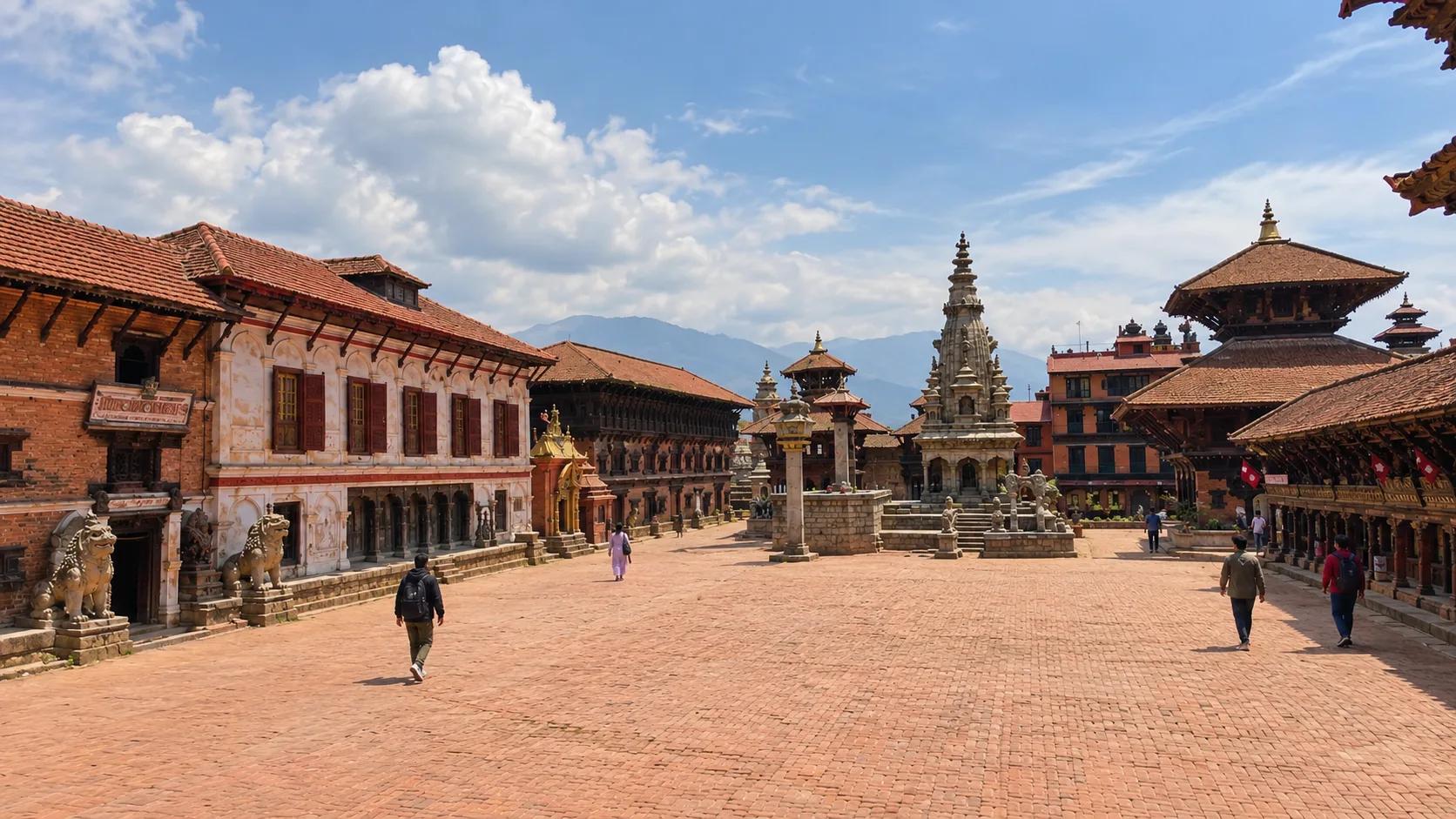
The 2-day heritage tour covers the main historic and religious sites of Kathmandu Valley: old temples, Buddhist stupas, royal palaces and the traditional towns around them. It is planned for travelers with limited time who want an introduction to Nepal’s history, architecture, religion and everyday culture.
Over the two days you visit Swayambhunath, Boudhanath and Pashupatinath, as well as the Durbar Squares of Kathmandu, Patan and Bhaktapur. All six are part of the Kathmandu Valley UNESCO World Heritage Site. A professional local guide goes with you and explains the stories, rituals and building styles at each stop.
What Makes Nepal a Great Destination for Heritage Tours?
Kathmandu Valley is a good place for a heritage tour because so much of its history is still in use. Palaces, pagoda-style temples, stupas and stone sculptures stand next to homes and shops, and people worship at many of them every day.
Hinduism and Buddhism sit close together here. Many Newar families follow both, and some shrines are used by Hindus and Buddhists alike. The valley’s towns were built largely by Newar artisans, whose work shows in carved wooden windows, brick courtyards and temple roofs. The Peacock Window in Bhaktapur is a well-known example. The pagoda style is often traced to the valley, and Araniko, a Newar craftsman, is said to have carried it to China in the 13th century.
A tour takes you through old neighborhoods where you can watch daily rituals and see the buildings in use.
Walk Through Nepal's Living History in Just Two Days
Day one starts at Swayambhunath, a Buddhist shrine on a hill west of the city, known for the monkeys that live there. From there you go to Kathmandu Durbar Square, where the old palace buildings and temples stand among working streets and shops. The route then continues to Boudhanath, a large stupa and a center of Tibetan Buddhism in Nepal, and to Pashupatinath, a Hindu temple complex on the Bagmati River. Cremations take place on the riverside ghats there, and non-Hindus can’t enter the main temple but can see the complex from the opposite bank.
Day two is spent in Patan and Bhaktapur, two Newar cities with medieval squares. Patan has the stone Krishna Mandir, and Bhaktapur has the five-tiered Nyatapola temple.
A local guide goes with you and explains the stories behind the monuments and the work of the artisans who built them.
UNESCO World Heritage Sites Covered in This Tour
Kathmandu Valley is home to seven monument zones recognized together as a UNESCO World Heritage Site. This tour introduces you to several of its most important cultural landmarks.
Swayambhunath Stupa: Located on a hill overlooking Kathmandu, Swayambhunath is an important Buddhist pilgrimage site known for its white dome, golden spire, prayer flags, and panoramic views of the valley.
Kathmandu Durbar Square: This historic royal square features ancient palaces, temples, courtyards, and traditional Newari architecture. It offers insight into the history of Nepal's former royal city and its artistic traditions.
Boudhanath Stupa: One of the largest spherical stupas in Nepal, Boudhanath is a major center of Tibetan Buddhist practice. Its surrounding monasteries, prayer wheels, and traditional shops create a distinctive spiritual atmosphere.
Pashupatinath Temple: Situated beside the Bagmati River, Pashupatinath is one of the most sacred Hindu temple complexes in Nepal. It is an important pilgrimage destination dedicated to Lord Shiva.
Patan Durbar Square: Located in Lalitpur, Patan Durbar Square is celebrated for its traditional Newari craftsmanship, historic temples, palace courtyards, and stone and metal artwork.
Bhaktapur Durbar Square: This historic square is known for its medieval architecture, palace complex, intricately carved windows, traditional temples, and distinctive Newari cultural heritage.
Your Heritage Journey Awaits
Together, these destinations offer a broad introduction to the religious, artistic, and architectural heritage of Kathmandu Valley.
Two days is enough to cover the main historic sites of Kathmandu Valley. The tour begins with the stupas and temples of Kathmandu, then moves on to the old royal squares of Patan and Bhaktapur. Many of the brick and carved-wood buildings there date from the Malla period, and local people still use the temples every day.
The tour works for first-time visitors and for anyone who cares about history and architecture. It also suits trekkers who want a couple of days in the valley before or after the mountains. A local guide stays with you throughout, so each site comes with its history and the customs around it.