This 16-day trek covers two parts of the Everest region in one trip: the Gokyo Valley and Everest Base Camp. You walk in over the Cho La Pass and fly back to Kathmandu by helicopter instead of retracing the trail to Lukla.
The trek starts with a flight from Kathmandu to Lukla. From there the trail follows the Dudh Koshi River through Phakding and up to Namche Bazaar, the main Sherpa market town in the Khumbu. You spend an extra day in Namche to adjust to the altitude. Along the way you pass monasteries, prayer flags and stone-walled villages, with the Himalayan peaks in view for much of the walk.
From Namche the route turns toward Gokyo, where a chain of glacial lakes sits at the foot of the mountains. The water is a turquoise colour that looks almost unreal against the rock and ice. Most trekkers climb Gokyo Ri, a viewpoint at 5,357 metres, to see Everest, Lhotse, Makalu and Cho Oyu in one sweep.
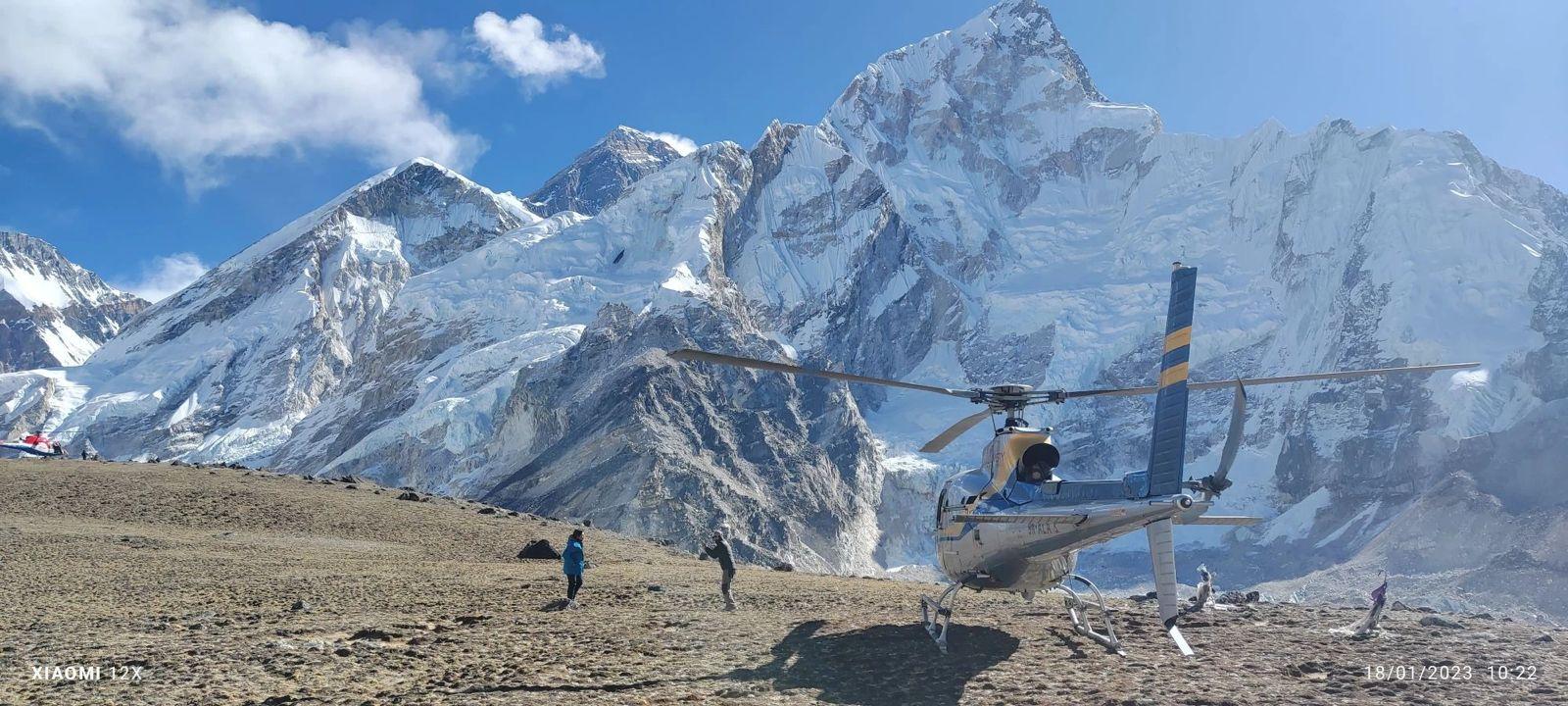
After Gokyo you cross the Cho La Pass at about 5,420 metres, the hardest day of the trek. It involves a rocky ascent and some glacier travel, and it connects the Gokyo Valley to the Everest Base Camp trail. At Base Camp (5,364 metres) you stand next to the Khumbu Glacier, with Everest itself hidden behind the nearer ridges of Nuptse. Then you board a helicopter and fly back to Kathmandu in a fraction of the time the walk out would take.
What to Expect on This Trek?
The Gokyo Valley trek offers a diverse experience, combining physical challenges, cultural encounters, and extraordinary mountain scenery. Throughout the journey, you will experience changing landscapes, from green hills and forested trails to rocky mountain paths and glacial valleys.
Scenic Himalayan Flight: Your adventure begins with a thrilling flight to Lukla, offering beautiful views of the hills, valleys, and Himalayan mountains. The landing at Tenzing-Hillary Airport is an exciting introduction to the Everest region.
Traditional Sherpa Villages: As you walk through villages such as Phakding, Namche Bazaar, Dole, and Machhermo, you will experience the traditional lifestyle and hospitality of the Sherpa people. You will also encounter Buddhist monasteries, mani walls, prayer wheels, and colourful prayer flags along the trail.
Beautiful Gokyo Lakes: You can expect to explore the spectacular Gokyo Lakes, known for their crystal-clear turquoise waters and peaceful surroundings. These glacial lakes are among the most beautiful natural attractions in the Everest region.
High-Altitude Adventure: The trek involves walking through steep trails, rocky landscapes, glacial moraines, and high mountain passes. Crossing Cho La Pass is one of the most challenging and rewarding parts of the journey.
Everest Base Camp Experience: Walking towards Everest Base Camp gives you the opportunity to witness the remarkable Khumbu Glacier, surrounding ice formations, and towering Himalayan peaks. It is one of the most memorable experiences for anyone visiting the Everest region.
Helicopter Return to Kathmandu: After completing the trekking adventure, you will enjoy a helicopter flight back to Kathmandu. This provides a comfortable alternative to retracing the trekking route and offers breathtaking aerial views of the mountains, glaciers, and valleys.
Overall, this trek combines adventure, natural beauty, and cultural experiences, making it a rewarding journey for those who want to explore the highlights of the Everest region within 16 days.
Major Attractions on This Trek
The Gokyo Valley, Everest Base Camp and Helicopter Return trek features several remarkable destinations that make the journey special. From turquoise glacial lakes to spectacular mountain viewpoints, every section of the trail offers something unique.
Gokyo Lakes
The Gokyo Lakes are among the most beautiful natural attractions in the Everest region. Located at high altitude within the Sagarmatha National Park, these glacial lakes are famous for their striking turquoise and blue colours. Surrounded by snow-covered mountains, rocky landscapes, and glaciers, they create a peaceful and unforgettable Himalayan setting.
The Gokyo lake system consists of six main lakes, with the third lake, Dudh Pokhari, located beside Gokyo Village. Trekkers can explore the lakes while enjoying spectacular views of the surrounding Himalayan landscape. The peaceful atmosphere and extraordinary scenery make Gokyo Lakes one of the most memorable highlights of this trek.
Gokyo Ri
Gokyo Ri, standing at approximately 5,357 metres, is one of the finest viewpoints in the Everest region. The climb to its summit is challenging, especially because of the altitude and steep trail, but the panoramic views make the effort worthwhile. From the top, you can witness magnificent views of Mount Everest, Lhotse, Makalu, Cho Oyu, and the beautiful Gokyo Lakes below. The viewpoint is particularly popular for sunrise, when the first sunlight illuminates the surrounding Himalayan peaks. For many trekkers, reaching Gokyo Ri becomes one of the most rewarding moments of the entire journey.
Cho La Pass
Cho La Pass, at approximately 5,420 metres, connects the Gokyo Valley with the Everest Base Camp trail. It is one of the most challenging sections of this trek, requiring good physical preparation, careful walking, and suitable weather conditions. The route crosses rocky terrain, steep mountain paths, and glacial sections that may be covered with snow and ice. From the pass, trekkers can enjoy impressive views of the surrounding Himalayan peaks and glaciers. Crossing Cho La Pass is a significant achievement and an essential part of this combined Gokyo and Everest Base Camp adventure.
Everest Base Camp
Everest Base Camp, located at approximately 5,364 metres, is one of the most iconic destinations in the Himalayas. Reaching this legendary location is a dream for trekkers from around the world. The trail passes through the dramatic Khumbu Glacier and offers spectacular views of surrounding peaks and glacial landscapes. At Everest Base Camp, you can experience the atmosphere of the world's highest mountain expedition destination. During the climbing season, colourful expedition tents create a remarkable scene against the rugged Himalayan surroundings. Reaching this destination is a memorable achievement and one of the main reasons trekkers choose this adventure.
Kala Patthar
Kala Patthar, at approximately 5,545 metres, is another major highlight of the trek. Although Everest Base Camp is an iconic destination, Kala Patthar provides one of the best accessible viewpoints for observing Mount Everest up close. The early-morning climb is challenging due to the high altitude, but the panoramic views are worth the effort. From the summit, you can enjoy spectacular views of Mount Everest, Nuptse, Pumori, and other surrounding peaks. Sunrise is particularly beautiful as golden sunlight gradually illuminates the Himalayan mountains.
Helicopter Flight to Kathmandu
The helicopter return to Kathmandu is a special feature of this 16-day adventure. After completing the trekking experience, you can avoid the long return journey on foot and enjoy an exciting aerial journey through the Himalayan landscape. During the flight, you may witness spectacular views of snow-covered mountains, deep valleys, glaciers, and traditional mountain settlements. The helicopter return provides a convenient and time-saving way to conclude your adventure while experiencing the Everest region from a completely different perspective. Flight arrangements are subject to weather conditions, operational requirements, and applicable landing permissions.
Is the Gokyo Valley, Everest Base Camp and Helicopter Return Trek Difficult?
This is a hard trek. It needs no technical climbing skills, but the days are long, the trails are steep and rocky, and the altitude gain is large. You should be fit enough to walk five to eight hours a day on uneven ground for more than two weeks.
Altitude is the main problem. The route goes above 5,000 metres, where there is about half as much oxygen in each breath as at sea level. Gokyo Ri, the Cho La Pass and Everest Base Camp all sit at that height, so a slow pace and the rest day in Namche matter. Learn the early signs of altitude sickness before you leave: headache, nausea, poor sleep and unusual tiredness. If they get worse, the only real fix is to go down. Cho La is the hardest day. Depending on the season and recent weather, the pass can have snow, ice and loose or slippery rock. You need sturdy boots, warm layers and a guide who knows the route. You do not need to be an experienced mountaineer. People with some hiking experience who train beforehand finish this trek regularly. Walking uphill with a loaded pack, climbing stairs and doing long cardio sessions for a few months before departure all help.
The helicopter does not make the trek easier. It replaces only the walk back to Lukla, and you still have to cover every day up to Everest Base Camp on foot.
When Is the Best Time for the Gokyo Valley Trek?
Choosing the right season is important for enjoying the Gokyo Valley, Everest Base Camp and Helicopter Return trek. Weather conditions, mountain visibility, trail conditions, and helicopter operations can all influence your experience. The two most favourable trekking seasons are spring and autumn.
Spring (March to May)
Spring is one of the best seasons for exploring Gokyo Valley. During this period, temperatures gradually become warmer, the weather is generally favourable, and mountain views are often excellent. Lower sections of the trekking route become colourful with blooming rhododendrons and other alpine vegetation.
March and April are particularly popular months for trekking in the Everest region. May also offers opportunities to experience the Himalayan environment during the spring climbing season. However, snow and ice may still affect high-altitude sections, particularly around Cho La Pass.
Autumn (September to November)
Autumn is another excellent season for the Gokyo Valley trek. After the monsoon season, the skies generally become clearer, the air feels fresh, and mountain visibility is often outstanding. The trails are also surrounded by beautiful landscapes, making this season ideal for photography and mountain exploration.
October and November are especially popular because of their relatively stable weather and comfortable trekking conditions. These months are also suitable for enjoying panoramic views from Gokyo Ri and Kala Patthar.
Winter (December to February)
Winter offers a quieter trekking experience, with fewer visitors and beautiful snow-covered landscapes. However, temperatures can become extremely cold, particularly at higher elevations. Snowfall and icy conditions may make Cho La Pass difficult or temporarily inaccessible.
Trekkers considering a winter departure should be well prepared and maintain flexibility in their travel plans.
Monsoon (June to August)
The monsoon season is generally less favourable for this trek because of frequent rainfall, cloudy skies, and reduced mountain visibility. Flight operations to Lukla may also be affected by poor weather conditions. Although the upper Everest region receives less rainfall than many lower parts of Nepal, unpredictable weather can still create challenges.
For the best overall experience, March to May and September to November are generally the recommended periods for the Gokyo Valley and Everest Base Camp adventure.
Final Note
This 16-day trek links two of the Everest region’s best-known destinations in one trip. You walk to the Gokyo Lakes, climb Gokyo Ri, cross the Cho La Pass and reach Everest Base Camp, then fly back to Kathmandu by helicopter. The flight saves you the multi-day walk back to Lukla and gives you a view of the whole route from above.
The trek suits people who want a quieter valley as well as Base Camp, and who are fit enough for long days above 5,000 metres. With some training beforehand and a guide who knows the route, most reasonably fit walkers can complete it.
To book or ask about dates, contact Alpine Club of Himalaya. Our guides lead this route every season and handle the flights, permits and helicopter transfer.
Ready to explore Gokyo Valley and Everest Base Camp? Join Alpine Club of Himalaya for a memorable 16-day Himalayan adventure with experienced guides and a spectacular helicopter return to Kathmandu.
Note
Our guides and trekking company reserve the right to modify the itinerary, routes, schedules, or travel arrangements at any time due to weather conditions, safety concerns, or local circumstances, including heavy snowfall, rain, landslides, and road or trail blockages. These changes are made to ensure the safety and well-being of all travelers.