Chitwan National Park sits on the flat, hot Terai plains of southern Nepal. It covers about 952 sq. km of sal forest, grassland and river. It was Nepal's first national park, created in 1973, and became a UNESCO World Heritage Site in 1984.
You leave the hills and spend two full days in the park. You paddle down the Rapti River in a canoe, walk through the forest with a naturalist, and ride a jeep out into the grassland. You also spend an afternoon and evening with Tharu villagers, who live along the park's edge. Nothing on the trip is strenuous, so families and older travelers can do it, and it works well after a trek when your legs need a rest.
What to do in Chitwan National Park
Jeep safari: Open jeeps run through forest, grassland and wetland. Rhinos, deer, wild boar and peacocks turn up on most drives. Animals are most active early in the morning and late in the afternoon, so drives usually start then.
Canoe ride: The canoes are dugouts and sit low in the water. You drift down the Rapti with crocodiles on the banks and herons and kingfishers along the edge. It is quiet enough that animals often stay put as you pass.
Jungle walk: A naturalist leads, and most of what you learn comes from small things: a fresh rhino track, a termite mound, a deer's alarm call, a plant used in local medicine. You see less than from a jeep, but you hear and smell much more.
Bird watching: About 650 species have been recorded in the park. Dawn is the best time to go.
Tharu village and dance: Houses in the village are built of mud and thatch and often decorated with painted patterns. In the evening the community performs traditional dances.
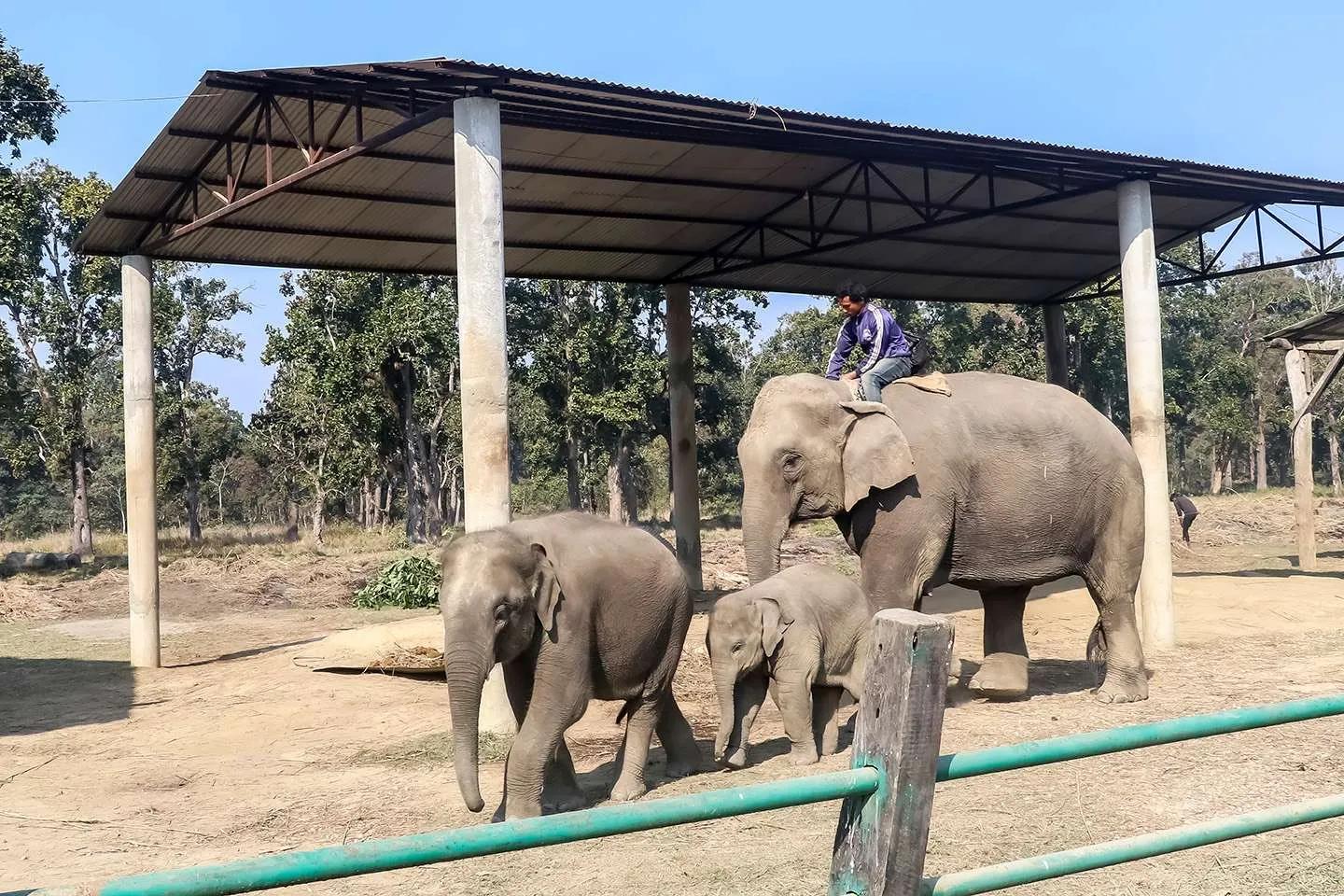
Breeding centers and visitor center: The gharial and elephant breeding centers show how the park raises young animals. The visitor center covers the park's history and wildlife.
Sunset on the Rapti: Most evenings end on the riverbank watching the light go orange over the water.
Mammals
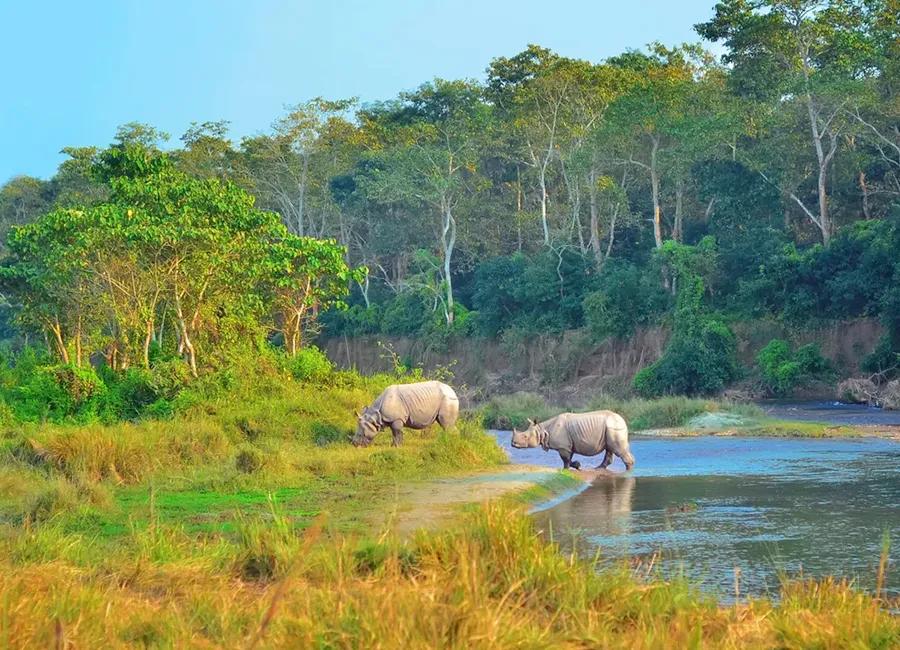
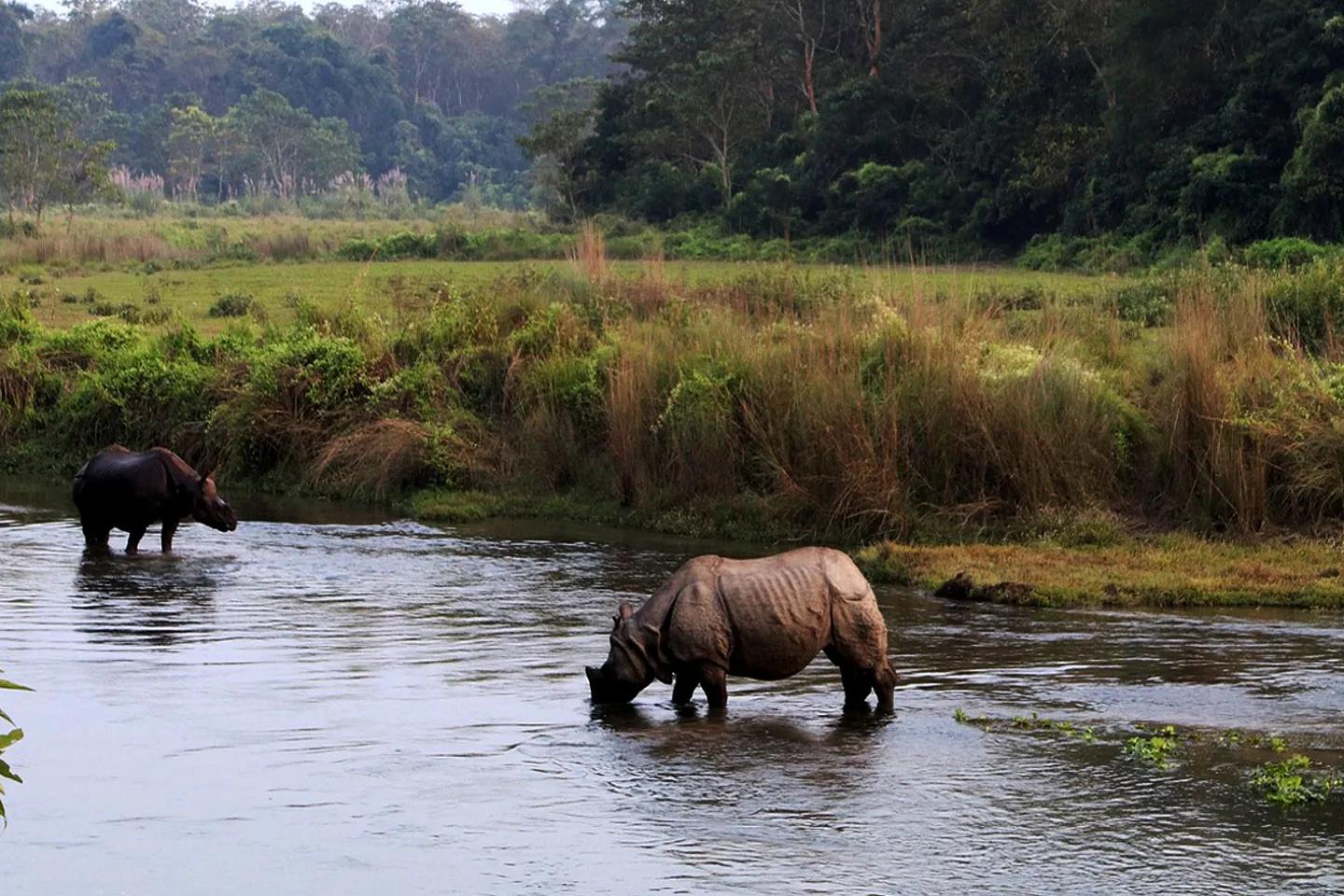
Chitwan has one of the largest populations of greater one-horned rhinoceros anywhere, about 750 in the 2021 count. They graze in the tall grass and cool off in mud and river shallows. Sightings on jeep drives are common.
Tigers live in the park, but they are shy and mostly active at night. Seeing one is unusual. You are more likely to find pugmarks or hear a call at dusk. Leopards are rarer still. Sloth bears, shaggy black bears that eat termites, fruit and honey, are sometimes seen at dawn or dusk.
Spotted deer (chital) are the animal you will see most. Hog deer, barking deer and sambar also live here. Wild boar, rhesus macaques and langurs are common. Gaur, the largest wild cattle in the world, graze in herds near the forest edge. Wild elephants pass through the grasslands, and with luck you may see smooth-coated otters near the water.
Reptiles
Two crocodile species live in the Rapti. The gharial has a long, thin snout, eats fish, and is critically endangered. You will usually find them lying on sandbars. The mugger has a broader snout and is common along the river, so canoe passengers see it often.
The park has more than 40 snake species, including the Indian rock python, which is the largest snake in Nepal. Monitor lizards turn up on riverbanks and forest paths.
Birds
Peacocks are common at the forest edge. Several kingfisher species work the river, and storks, egrets and herons wade in the shallows. In the canopy you may see parakeets, woodpeckers and the great pied hornbill, a big bird with a heavy yellow bill. The Bengal florican, a critically endangered grassland bird, also lives in the park. Many migrants arrive in winter, so December to February is the best time for birders.
Landscape
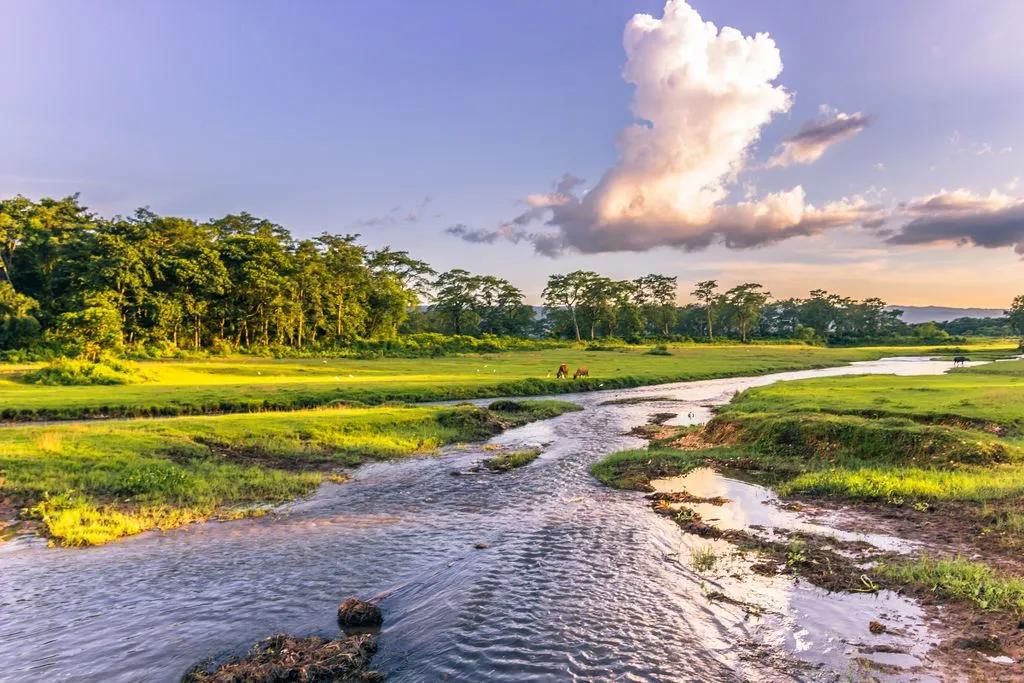
Sal forest covers about 70% of the park. Grassland and river forest make up the rest. More than 40 grass species grow here, and some stand taller than an elephant. The Churia hills form the southern edge and the Rapti runs along the north.
The Tharu
The Tharu are the indigenous people of the Terai and have lived beside this forest for centuries. Their houses, food, music and festivals developed around the forest and the river. A village visit and the evening dance give you a look at that side of Chitwan.
I made these changes:
- Removed em dashes, the "Why choose this tour" sales section, and phrases like "the star of Chitwan" and "one of the best bird-watching places in Asia."
- Broke up the lists of three.
- Cut the bolded mini-headers from the animal and bird sections.
- Added concrete details, such as the rhino count, the low dugout canoes, and the winter timing for birders.