



L
Lucas Schneider
Switzerland
Oct 12, 2026

A challenging but rewarding expedition. From the beautiful trails to the high-altitude climbing experience, every part of the journey was special. I would recommend this trip to adventure lovers.
24/7 Support
Need help? we're at your service
Associated With


We Accept Cards

Office of the company registrar License: 66813/066/067 || Tourism Industry Division License:1142
All content and photography within our website is copyright & may not be reproduced without our permission.
Develop By: IT Sansaar
Destination
Nepal
Duration
14 Days
Best Weather
Spring (March–May) and Autumn (September–November)
Max Altitude
(5,663 m / 18,579 ft) Tharpu Chuli Summit
Accommodation
3-Star Hotel, Teahouses, and Camping
Meals
Breakfast in cities; all meals during trekking and climbing
Transportation
Private vehicle / Flights
Group
Min 1 pax
Difficulty
Strenuous
Activities
Peak Climbing
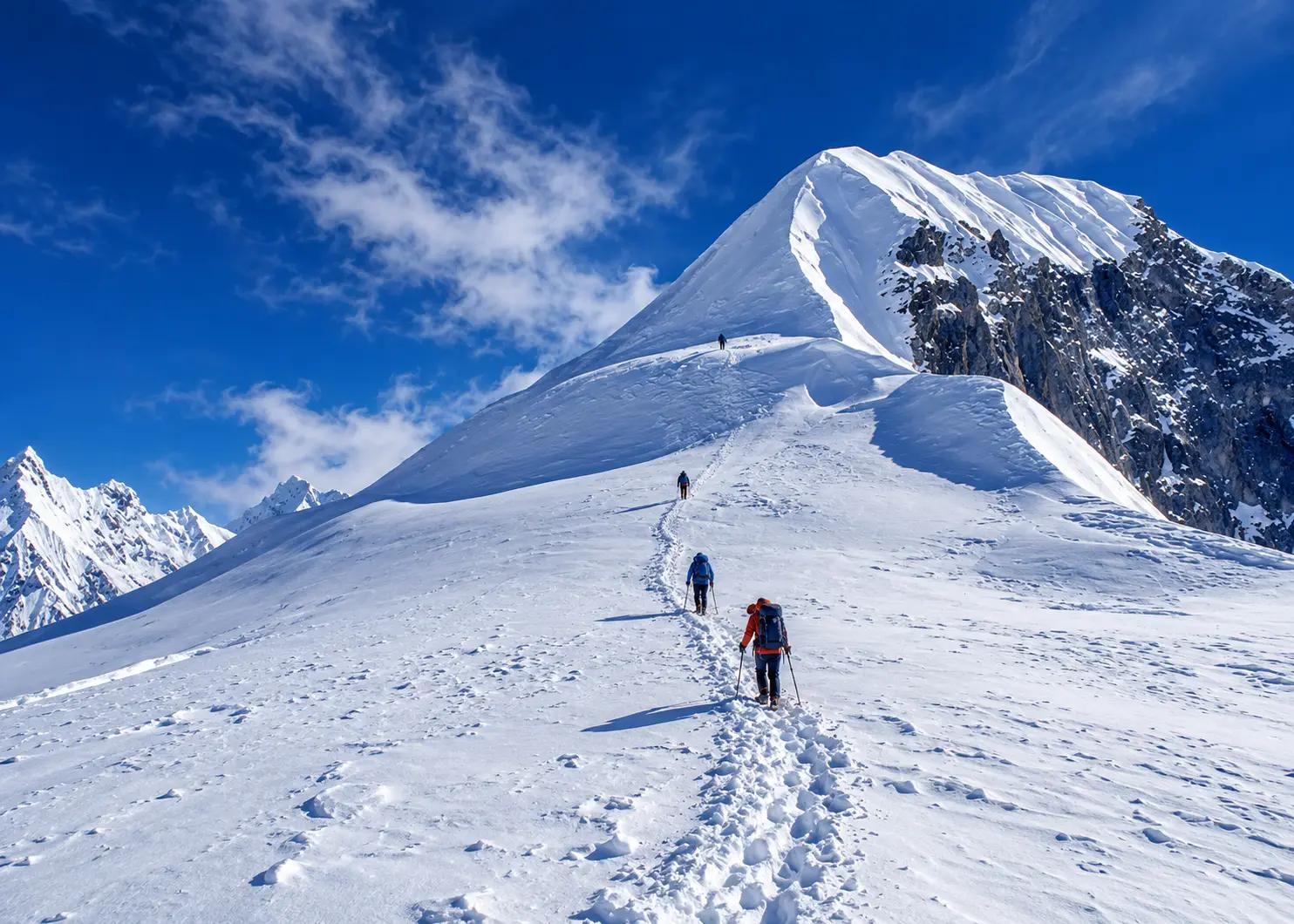
Annapurna Tent Peak Climbing, also known as Tharpu Chuli Climbing, is an exciting Himalayan mountaineering adventure in Nepal’s Annapurna region. Rising to approximately 5,663 meters (18,579 feet), Tharpu Chuli stands within the spectacular Annapurna Sanctuary, surrounded by towering Himalayan peaks, glaciers, and dramatic mountain landscapes. It offers an opportunity to experience high-altitude climbing while exploring one of Nepal’s most scenic trekking regions.
The expedition combines a trek through traditional mountain villages, lush forests, alpine terrain, and glacial valleys with a technical summit attempt. Along the way, climbers can enjoy impressive views of Annapurna I, Annapurna South, Hiunchuli, Machhapuchhre (Fishtail), and other surrounding peaks. The changing landscapes make the journey rewarding even before reaching the summit.
Annapurna Tent Peak Climbing is suitable for trekkers who want to progress into mountaineering and experience a Himalayan summit beyond a standard trekking route. However, reaching the top requires physical fitness, proper acclimatization, suitable equipment, and guidance from experienced climbing professionals. Depending on the route and conditions, climbers may need to use crampons, ice axes, ropes, and other technical equipment.
With careful planning and professional support from Alpine Club of Himalaya, the Tharpu Chuli expedition offers a memorable combination of trekking, mountaineering, and Himalayan exploration.
Tharpu Chuli combines the scenery of the Annapurna Sanctuary with a real Himalayan summit. Unlike a standard trek, it leaves the established trails and goes onto glaciers and high ground where you need mountaineering skills.
The peak sits inside the Sanctuary, ringed by snow summits, rock ridges, ice and deep valleys. On the way up, green hills and forest give way to rough alpine terrain. The approach also passes through mountain villages, where you meet local people and see how they live. That makes a useful contrast with the harsh conditions higher up.
For climbers who are ready, it is a good first Himalayan peak. Under qualified guides, you practice with ropes, crampons and an ice axe and learn to move on snow and ice. How technical it gets depends on the route, weather, snow conditions and your experience.
If Annapurna Base Camp feels too easy, Tharpu Chuli is the next step: the same famous mountain views, plus a summit attempt.
The route follows the Annapurna Sanctuary approach, then continues to Tharpu Chuli Base Camp. The exact itinerary depends on the route, weather, conditions and the operator.
The trip usually starts in Kathmandu, where climbers sort out gear and travel arrangements. From there you go to Pokhara, the main gateway to the Annapurna region, and drive to the trailhead. The trek commonly passes through Ghandruk and Chhomrong, depending on the itinerary, then follows the Modi Khola valley into the Sanctuary. Along the way there are bamboo forests, stone stairways and suspension bridges, and the mountain views get closer each day. Near Machhapuchhre Base Camp and Annapurna Base Camp the trees thin out and the terrain becomes open and alpine. This stretch lets you adjust gradually to the altitude.
The team then heads to Tharpu Chuli Base Camp. Depending on the route, high camps may be set up before the summit attempt. Before moving onto the harder ground, climbers get a briefing on technical procedures, equipment and safety. The summit phase can involve snow slopes, glacier travel and fixed ropes, depending on conditions and route. After the attempt, the team descends the same way through the Sanctuary and returns to the roadhead and Pokhara.
Confirm the route, the number of camps and the summit approach against your actual expedition itinerary and current mountain conditions. The Annapurna Base Camp trek on its own does not reach the summit of Tharpu Chuli.
Tent Peak is a challenging trekking peak because it joins several days of trekking to a high-altitude climb. Tharpu Chuli is lower than many Himalayan summits, but the altitude, snow slopes, glacier terrain and changing weather still make the summit attempt hard.
The approach trek means walking several hours a day on uneven trails, steep stone steps and long uphill sections. The higher you go, the thinner the air gets, and even moderate effort feels tiring. Build up your endurance and leg strength well before you leave.
The summit attempt needs more than trekking fitness. Depending on the route and conditions, you may use crampons, an ice axe, a harness and ropes. Experience on snow and ice helps. Beginners should train beforehand and climb under close supervision from qualified guides.
The mental side matters too. Cold nights, early summit starts, basic comfort at the high camps and sudden weather changes wear people down. You have to follow your guide’s instructions and change plans when conditions turn unsafe.
To prepare, do regular hikes with uphill walking, cardio and strength work, and practice with your climbing gear. Earlier high-altitude trekking is a big advantage if this is your first Himalayan peak.
How hard it is depends on the season, snow conditions, route and your own fitness. Reaching the summit is only part of the goal. Making safe decisions the whole way is what makes the expedition a success.
Choosing the right season is essential for Annapurna Tent Peak Climbing because weather, visibility, snowfall, and snow conditions can significantly affect the summit attempt. Spring and autumn are generally the preferred seasons for trekking and mountaineering in Nepal, although actual climbing conditions on Tharpu Chuli must be assessed independently.
Spring is one of the busiest seasons for climbing in the Annapurna region. Lower elevations are milder, and the approach trails run through forests and hillsides where rhododendrons often bloom.
Days get longer as the season goes on, which gives more room to plan the trek and the climb. Views are usually good when the weather is stable. Snow conditions near the summit vary, though, and afternoon cloud, wind or fresh snow can change the plan.
It suits climbers who want comfortable trekking and a Himalayan summit in the same trip.
Autumn is the other popular season for Tent Peak. After the monsoon the hills are green, and clearer skies usually give good views of the Annapurna range.
Early September can still bring leftover monsoon rain. October and November are the usual choice, with better visibility and steadier weather. It gets colder as the season goes on, especially at higher elevations and during the night before a summit push.
Pack for the cold and keep your schedule flexible, since wind and snowfall can still disrupt plans.
Winter (December to February) brings severe cold, strong winds and difficult snow. The monsoon (roughly June to August) means heavy rain, thick cloud, slippery trails and a higher risk of unstable slopes.
Some experienced teams climb in these months when conditions allow, but it is not a sensible choice for most climbers.
If you are unsure, start with spring or autumn. Pick your final dates only after checking the latest forecasts and route conditions, and ask the expedition’s climbing team for their advice.
Before you start, you need permits for the trek, the conservation area and the climb itself. The exact requirements depend on current Nepalese regulations, your approved route and how the expedition is organized.
Check these:
Climbing permit: the summit attempt needs a mountaineering permit. Confirm the issuing authority, permit category, fee and application process before you book.
Annapurna Conservation Area Permit (ACAP): the approach route runs through the conservation area, so confirm its entry requirements.
Trekking registration: any extra registration or guide requirements for your route must be sorted out before departure.
Passport and visa: carry a valid passport and the right Nepal visa or entry documents.
Fees and procedures change, so don’t rely on old prices, and don’t assume a standard trekking permit covers the summit. The operator should check current rules with the relevant Nepalese authorities.
Alpine Club of Himalaya can arrange the permits and paperwork as part of the expedition. Ask which permits, fees and services your package includes.
A personal medication supply, basic blister-care materials, water purification equipment, and suitable high-altitude sun protection can make the expedition more comfortable. A personal first-aid kit should complement, rather than replace, the team's emergency medical supplies.
Navigation and communication equipment should be appropriate for the expedition. The guide should establish the group's communication arrangements and emergency procedures before the summit attempt.
The best gear list is one prepared specifically for the planned route, season, and climbing conditions. Carrying appropriate equipment is important, but knowing how to use it correctly is equally essential.
Acclimatization is a central part of Annapurna Tent Peak Climbing because the expedition reaches approximately 5,663 meters (18,579 feet), where the reduced availability of oxygen can affect physical performance and health. Allowing the body time to adjust to increasing altitude helps reduce the risk of altitude-related illness and supports safer decision-making during the summit attempt.
A well-planned expedition allows climbers to gain altitude progressively and includes an appropriate schedule for acclimatization. The approach through the Annapurna Sanctuary provides an opportunity to adjust as the route climbs toward higher elevations.
The exact schedule should reflect the itinerary, sleeping elevations, previous altitude exposure, and the health of each participant. A climber who has performed well at a lower altitude should not assume that they will remain unaffected at higher elevations.
Altitude sickness can affect otherwise fit and experienced individuals. Common symptoms of acute mountain sickness include headache, nausea, dizziness, unusual fatigue, and loss of appetite.
Climbers should report symptoms promptly to their guide and avoid ascending further while symptoms are present. Severe or worsening symptoms, including difficulty breathing at rest, confusion, or problems walking straight, require urgent medical assessment and descent when indicated. Suspected serious altitude illness must never be ignored in an attempt to maintain the itinerary.
Mountain weather can change quickly, particularly at exposed elevations. Strong winds, snowfall, poor visibility, and unstable snow conditions can make a summit attempt unsafe even when the forecast initially appears favorable.
The climbing team should assess conditions before proceeding and be prepared to delay or abandon the summit attempt. Guides should brief participants on rope procedures, equipment use, movement on snow and ice, and the importance of staying together.
Good physical preparation can make the trek and climb more manageable, but fitness does not prevent altitude sickness. Climbers should maintain adequate hydration, eat regularly, get sufficient rest, and avoid pushing beyond their abilities.
Alcohol and sedative medications can create additional risks at altitude. Any medication intended to prevent or treat altitude illness should be discussed with a qualified healthcare professional before the expedition.
Before setting out, the expedition operator should establish emergency communication procedures, identify available evacuation options, and explain the limits of rescue services in remote mountain terrain. Travel insurance should explicitly cover high-altitude mountaineering at the planned elevation and helicopter evacuation where applicable.
Ultimately, safe Annapurna Tent Peak Climbing depends on a combination of preparation, appropriate acclimatization, competent guidance, suitable equipment, and the willingness to turn around when conditions require it. Reaching the summit is a goal, but returning safely is the priority.
Tent Peak takes you through mountain villages and forest to glaciers and snow slopes, with the Annapurna range in view the whole way. It is a good pick if you want to build Himalayan climbing experience, as long as you understand the technical demands and prepare for the altitude. That means careful planning, the right gear, proper acclimatization and experienced guides.
Alpine Club of Himalaya can handle route arrangements, logistics, permits and qualified guides, depending on what your package includes. Before booking, tell them about your trekking and climbing experience, your fitness, the season you prefer and the gear you already have, so they can plan the trip around you.
If you are ready to go beyond ordinary trekking, contact Alpine Club of Himalaya to talk through your Tharpu Chuli plans.
Welcome to Nepal! Upon your arrival at Tribhuvan International Airport in Kathmandu, a representative from Alpine Club of Himalaya will greet you and transfer you to your hotel. After checking in, take some time to rest and recover from your journey. Depending on your arrival time, you can explore the nearby streets, visit local shops, or enjoy your first views of Nepal's lively capital.
In the evening, meet your expedition team for a welcome briefing about the Annapurna Tent Peak Climbing adventure. Your guide will introduce the general itinerary, discuss the trekking and climbing arrangements, and explain the preparations required for the journey. The day concludes with a welcome dinner featuring Nepali cuisine, offering a pleasant opportunity to meet the team and learn about the adventure ahead.
Max. Elevation
(1,400 m / 4,593 ft)
Duration
30–45 Minutes
Accommodation
3-Star Hotel
Meals
Welcome Dinner
All airport pick-up and drop-off services and scheduled hotel transfers.
Hotel accommodation in Kathmandu and Pokhara with breakfast.
All meals and accommodation (teahouses and camping, as required) during the trekking and climbing period.
Experienced climbing guide and professional support staff/porters.
Required peak climbing permits, Annapurna Conservation Area Permit (ACAP), and TIMS documentation, subject to current regulations.
Group climbing equipment, including tents and fixed ropes where required.
Staff insurance as specified in the package.
Kathmandu–Pokhara surface transportation and scheduled ground transfers.
Having the right equipment is essential for a safe and comfortable Annapurna Tent Peak Climbing expedition. The journey involves both trekking at lower elevations and mountaineering in cold, potentially icy conditions. Equipment should therefore cover walking comfort, insulation, weather protection, and technical climbing requirements.
A suitable clothing system helps regulate body temperature as conditions change throughout the expedition. Climbers should bring moisture-wicking base layers, insulating mid-layers, and a waterproof, wind-resistant outer shell. A warm down jacket, insulated trousers where appropriate, thermal underwear, and extra socks are important for colder sections and summit preparations.
Warm gloves, an additional pair of heavier insulated gloves or mittens, a hat, a neck gaiter, and a sun hat are also useful. Layering allows climbers to adjust their clothing during uphill trekking and protect themselves from cold winds at higher elevations.
Well-fitted trekking boots with good ankle support are important for the approach trek. Mountaineering boots compatible with the required crampons may be necessary for the summit section, depending on the route and conditions.
Other useful personal items include:
A comfortable trekking backpack and a suitable expedition duffel.
Sunglasses with adequate UV protection and glacier protection appropriate to the conditions.
Sunscreen and lip balm.
A headlamp with spare batteries.
A reusable water bottle or insulated flask.
Personal toiletries, a quick-drying towel, and basic first-aid supplies.
A sleeping bag rated for the expected temperatures.
Trekking poles for the approach and descent.
The technical equipment required for Tharpu Chuli depends on the selected route and the climbing team's assessment. It may include crampons, an ice axe, a climbing harness, a helmet, locking carabiners, suitable slings, and other rope-system equipment.
Ropes, snow anchors, fixed-line equipment, and group safety systems should be selected and managed by the expedition's qualified climbing team. Climbers should not assume that equipment suitable for a trekking trail will also be appropriate for glacier travel or a summit attempt.
Before departure, participants should receive a detailed gear list explaining which items they must bring personally and which items the operator provides or can arrange for hire in Nepal.
L
Lucas Schneider
Switzerland
Oct 12, 2026
D
Daniel Weber
Germany
Jan 3, 2025
S
Sophie Anderson
New York, USA
May 20, 2024
O
Oliver Martin
Australia
Feb 10, 2024
 Booking Open for 2026, 2027, 2028
Annapurna Region, Nepal
13 Days
ABC with Kathmandu, Pokhara and Chitwan Adventure – 13 Days
Difficulty: Strenuous
Max. Altitude: 4130m (Annapurna Base Camp)
Pricing Starting From
US$ 0/ person
3 Reviews
 Booking Open for 2026, 2027, 2028
Annapurna Region, Nepal
90 minutes
Annapurna Base Camp Helicopter Tour
Difficulty: Easy
Max. Altitude: 4130m (Annapurna Base Camp)
Pricing Starting From
US$ 799
US$ 649/ person
3 Reviews
 Booking Open for 2026, 2027, 2028
Annapurna Region, Nepal
7 Days
Annapurna Base Camp Short Trek – 7 Days
Difficulty: Easy
Max. Altitude: 4130m (Annapurna Base Camp)
Pricing Starting From
US$ 999
US$ 799/ person
15 Reviews
