D
David Keller
Switzerland
Feb 1, 2026

The 22-day schedule allowed proper acclimatization, which made a huge difference. Amphu Lapcha Pass was challenging but incredibly rewarding. This trip pushed my limits in the best possible way.
Destination
Nepal
Duration
22
Best Weather
March, April, May, September, October & November
Accommodation
Hotel, Teahouse, and Camp
Meals
Breakfast, Lunch, Dinner
Transportation
Private vehicle / Flights
Group
Min. 1 Pax
Difficulty
Strenuous
Activities
Peak Climbing
The Mera Peak & Island Peak via Amphu Lapcha Pass – 22 Days expedition is one of Nepal’s most complete and challenging Himalayan climbing journeys, combining two iconic 6,000-meter summits with a dramatic high-altitude traverse across one of the country’s most technical passes. This carefully designed adventure links the remote Hinku Valley with the classic Khumbu region, offering climbers an immersive experience that blends glacier travel, alpine climbing skills, cultural encounters, and breathtaking Himalayan panoramas. Organized by the Alpine Club of Himalaya, this expedition is ideal for experienced trekkers and aspiring mountaineers looking to elevate their skills while standing atop two of Nepal’s most celebrated trekking peaks.
The journey begins with a scenic mountain flight to Lukla, the gateway to the Everest region, before diverting from the busy Everest Base Camp trail into the quiet and less-traveled Hinku Valley. This remote approach allows for gradual acclimatization while passing through traditional Sherpa villages, rhododendron forests, alpine meadows, and pristine glacial rivers. As the trail ascends toward Mera Peak, climbers are surrounded by dramatic Himalayan landscapes, including views of Mera Peak (6,476m), Nepal’s highest trekking peak. A dedicated pre-climb training session in Khare ensures participants are confident in using crampons, ice axes, harnesses, and fixed ropes before ascending to High Camp and making the summit push.
Reaching the summit of Mera Peak is a defining moment of the expedition. From the top, climbers are rewarded with one of the finest panoramas in the Himalayas, featuring five of the world’s 8,000-meter giants: Mount Everest, Lhotse, Makalu, Cho Oyu, and Kangchenjunga. Unlike many trekking peaks, Mera offers a true high-altitude mountaineering experience while remaining accessible to well-prepared climbers.
The adventure continues into the wild Hongu Valley, leading toward the formidable Amphu Lapcha Pass. This pass is one of Nepal’s most technical high-altitude crossings, requiring careful navigation across ice shelves and steep descents using fixed ropes. Crossing Amphu Lapcha is both physically demanding and immensely rewarding, offering dramatic views into the Imja Valley and marking the transition from remote wilderness into the Everest region.
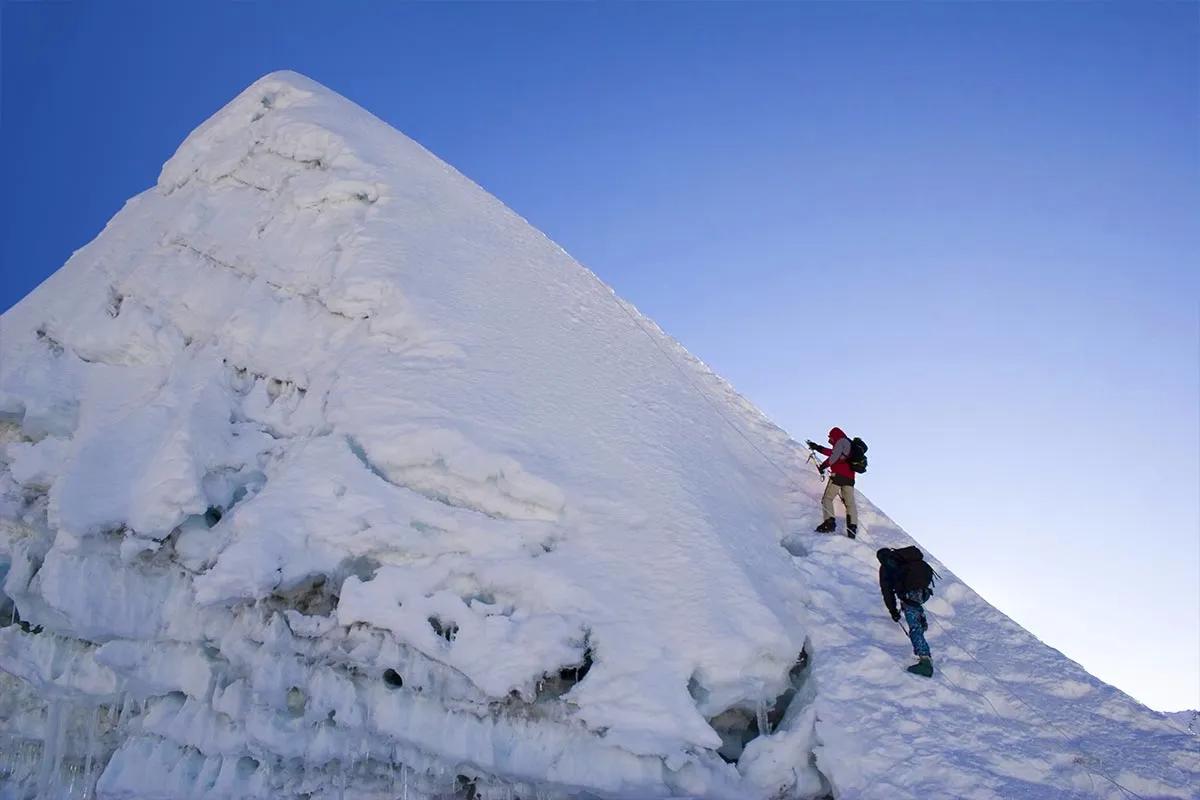
The expedition’s second major objective is Island Peak (Imja Tse), a classic climbing peak known for its technical headwall and narrow summit ridge. Located near the base of Lhotse’s towering south face, Island Peak provides a thrilling climb that includes rocky scrambles, glacier crossings, and fixed rope ascents. From its summit, climbers enjoy unmatched views of Ama Dablam and the surrounding Khumbu giants, making it a perfect complement to Mera Peak.
Beyond the summits, this expedition is also rich in cultural and scenic diversity. Trekkers pass through traditional Sherpa settlements such as Pangboche and Namche Bazaar, visit ancient monasteries, and experience the unique lifestyle of high-altitude Himalayan communities. The gradual descent back to Lukla provides time to reflect on the achievements of summiting two 6,000-meter peaks and successfully crossing one of Nepal’s most demanding passes.
This 22-day Mera Peak and Island Peak climbing expedition via Amphu Lapcha Pass is designed for climbers seeking a comprehensive Himalayan mountaineering experience. It combines physical challenge, technical skill development, remote wilderness trekking, and iconic summit success in a single, well-paced itinerary. With expert guidance, proper acclimatization, and full logistical support from the Alpine Club of Himalaya, this expedition offers a safe, rewarding, and truly unforgettable journey into the heart of the Nepal Himalayas.
The best time to climb Mera Peak and Island Peak via the challenging Amphu Lapcha Pass is during Nepal’s two primary climbing seasons: spring (March to May) and autumn (September to November). These seasons provide the most stable weather conditions, clearer skies, and safer climbing environments in the high Himalayas.
During spring, temperatures gradually rise, and the days are longer, offering favorable conditions for glacier travel and summit attempts. Snow conditions are generally more stable, and visibility is excellent, providing clear panoramic views of Himalayan giants such as Mount Everest and Makalu. Spring is particularly popular among climbers, as it coincides with the Everest climbing season, meaning routes are well-prepared and support logistics are strong.
In autumn, following the monsoon season, the air becomes crisp and exceptionally clear. The landscapes are fresh, and mountain views are often at their best. Temperatures are colder than in spring, especially at higher elevations, but the risk of heavy snowfall is generally lower. This season is highly recommended for climbers seeking stable weather and excellent summit visibility.
Winter (December to February) brings extremely cold temperatures and heavy snowfall, especially around Amphu Lapcha Pass, making the technical sections more dangerous. The monsoon season (June to August) is not suitable due to heavy rainfall, poor visibility, flight delays to Lukla, and unstable glacier conditions.
For anyone planning a Mera Peak and Island Peak climbing expedition via Amphu Lapcha, choosing spring or autumn significantly increases summit success rates and overall safety while ensuring the best possible Himalayan experience.
The Mera Peak and Island Peak expedition via Amphu Lapcha Pass is considered a challenging to strenuous high-altitude mountaineering adventure. It is more demanding than a standard trekking peak climb because it combines two 6,000-meter summits with a technical alpine pass crossing.
Mera Peak is often categorized as a trekking peak; however, its altitude of 6,476 meters makes it physically demanding. The climb primarily involves glacier walking with crampons, but the thin air at extreme altitude significantly increases the challenge.
Island Peak adds a higher level of technical difficulty. Climbers must navigate rocky sections, crevassed glaciers, and ascend a steep fixed-rope headwall before reaching a narrow summit ridge. This requires confidence in using mountaineering equipment.
The most technical section of the expedition is crossing Amphu Lapcha Pass, which involves steep ice slopes, possible crevasses, fixed rope sections, and rappelling. This pass demands good balance, rope-handling skills, and mental resilience.
Physical Fitness and Requirements
Climbing Mera Peak and Island Peak via Amphu Lapcha Pass requires excellent physical fitness, strong endurance, and mental determination. This 22-day expedition involves sustained trekking at high altitudes and multiple technical climbing sections.
Participants should have:
Training should begin at least 3–4 months before the expedition and include:
While advanced mountaineering experience is not mandatory, basic knowledge of the following is highly recommended:
Most expeditions include a pre-climb training session to refresh and refine these skills before summit attempts.
Mental Preparedness
Mental strength is equally important. Climbers must be prepared for:
· Cold temperatures and unpredictable weather
· Basic teahouse and tented camp conditions
· Long summit days starting before dawn
· Physical fatigue at high altitude
A positive mindset, flexibility, and teamwork are crucial for a successful Mera Peak and Island Peak climbing expedition.
This expedition is ideal for fit adventurers aiming to gain serious Himalayan mountaineering experience. With proper preparation, guided training, and a structured acclimatization schedule, climbers can safely attempt two iconic trekking peaks and cross one of Nepal’s most technical high-altitude passes in a single, unforgettable journey.
Proper acclimatization is the foundation of a safe and successful climb of Mera Peak and Island Peak via the demanding Amphu Lapcha Pass. Since this expedition reaches elevations above 6,000 meters and includes multiple high-altitude camps, a gradual ascent profile and well-planned acclimatization schedule are essential to minimize the risk of altitude-related illnesses and to maximize summit success.
The itinerary is carefully designed to allow the body to adapt naturally to decreasing oxygen levels. The route begins with steady trekking through the Hinku Valley, allowing gradual elevation gain before reaching Khare (5,045m). A dedicated acclimatization and pre-climb training day is scheduled in Khare, where climbers rest, hydrate, and practice technical skills. The climb to Mera High Camp and summit push follows proper altitude progression principles, including “climb high, return lower” techniques. After summiting Mera Peak, the descent into the Hongu Valley helps recovery before ascending again toward Amphu Lapcha Pass and Island Peak. This structured ascent and descent pattern significantly improves adaptation and reduces physical stress.
Hydration, nutrition, and pacing play a crucial role in acclimatization. Climbers are advised to drink 3–4 liters of water daily, maintain a balanced high-calorie diet, and walk at a slow, consistent pace. Experienced guides continuously monitor oxygen saturation levels and watch for symptoms of Acute Mountain Sickness (AMS), ensuring timely response if any issues arise. A buffer day is also included in the itinerary to accommodate weather delays or additional acclimatization if needed.
Acclimatization and Participation Requirements
· Previous high-altitude trekking experience (preferably above 4,500–5,000 meters)
· Strong cardiovascular endurance and physical fitness
· Ability to trek 6–8 hours per day for consecutive days
· Basic knowledge of mountaineering equipment (crampons, harness, ascender, rappel device)
· Mental resilience to handle cold temperatures, basic mountain lodges, and tented camps
· Willingness to follow guide instructions regarding pace, hydration, and safety
Climbers who have previously completed treks such as Everest Base Camp or similar high-altitude adventures will adapt more easily to the demands of this expedition. While technical mountaineering mastery is not mandatory, familiarity with snow and ice travel significantly enhances safety and confidence.
In summary, successful acclimatization on the Mera Peak and Island Peak expedition depends on gradual elevation gain, proper rest days, physical preparation, and disciplined adherence to safety protocols. With the right preparation and a carefully structured itinerary, climbers can safely attempt two iconic 6,000-meter Himalayan peaks and cross one of Nepal’s most technical alpine passes.
Climbing Mera Peak and Island Peak via the challenging Amphu Lapcha Pass involves prolonged exposure to high altitude above 5,000 and 6,000 meters. At these elevations, the reduced oxygen level can lead to altitude-related illnesses if proper acclimatization and safety measures are not followed. Understanding altitude sickness and how it is managed is essential for anyone joining this expedition.
Altitude Sickness (AMS) – What You Need to Know
Altitude sickness, also known as Acute Mountain Sickness (AMS), can occur when ascending too quickly to high elevations without adequate acclimatization. Common symptoms include:
· Headache
· Nausea or loss of appetite
· Dizziness
· Fatigue or weakness
· Difficulty sleeping
· Shortness of breath
In more severe cases, AMS can develop into High Altitude Pulmonary Edema (HAPE) or High Altitude Cerebral Edema (HACE), which are serious medical emergencies. However, with a properly designed itinerary and professional monitoring, the risk can be significantly minimized.
This expedition is carefully structured with gradual elevation gain, rest days, and acclimatization hikes to allow the body to adapt naturally. The itinerary includes a dedicated acclimatization and training day at Khare before ascending to Mera High Camp, as well as a descent into the Hongu Valley after summiting Mera Peak, which helps the body recover before attempting Amphu Lapcha Pass and Island Peak.
Hydration, slow pacing, and continuous health monitoring are key strategies in preventing altitude sickness. Climbers are strongly advised to maintain proper fluid intake, eat balanced meals, and immediately report any symptoms to the guide team.
Professional expedition operators such as the Alpine Club of Himalaya prioritize safety and preparedness throughout the Mera Peak and Island Peak climbing expedition. Comprehensive safety protocols are in place to ensure climbers are supported at every stage of the journey.
Company Safety Preparations
· Carefully designed itinerary with gradual altitude gain
· Experienced, government-licensed climbing guides and Sherpa support team
· Pre-climb technical training session before summit attempts
· Regular monitoring of oxygen saturation levels using pulse oximeters
· Immediate descent protocol if symptoms of AMS worsen
· Well-equipped first aid medical kit carried by guides
· Access to emergency evacuation coordination if required
· Buffer day included in the itinerary for weather or acclimatization needs
The company also conducts detailed briefings in Kathmandu before departure, covering altitude awareness, hydration practices, pacing strategy, and emergency procedures. During summit days, the guide-to-climber ratio is carefully maintained to ensure individual attention and safety on technical sections such as fixed ropes and glacier crossings.
Crossing Amphu Lapcha Pass and climbing two 6,000-meter peaks requires disciplined preparation, experienced leadership, and strict safety management. With proper acclimatization planning and professional expedition support, the risks associated with altitude sickness can be effectively managed, allowing climbers to focus on achieving their Himalayan mountaineering goals safely and confidently.
The Mera Peak and Island Peak via Amphu Lapcha Pass expedition is one of the most complete and rewarding high-altitude adventures in Nepal. Unlike single-peak programs, this 22-day journey combines two iconic 6,000-meter summits—Mera Peak and Island Peak—with the technical crossing of Amphu Lapcha Pass, creating a true Himalayan mountaineering experience rather than a standard trekking peak climb.
This climb offers exceptional value for experienced trekkers who want to step into serious alpine terrain. Mera Peak provides one of the finest summit panoramas in Nepal, with breathtaking views of five 8,000-meter giants including Mount Everest and Makalu. Island Peak adds a more technical challenge with glacier travel, fixed ropes, and a steep summit headwall. Meanwhile, Amphu Lapcha Pass connects the remote Hinku Valley with the classic Khumbu region, offering a dramatic and less-traveled high-altitude traverse.
Beyond the summits, this expedition stands out because of its diversity. Climbers experience remote wilderness, pristine glacial lakes, alpine valleys, traditional Sherpa settlements, and the vibrant mountain hub of Namche Bazaar—all within a single itinerary. The gradual acclimatization profile and structured training session make it suitable for physically strong adventurers looking to build their mountaineering skills in a real Himalayan environment.
Choosing this climb means choosing a challenging, technical, and deeply rewarding expedition that pushes physical limits while delivering unmatched mountain scenery and cultural immersion.
Comprehensive Guiding Services and Equipment
A successful ascent of Mera Peak and Island Peak requires more than physical fitness—it demands expert leadership, proper logistics, and reliable technical equipment. Professional operators such as the Alpine Club of Himalaya provide complete expedition support to ensure safety, efficiency, and a higher summit success rate.
From arrival in Kathmandu to final departure, the guiding service includes detailed expedition briefings, route planning, weather monitoring, and careful acclimatization management. Experienced, government-licensed climbing guides and Sherpa support staff accompany climbers throughout the journey. The guide team conducts a dedicated pre-climb training session covering the use of crampons, ice axes, harnesses, ascenders, and fixed ropes to prepare participants for glacier crossings and steep summit sections.
Comprehensive logistical support typically includes:
· All required climbing permits and national park fees
· Domestic flights to and from Lukla
· Teahouse accommodation during trekking sections
· Fully equipped tented camps at high altitudes
· High-altitude food preparation and hot meals
· Fixed rope setup on technical sections when required
· Group climbing equipment such as ropes, snow bars, and anchors
· First aid kits and emergency oxygen support (where applicable)
High-quality mountaineering infrastructure is especially critical during the Amphu Lapcha Pass crossing and Island Peak headwall ascent, where safety systems must be professionally managed.
With expert guides, structured acclimatization, technical training, and full logistical coordination, climbers can focus on performance and safety rather than operational concerns. Comprehensive guiding services and proper equipment preparation significantly enhance both safety and overall expedition success, making this climb a professionally supported and well-managed Himalayan mountaineering experience.
Safety is the highest priority during the Mera Peak & Island Peak via Amphu Lapcha Pass expedition. This 22-day Himalayan climbing program involves summiting Mera Peak, climbing Island Peak, and crossing the technical Amphu Lapcha Pass, making professional risk management essential.
The expedition follows a carefully structured itinerary with gradual altitude gain, acclimatization days, and a buffer day to handle weather delays. Guides continuously monitor climbers’ physical condition, oxygen saturation levels, and weather forecasts. Strict turnaround times are enforced on summit days to minimize exposure to high-altitude risks.
Emergency response protocols include immediate descent if altitude-related symptoms worsen, coordination for helicopter evacuation when necessary, and reliable communication systems between camps. With structured acclimatization, experienced leadership, and proactive decision-making, the expedition maintains a strong safety framework from start to finish.
A successful Mera Peak and Island Peak expedition depends on a well-organized and experienced support team. Professional operators such as the Alpine Club of Himalaya provide a highly skilled expedition crew to ensure smooth operations and maximum safety.
· Expedition Leader / Guide
Oversees overall expedition management, route decisions, acclimatization strategy, and safety protocols throughout the journey.
· High-Altitude Sherpa Climbers
Assist with rope fixing, glacier navigation, camp setup at high altitudes, and load carrying. Each climber is typically supported by experienced Sherpas during technical sections.
· Base Camp Manager / Sirdar
Coordinates supplies, camp logistics, and communication between high camps and the support team.
· Cook and Kitchen Staff
Prepare nutritious, high-calorie meals to maintain strength, recovery, and proper acclimatization.
· Porters and Support Crew
Carry expedition gear and supplies during the approach trek, allowing climbers to conserve energy for summit pushes.
· Medical Officer / First-Aid Personnel (on larger groups)
Monitors altitude-related health issues and provides emergency care if required.
· Kathmandu Operations Team
Manages permits, domestic flights, hotel arrangements, and emergency coordination from the company office.
This structured team approach ensures climbers are supported both on the mountain and behind the scenes.
Efficient transportation is a cornerstone of this expedition. The journey begins with a scenic mountain flight from Kathmandu to Lukla, which offers breathtaking aerial views of the Nepal Himalayas and provides direct access to the Everest region. This flight is not only a time-saver but also a spectacular introduction to the towering Himalayan peaks that will dominate the expedition.
From Lukla, the trekking route first heads toward the remote Hinku Valley, offering solitude and pristine alpine landscapes before connecting with the Khumbu region near Namche Bazaar. The multi-day trek passes through lush rhododendron and pine forests, traditional Sherpa villages, and glacier-fed rivers, gradually ascending to the high camps for Mera Peak and Island Peak. This well-planned route allows climbers to acclimatize effectively while enjoying some of the most spectacular scenery in Nepal.
Porters and local support are employed throughout the expedition. Porters carry heavy group equipment and supplies, while climbers carry only personal daypacks. This division of load ensures that climbers maintain energy for long trekking days and summit pushes. In lower trekking sections, mules may also be used to transport kitchen equipment, fuel, and base camp supplies, providing additional logistical efficiency.
Nutrition and energy management are critical for climbers attempting two 6,000-meter peaks and crossing the technical Amphu Lapcha Pass. The expedition provides full-board meals—breakfast, lunch, and dinner—throughout the trekking and climbing periods, except where specified in the itinerary.
Along the trekking sections, teahouses serve a variety of nutritious Nepalese and continental meals, including rice dishes, noodles, soups, vegetables, eggs, and fresh bakery items in larger villages. At higher camps, professional expedition cooks prepare high-calorie, energy-rich meals designed specifically to maintain endurance, aid acclimatization, and promote recovery in harsh alpine conditions.
During summit attempts and technical climbing rotations, climbers are supplied with lightweight energy snacks, hot drinks, and energy bars to sustain strength and focus. Maintaining proper nutrition throughout the expedition is essential to cope with extreme temperatures, long climbing days, and high-altitude physical demands.
Safe drinking water is carefully managed during the expedition. Water is boiled, filtered, or treated with purification tablets before consumption, ensuring it is safe and hygienic at all elevations.
At higher camps, natural water sources are limited or frozen, so additional water is melted from snow and treated accordingly. Climbers are advised to maintain hydration levels of 3–4 liters per day, which is essential for preventing dehydration and reducing the risk of altitude sickness. Guides monitor water intake and overall health to ensure climbers remain safe and fully functional at high altitude.
Accommodation is organized to balance comfort, safety, and acclimatization needs.
Kathmandu: Before and after the expedition, climbers stay in comfortable hotels on a bed-and-breakfast basis, providing a restful and convenient base for preparing gear, attending briefings, and managing last-minute logistics.
Trekking Route: Along the approach trail, teahouses and lodges provide clean twin-sharing rooms, often with shared bathrooms. These accommodations allow climbers to rest adequately while experiencing the culture and hospitality of local Sherpa communities.
High Camps: At Mera High Camp, Amphu Lapcha Base Camp, and Island Peak Base Camp, fully equipped expedition tents are provided, including insulated sleeping mats, dining tents, and kitchen tents. These camps are professionally managed to provide safe shelter against the harsh alpine environment, including cold nights, wind, and occasional snow. Proper rest at high camps is critical for summit success and safe acclimatization.
The expedition team consists of highly skilled Himalayan guides, high-altitude Sherpas, porters, and, where terrain allows, pack animals. Certified guides lead all technical climbing sections, including glacier travel, fixed rope ascents, and summit pushes, ensuring safety, route management, and real-time decision-making.
High-altitude Sherpas provide invaluable support by setting up camps, carrying loads during summit rotations, and assisting climbers with rope systems and technical maneuvers. Porters carry personal and group equipment along trekking sections, and mules transport heavier loads where the terrain permits.
This coordinated support system allows climbers to conserve energy for demanding high-altitude tasks, focus on technical climbing, and maintain pace with the expedition schedule while maximizing safety and efficiency.
Connectivity in the Everest and Hinku regions is limited due to remote and high-altitude locations.
Climbers are advised to bring high-capacity power banks and spare batteries for cameras, GPS devices, and communication tools. Limited connectivity ensures full immersion in the Himalayan environment while maintaining access to safety communication systems.
Climbing Mera Peak and Island Peak requires multiple official permits, which are professionally handled by the Alpine Club of Himalaya. Required permits include:
In addition, comprehensive travel and medical insurance covering high-altitude rescue, helicopter evacuation, and medical emergencies is mandatory for all participants.
By managing all documentation, logistics, and official processes, the company ensures compliance with government regulations and conservation policies. These permits not only provide safe and legal access to the mountains but also support environmental protection, local communities, and sustainable Himalayan tourism.
The flight from Kathmandu to Lukla is the most common and convenient way to begin the Mera Peak and Island Peak via Amphu Lapcha Pass expedition. This short, 30- to 40-minute mountain flight offers stunning aerial views of the Himalayas, including peaks like Everest, Lhotse, and Nuptse, and provides direct access to the Everest region. The Lukla Tenzing-Hillary Airport is considered one of the most thrilling and scenic airstrips in the world, making it both an adventure and a practical way to save time compared to trekking from the lowlands. Most climbers use this route because it allows them to start trekking directly in the high-altitude terrain, preserving energy and aiding acclimatization.
For climbers who are unable to take the Lukla flight due to weather, cost, or personal preference, there are alternative approaches to reach the trekking trail:
While alternative routes offer flexibility and scenic experiences, the Kathmandu-to-Lukla flight remains the most time-efficient and widely used option for climbers attempting Mera Peak, Island Peak, and Amphu Lapcha Pass. The Alpine Club of Himalaya can arrange flights, helicopters, or alternative trekking routes depending on climber preferences, weather conditions, and schedule, ensuring a safe and efficient start to the expedition.
Travel insurance is an essential requirement for anyone attempting the Mera Peak and Island Peak via Amphu Lapcha Pass expedition. High-altitude mountaineering involves inherent risks, including altitude sickness, extreme weather, technical climbing, and the possibility of emergency evacuation. Comprehensive travel insurance protects climbers against medical emergencies, helicopter rescues, trip cancellations, and equipment loss. Operators like the Alpine Club of Himalaya ensure that participants have proper insurance documentation before departure and provide guidance on selecting policies that cover high-altitude climbing, allowing climbers to focus on the expedition with confidence and peace of mind.
A valid passport and Nepalese visa are mandatory for the expedition. Passports must be valid for at least six months beyond the planned departure date and contain at least one blank visa page. Most foreign nationals can obtain a tourist visa on arrival at Tribhuvan International Airport in Kathmandu, while visas can also be arranged in advance through Nepalese embassies. Tourist visas typically range from 15 to 90 days depending on the stay. The Alpine Club of Himalaya assists climbers with guidance on visa requirements, documentation, and necessary fees, ensuring smooth entry into Nepal and compliance with local regulations.
Prior to the expedition, climbers receive a comprehensive online briefing from the Alpine Club of Himalaya. This session covers essential information about the itinerary, technical climbing requirements, safety protocols, acclimatization strategies, gear and equipment checklists, and emergency procedures. The online briefing prepares participants for the challenges of trekking and climbing at high altitudes, familiarizes them with the route, and ensures that they understand health, safety, and logistical requirements before arriving in Nepal, which improves overall preparedness and summit success.
The Alpine Club of Himalaya also accommodates last-minute bookings for climbers who decide to join the expedition on short notice. While permits, flights, and logistical arrangements must be confirmed quickly, the company provides expedited support to ensure all permits, including climbing and national park entry permits, are processed efficiently. Last-minute participants are guided through gear rental or purchase, and receive intensive online and on-site briefings to familiarize them with safety procedures, acclimatization practices, and summit expectations. This flexibility allows climbers with prior high-altitude experience and sufficient fitness to safely join the expedition without compromising preparation or safety.
The Mera Peak and Island Peak via Amphu Lapcha Pass expedition can be organized for both private and group bookings, offering flexibility depending on climbers’ preferences, experience level, and budget.
Private Booking:
· Ideal for families, friends, or individual adventurers who prefer a personalized experience.
· Provides a dedicated guide, Sherpa, and support staff for the climber or small group.
· Customizable itinerary, pace, and services to match fitness levels and personal preferences.
· Enhanced privacy, comfort, and tailored logistics, including accommodations, meals, and summit planning.
· Suitable for climbers who want a shared expedition experience with other adventurers.
· Economical, as costs for guides, porters, and camps are shared among participants.
· Group dynamics foster camaraderie, teamwork, and motivation, which is especially beneficial during high-altitude climbing.
· Standardized services and schedules are provided, with Alpine Club of Himalaya managing all logistics, permits, and safety protocols efficiently.
Both private and group bookings are professionally managed by Alpine Club of Himalaya, ensuring climbers receive expert guidance, proper acclimatization schedules, high-altitude safety, and full logistical support.
Staying connected during the expedition is important for safety, coordination, and communication with family or the company. Many climbers use Ncell SIM cards, which provide reliable mobile coverage in most trekking and high-altitude regions of the Everest and Hinku Valleys.
For group expeditions:
While connectivity at high camps is limited and primarily powered by solar panels or satellite phones, having Ncell SIMs for the trekking route and villages ensures groups remain in touch, can coordinate daily logistics, and maintain communication with Kathmandu operations.
Before beginning the Mera Peak (6,476m) and Island Peak (6,189m) via Amphu Lapcha Pass (5,845m) Expedition, climbers must ensure that all personal gear and technical equipment are thoroughly tested, properly fitted, and suitable for high-altitude mountaineering. This expedition combines glacier travel, technical rope sections, and high-altitude summit pushes exceeding 6,000 meters. Climbers will encounter extreme weather conditions, strong winds, sub-zero temperatures, steep snow slopes, and icy terrain. Reliable clothing, insulated mountaineering boots, and certified climbing equipment are essential for both safety and performance. Using untested or inappropriate gear may compromise summit success and increase risk at high altitude.
Alpine Club of Himalaya provides key expedition infrastructure, including base camp tents, high camp arrangements, fixed ropes on technical sections, group climbing ropes, cooking facilities during camping periods, and selected climbing hardware. However, climbers are responsible for ensuring their personal equipment complements the gear provided by the company. Participants are strongly advised to confirm in advance which items are included in the package and prepare accordingly.
This expedition requires strong physical conditioning, prior trekking experience at high altitude, and basic mountaineering skills. Proper acclimatization, hydration, and nutrition are critical throughout the journey, especially during the ascent of Mera Peak and the technical crossing of Amphu Lapcha Pass. Mental resilience, flexibility in response to mountain weather, and adherence to safety protocols significantly increase the likelihood of successful summits.
All participants must carefully follow the guidance and instructions of the licensed climbing guides and experienced Sherpa team from Alpine Club of Himalaya. Safety remains the highest priority at all times. Weather windows, route conditions, and climber health will determine summit attempts, and decisions made by expedition leaders are final and based on safety considerations.
Participants who need to cancel their Mera Peak and Island Peak via Amphu Lapcha Pass Expedition must notify Alpine Club of Himalaya in writing as soon as possible. Refunds will be processed according to the following schedule:
· 60 days or more before expedition departure: 20% of the total expedition cost will be retained as an administrative and processing fee.
· 30 to 59 days before departure: 50% of the total expedition cost will be retained.
· Less than 30 days before departure: The full expedition payment is non-refundable.
Please note that certain non-refundable expenses, such as climbing permits, domestic flight tickets, and government fees, may already have been processed prior to cancellation.
If Alpine Club of Himalaya is required to cancel the expedition due to unforeseen and unavoidable circumstances, including but not limited to extreme weather conditions, natural disasters, government restrictions, or serious safety concerns, participants will be offered:
· A full refund of all expedition fees paid to the company (excluding non-recoverable government permit fees where applicable), or
· The option to reschedule the expedition for a future available departure date.
Alpine Club of Himalaya shall not be held responsible for additional costs or delays caused by force majeure events beyond its control. These may include natural disasters, avalanches, earthquakes, political unrest, flight cancellations, strikes, epidemics, pandemics, or other unexpected events affecting travel or expedition logistics.
Participants are strongly advised to obtain comprehensive travel insurance that covers trip cancellation, interruption, high-altitude rescue, helicopter evacuation, medical treatment, and other unforeseen circumstances. Insurance coverage up to at least 6,500 meters is highly recommended for this expedition.
Your Mera Peak and Island Peak via Amphu Lapcha Pass expedition begins with your arrival in Kathmandu, the vibrant capital of Nepal. Upon landing at Tribhuvan International Airport, you will be welcomed by the expedition team from Alpine Club of Himalaya and transferred to your hotel. In the afternoon, a comprehensive expedition briefing is conducted covering the detailed route from Lukla to the Hinku Valley, the ascent of Mera Peak (6,476m), the crossing of Amphu Lapcha Pass (5,845m), and the technical climb of Island Peak (6,189m). This session includes discussion on altitude acclimatization strategy, glacier travel, fixed rope techniques, and safety protocols. The day also allows time for final gear inspection and rental of specialized high-altitude climbing equipment required for glacier crossings and summit pushes.
Max. Elevation
1,300m
Duration
Arrival Day
Accommodation
Hotel in Kathmandu
Meals
Breakfast
Private airport pick-up and drop-off services in Kathmandu.
Four (4) nights of accommodation in Kathmandu at a 3-star hotel on a Bed & Breakfast (BB) basis.
Round-trip domestic flights: Kathmandu – Lukla – Kathmandu, including all airport departure taxes.
Experienced English-speaking trekking guide throughout the trekking period.
Porter service (1 porter for every 2 trekkers).
Three daily meals (Breakfast, Lunch, and Dinner) during the trek at teahouses or lodges.
Clean and nutritious meals with tea or coffee during trekking days.
Sagarmatha National Park Entry Permit.
Makalu Barun National Park Entry Permit.
TIMS (Trekkers’ Information Management System) Card.
Government-authorized, licensed high-altitude climbing Sherpa guide during the climbing period.
Climbing permits and royalty fees for both Mera Peak and Island Peak (issued by the Nepal Mountaineering Association).
Twin-sharing tents for climbers at advanced base camp and high camps.
Nutritious meals at advanced base camp, including high-altitude food during summit rotations.
Regular weather forecast updates throughout the mountaineering period.
Emergency oxygen mask and regulator (usage charges may apply).
Medical consultation services at base camp (where HRA clinic facilities are available).
Comprehensive first aid medical kits for both participants and staff.
Helicopter rescue insurance for climbing staff.
Medical, accident, equipment, and evacuation insurance coverage for all expedition staff.
Transportation of up to 25 kg of personal climbing equipment per participant (via porter, yak, or mule).
Trekking and climbing route maps.
Assistance with flight ticket reconfirmation, departure information, and visa extension procedures.
Farewell dinner in a traditional Nepali restaurant with cultural show in Kathmandu.
Appreciation certificate issued by the Nepal Mountaineering Association.
T-shirt and appreciation certificate from Alpine Club of Himalaya.
Climbing gear support for both peaks, including climbing boots from Khare to Khare (Mera Peak) and from Chukung to Chukung (Island Peak).
Climbing Gears (Technical Equipment)
The following technical climbing equipment is required for safe ascent of Mera Peak (6,476m), crossing Amphu Lapcha Pass (5,845m), and summiting Island Peak (6,189m).
Personal Technical Climbing Gear
· Mountaineering boots (insulated double boots recommended for 6,000m peaks)
· Crampons (compatible with mountaineering boots)
· Ice axe (standard mountaineering axe)
· Climbing harness
· Climbing helmet
· Jumar/Ascender
· Belay device (ATC or similar)
· Locking carabiners (minimum 3–4)
· Non-locking carabiners (2–3)
· Prusik loops
· Sling/tape (120 cm recommended)
· Adjustable cow’s tail safety lanyard
· Climbing gloves (lightweight and insulated pair)
Alpine Club of Himalaya provides fixed ropes during climbing sections, but climbers must bring their personal safety gear.
Clothing for High-Altitude Climbing
Layering is essential for extreme weather conditions in the Everest and Hinku regions.
Base Layers
· Thermal tops (2 sets)
· Thermal bottoms (2 sets)
· Moisture-wicking trekking shirts
Insulation Layers
· Fleece jacket
· Softshell jacket
· Lightweight down jacket
· Heavy down jacket (expedition grade for summit days)
Outer Shell
· Waterproof and windproof jacket (Gore-Tex recommended)
· Waterproof and windproof pants
Lower Body
· Trekking pants (2 pairs)
· Fleece pants
· Down pants (for high camp and summit push)
Head and Hand Protection
· Warm beanie
· Sun hat or cap
· Balaclava or buff
· UV-protection glacier sunglasses
· Ski goggles (for high-altitude wind conditions)
· Inner liner gloves
· Insulated summit gloves or mittens
Footwear
· Trekking boots (waterproof)
· Mountaineering boots (for climbing period)
· Camp shoes or sandals
· Thermal socks (4–5 pairs)
· Heavy wool socks for summit days
Sleeping Equipment
· Four-season sleeping bag (rated to at least -20°C to -30°C)
· Sleeping bag liner
· Inflatable or foam sleeping mat (optional for extra comfort)
Personal Trekking Equipment
· 60–70L duffel bag (carried by porter/yak)
· 30–40L daypack
· Trekking poles
· Headlamp with extra batteries
· Water bottles (minimum 2 liters capacity)
· Thermos flask (recommended for summit day)
· Personal first aid kit
· Sunscreen SPF 50+
· Lip balm with UV protection
· Personal toiletries
· Quick-dry towel
· Wet wipes and hand sanitizer
· Energy bars and snacks
Important Documents
· Valid passport
· Nepal visa
· Travel insurance (covering high-altitude evacuation up to 6,500m)
· Passport-size photographs
· Copies of permits and flight tickets
Optional but Recommended Items
· Power bank
· Solar charger
· Camera with extra batteries
· Lightweight reading material
· Personal medication
Equipment Support by Alpine Club of Himalaya
Alpine Club of Himalaya provides:
· Group climbing ropes for summit sections
· Tents at base camp and high camps
· Kitchen and dining tents during camping period
· Oxygen cylinder with regulator (for emergency use)
· First aid medical kits
· Climbing permits and logistics support
· Climbing boots may be arranged in Khare (for Mera Peak) and in Chukung (for Island Peak) if required in advance.
Note: Alpine Club of Himalaya provides base camp tents, dining tents, cooking equipment, group technical gear, and porter support. Participants are expected to bring personal climbing gear, clothing, and essentials listed above.
D
David Keller
Switzerland
Feb 1, 2026
E
Emma Collins
Australia
Jan 18, 2026
24/7 Support
Need help? we're at your service
Associated With


We Accept Cards

Office of the company registrar License: 66813/066/067 || Tourism Industry Division License:1142
All content and photography within our website is copyright & may not be reproduced without our permission.
Develop By: IT Sansaar