E
Elias Sørensen
Denmark
Jul 11, 2025

I loved starting the trek from Salleri. It gave us time to adjust while enjoying remote trails. The Island Peak summit push was tough, but the team provided all the support and technical training we needed.
Destination
Nepal
Duration
17 Days
Best Weather
March, April, May, September, October & November
Max Altitude
6165
Accommodation
Hotel and Guesthouse
Meals
Breakfast, Lunch, Dinner
Transportation
Private vehicle / Flights
Group
Min. 1 Pax
Difficulty
Strenuous
Activities
Peak Climbing
The Island Peak Climb via Salleri and Return to Kathmandu by Flight – 17 Days itinerary is a rewarding Himalayan peak climbing adventure designed for climbers who want a slower, more scenic, and culturally rich approach to the Everest region. Instead of flying directly to Lukla, this journey begins with a beautiful overland drive from Kathmandu to Salleri, allowing you to gradually experience Nepal’s mid-hill landscapes, terraced farmlands, rhododendron forests, and charming Sherpa settlements before entering the high-altitude terrain of the Khumbu. This natural and gentle altitude progression makes the ascent safer and more comfortable, giving climbers a better chance to adjust before attempting Island Peak (Imja Tse), one of Nepal’s most iconic trekking peaks standing proudly at 6,189 meters.
From Salleri, the trail follows the classic Everest Base Camp route through villages like Nunthala, Bupsa, and Phakding before reaching the bustling Sherpa hub of Namche Bazaar. As you move higher toward Tengboche, Dingboche, and Chukhung, the landscapes shift into dramatic alpine scenery surrounded by legendary Himalayan giants such as Ama Dablam, Lhotse, Thamserku, Makalu, and Mount Everest. Before the summit attempt, you stay in Chukhung for proper acclimatization, followed by a night at Island Peak Base Camp. Here, your climbing guide provides essential pre-climb training, including crampon use, rope handling, glacier travel techniques, and safety practices to prepare you for the technical sections ahead.
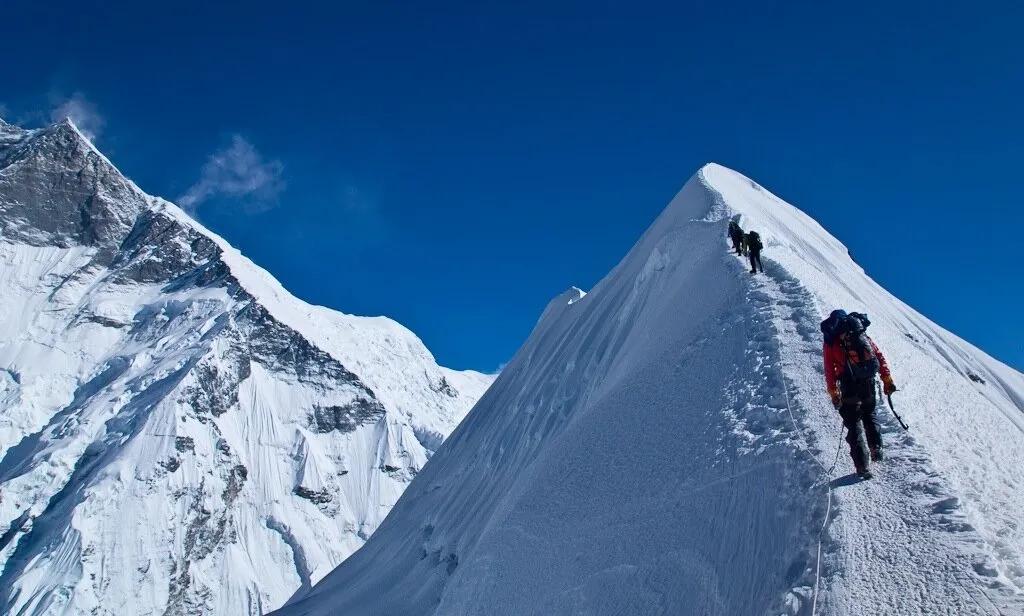
The final summit push is a thrilling experience that involves using fixed ropes, crossing crevasses, and navigating steep snow slopes before reaching the summit ridge. Standing atop Island Peak rewards you with stunning 360-degree views of the Imja Valley and an unforgettable panorama of some of the highest mountains on earth. After the successful climb, the return journey follows the trail back to Lukla, where a short and scenic mountain flight brings you safely to Kathmandu.
This 17-day peak climbing adventure is perfect for those seeking their first Himalayan summit or for trekkers aiming to step into more technical climbing. With expert guidance, well-planned acclimatization, and complete logistical support, Alpine Club of Himalaya ensures a safe, enjoyable, and unforgettable Island Peak climbing experience for adventurers ready to take on a true Himalayan challenge.
Island Peak (6,189m), also known locally as Imja Tse, is one of the most famous trekking peaks in Nepal. Its name was given by early British climbers because the peak appears like an island rising from the surrounding glaciers when viewed from Dingboche. Island Peak is widely recognized as the perfect introductory climbing peak for those preparing for higher expeditions such as Everest, Cho Oyu, or Lhotse, due to its challenging but achievable routes.
The climb involves trekking through moraine fields, glacier crossings, steep ice headwalls, and crevasses, requiring technical climbing techniques and the use of ropes and ladders. The final section of the ascent is the most demanding, with a steep climb to the narrow summit ridge. Once at the summit, climbers are rewarded with breathtaking 360-degree views of Lhotse, Makalu, Baruntse, Ama Dablam, and other towering Himalayan peaks.
Island Peak’s popularity comes from its accessibility, rewarding summit experience, and its role as a training ground for aspiring mountaineers. With the experienced team and guides of Alpine Club of Himalaya, climbers can take on the challenges of this technical ascent with confidence, ensuring both safety and the best chance of success.
The best time to climb Island Peak is during the spring (March to May) and autumn (September to November) seasons.
Spring offers stable weather, longer daylight hours, and vibrant landscapes. Temperatures at higher altitudes are relatively mild, and the climbing route remains in good condition. Rhododendron forests bloom along the lower trails, adding extra beauty to the trek.
Autumn is the most popular season due to its clear skies, excellent visibility, and dry weather. Temperatures are comfortable for trekking and climbing, and the views of the Himalayas are at their sharpest. This season provides the highest chance of a successful summit.
Both seasons provide the ideal conditions for trekking, acclimatization, and climbing, ensuring a safer and more enjoyable Island Peak experience.
Climbing Island Peak via Salleri demands strong physical fitness, endurance, and preparation, as it combines long trekking days with high-altitude climbing. Since the route begins with several days of trekking through rugged trails before reaching the Khumbu, trekkers must be comfortable walking 6–8 hours per day on uphill and downhill terrain. A good level of cardiovascular fitness, leg strength, stamina, and the ability to carry a light backpack are essential for maintaining steady progress.
Prior experience with multi-day trekking or high-altitude hiking is highly beneficial. For the climbing portion, Island Peak requires basic knowledge of mountaineering skills such as using crampons, ice axes, harnesses, and fixed ropes, although training will be provided at Base Camp by Alpine Club of Himalaya’s professional climbing guide.
It is recommended to start physical training at least 8–10 weeks before the trip, including trekking practice, strength workouts, and aerobic exercises like running, cycling, and stair climbing to ensure a safe and successful ascent.
Island Peak is considered a moderately difficult trekking peak, suitable for trekkers with strong fitness and beginner climbers wanting to attempt their first 6,000-meter summit. The approach via Salleri adds both distance and elevation changes, making the trek physically demanding but excellent for acclimatization.
The final summit push includes glacier travel, steep snow slopes, and a headwall near the summit that requires the use of fixed ropes and mountaineering equipment. While it does not require advanced technical climbing expertise, the high altitude, cold temperatures, and exposed sections make the climb challenging. Proper acclimatization, professional guidance, and steady pacing are key to overcoming the difficulty.
With appropriate preparation and support from Alpine Club of Himalaya, dedicated trekkers can successfully complete this rewarding Himalayan peak climb.
To increase your chances of success and make the journey more enjoyable, Alpine Club of Himalaya recommends a 3–6 month training program before your climb:
Comprehensive Guiding Services
Climbing two iconic Himalayan peaks requires more than just determination — it demands proper guidance, logistics, and safety measures. With Alpine Club of Himalaya, you are supported every step of the way by a team of experienced professionals.
Choosing Alpine Club of Himalaya guarantees a professional guiding service that maximizes your chances of summit success while minimizing risks.
Understanding the weather and climate of the Everest region is crucial for a successful climb of Island Peak. Conditions vary with the seasons, and planning your climb during the right window enhances both safety and enjoyment.
Even in the best seasons, climbers should be prepared for unpredictable weather in the Himalayas. At altitudes above 5,000 meters, conditions can change rapidly, and preparation is essential.
Despite these challenges, careful planning, proper gear, and the expertise of Alpine Club of Himalaya ensure that climbers are prepared to face changing conditions safely.
The weather in the Everest region can be unpredictable, especially at altitudes above 5,000 meters. While spring and autumn are the most reliable seasons for clear skies and stable conditions, climbers must always stay updated with the latest forecasts. Reliable weather predictions help determine the best time to move from base camps to high camps and plan safe summit pushes for Island Peak (6,189m).
Professional climbing guides from Alpine Club of Himalaya continuously monitor local and international mountain weather services, including forecasts on wind speed, snowfall, and temperature. This ensures summit attempts are made during safe weather windows. Even small shifts in wind or storm systems can affect climbing conditions, making accurate and timely updates essential for a successful ascent.
Since mountain weather can change quickly, climbers are encouraged to be flexible with their schedules and always follow the guidance of their expedition leaders. Here are some useful tips for tracking weather during your climb:
By staying alert and prepared, you can avoid unnecessary risks and increase your chance of a successful summit.
Safety is the top priority on high-altitude climbs like Island Peak (6,189m). With the professional support of Alpine Club of Himalaya, climbers receive thorough safety protocols and guidance throughout the expedition.
By adhering to these safety measures, climbers can focus on the adventure while minimizing potential risks.
Climbing Island Peak via Salleri is regulated by the Nepal Mountaineering Association (NMA) and local authorities to ensure safety, environmental protection, and responsible tourism.
Alpine Club of Himalaya ensures that all rules and regulations are communicated clearly, helping climbers comply with legal and environmental standards while focusing on a safe and rewarding Himalayan climbing experience.
Altitude sickness is one of the most common risks at high elevations. Island Peak is above 6,000 meters, where oxygen levels are significantly lower. Symptoms can include headaches, nausea, dizziness, fatigue, and difficulty sleeping. Severe cases may progress to High Altitude Pulmonary Edema (HAPE) or High Altitude Cerebral Edema (HACE), which require immediate medical attention.
With careful monitoring and support from Alpine Club of Himalaya, risks associated with altitude sickness are minimized.
Acclimatization plays a crucial role in the success of the Island Peak Climb via Salleri, as the route gradually ascends from low altitudes to over 6,000 meters. The itinerary naturally supports altitude adaptation because the journey starts in Salleri and progresses slowly through the mid-hills toward the high Khumbu region. Rest days in key locations like Nunthala, Namche Bazaar, Dingboche, and Chhukung help your body adjust to decreasing oxygen levels.
· Gradual Ascent: The overland journey and trek from Salleri ensure a slow gain in elevation, reducing the risk of altitude sickness.
· Short Acclimatization Hikes: Optional hikes to viewpoints and nearby ridges enhance acclimatization and offer beautiful scenery.
· Health Monitoring: Professional guides monitor your physical condition and symptoms related to altitude, making adjustments when necessary.
· Hydration & Rest: Drinking plenty of water, maintaining a balanced diet, and getting proper sleep support effective acclimatization.
By following a structured acclimatization plan, climbers increase their safety, comfort, and overall success rate during the Island Peak summit attempt.
The Island Peak Climb via Salleri includes a combination of comfortable teahouse accommodations during the trekking days and professionally organized tented camps at high-altitude climbing zones. Alpine Club of Himalaya ensures that all camps are safe, well-managed, and equipped to support a successful summit bid.
Tent Accommodation: At Island Peak Base Camp, climbers stay in durable 4-season expedition tents designed to withstand harsh Himalayan weather. Each climber receives a personal tent for privacy and warmth.
· Dining Arrangements: A dedicated mess tent serves freshly prepared, energy-rich meals suitable for high-altitude climbing.
· Rest & Preparation Area: Designated spaces allow climbers to relax, warm up, and organize technical gear before training sessions or summit attempts.
· Sanitation: Eco-friendly toilet tents and proper waste management follow Leave No Trace principles to protect the alpine environment.
· Summit Positioning: High Camp is strategically placed closer to the summit route, reducing climbing distance and helping climbers conserve energy for the strenuous ascent.
· Strong Tent Setup: Climbers stay in robust, weather-resistant tents suitable for extremely cold conditions and high winds.
· Nutritious Meals: High Camp food includes light but calorie-rich meals such as porridge, soups, noodles, and warm drinks to maintain energy levels.
· Gear Preparation Space: Sufficient space is provided for organizing ropes, crampons, ice axes, and harnesses before summit day.
· Emergency Supplies: First-aid kits, oxygen cylinders, and communication devices are available at both Base Camp and High Camp.
· Experienced Staff: Skilled Sherpa guides continuously assess weather, route conditions, and climbers’ health.
· Secure Camp Layout: Camps are built in safe zones, avoiding risks from avalanches, wind exposure, and rockfall.
· Porter Assistance: Porters carry heavy equipment, allowing climbers to focus on acclimatization and summit preparation.
· Hydration & Nutrition: Hot drinks, soups, and regular meals help maintain strength and hydration.
· Rest & Recovery: High-quality sleeping bags and insulated tents ensure comfortable rest, essential for high-altitude performance.
With well-organized camps and professional support, Alpine Club of Himalaya provides a safe, comfortable, and efficient environment throughout the Island Peak Climb via Salleri, helping climbers stay focused on achieving the summit.
The trek via Salleri begins with either an overland journey to Salleri or an optional flight to Lukla for convenience. Flights to Lukla remain weather-dependent, especially during peak trekking seasons. Alpine Club of Himalaya manages all logistics to ensure safe and timely travel.
Alternatives to Lukla Flights:
Climbing Island Peak via Salleri requires obtaining several official permits to ensure a legal, safe, and well-regulated expedition. These permits not only allow access to the protected regions of Nepal but also support local conservation and community initiatives.
Alpine Club of Himalaya takes full responsibility for arranging all necessary permits, making the process seamless and stress-free. By managing these logistics, climbers can focus entirely on acclimatization, trekking, and summit preparation without worrying about administrative requirements. These permits also guarantee that the expedition aligns with Nepal’s regulations for environmental protection and high-altitude safety.
Transportation for the Island Peak expedition via Salleri involves a combination of road travel, local jeeps, and trekking, carefully managed by Alpine Club of Himalaya to ensure safety and convenience throughout the journey.
Alpine Club of Himalaya coordinates all aspects of transportation, including road transfers, jeep arrangements, and flights, to provide a smooth, reliable, and comfortable travel experience during the entire expedition.
Meals during the Island Peak expedition are designed to provide proper nutrition and energy for high-altitude trekking and climbing. Along the route from Salleri to the high camps, climbers stay in teahouses that serve freshly prepared Nepali and Western meals. At base camp and high camps, Alpine Club of Himalaya arranges balanced expedition meals, including porridge, soups, pasta, rice dishes, and energy snacks. Special attention is given to hydration and calorie intake to maintain stamina during trekking and summit attempts.
Safe drinking water is crucial for preventing dehydration and altitude sickness. Along the Salleri route, teahouses provide boiled or filtered water. At base camp and high camps, water is purified using UV filters or chemical tablets, and climbers are advised to carry personal water bottles or hydration bladders. Alpine Club of Himalaya ensures that clean drinking water is available throughout the expedition and encourages regular hydration to support acclimatization and physical performance.
Comprehensive travel insurance is mandatory for all participants. The insurance should cover high-altitude trekking and mountaineering activities, including emergency evacuation, helicopter rescue, medical treatment, and trip cancellation. Alpine Club of Himalaya advises climbers to obtain insurance before the expedition and provides guidance on selecting plans that meet the requirements for climbing Island Peak.
A valid passport is required for all foreign nationals entering Nepal. Most nationalities can obtain a tourist visa on arrival at Tribhuvan International Airport in Kathmandu, while others may need to apply in advance at a Nepalese embassy. Visa regulations vary depending on the traveler’s nationality and duration of stay. Alpine Club of Himalaya assists climbers in understanding visa requirements and ensures that all travel documents are in order before departure, allowing a smooth start to the expedition.
While trekking and climbing Island Peak via Salleri, access to electricity and WiFi is limited due to the remote Himalayan environment. Alpine Club of Himalaya ensures that climbers have essential connectivity options while maintaining a safe and comfortable experience.
By preparing for limited electricity and WiFi access, climbers can focus on acclimatization, summit preparation, and enjoying the natural beauty of the Everest region. Alpine Club of Himalaya provides guidance on managing connectivity and power needs efficiently throughout the expedition.
Professional guide and porter services are essential for a safe and successful Island Peak climb via Salleri. Alpine Club of Himalaya provides experienced climbing guides and trained Sherpa support throughout the expedition.
Choosing to climb Island Peak via Salleri offers a unique and enriching Himalayan experience compared to the standard Lukla route. This route is ideal for trekkers and climbers seeking a more scenic, less crowded, and culturally immersive expedition.
Overall, the Island Peak climb via Salleri is perfect for climbers and trekkers who want a safer, scenic, culturally immersive, and less-crowded adventure while maximizing acclimatization and summit success.
Alpine Club of Himalaya accommodates climbers who wish to join the Island Peak expedition via Salleri at short notice. While high-altitude climbing requires preparation, last-minute bookings are possible under certain conditions:
This flexibility ensures that even climbers with limited planning time can safely join the Island Peak climb via Salleri while enjoying a complete Himalayan adventure.
To ensure climbers are fully prepared, Alpine Club of Himalaya provides a comprehensive online briefing before arrival in Kathmandu:
This online briefing ensures that participants arrive in Kathmandu informed, confident, and fully prepared, maximizing safety and enjoyment during the Island Peak expedition via Salleri.
If you prefer to travel light, Alpine Club of Himalaya offers high-quality climbing gear for rent, including mountaineering boots, crampons, ice axes, harnesses, and helmets. Renting is a practical and cost-effective option for many climbers.
Before starting your Island Peak climb via Salleri, it is essential to ensure that all your gear is properly tested and fits comfortably. Well-fitted and reliable equipment is critical for safety, performance, and overall success at high altitudes. While most personal climbing and trekking gear must be brought by participants, some technical climbing equipment—such as tents, ropes, ice screws, crampons, and harnesses—may be provided as part of the expedition package. Alpine Club of Himalaya recommends confirming in advance which items are included to avoid last-minute issues and ensure full preparedness.
If you need to cancel your Island Peak expedition, it is important to notify Alpine Club of Himalaya as soon as possible to reduce financial penalties. The cancellation charges are structured as follows:
· Cancellations made 60 days or more prior to departure will incur a 20% cancellation fee of the total trip cost.
· Cancellations made 30–59 days before departure will incur a 50% cancellation fee.
· Cancellations made less than 30 days before departure will result in forfeiture of the entire payment.
In rare cases where Alpine Club of Himalaya must cancel the expedition—due to extreme weather, natural disasters, political instability, or safety concerns—participants will be offered either a full refund or the option to reschedule their climb for a later date without penalty.
Alpine Club of Himalaya is not responsible for additional expenses, losses, or disruptions caused by events beyond its control. This includes natural disasters (earthquakes, floods, landslides), political unrest, health emergencies, flight delays, or other unforeseen circumstances that may affect the expedition schedule.
Alpine Club of Himalaya prioritizes safety, clear communication, and flexibility, ensuring climbers can focus on their adventure with confidence and peace of mind while tackling Island Peak via Salleri.
The expedition begins with a scenic road journey from Kathmandu to Salleri, offering a unique perspective of Nepal’s mid-hill landscapes. After breakfast, you will drive from Chabahil in Kathmandu in either a public shared jeep or a private vehicle, depending on your preference. The journey spans approximately 8–9 hours, passing through terraced fields, traditional villages, and riverside towns that showcase rural Nepalese life. The route winds through green hills and dense forests, providing a gradual transition from urban Kathmandu to the rural Himalayan foothills. Upon arrival in Salleri, you will check into a guesthouse, enjoy a well-deserved rest, and have a leisure evening to prepare for the trekking days ahead. Alpine Club of Himalaya staff ensure a smooth transfer and provide guidance for acclimatization and trekking preparations.
Max. Elevation
2,362 m
Meals
Lunch and Dinner
Pickup from Kathmandu International Airport upon arrival.
1 night’s accommodation in Kathmandu with breakfast.
15 nights’ tea house accommodation during the trekking portion.
1 night’s stay in a tented camp at Island Peak Base Camp.
Flight ticket from Kathmandu (or Ramechhap) to Lukla, including airport transfers.
Three daily meals (breakfast, lunch, and dinner) throughout the trek.
English-speaking professional trekking guide and porter support (1 porter for 2 trekkers), including their salary, food, accommodation, and insurance.
Comprehensive first aid kit with high-altitude medications and oxygen oximeter for monitoring.
All necessary trekking permits and the Island Peak climbing permit.
Climbing guide and support staff for Island Peak.
High-quality climbing equipment for Island Peak, including tents, mattresses, ropes, ice screws, and snow bars.
Equipment fees for the climbing guide.
Complete camping setup, including dining tent, cooking tent, table, chairs, and toilet tent.
Personal climbing gear per person, such as crampons, harness, ice axe, screw gates, and karabiners.
Arrangements for rescue operations in case of medical emergencies (covered by travel insurance).
Return flight from Lukla to Kathmandu (or Ramechhap) with airport transfers.
All government and local taxes.
Garbage deposit as per environmental regulations.
Alpine Club of Himalaya company T-shirt as a souvenir.
Trek completion certificate (upon request).
Farewell dinner at the end of the expedition.
Ncell SIM card with 20GB data/internet for communication during the trek.
Alpine Club of Himalaya ensures transparency in costs and provides a fully supported, safe, and organized trekking and climbing experience, allowing climbers to focus on the adventure without logistical worries.
Essential Climbing Equipment and Gear List
Clothing and Layering System
A proper layering system is essential for staying warm, dry, and protected throughout the Island Peak expedition. Weather conditions can vary greatly between the lower trekking sections and the high-altitude summit.
Base Layers (Moisture-Wicking)
Mid Layers (Insulation)
· One to two fleece or softshell jackets
· One insulated jacket (down or synthetic) for cold conditions
Outer Layers (Waterproof and Windproof)
· One waterproof and windproof jacket with hood (Gore-Tex or equivalent)
· One pair of waterproof overpants (preferably with side zips for easy layering)
Climbing Layers for Summit Push
· One expedition-grade down jacket (essential for summit night)
· Down or insulated pants (recommended for additional warmth at high altitudes)
Footwear
Proper footwear is critical for both trekking and the technical climbing section of Island Peak.
· Well-broken-in trekking boots with ankle support (waterproof)
· Mountaineering boots (double boots highly recommended for summit day)
· Lightweight shoes or sandals for use in teahouses and camps
· Four to five pairs of warm wool or synthetic socks
· Gaiters to prevent snow and debris from entering your boots
Headwear and Hand Protection
Protecting your head, hands, and face from cold, sun, and wind is essential at altitude.
· Warm wool or fleece beanie
· Sun hat or wide-brim trekking hat
· Neck gaiter or Buff for wind and sun protection
· Headlamp with extra batteries (a must for the early morning summit push)
· High-quality UV-protection sunglasses (glacier-rated)
· Ski goggles (optional, for high winds or snowfall during the summit)
· Lightweight inner gloves
· Insulated outer gloves or mittens for summit day
Technical Climbing Equipment
Technical gear is required for the glacier crossing and final ascent on fixed ropes. Most of this can be rented from Alpine Club of Himalaya in Kathmandu.
· Climbing harness (mountaineering-specific and adjustable)
· Helmet (UIAA or CE-certified)
· Ice axe (sized appropriately for your height, typically 55–70 cm)
· Crampons (compatible with your boots, anti-balling plates recommended)
· Ascender (jumar) with safety leash
· Belay or rappel device (e.g., figure 8 or ATC)
· Two locking carabiners (screwgate or auto-lock)
· One non-locking carabiner
· Climbing sling or personal anchor system
· Prusik cord or mechanical backup for fixed lines
Backpacks and Storage
Your gear will be split between what you carry and what is transported by porters or yaks.
· Trekking backpack (50–65 liters) or a large duffel bag (porters carry this)
· Daypack (30–40 liters) for carrying essentials and summit day gear
· Dry bags or waterproof stuff sacks for organizing gear
· Rain cover for your backpack
Sleeping Gear
Proper sleeping equipment ensures comfort and warmth at high-altitude camps.
· Four-season sleeping bag rated to at least -20°C (-4°F), preferably -30°C
· Sleeping bag liner (adds warmth and keeps your bag clean)
· Inflatable or foam sleeping mat (Base Camp mats may be provided)
Hydration and Nutrition
Staying hydrated and fueled is key to performance and acclimatization.
· Two to three water bottles (1-liter capacity, wide-mouth for freezing temps)
· Insulated water bottle cover
· Water purification tablets or filter (iodine, chlorine dioxide, or UV)
· Thermos flask for hot drinks during summit night
· Personal snacks like energy bars, dried fruit, trail mix, and gels
Personal Hygiene
Cleanliness and hygiene are essential for maintaining health during long expeditions.
· Toothbrush and small toothpaste
· Biodegradable soap and hand sanitizer
· Wet wipes (no showers above Namche)
· Quick-dry trekking towel
· Lip balm with SPF
· Sunscreen (SPF 50+ strongly recommended)
· Toilet paper (must carry your own)
· Pee bottle for cold nights (optional but convenient)
First Aid and Medication
Always carry personal medical supplies in addition to the group kit provided by your guides.
· Diamox (Acetazolamide) for altitude acclimatization (consult your doctor)
· Ibuprofen or paracetamol for headaches and muscle pain
· Blister care (moleskin, Compeed, or blister plasters)
· Rehydration salts or electrolyte tablets
· Personal medications with copies of prescriptions
· Basic first-aid kit (band-aids, antiseptic, tape)
Important Documents and Travel Essentials
Carry all required documentation and items needed for travel and permits.
· Valid passport (must be valid for at least 6 months)
· Nepal tourist visa (can be obtained on arrival or in advance)
· Four passport-sized photos (required for trekking permits)
· Travel insurance policy (must include high-altitude evacuation coverage)
· Copies of passport, visa, and insurance
· Cash in Nepali rupees (for lodges, tips, and purchases en route)
· Small lockable bag for valuables at the hotel or Base Camp
Optional but Recommended Items
These items are not essential but can greatly enhance your comfort and safety.
· Trekking poles (collapsible and adjustable)
· Lightweight book, journal, or Kindle
· Solar charger or power bank
· Small sewing and repair kit
· Lightweight binoculars
· Earplugs for noisy teahouses
· Camp shoes or slippers
· Extra ziplock bags or garbage bags for organizing gear
E
Elias Sørensen
Denmark
Jul 11, 2025
M
Marcello Bianchi
Italy
Jun 11, 2025
J
Jonathan Reed
Canada
Mar 11, 2025
24/7 Support
Need help? we're at your service
Associated With


We Accept Cards

Office of the company registrar License: 66813/066/067 || Tourism Industry Division License:1142
All content and photography within our website is copyright & may not be reproduced without our permission.
Develop By: IT Sansaar