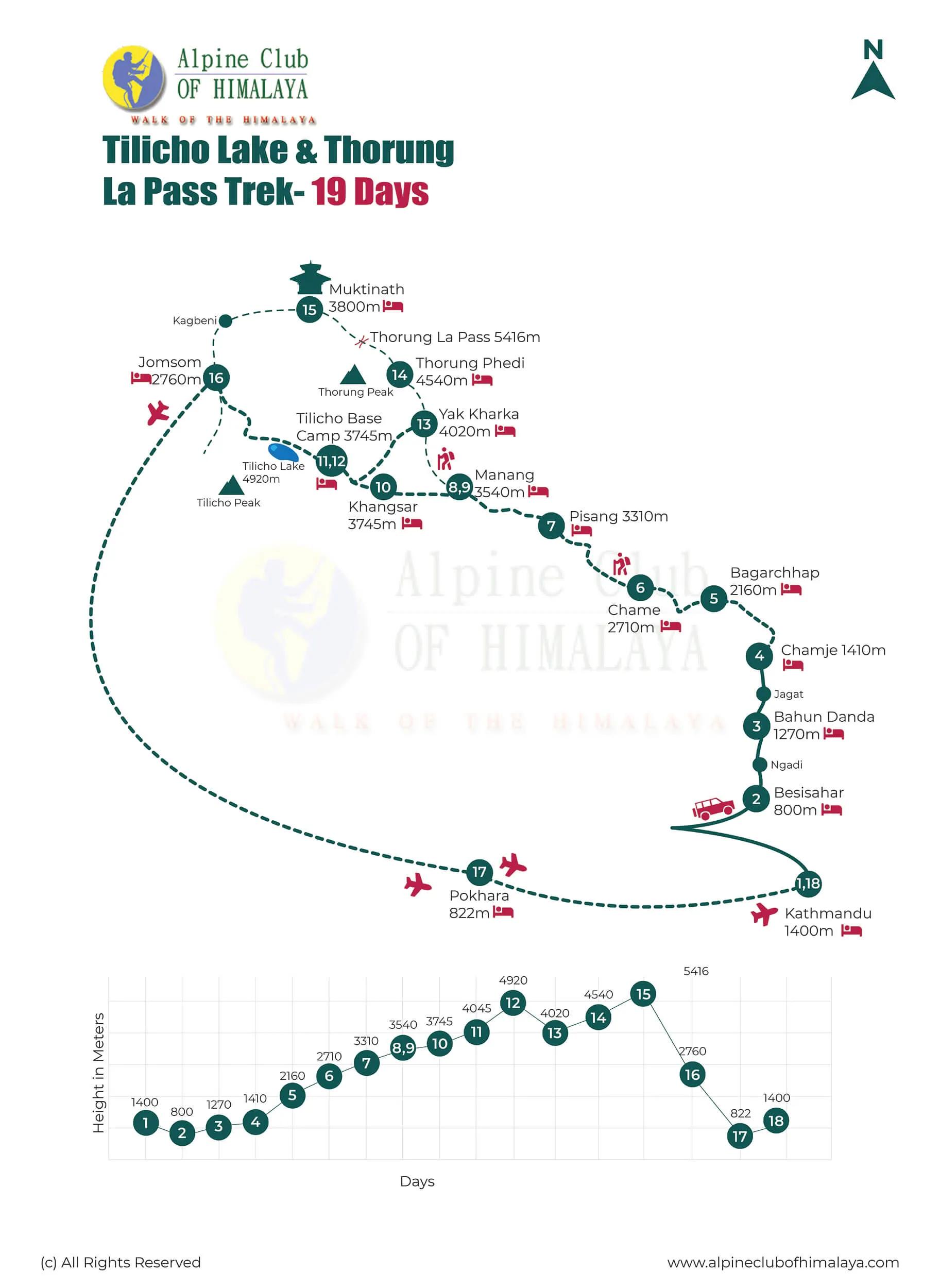
The Tilicho Lake and Thorong-La Pass Trek is one of the most spectacular trekking experiences in the Annapurna region of Nepal, offering a perfect blend of high-altitude adventure, cultural immersion, and breathtaking Himalayan landscapes. This 19-day trek takes you through lush subtropical valleys, dense forests, alpine meadows, and high-altitude deserts, culminating at Tilicho Lake (4,920 m), one of the highest lakes in the world, and crossing Thorong-La Pass (5,416 m), the highest point of the Annapurna Circuit trek. Trekkers are rewarded with panoramic views of Annapurna II, Nilgiri North, Khangsar Kang, Tilicho, and the surrounding Himalayan peaks, making it a paradise for nature lovers, photographers, and adventure seekers.
The trek begins with a scenic drive from Kathmandu to Besisahar, the traditional starting point of the Annapurna Circuit. From here, the trail follows the Marsyangdi River through terraced farmlands, vibrant villages, and bamboo and rhododendron forests. Early highlights include the villages of Bahundanda, Chamje, and Bagarchhap, where trekkers witness picturesque farmland, traditional Nepali architecture, and the towering peaks of Himalchuli and Manaslu. Moving further, the trail passes through dense pine and fir forests as you enter the Manang Valley, offering dramatic vistas of Paungda Danda, a 1,500-meter curved rock face, Annapurna II, Pisang Peak, and surrounding Himalayan ridges.
After reaching Manang, trekkers enjoy an acclimatization day, exploring local monasteries, glacial lakes, and cultural settlements while preparing for higher altitudes. The journey then continues to Khangsar village, following scree slopes and alpine meadows before reaching Tilicho Base Camp, a gateway to one of the world’s highest glacial lakes. The trail to Tilicho Lake offers jaw-dropping views of Khangsar Kang, Nilgiri, Tilicho, and Muktinath peaks, along with dramatic cliffs, glacial moraines, and pristine high-altitude landscapes. Tilicho Lake itself is a serene, turquoise gem surrounded by towering snow-capped mountains, providing trekkers with an unforgettable high-mountain experience.
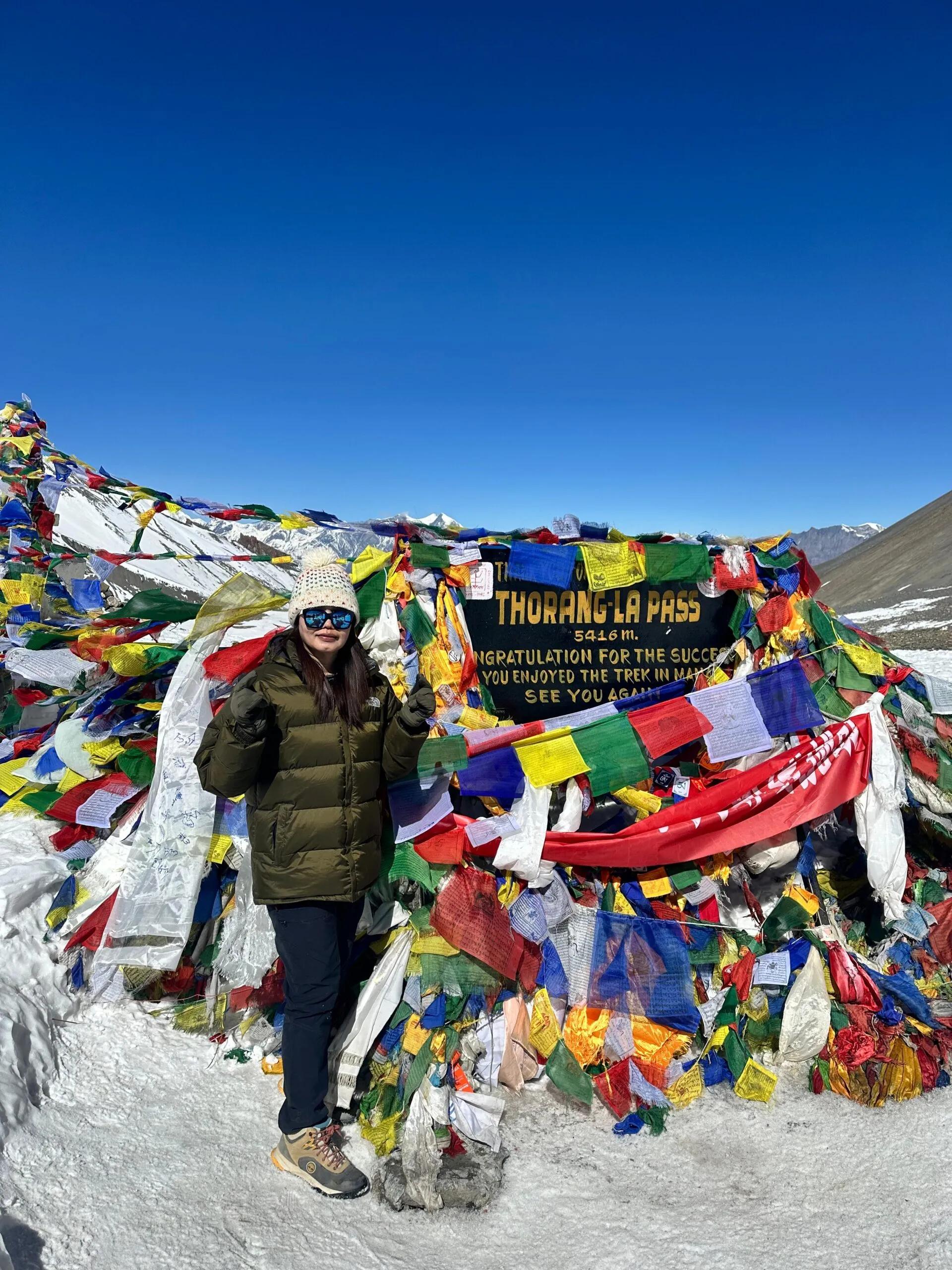
From Tilicho, the trek descends through alpine pastures and dwarf juniper shrubs to Yak Kharka and onward to Thorong Phedi, the final settlement before the challenging Thorong-La Pass. Crossing the pass at 5,416 meters is the highlight of the trek, rewarding adventurers with 360-degree views of the Annapurna, Dhaulagiri, Mukut, and Mustang ranges and a panoramic glimpse into the deep Kali Gandaki Valley. The descent from Thorong-La leads to Muktinath, one of Nepal’s most sacred pilgrimage sites for both Hindus and Buddhists. Trekkers can explore the Muktinath Temple, observe rituals at the holy water springs, and enjoy views of surrounding apple orchards against snow-covered peaks.
The final section of the trek follows the Kali Gandaki River to Jomsom, a historic settlement providing comfortable accommodations and essential amenities. From Jomsom, trekkers take a scenic flight to Pokhara, enjoying aerial views of the Annapurna and Dhaulagiri ranges, before returning to Kathmandu, concluding this extraordinary Himalayan journey.
The Tilicho Lake and Thorong-La Pass Trek – 19 Days is ideal for trekkers seeking high-altitude adventure, cultural exploration, and unforgettable mountain vistas. With professional guidance from Alpine Club of Himalaya, all permits, accommodations, meals, and logistics are carefully managed, allowing trekkers to focus on enjoying the natural beauty, cultural richness, and thrilling high-mountain experiences of the Annapurna region. This trek is a must-do for adventure seekers, photographers, and nature lovers aiming to explore one of Nepal’s most iconic trekking routes.
Best Time to Trek
The best time to undertake the Tilicho Lake and Thorong-La Pass Trek is during the spring (March to May) and autumn (September to November) seasons. These months provide the most stable weather, clear skies, and ideal trekking temperatures, ensuring a safe, enjoyable, and visually spectacular Himalayan experience.
· Spring Season (March to May)
Spring is among the most popular seasons for trekking in the Annapurna Region. During this time, the trails are lined with blooming rhododendron forests, alpine flowers, and lush greenery, creating breathtaking landscapes along the Annapurna Circuit. Temperatures are moderate, and visibility is excellent, allowing trekkers to enjoy panoramic views of Annapurna II, Tilicho Peak, Nilgiri, and surrounding Himalayan giants. Spring is perfect for those who appreciate colorful natural scenery combined with comfortable daytime temperatures for trekking to high-altitude destinations such as Tilicho Lake and Thorong-La Pass.
· Autumn Season (September to November)
Autumn is considered the prime trekking season in Nepal due to stable weather, crisp air, and dust-free skies. The post-monsoon clarity allows trekkers to witness incredible 360-degree vistas of the Annapurna, Dhaulagiri, Thorong, and Mustang ranges. Trails are dry and safe for crossing high passes like Thorong La. Daytime temperatures are comfortable for trekking, while nights at higher elevations can be cold but manageable. This season is ideal for trekkers seeking reliable weather, clear mountain panoramas, and optimal trekking conditions along the Tilicho Lake and Thorong-La route.
· Monsoon Season (June to August)
The monsoon season brings heavy rainfall to the lower Annapurna Circuit, making trails slippery and potentially hazardous. However, the Upper Mustang region lies in the rain shadow area, remaining relatively dry. Despite this, trekking during monsoon is recommended only for experienced trekkers who are prepared for occasional poor visibility, muddy trails, and challenging terrain.
· Winter Season (December to February)
Winter trekking offers peaceful trails and snow-covered landscapes, but temperatures at high altitudes are very cold. Crossing Thorong-La Pass can sometimes be difficult or unsafe due to snow accumulation and strong winds. Winter trekking is suitable for well-prepared and experienced trekkers capable of handling extreme cold and flexible itineraries.
Overall, the spring and autumn seasons remain the most favorable times for safe trekking, spectacular mountain views, and enjoyable weather conditions on the Tilicho Lake and Thorong-La Pass Trek.
Difficulty Level
The Tilicho Lake and Thorong-La Pass Trek – 19 Days is considered a challenging to strenuous trekking adventure. The route combines classic Annapurna Circuit trails with the high-altitude excursions to Tilicho Lake and Thorong-La Pass, reaching a maximum elevation of 5,416 meters (17,769 ft). Trekkers face long walking days, steep ascents and descents, rugged mountain paths, and remote high-altitude terrain.
The difficulty is increased due to:
- High-altitude trekking: Several days are spent above 3,500 meters, where oxygen levels are lower, and altitude-related discomfort may occur.
- Long trekking hours: Walks typically range between 5 to 8 hours per day on varied and sometimes rocky terrain.
- Remote landscapes: Limited accessibility and isolated settlements require careful planning and endurance.
- Weather variability: Strong winds, snow, and sudden changes in conditions can make high-altitude sections more demanding.
Despite these challenges, the trek is achievable for physically fit and determined trekkers, particularly with gradual acclimatization, proper pacing, and professional guidance.
Physical Fitness and Requirements
A good level of physical fitness is essential for successfully completing the Tilicho Lake and Thorong-La Pass Trek. Trekkers should be comfortable walking long distances on uneven trails while carrying a light daypack. Recommended preparation includes:
- Cardiovascular training: Hiking, jogging, cycling, swimming, or stair climbing 6–8 weeks before the trek to improve stamina.
- Strength training: Exercises targeting legs, core, and overall balance to manage steep ascents and descents.
- Mental readiness: The trek demands patience, adaptability, and the ability to cope with basic teahouse accommodations, limited facilities in remote areas, and varying temperatures from warm lower valleys to freezing high elevations.
Trekking with steady pacing, proper hydration, and acclimatization ensures safer progress along high passes like Thorong-La and remote sections of the Annapurna Circuit.
Acclimatization – High-Altitude Safety
Proper acclimatization is crucial on this trek due to the extreme elevations, particularly at Tilicho Lake (4,920 m) and Thorong-La Pass (5,416 m). As altitude increases, oxygen levels decrease, making gradual adaptation essential to prevent Acute Mountain Sickness (AMS). Symptoms of AMS can include headaches, nausea, dizziness, fatigue, and disturbed sleep.
The itinerary includes planned acclimatization days at key points such as Manang and Khangsar, allowing trekkers to follow the “climb high, sleep low” principle. Short day hikes to nearby lakes, viewpoints, or villages help the body adjust while offering stunning alpine vistas. Maintaining hydration, a balanced diet, and a controlled trekking pace supports healthy acclimatization and enhances overall trekking safety.
Evacuation and Emergency Support
Although the Tilicho Lake and Thorong-La Pass Trek is a popular Himalayan adventure, high-altitude trekking carries inherent risks, including altitude sickness, injuries, and sudden weather changes. Some sections of the trail are remote, with limited access to advanced medical facilities.
Alpine Club of Himalaya ensures:
- Daily health monitoring by experienced trekking guides.
- Emergency communication systems, including satellite phones for immediate contact with rescue services.
- Knowledge of nearby medical posts, such as in Manang, Kagbeni, and Jomsom, for quick decision-making.
- Helicopter evacuation arrangements in serious situations to ensure trekkers’ safety.
This structured emergency support provides trekkers with confidence and peace of mind throughout their high-altitude journey.
Role of Alpine Club of Himalaya
Alpine Club of Himalaya plays a pivotal role in making the Tilicho Lake and Thorong-La Pass Trek safe, well-organized, and unforgettable. Their services include:
- Comprehensive planning and logistics, including transportation, permits, accommodations, and meals.
- Experienced, licensed trekking guides providing insights into high-altitude trekking, local culture, and safety.
- Acclimatization support, route briefings, health monitoring, and emergency preparedness.
- Cultural and environmental guidance, encouraging respect for local traditions, monasteries, and fragile ecosystems.
With this level of operational support and professional guidance, trekkers can fully immerse themselves in the spectacular Himalayan landscapes, glacial lakes, high passes, and culturally rich villages of the Annapurna and Upper Mustang region.
Altitude Sickness and Preparations
The Tilicho Lake and Thorong-La Pass Trek – 19 Days involves trekking at high elevations where altitude sickness can be a serious concern if not managed properly. Acute Mountain Sickness (AMS) occurs when the body struggles to adjust to reduced oxygen levels at high altitudes. Common symptoms include headache, dizziness, fatigue, shortness of breath, nausea, and loss of appetite. In rare but severe cases, AMS may progress to high-altitude cerebral edema (HACE) or high-altitude pulmonary edema (HAPE), requiring immediate descent and medical attention.
Proper preparation significantly reduces the risk of altitude sickness. Trekkers are advised to improve cardiovascular fitness through hiking, jogging, cycling, or stair climbing several weeks before the trek. Maintaining a gradual ascent schedule, staying well-hydrated, eating nutritious meals, and avoiding alcohol or overexertion at higher elevations are critical preventive measures. Guides from Alpine Club of Himalaya are trained to recognize early symptoms of AMS, provide immediate support, and ensure trekkers’ safety throughout the high-altitude journey.
Environment and Climate
The Tilicho Lake and Thorong-La Pass Trek showcases one of the most geographically diverse trekking environments in Nepal, transitioning from lush subtropical valleys to high-altitude desert landscapes. The trek begins in the lower Marsyangdi and Marshyangdi River valleys, where dense forests, waterfalls, terraced farmlands, and vibrant river valleys create a picturesque setting. As trekkers ascend toward Chame, Pisang, and Manang, the climate becomes cooler, and the vegetation gradually shifts to pine, fir, rhododendron, oak, and maple forests.
Beyond Manang, the landscape transforms due to the rain-shadow effect of the Annapurna and Dhaulagiri ranges. Trekkers enter a dry alpine environment, characterized by barren hills, glacial valleys, rocky cliffs, and vast open plateaus. The approach to Tilicho Lake and Thorong-La Pass features rugged high-altitude terrain with sparse vegetation. In the Upper Mustang region, the terrain becomes semi-arid and desert-like, with colorful cliffs, wind-carved canyons, and ancient cave systems.
Climatic conditions vary by season. Spring and autumn are considered the best trekking periods due to stable weather, clear skies, and exceptional mountain visibility, providing a safe and visually rewarding experience for trekkers.
Flora and Fauna
The trek passes through multiple ecological zones, each rich in biodiversity. Lower elevations are covered with bamboo groves, ferns, pine forests, and rhododendron blooms, particularly striking during spring. Mid-altitude regions feature alpine shrubs, juniper bushes, and hardy grasses. Higher elevations near Thorong-La Pass, Tilicho Lake, and Upper Mustang support minimal vegetation due to cold temperatures, strong winds, and rugged terrain.
Wildlife is diverse and often encountered by trekkers. Species include Himalayan thar, blue sheep, musk deer, langur monkeys, and numerous bird species such as Himalayan griffons, snowcocks, and pheasants. Occasionally, reports of elusive snow leopards highlight the region’s remote and wild character. These encounters, combined with stunning flora, enhance the trek’s appeal for nature enthusiasts and photographers alike.
Transportation
Transportation for the Tilicho Lake and Thorong-La Pass Trek is organized to ensure safety, comfort, and scenic enjoyment. The journey begins with a scenic drive from Kathmandu to Besisahar or Dharapani, passing through picturesque villages, terraced farmland, and the dramatic Marsyangdi Valley.
After completing the trek in Jomsom, trekkers typically take a short mountain flight to Pokhara, which offers breathtaking aerial views of the Annapurna, Dhaulagiri, and Nilgiri ranges, as well as the Kali Gandaki Gorge. From Pokhara, travelers return to Kathmandu either by domestic flight or comfortable tourist vehicle. All transportation logistics, including airport transfers and internal travel arrangements, are managed by Alpine Club of Himalaya, ensuring a smooth and stress-free travel experience.
Domestic Flights and Road Alternatives
Flights from Jomsom to Pokhara are the fastest and most convenient way to conclude the trek. However, mountain weather conditions, such as fog, high winds, or low visibility, may occasionally cause delays or cancellations. In such cases, an alternative road journey through the Kali Gandaki Valley is arranged. While longer, the road trip offers up-close views of the Himalayas, traditional villages like Marpha and Kagbeni, apple orchards, and deep river gorges, making the journey an equally rewarding experience.
Flexible travel planning by Alpine Club of Himalaya ensures minimal disruption to the itinerary and allows trekkers to complete the trek safely and comfortably.
Accommodation
Accommodation along the Tilicho Lake and Thorong-La Pass Trek is primarily in local teahouses and mountain guesthouses. These lodges provide simple, clean, and comfortable facilities, with twin-sharing rooms and basic shared bathrooms.
At high-altitude stops and in remote Upper Mustang villages, amenities become more basic due to limited resources. However, in Kathmandu and Pokhara, trekkers stay in well-appointed hotels with modern facilities, offering relaxation and comfort before or after the high-altitude trekking adventure.
Meals
Meals on the trek are nutritious and energy-rich, designed to support trekkers’ stamina at high altitude. Teahouses serve a mix of traditional Nepali dishes, such as dal bhat, rice, potatoes, and lentils, alongside Tibetan-inspired meals like momos, thukpa, and noodles. As altitude increases, the menu becomes simpler but remains warm, filling, and suitable for energy replenishment, ensuring trekkers can maintain strength for challenging days.
Drinking Water
Safe hydration is essential for high-altitude trekking. Bottled water is widely available along the route, though prices increase at higher elevations. Trekkers are encouraged to use reusable water bottles and employ water purification methods such as tablets, filters, or boiling water from teahouses. Guides from Alpine Club of Himalaya provide continuous guidance on hydration practices to maintain health and prevent altitude-related complications.
WiFi and Electricity
WiFi and electricity are accessible in many lower and mid-altitude villages, while connectivity becomes limited in remote Upper Mustang regions and near Thorong-La Pass. Charging is generally available for a small fee, often powered by solar systems. Trekkers are advised to bring power banks or spare batteries for convenience during remote trekking days.
Guide and Porter Support
Alpine Club of Himalaya provides a professional trekking team, including experienced guides, assistant guides, and trained porters. Guides ensure proper navigation, daily pacing, acclimatization, and emergency response, while porters carry heavy gear and supplies, allowing trekkers to trek with light daypacks.
The company follows ethical trekking practices, ensuring fair wages, nutritious meals, and safe lodging for staff. With their reliable support and strong safety standards, trekkers can confidently enjoy the spectacular scenery, challenging trails, and cultural richness of the Tilicho Lake and Thorong-La Pass Trek.
Mountain Views During the Trek
The Tilicho Lake and Thorong-La Pass Trek offers unmatched Himalayan panoramas throughout the journey. Early trekking days in the Marsyangdi Valley reveal impressive peaks such as Lamjung Himal, Annapurna II, Annapurna IV, and Pisang Peak, rising above lush forests, terraced farmland, and deep river gorges.
As the trek ascends toward Chame, Upper Pisang, and Manang, mountain scenery becomes increasingly dramatic with snow-covered peaks, glacial ridges, and geological formations like the massive Paungda Danda rock wall. The Manang Valley offers wide vistas of Annapurna III, Gangapurna, Tilicho Peak, and Pisang Peak.
Crossing Thorong-La Pass (5,416 m) rewards trekkers with sweeping panoramas of the Annapurna and Dhaulagiri ranges, while Upper Mustang presents colorful cliffs, eroded canyons, open valleys, and Tibetan-style desert landscapes, with peaks like Nilgiri, Dhaulagiri, and Tukuche forming a dramatic backdrop.
The trek’s combination of alpine lakes, high passes, desert valleys, and cultural settlements creates a visual masterpiece, perfect for photographers and mountain lovers alike.
Why Choose the Tilicho Lake and Thorong-La Pass Trek?
This trek is ideal for trekkers seeking a comprehensive Himalayan adventure combining the classic Annapurna Circuit with the remote and culturally rich Tilicho Lake and Thorong-La Pass route. Highlights include:
· Crossing the iconic Thorong-La Pass (5,416 m), one of the world’s highest trekking passes.
· Visiting Tilicho Lake, a stunning glacial lake at 4,920 m with dramatic mountain surroundings.
· Experiencing the restricted Upper Mustang region, including Lo Manthang, ancient monasteries, traditional Tibetan villages, and desert landscapes.
· Immersing in a wide range of Nepalese landscapes, from lush subtropical valleys to arid high-altitude plateaus.
· Enjoying a well-structured itinerary with proper acclimatization, professional logistical support, and ethical trekking practices from Alpine Club of Himalaya.
This 19-day trek offers a perfect balance of adventure, culture, and natural beauty, making it one of Nepal’s most rewarding high-altitude trekking journeys.
TIMS and Permits
Trekking in the Annapurna region and Upper Mustang requires official permits for safety, environmental conservation, and legal access. Alpine Club of Himalaya assists in obtaining all necessary documentation:
- Annapurna Conservation Area Permit (ACAP): Mandatory for trekking in the Annapurna region, supporting conservation projects and sustainable tourism.
- Restricted Area Permit for Upper Mustang: Required for entering the controlled Mustang region to preserve its fragile culture and environment.
- Trekkers’ Information Management System (TIMS) Card: Essential for trekker registration and safety monitoring in high-altitude areas.
Carrying valid permits ensures trekkers comply with government regulations while supporting environmental protection and local community development.
Photography and Drone Policy
The Tilicho Lake and Thorong-La Pass Trek – 19 Days offers unparalleled photography opportunities, making it a dream destination for avid photographers. Trekkers can capture majestic Himalayan peaks, pristine glacial lakes, sweeping high-altitude plateaus, traditional villages, ancient monasteries, and the stunning desert landscapes of Upper Mustang. The diversity of natural scenery and cultural heritage makes every step of the trek visually rewarding and highly photogenic.
While photography of landscapes and trekking environments is generally encouraged, it is essential to respect local customs, traditions, and conservation regulations. Trekkers should always seek permission before photographing local residents, religious ceremonies, or sacred sites. Wildlife photography should be conducted from a safe distance without disturbing animals or their natural habitats.
Drone usage in the Tilicho Lake and Thorong-La Pass region is strictly regulated due to the presence of protected areas and controlled zones. Flying a drone requires special permits from the Civil Aviation Authority of Nepal and local authorities. Unauthorized drone flights can result in fines or confiscation. Alpine Club of Himalaya provides guidance on responsible photography practices, including obtaining necessary drone permits and adhering to safety rules, ensuring trekkers can enjoy aerial photography responsibly while minimizing impact on local communities and the environment.
Travel Insurance
Comprehensive travel insurance is highly recommended for the Tilicho Lake and Thorong-La Pass Trek. This trek involves high-altitude trekking, remote terrain, and long walking days, which can pose potential risks such as altitude sickness, injuries, flight delays, or sudden weather changes. Trekkers must ensure their policy covers:
· Emergency helicopter evacuation for high-altitude rescues.
· Medical treatment in case of accidents or altitude-related illness.
· Coverage for trekking up to 5,500 meters.
· Trip cancellations due to unforeseen circumstances.
· Loss or theft of personal belongings.
Having valid insurance provides peace of mind and ensures prompt assistance in case of emergencies, allowing trekkers to fully enjoy the spectacular Himalayan journey with confidence.
Passport and Visa
All international trekkers must carry a valid passport with at least six months’ validity. A Nepal entry visa is required before starting the trek and can be arranged online or obtained upon arrival at Tribhuvan International Airport, Kathmandu.
Trekkers are advised to carry photocopies of their passports and visa during the trek, as these documents are frequently checked at permit verification points and trekking checkpoints. Proper documentation ensures compliance with government regulations and helps maintain a smooth trekking experience throughout the Annapurna and Tilicho Lake region.
Local SIM Card and Communication
Reliable communication is essential for both safety and convenience during the Tilicho Lake and Thorong-La Pass Trek. To help trekkers stay connected in remote areas, Alpine Club of Himalaya assists in obtaining a local Ncell SIM card, one of the most widely used mobile networks in Nepal.
A local SIM card allows trekkers to maintain regular contact with trekking guides, support staff, and family members while moving through different regions of the Annapurna Circuit and Upper Mustang. Network coverage is generally available in major villages and towns along the route, including Dharapani, Chame, Manang, Kagbeni, and Jomsom. Connectivity may be limited in remote Upper Mustang areas and at high elevations due to rugged terrain, but the SIM card ensures reliable communication wherever possible.
Having a local SIM card allows trekkers to receive weather updates, trail condition alerts, and logistical instructions from guides, as well as share important updates with family. Recharge facilities are available in trekking villages where network services exist. This communication support enhances safety and adds an extra layer of reassurance during the high-altitude journey.
Last-Minute Booking
For trekkers seeking flexibility, the Tilicho Lake and Thorong-La Pass Trek can be arranged even at short notice. With efficient planning and experienced staff, Alpine Club of Himalaya can organize permits, accommodation, transportation, and professional trekking support for last-minute bookings.
However, early reservations are recommended, especially during peak trekking seasons, to secure domestic flights, teahouse accommodations, and permit processing. The company’s ability to accommodate flexible travel arrangements ensures that even spontaneous adventurers can enjoy this high-altitude Himalayan trek safely and comfortably.
Online Pre-Trek Briefing
To ensure trekkers are fully prepared, Alpine Club of Himalaya offers online pre-trek briefings prior to arrival in Nepal. These sessions cover:
· Detailed itinerary overview and daily trekking plans.
· Altitude awareness and AMS prevention strategies.
· Recommended packing lists and trekking gear essentials.
· Health precautions, safety tips, and emergency protocols.
· Guidance on cultural etiquette, responsible tourism, and environmental awareness.
Pre-trek briefings provide trekkers with the knowledge and confidence needed to tackle high-altitude trekking, making their journey safer, more enjoyable, and well-informed.
Private and Group Bookings
Trekkers can choose between private customized treks or group departures for the Tilicho Lake and Thorong-La Pass Trek:
· Private Treks: Offer flexible pacing, personalized service, and tailored itineraries, ideal for families, couples, or small groups seeking an intimate trekking experience.
· Group Treks: Provide a social trekking environment, shared logistics, and the guidance of experienced leaders, making it suitable for solo travelers or those looking for companionship.
In both options, Alpine Club of Himalaya ensures high safety standards, professional guides, porter support, and quality accommodation arrangements. This allows trekkers to focus on enjoying the breathtaking landscapes, cultural heritage, and high-altitude adventure without logistical concerns.
Pickup and Drop Points from Kathmandu:
1 - Devo Boutique Hotel, Thamel, Kathmandu (or similar)
2 - Tribhuvan International Airport (TIA), Kathmandu
3 - Alpine Club of Himalaya Pvt. Ltd
4 - Within Thamel, Kathmandu
Final Notes
Before setting out on the Tilicho Lake and Thorong-La Pass Trek – 19 Days, thorough preparation is crucial to ensure a safe, comfortable, and unforgettable adventure in one of Nepal’s most spectacular trekking regions. This 19-day trek takes participants through diverse landscapes, from the lush subtropical valleys and terraced farmlands of Besi Sahar and the Marsyangdi River region, to the high alpine meadows, rugged cliffs, and glacial terrains near Tilicho Lake and Thorong La Pass. Along the route, trekkers are treated to breathtaking views of the Annapurna and Dhaulagiri ranges, striking rock formations like Paungda Danda, serene high-altitude lakes, and culturally rich villages influenced by Gurung, Thakali, and Tibetan traditions. Highlights include the turquoise waters of Tilicho Lake—one of the world’s highest glacial lakes at 4,920 meters—and the iconic Thorong La Pass at 5,416 meters, offering panoramic vistas of the Himalayas and the Kali Gandaki Valley.
Support from Alpine Club of Himalaya
The Alpine Club of Himalaya provides complete support throughout the trek, leveraging decades of Himalayan trekking expertise. Our experienced team manages all logistics, including trekking permits, route updates, transportation, accommodation bookings, and local guidance. Trekkers can rely on our licensed guides and trained porters, including female guides, to ensure safety, monitor high-altitude health, and provide cultural and environmental insights along the trail. With this professional support, trekkers can fully immerse themselves in the breathtaking mountain landscapes, remote villages, monasteries, and high passes without worrying about logistics or navigation.
Safety and Insurance
Safety is a top priority for the Tilicho Lake and Thorong-La Pass Trek. Trekkers are strongly advised to obtain comprehensive travel insurance that covers high-altitude trekking (up to at least 5,500 meters), medical emergencies, helicopter evacuation, trip cancellations, and unforeseen events. This ensures peace of mind and immediate assistance in case of altitude sickness, injuries, or emergency situations in remote Himalayan regions.
Cancellation Policy
Cancellation by the Participant:
If a booking must be canceled, written notification via email or signed letter is required. The cancellation charges are:
- 60 days or more before departure: 20% of the total trek cost retained for pre-arranged permits, accommodations, transportation, and administrative expenses.
- 30–59 days before departure: 50% of the total trek cost is non-refundable.
- Less than 30 days before departure: 100% of the total trek cost is non-refundable.
Cancellation by the Organizer:
In rare cases, the trek may be canceled due to extreme weather, natural disasters, political unrest, or safety concerns. In such situations, participants may:
- Receive a full refund of all payments made, or
- Reschedule the trek for a future date at no additional cost.
Force Majeure Clause:
The Alpine Club of Himalaya is not responsible for additional costs or delays caused by unforeseen events, including but not limited to:
- Natural disasters such as earthquakes, floods, or landslides
- Political unrest, strikes, demonstrations, or border closures
- Health emergencies, epidemics, or pandemics
- Travel disruptions, including flight cancellations or delays
Participants are responsible for any extra personal expenses incurred due to these events, such as accommodation, rescheduled flights, or insurance claims. Comprehensive travel insurance is strongly recommended to manage these risks.
Key Takeaways
By preparing properly, following safety guidelines, and packing appropriate gear, trekkers can fully enjoy the 19-day Tilicho Lake and Thorong-La Pass Trek. This journey offers a perfect combination of natural beauty, high-altitude adventure, and cultural experiences—from the lush lower valleys and alpine meadows to the turquoise waters of Tilicho Lake and the towering heights of Thorong La Pass. With the full support of the Alpine Club of Himalaya, participants can trek with confidence, knowing that all logistics, safety measures, and cultural guidance are expertly managed, making this Himalayan adventure truly memorable, life-changing, and one of the most spectacular trekking experiences in Nepal.