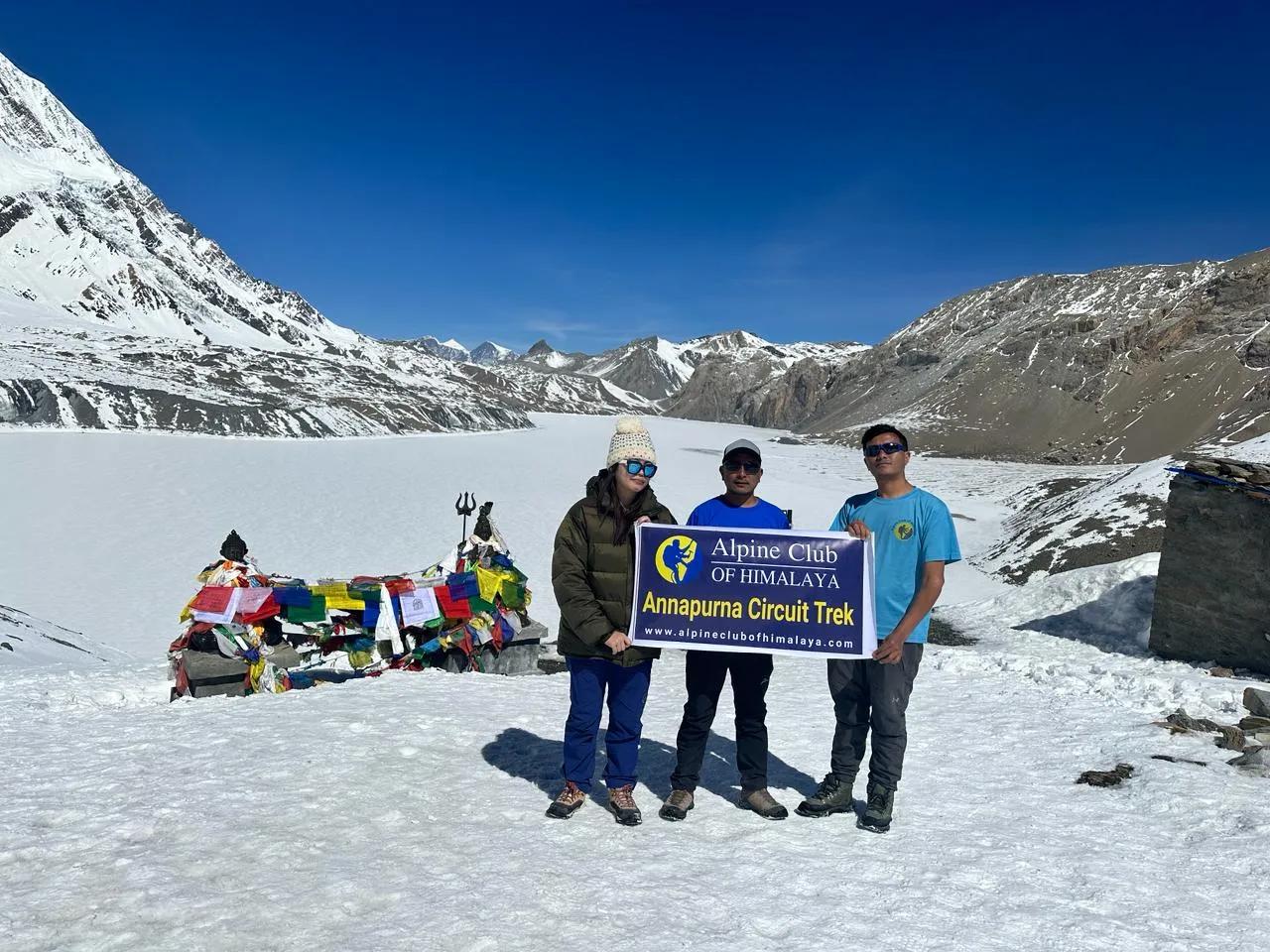
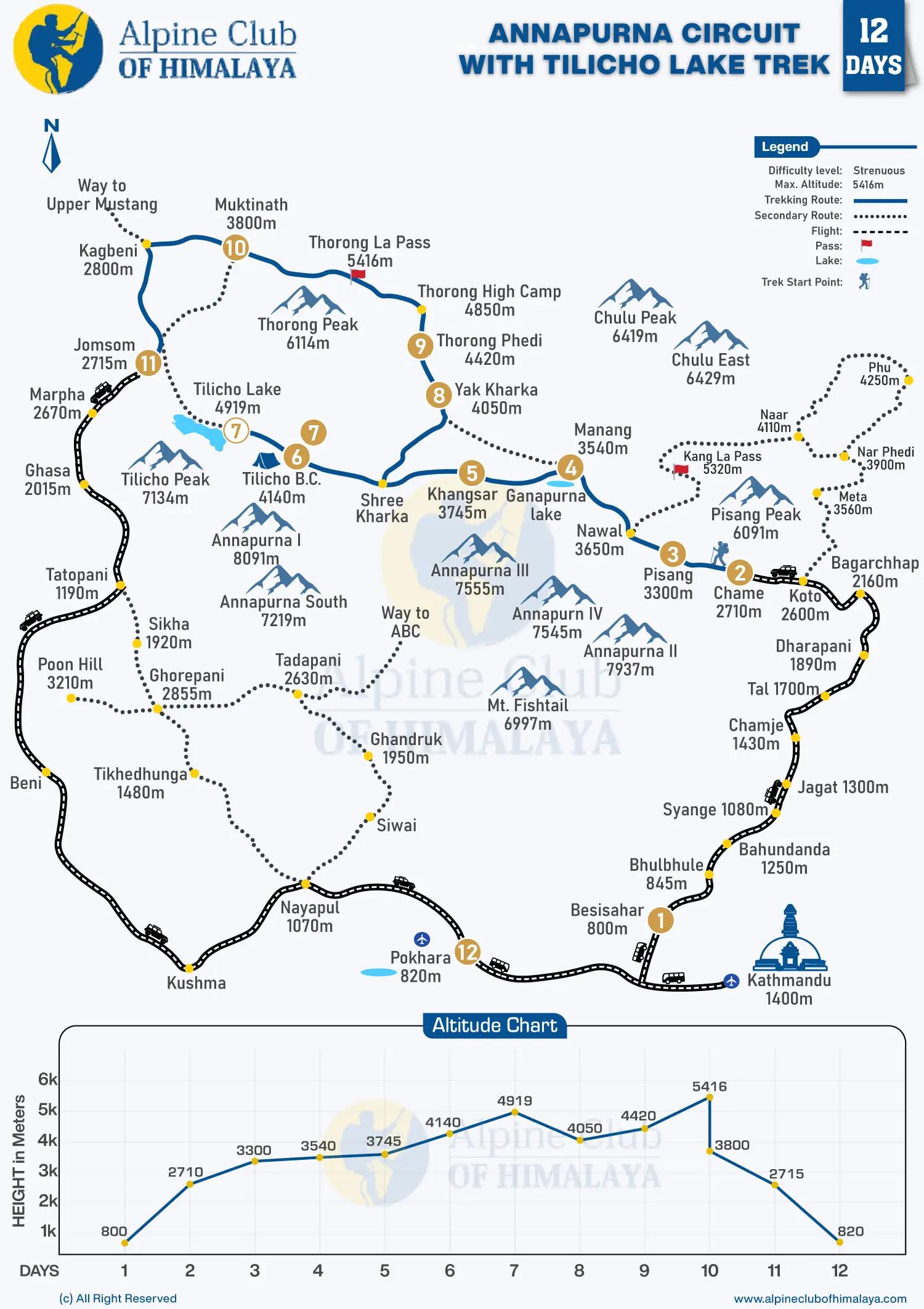
The Annapurna Circuit with Tilicho Lake Trek – 12 Days is one of Nepal’s most rewarding and scenic high-altitude adventures, combining the legendary Annapurna Circuit route with a visit to Tilicho Lake (4,919 meters), one of the highest lakes in the world. This exciting 12-day journey, organized by Alpine Club of Himalaya, takes trekkers deep into the heart of the Annapurna region and offers diverse landscapes, dramatic Himalayan panoramas, ancient culture, and a rich natural environment. Designed for trekkers seeking a shorter itinerary without compromising on highlights, this trek provides a perfect blend of challenge, adventure, and cultural immersion, making it one of the most popular Himalayan trekking routes for both new and experienced trekkers.
The journey begins in Kathmandu, where your adventure team from Alpine Club of Himalaya handles permits, trip briefings, and all necessary preparations. A scenic drive to Chame marks the start of your trek, gradually taking you from lush green hills, terraced fields, and subtropical forests into fir, pine, and rhododendron woodlands. As you ascend, the landscape transforms into alpine meadows, rocky cliffs, and eventually into the high-altitude desert terrain of Manang, an ancient trading village surrounded by some of the most iconic Himalayan peaks, including Annapurna II, Gangapurna, and Tilicho Peak.
A key highlight of this trek is the side trip to Tilicho Lake, renowned for its breathtaking turquoise waters set against a dramatic amphitheater of snow-capped mountains. The trail to Tilicho Base Camp is rugged, narrow, and exposed in places, adding an element of adventure as you traverse cliffside paths carved into steep hillsides. Reaching Tilicho Lake is a rewarding moment where trekkers can appreciate its pristine beauty and peaceful atmosphere, making it one of the most memorable sections of the entire Annapurna Circuit.
After exploring Tilicho Lake, the trail continues toward Yak Kharka and Thorong Phedi in preparation for crossing the legendary Thorong La Pass (5,416 meters)—the highest and most challenging point of the trek. The climb is demanding due to altitude and low oxygen levels, but with proper acclimatization and guidance from Alpine Club of Himalaya, trekkers safely make their way to the top, where panoramic views of the Annapurna, Dhaulagiri, and Mustang ranges unfold. The descent leads to the sacred pilgrimage site of Muktinath, a revered Hindu and Buddhist temple that symbolizes liberation and spiritual cleansing.
From Muktinath, the journey continues toward Jomsom, a picturesque town known for its windswept landscapes and unique Thakali culture. The trek concludes with a scenic drive to Pokhara, followed by a return journey to Kathmandu, where your 12-day adventure comes full circle. Throughout the trip, Alpine Club of Himalaya ensures comfortable accommodation in teahouses, nutritious meals, professional guidance, and a safe trekking experience through all elevations and terrains.
This 12-day Annapurna Circuit with Tilicho Lake Trek is ideal for trekkers who want to experience the very best of the Annapurna region in a shorter timeframe while still enjoying Teahouse hospitality, diverse cultures, dramatic mountain scenery, and challenging high passes. The combination of Tilicho Lake’s pristine beauty and the thrill of Thorong La Pass create an unforgettable Himalayan journey. With expert logistics and safety assurance from Alpine Club of Himalaya, trekkers can enjoy a seamless, well-organized, and highly rewarding trekking experience across Nepal’s most iconic trails.
Best Time to Trek
The ideal time to undertake the Annapurna Circuit with Tilicho Lake Trek is during spring (March to May) and autumn (September to November). These seasons provide stable weather, clear skies, and comfortable temperatures for trekking, ensuring a safe and enjoyable journey. Spring offers blooming rhododendron forests and vibrant landscapes, while autumn provides crisp air, excellent visibility, and panoramic views of the surrounding Himalayan peaks. Winter and monsoon seasons are less favorable due to heavy snowfall, freezing temperatures at higher elevations, and slippery trails, which may compromise safety and reduce mountain visibility.
· Spring (March to May) – mild temperatures, blooming rhododendron forests, colorful landscapes.
· Autumn (September to November) – clear skies, crisp air, post-monsoon visibility, ideal for photography.
· Winter (December to February) – cold temperatures, heavy snow at high passes, challenging conditions.
· Monsoon (June to August) – heavy rainfall, slippery trails, risk of landslides, and reduced visibility.
· Both spring and autumn provide comfortable daytime trekking temperatures and cool but manageable nights.
Difficulty Level
The Annapurna Circuit with Tilicho Lake Trek is considered a moderate to challenging trek, ideal for physically fit and determined trekkers. While technical climbing skills are not required, the trek involves long walking days, steep ascents and descents, and high-altitude terrain, particularly around Thorong La Pass (5,416m / 17,764ft) and Tilicho Lake (4,949m / 16,138ft). Trekkers can expect to walk 5–7 hours daily, with varying terrain including forest trails, alpine meadows, moraine paths, rocky ridges, and barren high-altitude zones. Cold temperatures, thinner air, and altitude-related fatigue above 3,500 meters make proper preparation essential. With guidance from Alpine Club of Himalaya, proper acclimatization, and a steady pace, this trek is accessible to both experienced trekkers and dedicated beginners seeking a high-altitude adventure.
Physical Fitness and Preparation
Trekking the Annapurna Circuit with Tilicho Lake requires cardiovascular endurance, leg strength, core stability, and stamina. Recommended preparation includes:
- Cardio Training: Jogging, cycling, or swimming to enhance endurance.
- Hiking Practice: Walking on hills or trails with a loaded backpack.
- Strength and Core Exercises: Squats, lunges, planks, and balancing exercises for uneven terrain.
- Mental Preparation: High-altitude trekking demands patience, steady pacing, and stress management.
- Health Precautions: Trekkers with heart, lung, or other chronic conditions should consult a physician before starting the trek.
A 6–8 week preparation plan improves performance and reduces fatigue, ensuring a safe and enjoyable experience along the Annapurna Circuit.
Altitude Sickness and Preparations
With altitudes reaching 5,416m at Thorong La Pass and 4,949m at Tilicho Lake, Acute Mountain Sickness (AMS) is a potential risk. Symptoms include headache, nausea, dizziness, fatigue, shortness of breath, and insomnia. Severe cases may progress to HAPE (High Altitude Pulmonary Edema) or HACE (High Altitude Cerebral Edema).
Preventive Measures:
- Gradual Acclimatization: Planned rest days in Manang and moderate daily distances help the body adjust.
- Hydration and Nutrition: Drink plenty of water, consume energy-rich meals, and avoid alcohol or excess caffeine.
- Steady Pacing: Walk at a consistent speed with short breaks during climbs.
Medical Preparations:
- Carry medications such as Diamox (acetazolamide) and painkillers under medical guidance.
- Guides from Alpine Club of Himalaya closely monitor trekkers for early signs of AMS and provide guidance on safe progression.
Emergency Preparedness:
- Early descent is the most effective treatment for severe AMS.
- Guides are trained in first aid and evacuation procedures to manage altitude-related emergencies.
Training Tips:
- Practice long hikes with a backpack and moderate-altitude treks beforehand.
- Strength and core exercises improve balance and reduce fatigue on uneven trails.
By combining preparation, acclimatization, and professional guidance, trekkers can enjoy the stunning landscapes of the Annapurna region safely.
Evacuation Procedures
Trekking in high-altitude regions of the Annapurna Circuit requires emergency planning. Alpine Club of Himalaya ensures structured protocols to manage health and safety risks:
1. Immediate Response:
- Guides assess and provide first aid on-site.
- Altitude-related symptoms are treated with immediate descent if necessary.
2. Local Support and Communication:
- Key villages like Chame, Manang, and Muktinath have health posts, mobile coverage, and radio communication.
- Guides carry satellite phones and communication devices for emergencies.
3. Evacuation Options:
- Ground Evacuation: By jeep, stretcher, or on foot for moderate cases.
- Helicopter Evacuation: For critical emergencies from Manang, Muktinath, or Jomsom to Pokhara or Kathmandu hospitals.
4. Emergency Planning:
- Guides are familiar with alternate routes, evacuation points, and weather contingencies.
- All trekkers are briefed on communication plans and safety protocols before departure.
5. Health and Insurance Preparedness:
- Comprehensive travel insurance covering high-altitude trekking and helicopter evacuation is mandatory.
- Continuous monitoring by Alpine Club of Himalaya guides ensures early intervention and safe trekking.
Environment
The Annapurna Circuit with Tilicho Lake Trek passes through diverse ecological zones, offering trekkers a unique experience of Nepal’s natural beauty. In the lower altitudes, the trail winds through subtropical forests filled with rhododendron, oak, and pine trees, alongside cascading waterfalls and abundant birdlife. Moving into the mid-altitudes, trekkers encounter terraced farmland, traditional villages, and alpine meadows, reflecting the harmonious coexistence of people and nature. At higher altitudes, the landscape becomes rugged and barren, featuring rocky ridges, glacial valleys near Tilicho Lake, and the stark expanses surrounding Thorong La Pass. The trek also immerses trekkers in local culture, with opportunities to see stone houses, monasteries, prayer flags, and Buddhist stupas that reflect the traditions of Gurung, Manangi, and Tibetan-influenced communities.
Meals
Meals are provided throughout the trek, ensuring trekkers receive adequate nutrition for high-altitude trekking. Traditional Nepali dishes such as dal bhat (rice, lentils, vegetables, and pickles), soups, noodles, fried rice, porridge, and boiled potatoes are commonly served. International options like pasta, noodles, and simple snacks are also available in teahouses. At higher altitudes, meals are simpler due to logistical challenges, making vegetarian options preferable for easier digestion and sustained energy. Meals are included from Besi Sahar to Jomsom, helping trekkers maintain proper nutrition and supporting acclimatization throughout the trek.
Accommodation
Accommodation varies according to location and altitude along the Annapurna Circuit with Tilicho Lake Trek. In Kathmandu and Pokhara, trekkers stay in 3-star hotels with twin or double rooms, attached bathrooms, hot showers, and Wi-Fi. Along the trek, lodges and teahouses provide basic but comfortable rooms with mattresses, blankets, and shared bathrooms. At high-altitude stops such as Thorong Phedi and Tilicho Base Camp, facilities are minimal, often limited to simple bedding, and tents may be arranged if necessary. Teahouses not only provide a place to rest and enjoy meals but also serve as social hubs where trekkers can meet fellow adventurers and share experiences.
Drinking Water
Clean drinking water is essential for preventing dehydration and reducing the risk of altitude sickness. In lower sections, water is available from taps, rivers, or village sources but should be treated with purification tablets, filters, or UV sterilizers. Bottled water is available at teahouses but is more expensive at higher altitudes. Trekkers are encouraged to carry reusable bottles or hydration systems and refill them at safe water sources along the trail.
Transportation
Transportation during the Annapurna Circuit with Tilicho Lake Trek is a combination of private vehicle transfers and trekking on foot, ensuring a smooth and convenient journey through the diverse landscapes of Nepal.
The trek begins with a scenic drive from Kathmandu to Besi Sahar (800m / 2,625ft), which takes approximately 6–7 hours. This route passes through lush countryside, terraced fields, and small villages, offering travelers a first glimpse of the rural beauty of central Nepal. From Besi Sahar, a short drive to Dharapani is arranged to begin the trekking section comfortably, reducing the first day’s walking load.
During the trek, all trails are covered on foot, as motorable roads do not reach the remote villages along the Annapurna Circuit. Trekkers walk 5–7 hours daily, depending on the terrain and altitude, through forests, valleys, and high-altitude passes. Trekking provides the best way to immerse in nature, enjoy panoramic mountain views, and experience local culture in villages like Chame, Pisang, Manang, Khangsar, and Yak Kharka.
After crossing the Thorong La Pass (5,416m / 17,764ft) and descending to Muktinath (3,800m / 12,467ft), trekking continues through Kagbeni before reaching Jomsom (2,715m / 8,910ft). Jomsom is accessible by road, and from here, a 6–7 hour drive to Pokhara (823m / 2,700ft) concludes the trek. The drive offers stunning valley views, river gorges, and glimpses of local rural life, providing a comfortable transition back to city life.
All vehicle transfers are arranged by Alpine Club of Himalaya using private jeeps or tourist vans, ensuring safety, reliability, and timely arrival at each starting or ending point. This combination of road travel and trekking allows trekkers to maximize time on the trail while minimizing unnecessary fatigue from long approaches.
Wi-Fi and Electricity
Throughout the Annapurna Circuit with Tilicho Lake Trek, electricity and Wi-Fi availability vary by location. Lower-altitude villages and towns such as Besi Sahar, Chame, and Manang often have limited electricity from solar panels or generators, allowing basic phone charging. Wi-Fi may be available in teahouses or lodges but can be slow or unstable. Higher-altitude stops, including Thorong Phedi and Tilicho Base Camp, provide minimal electricity, usually for essential device charging, and Wi-Fi is generally unavailable. Trekkers are advised to carry power banks and solar chargers to ensure connectivity throughout the trek.
Guide and Porter Support
To ensure a safe and enjoyable trekking experience, Alpine Club of Himalaya provides professional guides and porters for the entire Annapurna Circuit with Tilicho Lake Trek. The team includes:
· Lead Trek Guide: Experienced, licensed, and knowledgeable about the trail, local culture, and altitude safety. The guide manages the group’s pace, acclimatization, and emergency situations.
· Assistant Guide: Supports the lead guide, especially for groups larger than 6–8 trekkers, ensuring personalized attention and safety.
· Porters: Trained to carry trekking gear, camping equipment, and group supplies. Their support allows trekkers to enjoy the trail without heavy backpacks.
Staff-to-Trekker Ratio: Alpine Club of Himalaya follows a standard of 1 porter for every 2 trekkers and 1 assistant guide for every 10 trekkers, ensuring proper support and attention for each participant. Porters are provided with proper meals, accommodations, and fair wages, emphasizing ethical and responsible trekking practices.
This combination of well-trained guides, reliable porters, and access to basic electricity and connectivity allows trekkers to focus on the adventure, safely navigate the challenging terrain, and enjoy the stunning scenery of the Annapurna Circuit with Tilicho Lake.
TIMS and Permits
Trekking in the Annapurna region requires certain permits to ensure safety, conservation, and legal access to the trails. Alpine Club of Himalaya assists all trekkers in obtaining these essential documents prior to departure.
1. Annapurna Conservation Area Permit (ACAP):
· The Annapurna Conservation Area Permit is mandatory for trekking within the Annapurna region.
· It is issued by the National Trust for Nature Conservation (NTNC) and helps protect the fragile environment of the Annapurna Conservation Area.
· The permit fee is approximately $30 USD per person for international trekkers and covers the entire duration of the trek.
· The permit allows access to all teahouses, trails, and viewpoints within the conservation area.
2. Trekkers’ Information Management System (TIMS) Card:
- The TIMS card is required for all trekkers in Nepal to monitor visitor activity and ensure safety.
- Individual TIMS Card: For solo trekkers, costing approximately $10 USD.
- Group TIMS Card: For trekkers in organized groups, costing around $20 USD per group.
- The TIMS card is checked at checkpoints along the route, particularly at trailheads and major villages.
3. Other Permits:
· While ACAP and TIMS are the primary permits for the Annapurna Circuit, trekkers should carry a valid passport and visa to enter Nepal legally.
· For treks extending to Mustang or other restricted areas, additional permits may be required, though they are not needed for the standard 10-day Annapurna Circuit.
Important Notes:
· Permits can be obtained in Kathmandu or Pokhara before starting the trek.
· Alpine Club of Himalaya ensures that all permits and TIMS cards are processed efficiently to avoid delays.
· Trekkers should carry photocopies of all permits and identification documents while trekking.
Having proper permits not only ensures legal compliance but also supports conservation efforts, local communities, and sustainable trekking practices in the Annapurna region.
Permissions and Restrictions
Trekking in the Annapurna region requires official permits to ensure legal access, safety, and environmental protection. The Annapurna Conservation Area Permit (ACAP) and TIMS card are mandatory. Trekkers must respect park regulations, including no littering, no hunting, and no off-trail camping. Certain areas may have seasonal restrictions or require additional permissions, especially for treks beyond the standard Annapurna Circuit. Alpine Club of Himalaya ensures all permits are obtained beforehand and that trekkers are fully informed about local rules and cultural sensitivities.
Travel Insurance
High-altitude trekking carries inherent risks, so travel insurance is mandatory. The policy should cover medical emergencies, evacuation, trip cancellations, and high-altitude trekking up to 5,500–6,000 meters. Alpine Club of Himalaya recommends trekkers secure comprehensive insurance before departure, ensuring peace of mind during the expedition.
Passport and Visa
A valid passport and Nepal tourist visa are required for international travelers. Visas can be obtained on arrival at Tribhuvan International Airport in Kathmandu or in advance through Nepalese embassies. Trekkers should ensure their passport is valid for at least six months and carry multiple copies for permits and emergency use.
Why Choose this Trek with Alpine Club of Himalaya?
Choosing the Annapurna Circuit with Tilicho Lake Trek with Alpine Club of Himalaya ensures a safe, enjoyable, and unforgettable high-altitude adventure. With years of experience in organizing treks across Nepal, the company provides professional guidance, personalized services, and thorough planning for every detail of your journey.
1. Expert Guides and Support:
Alpine Club of Himalaya assigns experienced local guides who know the trails, weather patterns, and emergency protocols. Every group is supported with one porter for every two trekkers and an assistant guide for up to 10 trekkers, ensuring smooth logistics, load management, and safety throughout the trek.
2. Well-Planned Itinerary and Accommodations:
The trek is designed for optimal acclimatization, covering the most scenic routes, Tilicho Lake, and Thorong La Pass, with balanced daily distances and rest periods. Accommodation ranges from teahouses in villages to comfortable high-altitude lodges or tents, with meals provided to ensure energy and nutrition.
3. Safety and Health Management:
Alpine Club of Himalaya prioritizes safety with altitude sickness monitoring, first aid-trained guides, and knowledge of evacuation procedures including helicopter rescue if needed. All trekkers receive guidance on hydration, nutrition, and pacing to minimize risks at high altitudes.
4. Cultural and Environmental Insight:
Guides provide insights into local Gurung, Manangi, and Tibetan-influenced cultures, traditions, and monasteries along the trek. The company emphasizes eco-friendly trekking, ensuring minimal environmental impact while respecting local customs.
5. Comprehensive Services:
From airport pickups, transportation, and permit management, to gear assistance and trekking tips, Alpine Club of Himalaya offers end-to-end support for a hassle-free experience.
6. Memorable Himalayan Experience:
Trekking with Alpine Club of Himalaya combines breathtaking Himalayan views, visits to Tilicho Lake, and the crossing of Thorong La Pass, with professional guidance and reliable support, creating memories that last a lifetime.
Choosing Alpine Club of Himalaya guarantees not only an adventurous and scenic trek but also a safe, well-organized, and culturally enriching journey through the Annapurna Circuit with Tilicho Lake.
Photography and Drone Policy
The Annapurna Circuit with Tilicho LakeTrek offers spectacular opportunities for photography, from towering snow-capped peaks and alpine meadows to traditional villages and cultural landmarks. Alpine Club of Himalaya encourages trekkers to capture these unforgettable moments, while respecting local customs, wildlife, and environmental regulations.
Photography Guidelines:
· Trekkers are welcome to take photographs of landscapes, flora, and fauna, as well as village life along the trail.
· It is important to seek permission before photographing local residents, especially in remote villages and religious sites, to respect cultural sensitivities.
· Wildlife photography should be done from a distance to avoid disturbing animals, particularly in the Annapurna Conservation Area.
Drone Policy:
· Flying drones is strictly regulated in Nepal, particularly in protected areas such as the Annapurna Conservation Area.
· Trekkers wishing to use drones must obtain special permits from the Civil Aviation Authority of Nepal (CAAN). These permits are typically required for both recreational and professional drone use.
· Without proper permits, drone use is prohibited and can result in fines, confiscation, or legal penalties.
· Alpine Club of Himalaya can provide guidance on permit requirements and safe drone operation, ensuring compliance with local regulations.
Best Practices:
· Use drones in open areas away from crowded villages or cultural sites.
· Keep drones at a safe distance from wildlife and avoid flying over protected zones without authorization.
· Respect fellow trekkers’ experiences by flying drones quietly and responsibly, ensuring minimal disruption.
By following these guidelines, trekkers can enjoy capturing breathtaking views and memorable moments safely and responsibly, while preserving the cultural integrity and natural beauty of the Annapurna region.
Last-Minute Booking
Alpine Club of Himalaya accommodates trekkers who wish to join the Annapurna Circuit with Tilicho Lake Trek at short notice. While high-altitude trekking requires preparation, last-minute bookings are possible under certain conditions:
· Availability Check: Trekkers should contact the team in advance to confirm space, permits, and the availability of experienced guides and porters.
· Expedited Permits: ACAP (Annapurna Conservation Area Permit) and TIMS cards can be processed quickly to allow trekkers to start without delay.
· Gear and Logistics: Alpine Club of Himalaya ensures that essential trekking gear, tents (if needed), and porter support are arranged in time for late arrivals.
· Flexible Scheduling: Transportation, accommodation, and trekking arrangements can be adjusted to accommodate last-minute travelers while ensuring a smooth and safe trekking experience.
This flexibility allows adventurers with limited planning time to still enjoy a well-organized Annapurna Circuit Trek with all necessary support.
Online Briefing
Before arriving in Kathmandu, Alpine Club of Himalaya provides a comprehensive online briefing to ensure trekkers are fully prepared for the Annapurna Circuit Trek:
· Itinerary Overview: Detailed explanation of trekking days, acclimatization schedules, daily distances, and highlights along the trail.
· Gear and Packing Guidance: Instructions on essential trekking equipment, clothing layers, footwear, and personal items suitable for high-altitude trekking.
· Health and Safety Instructions: Advice on altitude sickness prevention, hydration, nutrition, and safe trekking practices.
· Cultural and Environmental Awareness: Guidance on local customs, responsible trekking, and eco-friendly practices in the Annapurna region.
· Q&A Session: Trekkers can ask questions about trail conditions, weather, emergency procedures, or any concerns regarding the trek.
The online briefing ensures that trekkers arrive in Nepal confident, well-prepared, and informed, ready to enjoy the journey safely and comfortably.
Pickup and Drop Points from Kathmandu:
1 - Devo Boutique Hotel, Thamel, Kathmandu (or similar)
2 - Tribhuvan International Airport (TIA), Kathmandu
3 - Alpine Club of Himalaya Pvt. Ltd
4 - Within Thamel, Kathmandu
Final Notes
Before starting the Annapurna Circuit with Tilicho Lake Trek, careful preparation is essential to ensure a safe, enjoyable, and unforgettable experience in one of Nepal’s most iconic trekking regions. This 12-day adventure takes trekkers through a variety of landscapes—from lush subtropical valleys and terraced farmlands to alpine meadows and the high-altitude, rugged deserts near Thorong La Pass (5,416 m / 17,769 ft). Along the way, trekkers are rewarded with breathtaking views of the Annapurna and Dhaulagiri ranges, cultural encounters in traditional villages, and the serene beauty of Tilicho Lake, one of the highest lakes in the world.
A flexible and layered clothing system is crucial to adapt to changing weather and temperature variations. Trekkers should carry moisture-wicking base layers, insulated jackets, and waterproof outer shells. Sturdy, broken-in trekking boots, comfortable backpacks, and properly fitted gear are essential for safety, endurance, and performance. While technical climbing skills are not required, the trek is moderate to challenging due to long hiking days, significant altitude gains, and high-pass crossings. Proper acclimatization, good physical fitness, and mental determination are key to successfully completing the circuit.
With over two decades of experience, Alpine Club of Himalaya provides full support throughout the trek. Our team assists with permits, route updates, transportation, accommodation arrangements, and local guidance, ensuring that trekkers have a smooth and memorable experience. Whether you are a solo traveler, part of a group, or trekking with our experienced female guides, every detail is managed to maximize safety, comfort, and adventure. With our guidance, trekkers can fully immerse themselves in the awe-inspiring Himalayan scenery, rich cultural experiences, and the unique adventure offered by the Annapurna Circuit with Tilicho Lake.
Cancellation Policy
Cancellation by the Participant:
If you need to cancel your booking, please notify Alpine Club of Himalaya in writing via email or a signed letter. Cancellation charges are as follows:
- 60 days or more before departure: 20% of the total trek cost retained to cover pre-arranged permits, accommodation, domestic transport, and administrative costs.
- 30 to 59 days before departure: 50% of the total trek cost is non-refundable.
- Less than 30 days before departure: 100% of the trek cost is non-refundable.
These charges reflect the advance investments made for permits, lodges, transportation, and guide/porter services.
Cancellation by the Organizer:
In rare cases, the trek may be canceled due to extreme weather, natural disasters, political unrest, or safety concerns. In such instances, participants may:
- Receive a full refund of all payments made, or
- Reschedule the trek for a future date at no additional cost.
Safety is the top priority of Alpine Club of Himalaya, and cancellations by the organizer occur only when absolutely necessary.
Force Majeure Clause
Alpine Club of Himalaya is not responsible for extra costs or delays caused by unforeseen events, including but not limited to:
- Natural disasters: earthquakes, floods, landslides
- Political unrest: strikes, demonstrations, or border closures
- Health emergencies: epidemics, pandemics, or other unforeseen medical issues
- Travel disruptions: flight cancellations, airspace closures, or delays
Participants are responsible for any additional personal expenses incurred due to such events, including extra accommodation, changed flights, or insurance claims. We strongly recommend obtaining comprehensive travel insurance covering cancellations, medical emergencies, and force majeure events prior to joining the trek.