O
Oliver Grant
Bristol, UK
Sep 6, 2026

If you've done the standard ABC trek and want a more historic, less crowded alternative, this route to North Annapurna delivers exactly that.
Destination
Nepal
Duration
5 Days
Best Weather
March, April, May, September, October & November
Max Altitude
4130m (Annapurna Base Camp)
Accommodation
Hotel and Guesthouse
Meals
Breakfast, Lunch, Dinner
Transportation
Private vehicle / Flights
Group
Min. 1 Pax
Difficulty
Easy
Activities
Trekking
The North Annapurna Base Camp Trek – 5 Days is a short yet rewarding adventure in the remote northern section of the Annapurna region of Nepal. Organized by Alpine Club of Himalaya, this trek follows the historic Maurice Herzog Trail, leading trekkers to the rarely visited North Face of Mount Annapurna. Unlike the popular Annapurna Base Camp route, this trail remains less crowded, peaceful, and close to nature, making it an excellent choice for trekkers seeking a quieter and more authentic Himalayan experience.
The journey begins with a scenic drive from Pokhara to Humkhola, passing through Tatopani and covering approximately 115 kilometers in 6–7 hours. The trek starts and ends at Humkhola, gradually ascending through stone-paved paths, dense forests, natural streams, and waterfalls. Along the way, trekkers pass important landmarks such as Busket Mela, Gurase Danda, Sandhikharka, Gufa Phant, Sunkhola, and the beautiful Panchakunda (Narchyang) Lake, a sacred high-altitude lake known for its striking blue color and peaceful surroundings.
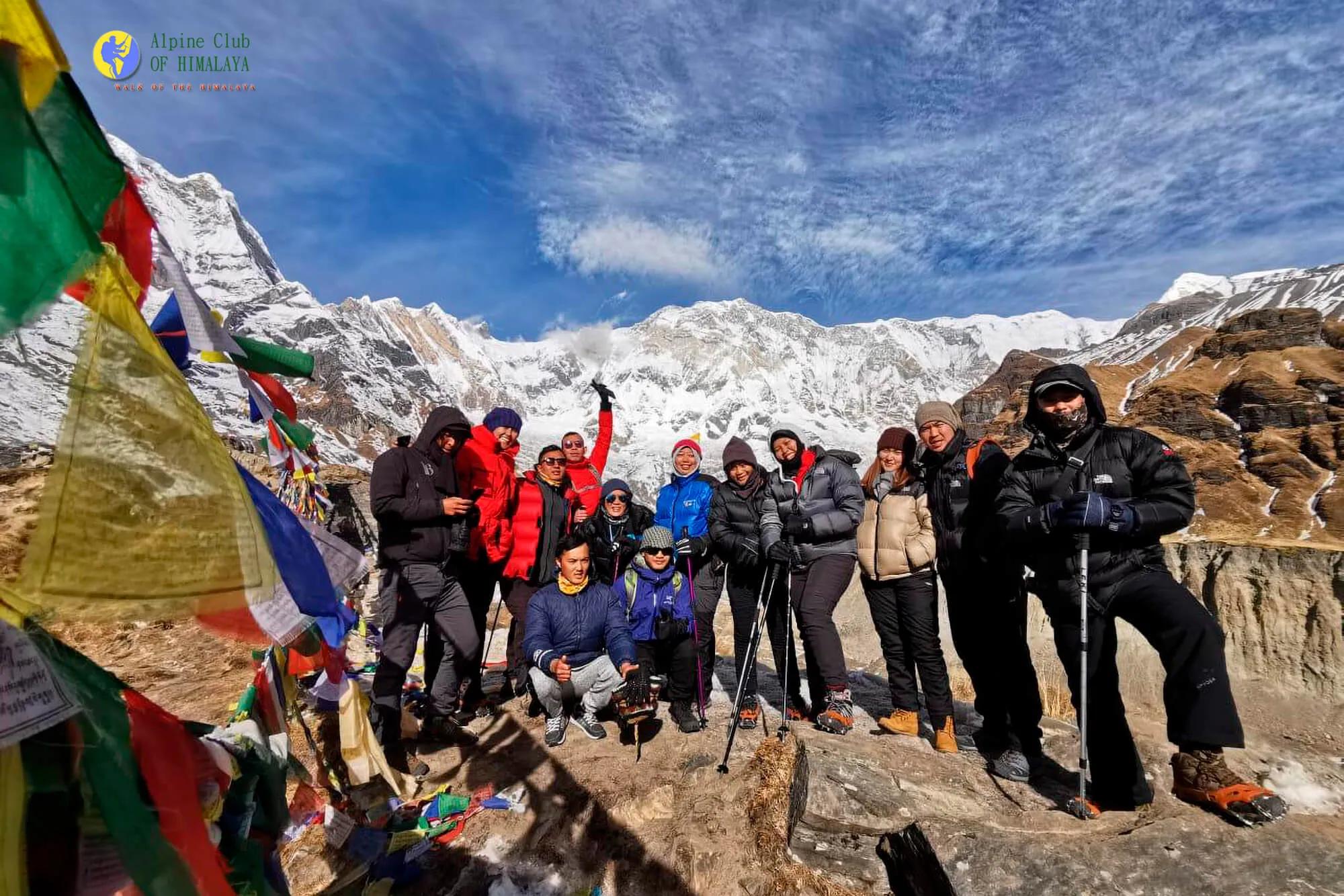
The highlight of the trek is reaching North Annapurna Base Camp at 4,190 meters, where panoramic views of Annapurna I, Fang Peak, Annapurna III, and surrounding glaciers unfold. Despite its high elevation, the trek is graded as moderate, making it suitable for trekkers with reasonable fitness and some prior hiking experience. The total walking distance is approximately 23 kilometers, with the longest trekking day involving around 11 kilometers and 6 hours of walking.
Accommodation during the trek includes a mix of camping and basic hotels, as facilities are limited in the upper sections. Although some teahouses are available along the route, Alpine Club of Himalaya does not rely entirely on them to ensure comfort and safety. All meals—breakfast, lunch, and dinner—are provided throughout the trek. The best seasons for this trek are March to May and August to November, when weather conditions and mountain views are at their best.
This 5-day North Annapurna Base Camp Trek is ideal for trekkers looking for an alternative Annapurna route that combines natural beauty, cultural significance, and historical importance. Promoted by local communities, ACAP, TAAN, and tourism authorities, this trail is gradually gaining recognition while still preserving its untouched charm. With expert guidance and well-planned logistics from Alpine Club of Himalaya, trekkers can enjoy a safe, memorable, and truly unique Himalayan trekking experience.
The history of the Annapurna North Base Camp is closely connected to one of the most significant milestones in mountaineering history. On June 3, 1950, a French expedition led by Maurice Herzog successfully reached the summit of Mount Annapurna I (8,091 m). This achievement marked the first-ever ascent of an 8,000-meter peak in the world, making Annapurna a landmark in global climbing history.
During this historic expedition, the French team approached the mountain from the north side, exploring what later became known as the French North Face route. Because of Maurice Herzog’s leadership and the importance of this ascent, the trekking route leading to the Annapurna North Base Camp is also widely referred to as the Maurice Herzog Trail. This trail holds strong historical value, as it follows the path used by the first climbers to study and access the formidable north face of Annapurna I.
For many years, the North Annapurna Base Camp route remained remote and rarely visited. Unlike the southern Annapurna Base Camp, this trail saw very little trekking activity, making it one of the least crowded and most pristine trekking routes in the Annapurna region. Its solitude and raw natural beauty continue to attract trekkers who prefer quiet trails and a more adventurous experience.
In recent years, the North Annapurna Base Camp Trek has gradually gained popularity among trekkers. With increasing interest, basic teahouses have been developed along some sections of the trail, although facilities remain limited, especially near the base camp itself. In the past, trekkers had to rely entirely on camping, and even today, accommodation cannot be fully guaranteed in all locations.
For this reason, it is highly recommended to gather updated information and arrange logistics through a reliable trekking company such as Alpine Club of Himalaya before starting the trek. Proper planning ensures safe accommodation, meals, and support while allowing trekkers to experience this historic and less-explored Himalayan route with confidence.
Narchyang Lake, also known as Panchakunda Lake, is one of the most scenic and spiritually significant highlights of the North Annapurna Base Camp Trek. Located at a high altitude near the base of Annapurna’s north face, this pristine alpine lake lies along the historic Maurice Herzog Trail and serves as an important acclimatization and camping point for trekkers heading toward North Annapurna Base Camp.
The lake is known for its deep blue and turquoise color, which beautifully reflects the surrounding snow-capped peaks, rocky cliffs, and clear Himalayan skies. Surrounded by rugged terrain and untouched wilderness, Narchyang Lake offers a peaceful atmosphere that allows trekkers to rest, reflect, and fully connect with nature. Due to its remote location, the area remains largely unspoiled and far less crowded compared to other popular trekking destinations in the Annapurna region.
Narchyang Lake holds strong religious and cultural importance for local communities. The name Panchakunda refers to the belief that the lake consists of five sacred sections, and it is visited by pilgrims during special religious occasions. Locals consider the lake holy, adding spiritual depth to the trekking experience.
For trekkers traveling with Alpine Club of Himalaya, Narchyang Lake is more than just a scenic stop—it is a key landmark that enhances the overall experience of the North Annapurna Base Camp Trek. The area around the lake has limited facilities, and accommodation is usually arranged through camping, as teahouse options are not reliable at this altitude.
Reaching Narchyang Lake is a rewarding journey through forests, alpine landscapes, and glacial valleys. It stands as a perfect example of why the North Annapurna route is considered one of the most authentic and less-explored trekking trails in Nepal, offering both natural beauty and cultural significance in a single destination.
The best time to trek to North Annapurna Base Camp is during the spring and autumn seasons, when weather conditions are stable and mountain views are clear.
· Spring (March to May):
This is one of the best seasons for the North Annapurna Base Camp Trek. The weather is mild, trails are dry, and the forests come alive with blooming rhododendrons and wildflowers. Visibility is excellent, offering clear views of Annapurna I and surrounding peaks.
· Autumn (September to November):
Autumn provides clear skies, stable weather, and crisp mountain views, making it the most popular trekking season in Nepal. Post-monsoon landscapes are fresh and green, and temperatures are comfortable for trekking at higher altitudes.
· Monsoon (June to August):
Trekking is possible but less recommended due to rainfall, slippery trails, and leeches in lower sections. However, the landscape is lush, and the trail remains very quiet.
· Winter (December to February):
Winter trekking is challenging due to cold temperatures and snowfall, especially near North Annapurna Base Camp. This season is suitable only for experienced trekkers with proper equipment.
For a safe and well-planned trek, Alpine Club of Himalaya recommends March–May and September–November as the ideal trekking periods for the North Annapurna Base Camp Trek.
The North Annapurna Base Camp Trek offers some of the most breathtaking and lesser-seen mountain panoramas in the Annapurna region. Trekkers are rewarded with dramatic, close-up views of snow-capped peaks, glaciers, and rugged alpine landscapes along the entire trail.
· Annapurna I (8,091 m): The trek culminates at the North Base Camp, providing a spectacular view of Annapurna I’s north face and surrounding glaciers.
· Fang Peak and Annapurna III: These majestic peaks dominate the skyline, offering incredible photography and awe-inspiring scenery.
· Lamjung Himal and Ganesh Himal: Visible along parts of the lower trail, these peaks add variety to the panoramic vistas.
· Glacial Valleys and Alpine Ridges: Between Sunkhola and Panchakunda Lake, trekkers traverse high ridges and valleys with stunning glacial formations.
· Narchyang (Panchakunda) Lake: Reflections of surrounding peaks on the lake’s turquoise waters create a serene and memorable sight.
· Less-crowded viewpoints: Unlike popular Annapurna trails, this route offers peaceful and uninterrupted mountain views, making every stop along the trek uniquely rewarding.
Trekking with Alpine Club of Himalaya ensures that stops and camping sites are chosen to maximize these panoramic views, allowing trekkers to fully enjoy the majestic Himalayas in a tranquil and unspoiled environment.
The North Annapurna Base Camp Trek is graded as a moderate trek. Although it is a short 5-day itinerary, the trail passes through remote terrain and high-altitude landscapes, reaching a maximum elevation of 4,190 meters. The trek involves steady ascents, descents, stone-paved paths, forest trails, and alpine sections. The route is less developed than other Annapurna treks, and limited facilities add to the overall challenge. Prior trekking experience is helpful but not mandatory if you are physically prepared and trekking with a professional team such as Alpine Club of Himalaya.
Physical Fitness and Requirements
To enjoy the North Annapurna Base Camp Trek safely and comfortably, a good level of physical fitness is required.
· Trekkers should be able to walk 5–6 hours per day on uneven mountain trails
· The trek includes continuous uphill and downhill sections, so strong legs and balance are important
· Regular activities such as walking, hiking, cycling, swimming, or stair climbing before the trek are highly beneficial
· No technical climbing skills are required, but basic trekking experience helps with confidence and endurance
· Proper acclimatization, hydration, and a steady walking pace are essential to manage altitude
Due to limited accommodation along the route, trekking with an experienced agency like Alpine Club of Himalaya ensures proper logistics, meals, camping support, and safety arrangements. With adequate preparation and a positive mindset, the North Annapurna Base Camp Trek is achievable and highly rewarding for fit and motivated trekkers.
The North Annapurna Base Camp Trek is one of the best alternative trekking routes in the Annapurna region, perfect for travelers who want a unique and less-commercialized Himalayan journey. This 5-day trek follows the legendary Maurice Herzog Trail, leading to the rarely visited North Annapurna Base Camp at 4,190 meters. Trekkers enjoy breathtaking views of Annapurna I, icefalls, glaciers, and alpine valleys, along with a visit to the sacred Narchyang (Panchakunda) Lake. With its moderate difficulty, remote beauty, and rich mountaineering history, this trek offers an unforgettable adventure.
When organized by Alpine Club of Himalaya, trekkers benefit from expert guidance, reliable logistics, and a safe trekking experience in one of Nepal’s most pristine mountain regions.
The North Annapurna Base Camp Trek offers a rich blend of cultural heritage and natural beauty, making it more than just a mountain walk. The trail passes through traditional villages inhabited by Magar and Gurung communities, where trekkers can observe authentic rural lifestyles, local farming practices, and age-old traditions that remain largely untouched by modern tourism. Simple stone houses, terraced fields, and warm local hospitality provide meaningful cultural encounters along the way.
From a natural perspective, the trek showcases the diverse landscapes of the northern Annapurna region, ranging from subtropical forests to high alpine terrain. Trekkers walk through lush forests filled with rhododendron, oak, and pine, cross natural streams and waterfalls, and gradually reach glacial valleys beneath the towering north face of Annapurna. Highlights such as the sacred Narchyang (Panchakunda) Lake and the dramatic glaciers surrounding North Annapurna Base Camp reflect the raw and untouched beauty of this remote region.
With expert guidance from Alpine Club of Himalaya, trekkers gain deeper insight into both the cultural significance and natural diversity of this historic trail, making the journey a truly enriching Himalayan experience rather than just a physical adventure.
Altitude sickness, also known as Acute Mountain Sickness (AMS), can occur above 3,000 meters. Common symptoms include headache, nausea, dizziness, fatigue, and loss of appetite. To minimize the risk, trekkers should maintain a slow and steady walking pace, drink plenty of fluids, eat properly, and avoid alcohol during the trek. Pre-trek physical preparation and prior trekking experience at altitude are helpful but not mandatory.
Trekkers are encouraged to inform guides immediately if any symptoms appear. Early detection and prompt response are key to safe trekking. With proper preparation, awareness, and the support of experienced guides from Alpine Club of Himalaya, the North Annapurna Base Camp Trek can be completed safely and enjoyably by most physically fit trekkers.
Although the North Annapurna Base Camp Trek is a short 5-day itinerary, proper acclimatization is still essential as the trail reaches a maximum elevation of 4,190 meters. The itinerary is designed with a gradual ascent, allowing the body to adapt naturally to increasing altitude. Trekking at a steady pace, staying well hydrated, and avoiding rapid elevation gain help reduce the risk of altitude-related issues. With professional planning by Alpine Club of Himalaya, rest periods and overnight stops are carefully arranged to support safe acclimatization throughout the trek.
In case of a medical emergency, including altitude sickness or injury, Alpine Club of Himalaya follows well-established evacuation protocols. The trekking guides are trained in first aid and altitude awareness and carry essential medical kits. If a trekker’s condition does not improve with rest or descent, immediate evacuation is arranged, which may include descending on foot or helicopter evacuation depending on the severity and location. Evacuation services are coordinated with local authorities and rescue providers, and trekkers are strongly advised to have comprehensive travel insurance that covers high-altitude trekking and helicopter rescue.
The North Annapurna Base Camp Trek offers stunning Himalayan scenery, but trekkers should be aware of the weather patterns and potential challenges along this remote trail.
Weather
· Spring (March–May): Mild temperatures and mostly clear skies make trekking comfortable. Rhododendron forests bloom along the lower sections, and visibility of snow-capped peaks is excellent.
· Autumn (September–November): Clear skies, stable weather, and crisp mountain air provide the best conditions for photography and trekking. Trails are dry, and mountain views are unobstructed.
· Monsoon (June–August): Heavy rainfall can make trails slippery, cause leeches in lower sections, and create waterlogged paths. Trekkers may face occasional trail closures due to landslides.
· Winter (December–February): Cold temperatures, frost, and snow make trekking more challenging, particularly at higher altitudes. Proper winter gear is essential if attempting the trek in this season.
Challenges
· Remote and less-developed trail: Facilities are limited, especially near North ABC, requiring trekkers to rely on camping for part of the journey.
· Altitude: The trek reaches 4,190 meters, and altitude sickness (AMS) can occur. Gradual ascent, proper acclimatization, and hydration are essential.
· Physical demands: The trail involves uphill and downhill trekking, stone-paved paths, and uneven terrain, which can be strenuous for the unprepared.
· Weather variability: Sudden changes in weather, especially in higher alpine regions, can result in cold winds, snow, or rain.
· Limited medical support: Emergency evacuation may require descending to lower altitudes or helicopter rescue in case of serious illness or injury.
Trekking with Alpine Club of Himalaya ensures professional guidance, proper logistics, and safety support, helping trekkers navigate these challenges while enjoying the pristine beauty of the North Annapurna region.
Ensuring safety and security is a top priority for trekkers on the North Annapurna Base Camp Trek, given the remote and less-crowded nature of this trail. While the trek is moderately challenging, proper planning, guidance, and awareness significantly reduce risks.
By trekking with Alpine Club of Himalaya, travelers enjoy professional supervision, structured logistics, and well-coordinated safety measures, making the North Annapurna Base Camp Trek a secure and enjoyable adventure even in its remote Himalayan environment.
The North Annapurna Base Camp Trek is a paradise for nature lovers, offering a diverse range of flora and fauna across its varied altitudes and landscapes. The trail passes through subtropical forests at lower elevations, alpine meadows in the mid-hills, and rugged high-altitude zones near North ABC, creating a rich ecological experience.
Lower sections are dominated by oak, rhododendron, and pine forests, with colorful wildflowers blooming in spring. The rhododendrons, in particular, create breathtaking red, pink, and white carpets along the trail, enhancing the trekking experience. Higher up, alpine shrubs and hardy mosses adapt to the rocky terrain and colder temperatures, adding to the trail’s scenic diversity.
Wildlife sightings are common for trekkers who move quietly along the trail. Animals such as Himalayan langurs, musk deer, Himalayan tahr, and various bird species like the vivid Himalayan monal can occasionally be spotted. The remote nature of this trail also allows trekkers to encounter wildlife in its natural habitat, away from the crowds typical of southern Annapurna routes.
The pristine Narchyang (Panchakunda) Lake area and surrounding alpine meadows further showcase delicate high-altitude vegetation, while streams and waterfalls support aquatic flora. Trekking with Alpine Club of Himalaya ensures safe exploration while respecting the fragile environment, making this journey a unique combination of adventure, natural beauty, and ecological appreciation.
Accommodation along the North Annapurna Base Camp Trek is a mix of camping and basic lodges, designed to suit the remote and less-frequented nature of this trail. Unlike the popular Annapurna Base Camp route, this northern trail has limited teahouse facilities, especially near North ABC, making camping a key part of the experience.
Choosing Alpine Club of Himalaya ensures that trekkers enjoy well-organized accommodation, balancing comfort and adventure while experiencing the pristine and less-explored landscapes of northern Annapurna.
Transportation for the North Annapurna Base Camp Trek is an important part of the journey, as the trailhead is located in a remote northern area of the Annapurna region. Proper planning ensures a smooth start and end to the trek.
· Arrival in Pokhara: Most trekkers begin the journey by flying or driving to Pokhara, the gateway to the Annapurna region. Pokhara offers well-connected domestic flights, buses, and private vehicles from Kathmandu and other major cities in Nepal.
· Drive to Humkhola (Trailhead): From Pokhara, the trek starts with a 6–7 hour scenic drive covering approximately 115 km to Humkhola. The road passes through small towns, forests, and river valleys, providing an introduction to the natural beauty of northern Annapurna.
· Trek access: Humkhola is the starting point of the North Annapurna Base Camp Trek, and vehicles are not available beyond this point. All further travel is on foot through the trail, following stone paths, forested areas, and alpine valleys.
· Return journey: After completing the trek, trekkers descend back to Humkhola, where private vehicles arranged by Alpine Club of Himalaya transport participants back to Pokhara. From Pokhara, travelers can continue to Kathmandu by road or air.
· Local transport: Depending on availability, jeeps or local buses can also be used to cover parts of the trailhead approach, but private vehicles arranged by the trekking company are safer and more convenient.
By traveling with Alpine Club of Himalaya, all transportation—from Pokhara to the trailhead and back—is well-coordinated, comfortable, and reliable, ensuring trekkers can focus on the adventure without logistical concerns.
During the North Annapurna Base Camp Trek, trekkers are provided with all meals—breakfast, lunch, and dinner. Meals are freshly prepared, focusing on nutritious and high-energy food to support trekking at high altitudes. The menu usually includes local Nepali dishes such as dal bhat (lentil rice), noodles, soups, vegetables, and occasionally meat, along with snacks and hot drinks. In high-altitude camps near North ABC and Panchakunda Lake, meals are served in camp dining tents prepared by the trekking staff to ensure comfort and hygiene.
Clean drinking water is essential for health and altitude acclimatization. Trekkers are advised to either boil water, use water purification tablets, or carry a reliable water filter. Along the trail, water from streams and springs is abundant but must be purified before drinking. The trekking team from Alpine Club of Himalaya ensures access to safe drinking water at campsites and during trekking days.
Hiring a professional guide and porter is highly recommended for this trek:
The presence of guides and porters also enhances safety, local knowledge, and overall trekking efficiency.
Being a remote and less-frequented trail, Wi-Fi and electricity are limited or unavailable, especially near North Annapurna Base Camp and Panchakunda Lake. Some teahouses in the lower sections may provide limited electricity for charging devices, usually via solar power or generators. Trekkers are advised to carry power banks and solar chargers to ensure their devices stay charged throughout the trek.
Trekking in Nepal requires proper permits and documentation to ensure safety and support conservation of the trails. For the North Annapurna Base Camp Trek, trekkers must carry a Trekking Information Management System (TIMS) card and an Annapurna Conservation Area Permit (ACAP). The TIMS card is mandatory for all trekkers and acts as a tracking and safety system in remote areas, helping authorities locate trekkers in case of emergencies. It is issued by the Nepal Tourism Board (NTB) or authorized trekking agencies like Alpine Club of Himalaya, and is available in individual or group formats. Since the trek passes through the Annapurna Conservation Area, an ACAP permit is also required.
This permit supports environmental protection, conservation, and local community development and is issued by ACAP offices or authorized trekking agencies, with fees varying based on nationality and duration of stay. Trekkers should carry original permits at all times, as checkpoints strictly monitor them, and trekking without valid permits is not allowed. With professional assistance from Alpine Club of Himalaya, all permit arrangements are handled smoothly, ensuring compliance with regulations while contributing to sustainable tourism in the Annapurna region.
Proper travel insurance is essential for a safe and worry-free North Annapurna Base Camp Trek. Trekkers are strongly advised to purchase comprehensive insurance that covers high-altitude trekking above 4,000 meters, medical emergencies, and evacuation, including helicopter rescue in case of severe illness or altitude sickness. The insurance should also cover unexpected trip delays, cancellations, or interruptions due to weather, strikes, or personal emergencies. Securing adequate travel insurance before the trek ensures peace of mind and safety throughout the journey.
A valid passport with at least six months of validity from the date of arrival is required for entry into Nepal. All international visitors must obtain a Nepal tourist visa, which can be secured either on arrival at Tribhuvan International Airport or major land border points, or in advance from Nepali embassies and consulates abroad. Tourist visas are available for 15, 30, or 90 days, with fees varying based on nationality. Trekkers are advised to carry photocopies of their passport and visa, keep the originals in a safe place, and share copies with their trekking agency, such as Alpine Club of Himalaya, to ensure smooth processing and added security throughout the trek.
Last-minute bookings for the North Annapurna Base Camp Trek are possible with Alpine Club of Himalaya, provided there is availability in permits, guides, and accommodations. The agency can assist with rapid permit processing (TIMS and ACAP), equipment rental, and logistical arrangements, allowing travelers to join the trek even on short notice. While early booking is recommended for smooth planning, last-minute arrangements are convenient for flexible travelers who decide to experience this less-crowded and remote Himalayan adventure spontaneously.
For the North Annapurna Base Camp Trek, Alpine Club of Himalaya provides a detailed online briefing prior to departure. This briefing covers essential information about the trek, including the itinerary, accommodation, meals, weather, safety measures, required permits, equipment checklist, and high-altitude precautions. Online briefings help trekkers prepare mentally and physically, understand potential challenges, and ensure they are fully informed about the trekking route, emergency procedures, and cultural practices along the trail. It is particularly helpful for international travelers who want a smooth and well-planned trekking experience.
The North Annapurna Base Camp Trek can be arranged for both group and private bookings with Alpine Club of Himalaya. Group bookings are ideal for friends, families, or organized trekking clubs, offering a shared trekking experience with professional guides, porters, and logistical support, often at a more cost-effective rate. Private bookings provide flexibility, personalized itineraries, and exclusive attention from guides and support staff, making them perfect for travelers seeking a customized or more intimate trekking experience. Whether joining a group or booking privately, Alpine Club of Himalaya ensures all arrangements—from permits and accommodation to meals, transportation, and safety measures—are fully managed, providing a comfortable, secure, and memorable trekking adventure in the remote North Annapurna region.
Choosing Alpine Club of Himalaya guarantees a safe, seamless, and unforgettable trekking experience in Nepal. With years of expertise in the Himalayas, we specialize in curated trekking itineraries like the North Annapurna Base Camp Trek that balance adventure, comfort, and cultural immersion. Our experienced local guides and trained porters ensure every step of your journey is supported, from navigating remote trails to sharing insights about Nepalese culture, flora, and fauna. We handle all logistics—including permits, transport, accommodation, meals, and camping arrangements—so trekkers can focus on enjoying the spectacular landscapes. Safety is our top priority: our guides are trained in first aid, altitude management, and emergency evacuation, giving you peace of mind at every stage. Whether you prefer a private trek, a small group adventure, or even a last-minute booking, Alpine Club of Himalaya provides personalized service, high-quality gear, and professional guidance, making your Himalayan adventure stress-free, memorable, and truly immersive.
· Experienced guides and porters with in-depth trail knowledge and high-altitude expertise.
· Customizable itineraries tailored to your fitness, schedule, and adventure preferences.
· All-inclusive logistics support: permits (TIMS & ACAP), meals, accommodation, and transport handled.
· Commitment to safety: first-aid trained staff, acclimatization advice, and emergency preparedness.
· Cultural and natural insights: local communities, monasteries, alpine lakes, and Himalayan flora & fauna.
· Flexible trekking options: private treks, group treks, or last-minute bookings made easy.
· High-quality camping and trekking equipment for comfort in remote and high-altitude areas.
Before setting out on the North Annapurna Base Camp Trek, it is essential to ensure that all necessary travel, trekking, and safety preparations are in place. This 5-day adventure takes you through pristine, less-crowded trails of the Annapurna region, offering a mix of high-altitude mountain landscapes, alpine lakes, glacial streams, and cultural encounters with local communities. Due to the varying climate—from warm valleys to chilly alpine mornings—proper preparation is crucial for a safe and enjoyable experience.
Trekkers are advised to pack appropriate multi-day trekking gear, including a reliable layering system for both warm and cold conditions. Ensure your trekking boots are well-broken in, and your clothing, backpack, and other equipment are tested for comfort and durability. While the North ABC trek is classified as moderate and does not require technical climbing skills, it involves several hours of sustained uphill and downhill trekking each day. Maintaining a good level of physical fitness will enhance your trekking experience and reduce fatigue.
The Alpine Club of Himalaya is committed to providing high-quality service, safety, and personalized support throughout your trek. Our experienced team is available to assist with any questions regarding gear, accommodations, trail conditions, or itinerary adjustments, ensuring your North Annapurna Base Camp Trek is memorable for all the right reasons.
If you need to cancel your booking for the North Annapurna Base Camp Trek, you must notify Alpine Club of Himalaya in writing via official email or a signed letter. Cancellation fees are applied based on the notice period before your scheduled trek start date:
· 60 days or more prior to departure: 20% of the total trek cost will be deducted to cover pre-booking and administrative expenses.
· 30 to 59 days prior to departure: 50% of the total trek cost will be charged.
· Less than 30 days prior to departure: No refunds will be provided, and the full amount paid will be considered non-refundable.
These charges reflect upfront costs for domestic transport, trekking permits, lodge/campsite reservations, and staff arrangements, which are confirmed in advance.
In rare circumstances where Alpine Club of Himalaya must cancel the trek due to extreme weather, natural disasters, political unrest, or safety concerns, you will be offered:
Cancellations by the organizer are only made when absolutely necessary, as your safety is our highest priority.
Alpine Club of Himalaya will not be held responsible for any disruptions, delays, or cancellations caused by force majeure events, including but not limited to:
· Natural disasters such as earthquakes, landslides, or severe flooding
· Political unrest, strikes, protests, or government-imposed travel restrictions
· Epidemics, pandemics, or public health emergencies
· Airline delays, cancellations, airspace closures, or transport strikes
In such events, any additional expenses incurred (including extended accommodations, rescheduled flights, or emergency/medical costs) are the responsibility of the participant.
For this reason, it is strongly recommended to obtain comprehensive travel insurance before your trek. Your policy should cover trip cancellation, interruption, emergency evacuation, high-altitude medical care, and other unexpected situations to ensure peace of mind while trekking in the Himalayas.
The North Annapurna Base Camp Trek begins with an early morning drive from Pokhara through scenic hills, rivers, and small villages, covering approximately 115 km over 6–7 hours. The journey passes through lush landscapes and winding mountain roads, giving trekkers a glimpse of rural life in northern Annapurna. From Tatopani, the trek officially begins with a moderate uphill trail leading to Humkhola, surrounded by forests, streams, and terraced farmland. The route is mostly stone-paved and gradually ascends, providing a comfortable introduction to trekking in the Annapurna region. Along the way, trekkers may encounter local villages, small waterfalls, and natural springs, offering perfect stops for photography and relaxation.
By the evening, trekkers reach Humkhola, where tents or basic teahouses are set up. The evening can be spent relaxing, enjoying local food, and acclimatizing to the altitude before the next day’s hike.
Max. Elevation
2,890 m
Duration
6–7 hours drive + 2–3 hours trekking
Accommodation
Teahouse / Camping
Meals
Breakfast, Lunch, Dinner
All airport transfers, including pickups and drop-offs, will be arranged in a private, comfortable vehicle for your convenience.
Basic teahouse or lodge accommodations during the trek, offering a local experience and essential amenities.
3 meals per day (B/L/D) with tea twice daily, including eggs, bread, Dal Bhat, noodles, and local dishes.
A special farewell dinner in Kathmandu hosted by Alpine Club of Himalaya to celebrate the successful completion of your trek.
Overland transport between Tatopani and Pokhara will be provided by sharing jeep
A highly experienced, English-speaking, government-licensed trekking guide along with an assistant guide (provided at a ratio of 1 assistant guide per 10 trekkers) will be throughout the trek.
One porter allocated for every two trekkers to carry trekking gear and personal belongings.
All staff costs including salaries, insurance, meals, equipment, and accommodation during the trek are fully covered.
A down jacket and sleeping bag will be provided for the duration of the trek (to be returned after completion).
Complimentary items from Alpine Club of Himalaya including a trekking duffel bag, printed trekking map, and a branded t-shirt.
All required trekking permits and documentation such as the Annapurna Conservation Area Project (ACAP) permit and TIMS card.
A comprehensive medical kit carried by the trek leader to address basic health concerns along the trail.
All applicable government taxes, service charges, and local taxes are included in the package cost.
Trekking Gears and Packing List
Proper trekking gear and packing are essential for a safe, comfortable, and enjoyable experience on the North Annapurna Base Camp Trek. The trail passes through forests, alpine meadows, and high-altitude terrains, where temperatures and weather can change rapidly. Packing the right gear ensures you stay warm, protected, and well-prepared for all conditions while allowing you to fully enjoy the Himalayan landscapes, cultural encounters, and high-altitude adventure.
Below is a complete packing guide, organized for convenience:
Clothing
Footwear
Backpack and Accessories
Camping and Sleeping Gear
Electronics and Miscellaneous
Food and Hydration
Documents and Money
Food & Meals Provided
Note: Porters will carry your main duffel bag, but you are responsible for carrying your daypack. Keep essentials like water, snacks, camera, rain jacket, and personal items in your daypack. Weather can change rapidly in the Himalayas, so dressing in layers and carrying weatherproof gear is crucial.
Alpine Club of Himalaya recommends doing a gear check in Pokhara before the trek. Most items can be rented or bought locally if needed. Proper preparation ensures a smoother and more enjoyable experience in the majestic Annapurna region.
O
Oliver Grant
Bristol, UK
Sep 6, 2026
O
Oliver Bennett
United Kingdom
Jan 1, 2026
M
Marco DeLuca
Italy
Nov 5, 2025
L
Liam Foster
Dublin, Ireland
Mar 27, 2025
24/7 Support
Need help? we're at your service
Associated With


We Accept Cards

Office of the company registrar License: 66813/066/067 || Tourism Industry Division License:1142
All content and photography within our website is copyright & may not be reproduced without our permission.
Develop By: IT Sansaar