The Mera Peak, Island Peak, and Lobuche East Climbing via Amphu Lapcha Pass is one of the most thrilling and complete high-altitude expeditions in Nepal. This 28-day Himalayan adventure combines remote trekking, glacier crossings, and the ascent of three iconic trekking peaks—Mera Peak (6,476m), Island Peak (6,189m), and Lobuche East (6,119m)—along with the dramatic crossing of the challenging Amphu Lapcha Pass (5,845m). This expedition is ideal for experienced trekkers and aspiring mountaineers seeking a serious alpine challenge in the heart of the Everest region.
This high-altitude journey takes you through the remote valleys of the Khumbu and Hinku regions, offering panoramic views of the world’s highest mountains, including Mount Everest (8,848.86m), Lhotse, Makalu, Cho Oyu, and even distant Kanchenjunga on clear days. With a combination of technical climbing, glacier travel, and cultural encounters in traditional Sherpa villages, this trip is one of Nepal’s most rewarding multi-peak climbing adventures.
Trip Overview
Your journey begins with a scenic mountain flight to Lukla, the gateway to the Everest region. From Lukla, the trail heads toward the quieter Hinku Valley, passing through dense rhododendron forests, alpine meadows, and remote settlements before reaching Mera Peak Base Camp via Mera La Pass.
Mera Peak Climbing (6,476m)
Mera Peak is the highest trekking peak in Nepal and is considered a non-technical climb, making it a perfect introduction to Himalayan mountaineering. The ascent involves gradual snow slopes, typically under 40 degrees, with rope travel across glaciers and crevassed terrain. Although technically straightforward, the high altitude demands strong physical fitness and proper acclimatization.
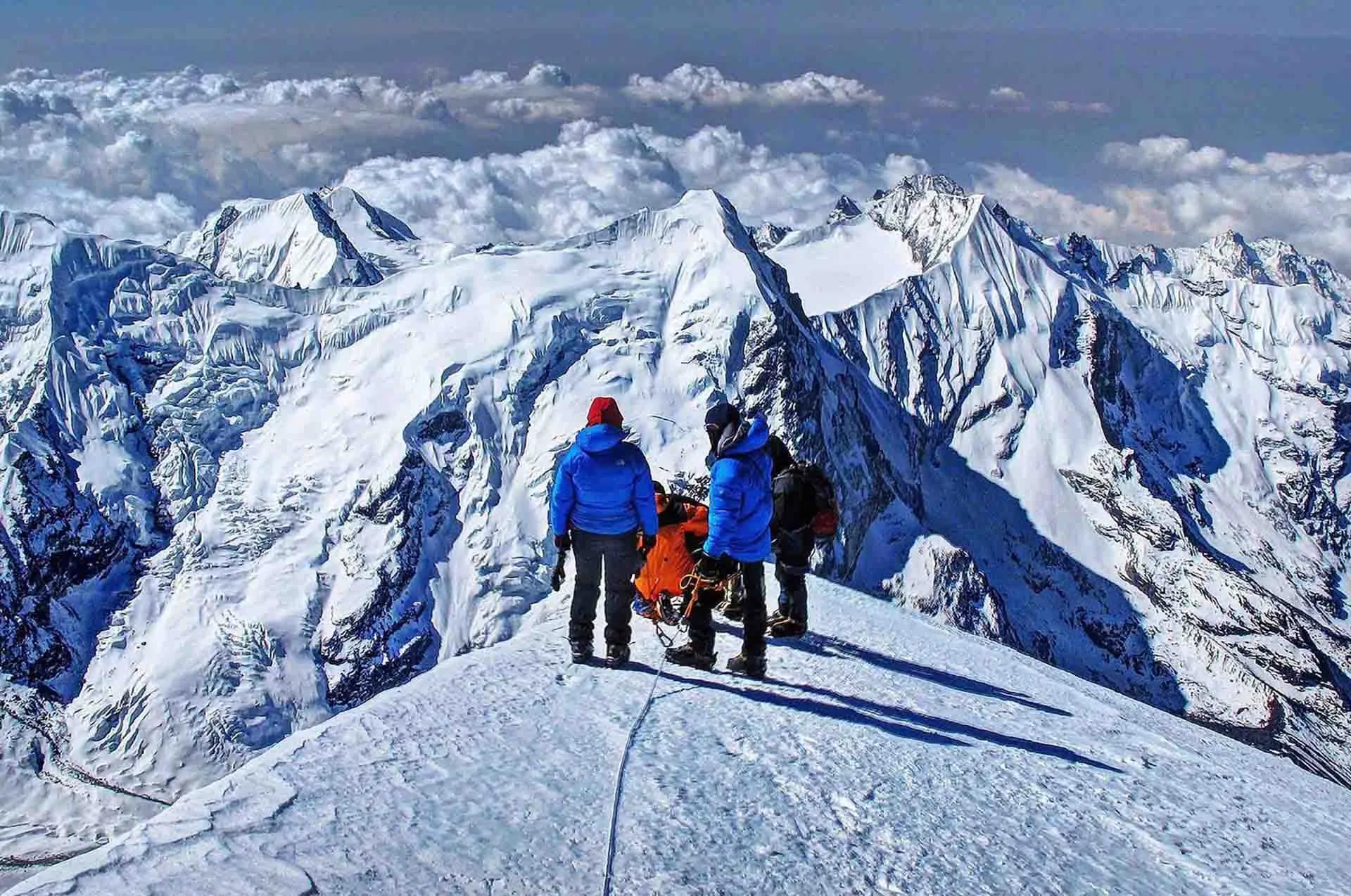
From the summit of Mera Peak, climbers are rewarded with one of the finest panoramic views in Nepal. The Himalayan skyline stretches endlessly, featuring five of the world’s highest mountains rising above the clouds.
Honku Valley & Amphu Lapcha Pass (5,845m)
After descending from Mera Peak, the expedition continues into the remote and untouched Honku Valley. This hidden valley offers pristine landscapes, dramatic ice formations, and the sacred Panch Pokhari (Five Lakes), creating a peaceful and spiritual atmosphere.
The crossing of Amphu Lapcha Pass is one of the most adventurous sections of the journey. This high mountain pass requires fixed rope usage, glacier navigation, and careful technical descent. It is considered one of the most demanding high passes in the Everest region, offering dramatic views of towering Himalayan peaks and vast glacial terrain.
Island Peak Climbing (6,189m)
Upon entering the Chhukung Valley, the focus shifts to Island Peak, also known as Imja Tse. Island Peak is more technical than Mera and includes rock scrambling, snow climbing, and a final steep ice wall ascent with fixed ropes. This peak is a favorite among climbers preparing for higher Himalayan expeditions.
From the summit, you enjoy close-up views of Lhotse, Ama Dablam, Makalu, and Everest dominating the skyline. The feeling of standing at this height surrounded by Himalayan giants is truly unforgettable.
Lobuche East Climbing (6,119m)
The final summit of this incredible expedition is Lobuche East, a challenging and rewarding peak located near the Everest Base Camp trail. The climb involves steep snow and ice slopes with sections requiring fixed rope support. Lobuche East offers spectacular views of Everest, Lhotse, Nuptse, and Pumori.
Summiting Lobuche East after Mera and Island Peak completes an extraordinary triple-peak Himalayan adventure.
Best Time for Climbing
The best time for the Mera Peak, Island Peak, and Lobuche East Climbing via Amphu Lapcha Pass is during the two main trekking and climbing seasons in Nepal: spring and autumn. These seasons offer stable weather, clear skies, and safer mountain conditions for high-altitude expeditions.
Spring (March to May)
Spring is one of the most popular and reliable seasons for climbing Mera Peak, Island Peak, and Lobuche East. During this time, temperatures are moderate, snow conditions are generally stable, and the visibility is excellent. The mountain views are crystal clear, with stunning panoramas of Mount Everest, Lhotse, and Makalu.
Spring also offers longer daylight hours, which are beneficial for summit attempts and glacier crossings, especially when crossing the technical Amphu Lapcha Pass.
Autumn (September to November)
Autumn is another excellent season for this multi-peak expedition. After the monsoon season, the air becomes fresh and dust-free, offering outstanding mountain views and stable climbing conditions. The temperatures are slightly cooler than spring, especially at higher altitudes, but the weather remains generally dry and predictable.
Autumn is ideal for climbers seeking clear summit days and firm snow conditions on high passes and peaks.
Seasons to Avoid
- Monsoon (June to August): Heavy rainfall, slippery trails, cloudy skies, and unstable glacier conditions make climbing risky.
- Winter (December to February): Extremely cold temperatures, heavy snowfall, and strong winds at high elevations create challenging and potentially dangerous conditions, particularly at high camps and on exposed ridges.
For the highest success rate and safest experience, spring and autumn remain the best seasons for climbing Mera Peak, Island Peak, and Lobuche East via Amphu Lapcha Pass.
Is This Expedition Right for You?
The Mera Peak, Island Peak, and Lobuche East Climbing via Amphu Lapcha Pass expedition is designed for strong and determined adventurers who are ready for a serious high-altitude challenge in the Everest region. This 28-day journey is not a beginner-level trek; it combines three Himalayan summits—Mera Peak, Island Peak, and Lobuche East—along with the technical crossing of Amphu Lapcha Pass.
This expedition is right for you if:
· You have previous trekking experience above 4,500 meters.
· You are physically fit and comfortable walking 6–8 hours daily on rugged terrain.
· You have basic mountaineering skills, including the use of crampons, ice axe, harness, and fixed ropes.
· You are mentally prepared for cold temperatures, high altitude, and changing weather conditions.
· You are seeking a remote and less crowded route in the Everest region.
· You want to gain real Himalayan climbing experience before attempting higher expeditions.
The climb of Mera Peak is considered non-technical but involves glacier travel and high altitude. Island Peak and Lobuche East are more technical, requiring snow and ice climbing skills. The Amphu Lapcha Pass crossing is physically demanding and involves rope-assisted ascent and descent on steep glacial terrain.
If you are looking for a challenging multi-peak expedition with spectacular views of Mount Everest, Lhotse, and Makalu, and you are ready to push your limits in a safe and well-acclimatized itinerary, then this expedition is an excellent choice.
However, if you are new to high-altitude trekking or prefer a less technical adventure, it is better to start with a single trekking peak or a classic Everest Base Camp trek before attempting this demanding 28-day Himalayan journey.
Difficulty Level
The Amphu Lapcha Pass Trek with Mera Peak and Island Peak Climbing is rated as challenging to strenuous. It is a demanding high-altitude expedition that requires proper acclimatization, strong physical conditioning, and basic mountaineering skills. While Mera Peak is considered non-technical, Island Peak and Amphu Lapcha Pass involve moderate to technical climbing using ropes, ice axes, crampons, and harnesses.
· Mera Peak (6,476m):
Technically straightforward with gradual snow slopes, but the high elevation and crevassed glacier sections demand alertness, endurance, and good acclimatization. Summit day is long and physically demanding, often requiring 8–10 hours of continuous effort.
· Island Peak (6,189m):
More technical than Mera Peak. The climb includes steep rock scrambling, glacier travel, ladder crossings over crevasses, and a final steep ice wall of approximately 100 meters near the summit. Prior experience using fixed ropes is highly beneficial.
· Amphu Lapcha Pass (5,845m):
One of the most technical high passes in Nepal. The crossing requires rope-assisted ascent and descent, glacier navigation, and careful movement through crevasse-prone terrain. Both sides of the pass involve steep and exposed sections.
Due to the combination of high-altitude trekking and technical alpine climbing, this expedition is best suited for experienced trekkers or beginner climbers who already have prior high-altitude experience.
Physical Fitness & Requirements
Completing this multi-peak Himalayan expedition demands excellent physical fitness, endurance, and mental resilience. Trekkers typically walk 6–8 hours per day, while summit days can extend up to 10–12 hours over snow, ice, and rocky terrain.
Key physical requirements include:
• Cardiovascular endurance: Ability to hike for long hours at high altitude while carrying a daypack
• Leg and core strength: Essential for steep ascents, descents, and technical climbing sections
• Mental determination: Crucial during summit pushes, glacier crossings, and cold early-morning starts
• Altitude experience: Previous trekking experience above 4,500 meters is strongly recommended
• Technical familiarity: Basic knowledge of using crampons, ice axe, harness, and fixed ropes is beneficial, especially for Island Peak and Amphu Lapcha Pass
We recommend following a structured training plan 8–12 weeks before departure, including hiking, stair climbing, strength training, cardio workouts, and flexibility exercises. Proper preparation significantly increases summit success rates and ensures a safer and more enjoyable Himalayan climbing experience.
Weather Conditions and Forecast
Weather plays a crucial role in the success of the Amphu Lapcha Pass Trek with Mera Peak and Island Peak Climbing. This high-altitude expedition crosses remote Himalayan terrain, including Mera Peak, Island Peak, and the technical Amphu Lapcha Pass, where conditions can change rapidly. Understanding seasonal weather patterns is essential for safety, summit success, and overall trip enjoyment.
Seasonal Weather Overview
• Spring (March to May) offers stable weather, moderate temperatures, and clear mountain views. Daytime temperatures at lower elevations range from 10°C to 15°C, while higher camps can drop to -10°C to -15°C at night. Snow conditions are generally stable, making it one of the best seasons for peak climbing and crossing high passes.
• Autumn (September to November) is another ideal season. After the monsoon, skies are clear, humidity is low, and mountain visibility is excellent. Daytime temperatures are similar to spring, but nights at higher elevations can be colder, often falling below -15°C near summit camps.
• Winter (December to February) brings extremely cold temperatures, heavy snowfall, and strong winds, especially above 5,000 meters. Summit attempts become more difficult due to harsh weather and unstable snow conditions.
• Monsoon (June to August) is not recommended for this expedition. Heavy rainfall at lower altitudes, cloudy skies, slippery trails, and unstable glacier conditions increase the risk of delays and accidents.
High-Altitude Weather Challenges
At elevations above 5,000 meters, weather can shift within hours. Climbers may experience:
• Sudden snowfall and whiteout conditions
• Strong winds on exposed ridges
• Freezing temperatures during early morning summit pushes
• Increased risk of altitude-related issues
Professional guides monitor forecasts daily and plan summit attempts based on favorable weather windows. Flexibility in the itinerary is essential to ensure safe crossings and successful climbs.
Safety and Security
Safety is the top priority during the Amphu Lapcha Pass Trek with Mera and Island Peak Climbing. This expedition involves glacier travel, technical climbing, and high-altitude trekking, so careful planning and professional support are essential.
• Experienced Guides and Support Team
Certified climbing guides with extensive experience in the Everest region lead the expedition. They manage rope fixing, glacier navigation, and safety protocols during summit attempts and while crossing Amphu Lapcha Pass. The support crew ensures proper logistics, camp setup, and coordination throughout the journey.
• Proper Acclimatization
The itinerary is carefully designed to include gradual altitude gain and acclimatization days. This reduces the risk of Acute Mountain Sickness (AMS) and improves summit success rates. Climbers are monitored regularly for altitude symptoms, and contingency plans are in place if descent is required.
• Personal Responsibility
Climbers are expected to follow guide instructions, maintain proper hydration, use equipment correctly, and communicate openly about health conditions. Physical preparation and travel insurance covering high-altitude rescue are strongly recommended.
With proper planning, professional leadership, and responsible teamwork, the Amphu Lapcha Pass Trek with Mera and Island Peak Climbing offers a challenging yet safe Himalayan adventure.
Altitude Sickness
Altitude sickness is one of the primary concerns during the Amphu Lapcha Pass Trek with Mera Peak and Island Peak Climbing, as the expedition reaches elevations above 6,000 meters, including Mera Peak, Island Peak, and the high crossing of Amphu Lapcha Pass. As altitude increases, oxygen levels decrease, and the body must adapt gradually to thinner air.
What is Altitude Sickness?
Altitude sickness, also known as Acute Mountain Sickness (AMS), occurs when the body cannot adjust quickly enough to high elevation. It commonly develops above 2,500 meters and becomes more likely above 4,000 meters.
Common Symptoms of AMS
• Headache
• Nausea or vomiting
• Loss of appetite
• Dizziness or lightheadedness
• Fatigue and weakness
• Difficulty sleeping
If ignored, AMS can progress into more serious conditions such as High Altitude Pulmonary Edema (HAPE) or High-Altitude Cerebral Edema (HACE), which require immediate descent and medical attention.
Risk Factors During This Expedition
This multi-peak expedition includes multiple high camps and summit pushes above 6,000 meters. Rapid altitude gain, dehydration, overexertion, and poor acclimatization increase the risk of altitude-related illness.
However, with a carefully designed itinerary, professional guidance, and proper acclimatization, the risks can be significantly minimized.
Acclimatization
Acclimatization is a critical part of the Mera Peak and Island Peak climbing expedition via Amphu Lapcha Pass. The itinerary is carefully designed to allow gradual altitude gain, reducing the risk of altitude sickness and improving overall summit success rates.
The trek includes multiple acclimatization days before summit attempts and before crossing Amphu Lapcha Pass. Slow ascents between camps allow the body to adjust naturally to decreasing oxygen levels.
During acclimatization days, climbers:
• Rest and hydrate properly
• Take short hikes to higher elevations
• Return to lower camps to sleep (“climb high, sleep low”)
• Monitor oxygen levels and overall health
This gradual process increases oxygen efficiency and prepares climbers for higher camps and summit pushes above 6,000 meters.
Why Acclimatization is Essential
As altitude increases, oxygen levels decrease and air pressure drops. Without proper adaptation, climbers risk developing Acute Mountain Sickness (AMS) or more serious conditions such as High Altitude Pulmonary Edema (HAPE) and High Altitude Cerebral Edema (HACE).
Proper acclimatization allows the body to:
• Produce more red blood cells to carry oxygen efficiently
• Adapt gradually to thinner air
• Prevent altitude-related complications
• Maintain strength and endurance at higher elevations
• Increase the overall safety and success rate of the expedition
By following a structured ascent schedule, staying hydrated, eating nutritious meals, and listening carefully to professional guides, climbers can safely adjust to high altitude and maximize their chances of successfully summiting Mera Peak and Island Peak while crossing Amphu Lapcha Pass safely.
Careful preparation and disciplined acclimatization are the foundation of a safe, rewarding, and successful Himalayan climbing experience.
Team Composition for the Expedition
The success of the Amphu Lapcha Pass Trek with Mera Peak and Island Peak Climbing depends on strong teamwork, professional expertise, and well-coordinated support throughout the journey. Female Guide Holiday carefully assembles an experienced team to ensure climbers receive technical guidance, logistical support, and personalized care at every stage of the expedition.
Typical Team Composition
• Expedition Leader / Climbing Guide
A certified, English-speaking guide with extensive experience in high-altitude Himalayan climbs. Responsible for overall expedition management, route decisions, and safety oversight during peak climbs and the Amphu Lapcha Pass crossing.
• High-Altitude Sherpa Climbers
Experienced Sherpas assist with load carrying, route fixing, camp setup, and climbing support above Base Camp. Each climber is supported by at least one high-altitude Sherpa to ensure safety and efficiency.
• Base Camp Manager / Sirdar
Coordinates logistics, communication, and supplies between Base Camp and climbing teams. Ensures smooth operations and timely support.
• Cook and Kitchen Staff
Skilled cooks prepare nutritious, high-energy meals at Base Camp and during trekking phases. Proper nutrition is critical for maintaining stamina, endurance, and successful acclimatization.
• Porters and Support Crew
Local porters carry expedition equipment, food, and personal luggage along the trekking route, particularly in areas where vehicle access is limited.
• Medical Officer or First-Aid Responder
For larger teams, trained medical personnel may accompany the expedition to monitor altitude-related health issues, handle minor injuries, and provide emergency care.
• Office Support Team (Kathmandu-based)
The Female Guide Holiday operations team handles permits, flight arrangements, logistics, and emergency coordination from Kathmandu to ensure smooth expedition planning.
This comprehensive team structure ensures that all aspects of the expedition—from logistics and safety to climbing support and nutrition—are managed efficiently, allowing climbers to focus on their summits safely.
Transportation
Accessing the remote regions for the Amphu Lapcha Pass Trek involves a combination of flights, road transfers, and trekking. Female Guide Holiday ensures all transport is safe, well-organized, and comfortable.
Flights
- Kathmandu to Lukla: Scenic Mountain flight offering spectacular Himalayan views and direct access to the trekking trail.
Trekking and Road Transfers
- Depending on the route, private or shared vehicles may be used to reach trailheads.
- Porters carry heavy gear, while climbers carry daypacks with personal essentials.
Trekking to Base Camp
- From Lukla, the trek progresses through remote villages, alpine forests, and glaciers, gradually reaching Mera Peak Base Camp and the Amphu Lapcha route.
Meals
A well-planned meal schedule supports energy, endurance, and acclimatization throughout the expedition:
• Kathmandu: Bed & Breakfast at tourist-standard hotels for pre-expedition comfort.
• Trekking phase: Breakfast, lunch, and dinner prepared by the expedition cook team, featuring a mix of Nepali, Tibetan, and international dishes.
• Base Camp and high camps: High-calorie, nutritious meals including carbohydrates, proteins, and adequate hydration, specifically designed for high-altitude performance.
Drinking Water
Hydration is critical for acclimatization and performance:
• Safe drinking water is provided throughout the trek, treated with purification tablets, filters, or boiling.
• At higher camps, bottled water or melted snow is supplied hygienically.
• Climbers are encouraged to drink frequently to avoid dehydration and altitude-related issues.
Accommodation
Accommodation is designed for comfort and safety at all stages:
• Kathmandu: Tourist-standard or 5-star hotels based on preference.
• Trekking route: Tea houses or lodges in local villages offering basic amenities, warm meals, and traditional hospitality.
• Base Camp and high camps: Durable, insulated expedition tents with sleeping mats and dining arrangements, designed for high-altitude weather conditions.
Proper hygiene, sanitation, and comfortable layouts are maintained throughout the expedition to ensure safe rest and recovery.
Guides, Porters, and Support Systems
Female Guide Holiday provides a well-trained support team:
- Guides and Sherpas: Lead the route, manage camps, and ensure safety on technical sections and summit climbs.
- Porters and mules: Carry trekking and climbing gear, food, and camping equipment, reducing the load on climbers and allowing them to focus on acclimatization and climbing performance.
This support system is crucial for maintaining safety, organization, and comfort in remote Himalayan terrain.
WiFi and Electricity
Connectivity is limited in high-altitude regions:
• Base Camp and high camps: Electricity via solar panels or generators, primarily for essential lighting and device charging.
• WiFi and internet: Generally unavailable or extremely limited. Climbers are advised to plan accordingly and focus on the expedition experience.
• Village tea houses: Some may provide basic electricity and intermittent WiFi, but availability is not guaranteed.
This ensures climbers remain fully immersed in the Himalayan environment while maintaining essential communication and safety needs.
Permits and Requirements
Climbing Mera Peak (6,476m), Island Peak (6,189m), and crossing Amphu Lapcha Pass (5,845m) in Nepal requires several official permits and documentation to legally access the Everest region. Alpine Club of Himalaya assists climbers in obtaining all necessary permits, ensuring a smooth and hassle-free process so participants can focus entirely on trekking, acclimatization, and summit attempts.
Climbing Permit
A climbing permit is mandatory for all peaks above 6,000 meters and is issued by the Nepal Ministry of Tourism, Department of Mountaineering and Archaeology. Both Mera Peak and Island Peak require official permits, and the cost varies depending on the season, the specific peak, and the size of the climbing group. Alpine Club of Himalaya manages the permit applications on behalf of climbers to ensure timely approval.
Sagarmatha National Park Permit
Since the expedition passes through Sagarmatha National Park, climbers must obtain a National Park entry permit. This permit supports conservation efforts in the Everest region and allows authorities to monitor trekking and climbing activities. Alpine Club of Himalaya arranges all National Park permits, ensuring full compliance.
TIMS Card (Trekkers’ Information Management System)
All trekkers in the Everest region are required to have a TIMS card, which allows authorities to track participants for safety and emergency purposes. This standard requirement is essential for trekking in Sagarmatha National Park and surrounding high-altitude regions.
Local Permits
Some areas along the route, especially near Amphu Lapcha Pass and remote villages, require additional local permits issued by district authorities. These permits regulate tourism, support local communities, and help protect the fragile Himalayan ecosystem. Alpine Club of Himalaya arranges all local permits to ensure smooth access.
Insurance Requirements
Climbers must have comprehensive travel and high-altitude insurance that covers:
• Medical emergencies at high altitude
• High-altitude evacuation and helicopter rescue
• Trip cancellations due to weather or unforeseen circumstances
Insurance is critical due to the technical climbing sections, glacier travel, and remote locations along the Amphu Lapcha Pass route and summit climbs.
Identification and Documentation
- A valid passport and Nepal visa are required.
- Climbers may also need to provide proof of prior high-altitude trekking or climbing experience, particularly for Island Peak and Amphu Lapcha Pass.
Online Briefing
Alpine Club of Himalaya provides a comprehensive online pre-expedition briefing for all climbers participating in the Amphu Lapcha Pass Trek with Mera Peak and Island Peak Climbing. This session covers essential information about trekking and climbing routes, weather conditions, technical gear requirements, safety protocols, and acclimatization strategies. Participants also receive guidance on nutrition, hydration, and high-altitude medical precautions. The online briefing allows climbers to ask questions directly to the expedition leader and Sherpa team, ensuring they are fully prepared, confident, and well-informed before departure. This digital orientation is especially valuable for international participants, helping them understand logistical details, challenges, and expectations in advance, and reducing confusion during the initial days of the trek and climb.
Last-Minute Booking
Alpine Club of Himalaya accommodates last-minute bookings for the expedition, depending on the availability of permits, flights, and logistical support. However, early booking is highly recommended to secure:
- Climbing permits and Sagarmatha National Park approvals
- Domestic flights from Kathmandu to Lukla
- Adequate allocation of guides, Sherpas, porters, and expedition gear
- Preparation time for online briefing, gear checks, and acclimatization advice
Even with late bookings, Alpine Club of Himalaya ensures that participants receive full logistical support, high-altitude safety briefings, and expedition preparation, making the journey smooth and well-organized.
Group and Private Bookings
The Amphu Lapcha Pass Trek with Mera Peak and Island Peak Climbing can be arranged as group or private bookings based on your preference.
- Group Bookings: Ideal for those looking to join other climbers, providing a shared experience with fellow adventure enthusiasts. Groups benefit from shared guides, porters, and base camp facilities while keeping costs more accessible.
- Private Bookings: Perfect for individuals, couples, or small teams seeking a more personalized expedition. Private bookings offer customized itineraries, dedicated guides, and flexible schedules, ensuring a tailored experience for acclimatization, summit attempts, and overall comfort.
Whether you choose group or private arrangements, Alpine Club of Himalaya ensures professional guidance, high-altitude support, and safe management throughout the expedition.
Ncell SIM for Trekking Groups
For groups undertaking the Mera Peak, Island Peak & Lobuche East expedition via Amphu Lapcha Pass, staying connected is essential for safety and coordination. Alpine Club of Himalaya recommends using NCell SIM cards, which provide reliable coverage in lower and mid-altitude trekking areas such as Lukla, Namche Bazaar, Dingboche, and Lobuche, while connectivity may be limited at high camps. NCell SIMs can be purchased upon arrival in Kathmandu with passport registration, and group packages with shared data are available for easy communication among trekkers, guides, and porters. These SIMs enable calling, texting, and 4G internet for navigation, weather updates, and emergency contact, while backup satellite phones or radios are suggested for high-altitude summits. Recharge options, protective cases, and power banks ensure uninterrupted service throughout the expedition.
Final Notes
Before undertaking the Mera Peak, Island Peak, and Lobuche East expedition via Amphu Lapcha Pass, climbers should ensure that all personal gear and equipment are thoroughly tested, properly fitted, and comfortable. High-altitude mountaineering demands reliable clothing, footwear, and technical gear to handle extreme weather, challenging terrain, and the physical strain of climbing above 5,000 meters. Untested or improperly fitted equipment can compromise both safety and performance during the expedition.
Essential expedition gear—including tents, ropes, high-altitude cooking facilities, and select climbing hardware—is provided by the Alpine Club of Himalaya. Climbers should confirm with the team which items are included in the package and make sure that their personal gear complements the provided equipment. Proper preparation, physical fitness, and attention to gear details are critical to enhancing the chances of a safe and successful summit of Mera Peak (6,476m), Island Peak (6,189m), and Lobuche East (6,119m).
Cancellation Policy
Cancellation by the Participant
If a participant needs to cancel the expedition, they must notify Alpine Club of Himalaya immediately. Refunds are processed according to the following schedule:
- 60 days or more before departure: 20% of the total expedition cost retained as administrative fee
- 30 to 59 days before departure: 50% of the total expedition cost retained
- Less than 30 days before departure: Full payment is non-refundable
Cancellation by the Organizer
If Alpine Club of Himalaya cancels the expedition due to unforeseen circumstances such as extreme weather, natural disasters, or safety concerns, participants are entitled to a full refund of all paid fees or the option to reschedule the expedition for a later date.
Force Majeure
Alpine Club of Himalaya is not responsible for additional expenses or losses resulting from force majeure events, including natural disasters, political unrest, strikes, or health emergencies. Climbers are strongly encouraged to obtain comprehensive travel insurance that covers emergency evacuation, medical treatment, and unforeseen circumstances to ensure full protection during the expedition.