Mera Peak Climbing (6,461m) via the alternative route is one of the most rewarding and adventurous trekking peak experiences in Nepal. As the highest trekking peak in the country, Mera Peak offers a perfect blend of wilderness trekking, cultural exploration, and high-altitude mountaineering. This less-crowded alternative route takes you through the pristine Makalu Barun National Park, allowing you to experience unspoiled Himalayan landscapes, diverse vegetation, and rich wildlife in one of Nepal’s most remote regions.
Throughout the journey, you will trek through dense rhododendron and pine forests, high alpine meadows, and dramatic glacial valleys. The route passes traditional mountain villages such as Paiya, Panguam, and Cholem Kharka, where you gain insight into the daily lifestyle, culture, and traditions of the local communities. Trekking through the mystical Hinku Valley, you are constantly rewarded with breathtaking views of rolling hills, deep gorges, and towering Himalayan giants.
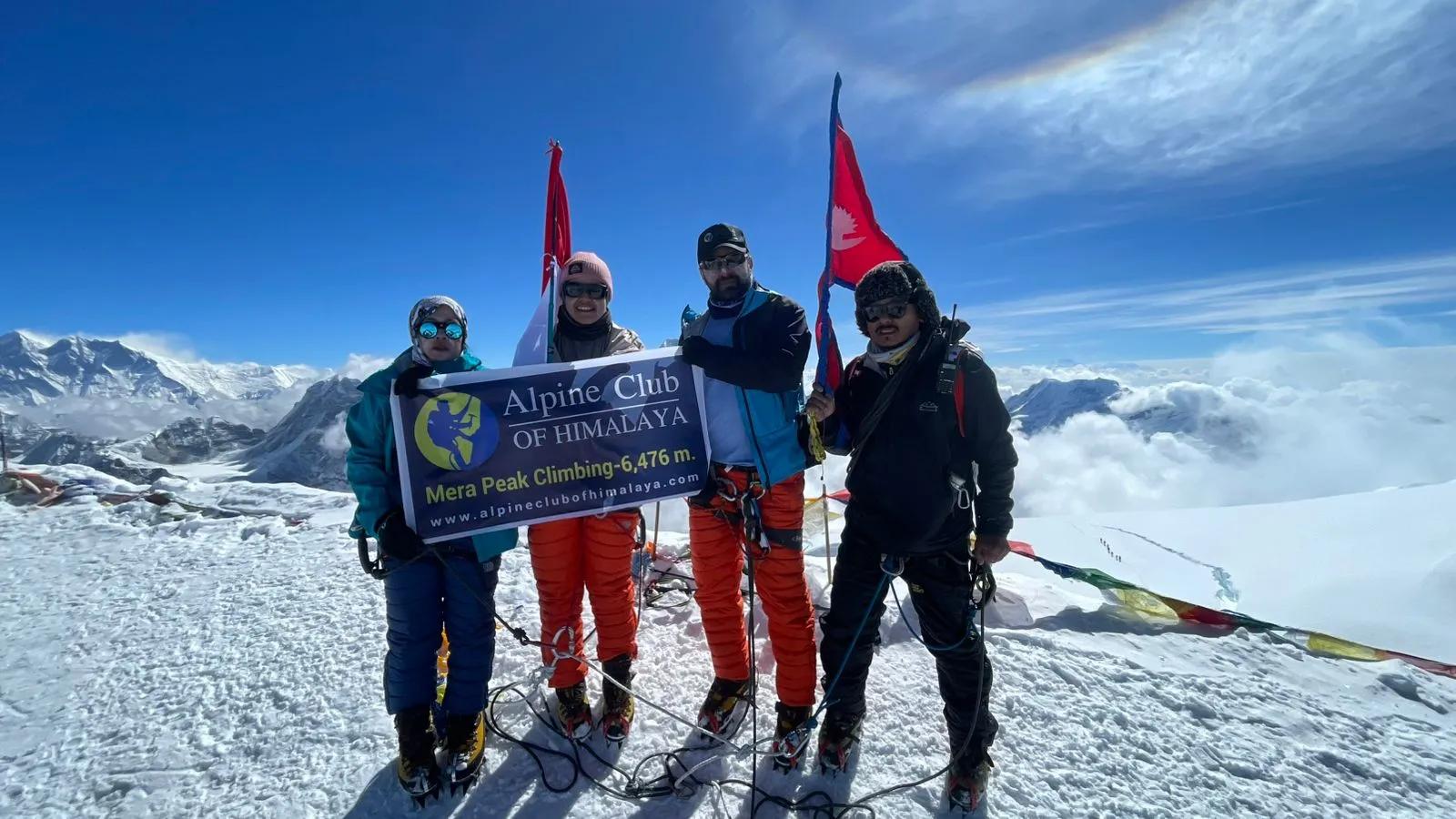
From the summit of Mera Peak, climbers are treated to one of the finest panoramic viewpoints in the Himalayas. On a clear day, you can enjoy spectacular views of Mount Everest, Lhotse, Cho Oyu, Makalu, Kanchenjunga, and Ama Dablam, making this climb truly unforgettable. Despite being a non-technical peak, the climb requires good physical fitness, mental preparation, and proper acclimatization, making it ideal for adventure seekers looking to step into high-altitude mountaineering.
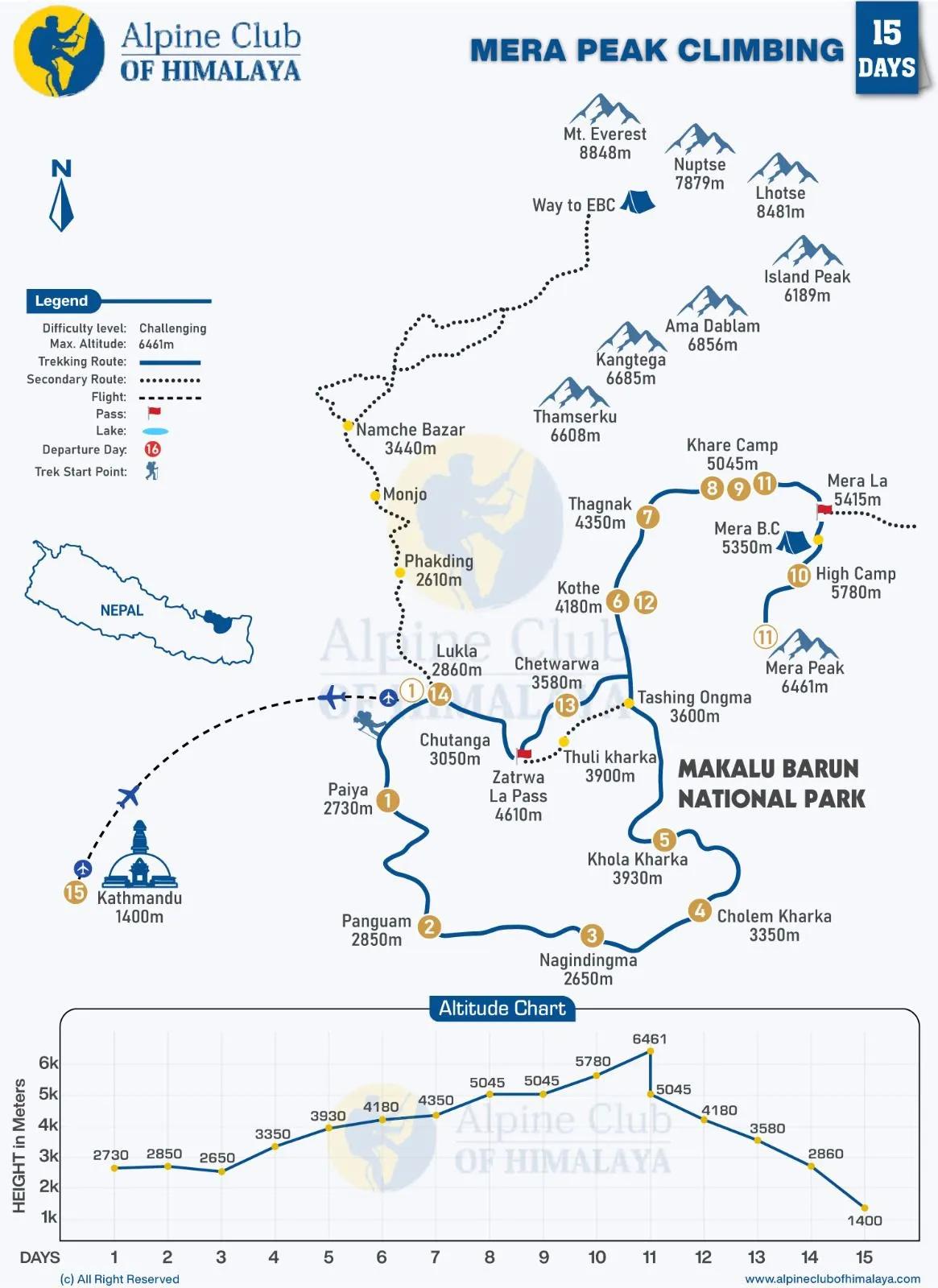
This 15-day alternative route itinerary is carefully designed to allow gradual acclimatization while offering a quieter and more scenic approach compared to the standard route. The journey begins with a scenic flight to Lukla, followed by trekking through Paiya, Panguam, Nagindingma, and Khola Kharka before entering the heart of the Hinku Valley. After proper acclimatization in Khare, you ascend to Mera High Camp and attempt the summit before returning via Chetarwa to Lukla.
Alpine Club of Himalaya offers a fully supported Mera Peak Climbing package, including professional guides, experienced climbing staff, proper acclimatization days, and well-planned logistics. Our team ensures safety, comfort, and valuable mountain knowledge throughout the expedition, making the climb both enjoyable and informative.
Important Note: Peak climbing in the Himalayas is physically and mentally demanding. Participants should be in good health, have a positive mindset, and be prepared for high-altitude conditions. With the expert guidance and support of Alpine Club of Himalaya, you can confidently take on this thrilling Himalayan challenge and achieve a lifetime mountaineering goal.
Best Time for Mera Peak Climb
The best time to climb Mera Peak is during the spring and autumn seasons, when weather conditions, visibility, and trail accessibility are at their best. Each season offers its own unique advantages, making them ideal for a safe and successful summit experience.
Spring Season (March to May)
Spring is one of the most popular and favorable seasons for Mera Peak Climbing. During this period, temperatures gradually become warmer, especially at lower and mid-altitudes, making trekking more comfortable. The skies are generally clear, offering excellent mountain views throughout the journey. One of the highlights of climbing in spring is the beautiful rhododendron forests in bloom along the lower trails, adding vibrant colors to the trekking experience. Snow conditions at higher elevations are usually stable, which helps create safer climbing conditions for the summit attempt. Spring is ideal for climbers who prefer slightly warmer weather and colorful landscapes.
Autumn Season (September to November)
Autumn is another prime season for climbing Mera Peak and is often considered the best time for mountain visibility. After the monsoon season, the air becomes fresh and clear, resulting in stunning panoramic views of the Himalayan range. Weather conditions during autumn are stable, with crisp mornings, mild daytime temperatures, and cold but manageable nights at higher altitudes. Trail conditions are generally dry and well-defined, making trekking and climbing safer and more comfortable. Autumn is perfect for climbers who value clear skies, sharp mountain views, and consistent weather for a successful summit attempt.
Both spring and autumn seasons offer safer climbing conditions, better acclimatization opportunities, and higher summit success rates. Choosing either of these seasons ensures a rewarding, enjoyable, and memorable Mera Peak climbing.
Difficulty Level
Mera Peak Climbing is considered moderately challenging, making it an ideal choice for trekkers who wish to progress into high-altitude mountaineering without technical complexity. The climbing route itself is non-technical, meaning no prior technical climbing experience is required. However, the real challenges come from the high altitude, prolonged trekking days, cold temperatures, and the physical demands of ascending above 6,000 meters. The summit day involves walking on snow and ice using basic mountaineering equipment such as crampons, ice axes, harnesses, and ropes.
These skills are taught during acclimatization and pre-summit training by experienced climbing guides. With proper acclimatization, a well-structured itinerary, and professional support from Alpine Club of Himalaya, Mera Peak is a realistic and achievable goal for committed and well-prepared climbers.
Physical Fitness and Requirements
A good level of physical fitness is essential for a safe and successful Mera Peak climb. Climbers should be comfortable walking 5 to 7 hours per day over mixed terrain, including steep ascents, descents, rocky trails, and snowy sections at higher altitudes. While previous trekking experience at moderate to high elevations is highly recommended, it is not mandatory for those who maintain strong overall fitness and a positive mindset. Cardiovascular endurance, leg strength, balance, and stamina are especially important for coping with long trekking days and thin air at altitude.
Equally important is mental preparedness, as climbers must adapt to changing weather conditions, cold temperatures, limited facilities, and the physical effects of high altitude. Training before the trip should include regular aerobic exercises such as hiking, stair climbing, cycling, running, or strength training to improve endurance and muscle strength. With the right physical conditioning, mental resilience, and expert guidance from Alpine Club of Himalaya, climbers can confidently face the challenges of Mera Peak and enjoy a safe, rewarding, and life-changing Himalayan mountaineering experience.
Stunning Views of Everest and Other Major Peaks
One of the most compelling reasons to choose the Mera Peak Summit is the extraordinary panoramic scenery it offers throughout the journey and from the summit itself. Mera Peak is widely regarded as one of the finest viewpoints in the Himalayas, providing climbers with uninterrupted and wide-ranging mountain vistas. From the summit ridge, you are rewarded with breathtaking views of Mount Everest, Lhotse, Makalu, Cho Oyu, Kanchenjunga, and the striking Ama Dablam, all visible in a single sweeping panorama on clear days. Unlike many trekking peaks, Mera Peak’s open summit and surrounding landscape allow for expansive visibility in every direction, making it a dream destination for photographers and nature lovers. These dramatic Himalayan views, combined with the remote and untouched environment of the Hinku Valley, make the Mera Peak climb a truly unforgettable high-altitude adventure.
Is This Trip for You?
Mera Peak Climbing – 15 Days is a rewarding high-altitude trekking and climbing expedition designed for adventurous trekkers who are physically fit, motivated, and eager to experience one of Nepal’s highest trekking peaks at 6,461 meters. While the climb is non-technical, it requires endurance, mental preparation, and proper acclimatization, making it best suited for trekkers who have prior experience at moderate to high altitudes and are comfortable trekking 5–7 hours per day on steep, rocky, and occasionally snowy terrain.
This expedition combines challenging trekking days through the Hinku Valley and surrounding alpine landscapes with the ultimate reward of summiting Mera Peak. While formal mountaineering experience is not mandatory, participants should be familiar with basic alpine equipment, including crampons, ice axes, and harnesses, which are taught during pre-summit training at Khare and High Camp. The climb demands stamina, leg strength, and cardiovascular fitness, as well as mental resilience to handle cold temperatures, rapidly changing weather, and high-altitude conditions.
Mental preparedness is equally important, as the trek passes through remote valleys where lodges are basic, and higher camps are set up with tents. Climbers must stay calm, focused, and adaptable, particularly during summit day when the climb begins before sunrise. Despite these challenges, the sense of achievement from standing atop Mera Peak and enjoying uninterrupted views of Everest, Lhotse, Makalu, Cho Oyu, Kanchenjunga, and Ama Dablam makes the effort immensely rewarding.
Safety, Support & Logistics
At Alpine Club of Himalaya, your safety, comfort, and success are our top priorities. With over two decades of experience guiding climbers across Nepal’s high-altitude regions, we ensure every aspect of your expedition is professionally managed.
Our 15-day itinerary is carefully structured with acclimatization days in Khare and Thangnak, built-in contingency days for bad weather, and step-by-step support from our experienced team. All climbers receive guidance from UIAA-trained climbing professionals, who provide instruction on equipment, snow and ice walking, and safe ascent techniques.
The expedition maintains a high guide-to-client ratio for personalized attention. Our team includes professional climbing guides, skilled porters, cooks, and logistics staff, ensuring smooth operations from Kathmandu to the summit and back. High-quality climbing gear, ropes, and emergency safety equipment are provided, and tents, meals, and health monitoring are organized during nights spent at High Camp.
Even in remote areas such as Khare and High Camp, our team ensures full camping support, with warm meals, safe tent setup, and daily health checks. Communication is maintained through satellite phones and two-way radios for emergencies, giving climbers peace of mind.
From arrival in Kathmandu to your return flight, Alpine Club of Himalaya takes care of all permits, flights, accommodations, meals, safety procedures, and route navigation. Whether you are a first-time high-altitude climber or an experienced trekker seeking an unforgettable Himalayan summit, this 15-day Mera Peak expedition provides a safe, well-supported, and life-changing adventure in the heart of the Nepal Himalayas.
Weather Conditions and Forecast
Weather in the Hinku Valley and surrounding Mera Peak region can be unpredictable, particularly above 5,000 meters, where snow, high winds, and sudden storms are common. Understanding seasonal weather patterns helps climbers prepare adequately.
· Spring (March–May): At lower altitudes, daytime temperatures range between 10°C and 15°C, while higher camps such as Thangnak, Khare, and Mera High Camp can drop to -10°C to -20°C at night. Afternoon snow showers are common, so layered clothing and proper gear are essential.
· Autumn (September–November): Autumn is the most popular climbing season due to clear skies, stable weather, and dry trails. Early mornings at higher camps can be extremely cold, with summit temperatures reaching -25°C, but the visibility is often excellent, providing breathtaking views of Everest, Lhotse, Makalu, Cho Oyu, and Ama Dablam.
· High-Altitude Conditions: Above 5,000 meters, climbers can experience severe cold, strong winds, and occasional whiteouts, particularly near Mera High Camp. Alpine Club of Himalaya monitors weather conditions daily using satellite updates to optimize safety, adjust schedules, and maximize summit success.
Safety and Security
Safety is the top priority during the Mera Peak 15-Day expedition, as the route involves high-altitude trekking and glacier sections. To ensure climbers’ well-being:
· Led by licensed, experienced Sherpa guides trained in high-altitude rescue and expedition management
· High guide-to-client ratio ensures personalized support and constant monitoring
· Daily pulse oximeter checks to monitor oxygen saturation and prevent altitude-related issues
· Emergency oxygen and first-aid kits available throughout the trek
· Real-time weather assessments to manage route safety and prevent avalanche or snow-related risks
The region is politically stable and safe from crime, but the combination of remote terrain, high altitude, and rapidly changing weather makes traveling with a professional company like Alpine Club of Himalaya essential.
Altitude Sickness (AMS)
Extended time above 5,000 meters makes Altitude Sickness (AMS) a serious concern. Symptoms can include:
· Headache, nausea, and fatigue
· Shortness of breath at rest
· Dizziness or poor sleep
If left untreated, AMS can escalate to HAPE (High-Altitude Pulmonary Edema) or HACE (High-Altitude Cerebral Edema), both life-threatening conditions. Alpine Club of Himalaya minimizes risks through:
· Daily health monitoring with pulse oximeters
· Immediate descent for symptomatic trekkers
· Emphasis on hydration, rest, and proper nutrition
· Emergency helicopter evacuation arrangements if required
Our team is fully trained to respond to AMS and other high-altitude emergencies efficiently, ensuring climbers’ safety at all times.
Acclimatization Requirement for a Safe Climb
The 15-day Mera Peak itinerary includes multiple acclimatization days, essential for safe climbing and summit success. Key strategies include:
· Rest days at Khare before the summit attempt
· Gradual altitude gain with “climb high, sleep low” practices during acclimatization hikes
· Careful pacing to allow smooth physiological adaptation
Following the acclimatization plan is mandatory, as it dramatically reduces health risks and increases the likelihood of reaching the summit safely.
Facilities and Camp Setup
During the Mera Peak 15-Day expedition, Alpine Club of Himalaya ensures that climbers enjoy comfortable, safe, and well-organized accommodations throughout the trek, carefully balancing local teahouse stays with fully equipped tented camps in remote high-altitude locations. The combination of teahouses and tented camps allows for both cultural immersion at villages and proper comfort in areas where no permanent facilities exist, ensuring a smooth and enjoyable trekking and climbing experience.
Teahouses:
In lower and mid-altitude villages such as Lukla, Kothe, Thangnak, and Khare, climbers stay in teahouses, which provide a basic yet cozy environment for rest and recovery. Most teahouses feature twin or triple rooms with simple bedding, shared bathrooms, and basic hot-water facilities (where available). Meals are served in communal dining areas, offering hearty and nutritious food to refuel after long trekking days. Typical menus include rice, dal (lentils), noodles, soups, and local dishes, catering to both vegetarian and non-vegetarian preferences. The teahouses also offer opportunities to interact with local villagers, experience traditional Himalayan hospitality, and enjoy warm beverages like tea and hot chocolate after a day on the trail.
Tented Camps:
For high-altitude locations such as Mera High Camp and other remote sections, where no permanent lodges exist, fully managed tented camps are provided by Alpine Club of Himalaya. These camps are designed for both safety and comfort in extreme conditions. Weather-proof tents are equipped with foam sleeping mats and insulated sleeping bags to provide warmth during cold Himalayan nights, while dining tents and kitchen tents are set up to serve warm, nutritious meals prepared daily by professional expedition cooks. The tented camps are carefully maintained by trained support staff, ensuring cleanliness, safety, and organization even in the most remote and rugged locations.
Additional Facilities and Services:
· Hygiene and sanitation: Clean and organized setups are maintained at both teahouses and camps. Portable toilets or designated toilet tents are provided at high-altitude camps.
· Meal planning: All meals are carefully planned to provide balanced nutrition, energy, and hydration, essential for high-altitude trekking and climbing.
· Safety and support: Trained support staff, including guides, cooks, and porters, manage the camps, monitor climbers’ health, and ensure all necessary equipment is available, creating a secure environment for rest and recovery.
· Comfort in extreme conditions: Special attention is given to sleeping arrangements, heating solutions where possible, and organized dining spaces to keep climbers warm and energized for the challenging trekking and summit days ahead.
With this combination of cultural teahouse experiences and professional high-altitude tented camps, Alpine Club of Himalaya provides climbers with the ideal balance of comfort, safety, and authenticity. These arrangements ensure that each participant can rest well, recover efficiently, and maintain energy levels, which is critical for tackling Mera Peak’s demanding terrain and achieving a successful summit.
Lukla Flight and Alternatives
The expedition begins with a scenic domestic flight from Kathmandu to Lukla, which can sometimes experience weather-related delays. To provide flexibility, Alpine Club of Himalaya offers several alternatives:
- Ramechhap to Lukla Flight: Operates from Manthali Airport (Ramechhap), a 4–5 hour drive from Kathmandu, often used during peak season to reduce cancellations
- Helicopter Charter: Private or shared helicopter flights to Lukla or directly to Khare for quicker access and scenic experience
- Overland + Trek Route: For adventurous trekkers, a drive to Salleri or Jiri followed by trekking to Lukla can be arranged, adding 4–6 days to the itinerary
Alpine Club of Himalaya handles all logistics, including flights, rebookings due to weather, permits, accommodation, and high-altitude transport, ensuring a smooth and safe start to your expedition.
Meals During the Trek and Climb
Proper nutrition is essential for a safe and successful Mera Peak expedition. Alpine Club of Himalaya ensures that climbers receive well-balanced, high-energy meals throughout the 15-day journey, whether in teahouses at lower altitudes or tented camps at high elevations. Meals are carefully planned to provide adequate calories, protein, and hydration, helping climbers maintain strength, endurance, and recovery during long trekking and climbing days.
Teahouse Meals:
During the trek through villages such as Lukla, Paiya, Kothe, Thangnak, and Khare, climbers stay in local teahouses where meals are served in communal dining areas. Breakfast, lunch, and dinner are typically provided, with menus designed to suit both Western and Himalayan tastes. Typical meals include:
- Breakfast: Porridge, eggs, pancakes, bread, tea, coffee, and hot chocolate
- Lunch: Rice, noodles, soups, sandwiches, and simple local dishes
- Dinner: Dal bhat (lentils with rice), vegetables, pasta, soups, and optional meat dishes
Teahouse meals not only fuel the body but also provide an opportunity to experience local Nepali cuisine and hospitality, adding cultural value to the trekking experience. Hot beverages and soups are served throughout the day to keep climbers warm and hydrated.
High-Altitude Tent Meals:
At remote high-altitude camps, including Mera High Camp and summit base areas, meals are prepared by professional expedition cooks in fully equipped kitchen tents. These meals are designed for maximum energy and nutrition, with a focus on foods that are easily digestible at high elevations. Daily meals include:
· Breakfast: High-energy options such as oatmeal, porridge, eggs, bread, and tea or coffee
· Lunch: Soups, noodles, rice dishes, and fresh vegetables where possible
· Dinner: Hot meals with carbohydrates, proteins, and fats to replenish energy stores after climbing and trekking
· Snacks: Energy bars, chocolates, nuts, and dried fruits are provided during treks and summit climbs for quick energy boosts
Hydration and Safety
Proper hydration is emphasized throughout the trek, as high-altitude trekking increases the risk of dehydration. Boiled or filtered water, electrolyte drinks, and herbal teas are provided at camps and teahouses. Alpine Club of Himalaya ensures all meals meet high standards of hygiene and safety, preventing food-borne illnesses that can affect high-altitude performance.
Special Dietary Needs
Climbers with vegetarian, vegan, or other dietary preferences can be accommodated with prior notice. The team prepares meals carefully to meet nutritional requirements while maintaining taste and energy density.
By combining local teahouse experiences with high-altitude tented camp meals, Alpine Club of Himalaya ensures climbers have consistent, nutritious, and energizing food throughout the expedition. This carefully planned meal system is vital for maintaining energy levels, aiding acclimatization, and supporting a successful and enjoyable Mera Peak 15-Day climb.
Drinking Water
Staying properly hydrated is crucial during a high-altitude expedition like Mera Peak Climbing, where the body loses more water due to cold, dry air and physical exertion. Alpine Club of Himalaya ensures that climbers have access to safe, clean, and reliable drinking water throughout the trek.
· At teahouses, boiled water is provided for drinking and cooking, while filtered bottled water is available for purchase if needed.
· At high-altitude camps such as Khare and Mera High Camp, water is boiled, filtered, and sometimes treated with purification tablets before distribution to climbers.
· Hydration packs, insulated bottles, and thermoses are recommended to keep water from freezing in extremely cold conditions at higher elevations.
· Electrolyte powders, juices, and herbal teas are provided to maintain energy and prevent dehydration, which is especially important during long trekking days and the summit push.
By ensuring clean and safe drinking water at every stage, Alpine Club of Himalaya minimizes the risk of dehydration and water-borne illnesses, supporting climbers’ health, energy, and performance.
Accommodation
Accommodation on the Mera Peak 15-Day expedition is a combination of teahouses at lower altitudes and fully equipped tented camps at higher elevations, offering both cultural immersion and safety in remote regions.
Teahouses:
· Located in villages such as Lukla, Paiya, Kothe, Thangnak, and Khare
· Provide twin or triple rooms with basic bedding and shared bathrooms
· Offer warm meals in communal dining areas
· Allow climbers to experience local Nepali hospitality and culture
Tented Camps:
· Used in high-altitude and remote areas such as Mera High Camp
· Include weather-proof tents, insulated sleeping mats, sleeping bags, and dining tents
· Managed by trained support staff who set up camps, prepare meals, and maintain hygiene
· Provide safe and comfortable resting spaces essential for recovery before summit climbs
The combination of teahouses and tented camps ensures climbers rest well, acclimatize effectively, and remain energized for challenging trekking and summit days. Alpine Club of Himalaya maintains cleanliness, safety, and organization throughout the expedition.
Transportation
Transportation logistics are an integral part of the Mera Peak expedition, ensuring smooth travel from Kathmandu to Lukla and during return. Alpine Club of Himalaya manages all aspects efficiently:
· Domestic Flights: The journey begins with a scenic flight from Kathmandu to Lukla, offering stunning aerial views of the Himalayas. These flights are often weather-dependent, and the team monitors conditions closely for safe departure.
· Alternative Flights: During peak season or in case of delays, flights from Ramechhap (Manthali Airport) can be arranged to reduce cancellations. Private or shared helicopter charters can also be organized to Lukla or directly to Khare for flexibility.
· Overland + Trek Options: Adventurous trekkers can drive to Salleri or Jiri and trek to Lukla, adding 4–6 days to the itinerary.
· Ground Transport: From Kathmandu to the airport, hotels, and meeting points, transfers are arranged in comfortable vehicles to ensure convenience and safety.
All transportation, whether by air or road, is fully coordinated by Alpine Club of Himalaya, ensuring timely transfers, safety, and flexibility in case of weather or logistical changes.
Guide and Porter Support
During the Mera Peak 15-Day expedition, the safety, comfort, and success of every climber are prioritized. Alpine Club of Himalaya provides professional guide and porter support throughout the trek and climb:
· Experienced Sherpa Guides: Each group is led by licensed, UIAA-trained Sherpa climbing guides with extensive experience in high-altitude mountaineering. Guides provide technical instruction, ensure safety on glacier crossings, and monitor climbers’ health and acclimatization.
· High Guide-to-Client Ratio: Ensures personalized attention, continuous support, and effective communication during both trekking and summit days.
· Porters: Trained porters carry the majority of personal gear, food supplies, and camping equipment, reducing the physical load on climbers and allowing them to focus on trekking and climbing.
· Health Monitoring: Guides and porters assist with daily health checks, pulse oximeter readings, and altitude management, ensuring that climbers remain safe and acclimatized.
With guide and porter support, climbers can fully enjoy the expedition with confidence, knowing that expert assistance is available at every stage of the journey.
Wi-Fi and Electricity
Staying connected during high-altitude trekking can be challenging, but Alpine Club of Himalaya ensures basic connectivity and power access where possible:
· Wi-Fi: Available at select teahouses in Lukla, Kothe, Thangnak, and Khare, usually for a small fee. Signal strength may be limited at high-altitude camps and remote locations.
· Electricity: Charging facilities are available at lower-altitude teahouses (Lukla, Thangnak, Khare) via solar panels or generator power, often for a small fee. At higher camps, electricity is limited, and climbers are advised to bring power banks or solar chargers.
· While modern connectivity is limited, the experience emphasizes disconnecting from daily life, immersing in nature, and enjoying the Himalayan environment.
Nepalese SIM Card
For group communication and connectivity, Alpine Club of Himalaya provides:
· One Nepalese Ncell SIM card for the group, allowing calls, SMS, and data usage in areas with mobile network coverage.
· Useful for emergency communication, coordination with guides, or staying in touch with family during lower-altitude trekking days.
· Coverage is generally available in Lukla, Kothe, Thangnak, and some villages along the route, but mobile signals are weak or absent at high-altitude camps like Mera High Camp.
Providing a group SIM card ensures that participants can stay connected without worrying about local mobile arrangements, while still enjoying the remote Himalayan environment.
Climbing Permits and Entrance Fees
Climbing Mera Peak requires official permits and payment of entrance fees to ensure legal access, conservation of the region, and safety of climbers. Alpine Club of Himalaya manages all permit arrangements in advance, making the process smooth and hassle-free for participants.
- Mera Peak Climbing Permit (Nepal Mountaineering Association – NMA):
· Mandatory for all climbers attempting Mera Peak.
· Ensures climbers are officially registered and monitored by Nepalese authorities.
· Fees contribute to conservation and maintenance of high-altitude trekking and climbing routes.
- Sagarmatha National Park Entry Permit:
- Required for trekking through parts of the Everest and Hinku Valley regions.
- This permit helps protect the park’s unique ecosystem, including Himalayan flora, fauna, and glaciers.
- Permit fees support park management, local communities, and environmental protection initiatives.
- TIMS Card (Trekkers’ Information Management System):
- Ensures trekkers are registered with the Nepal Tourism Board.
- Provides an additional layer of security and record-keeping for all visitors trekking in high-altitude regions.
Included Services by Alpine Club of Himalaya:
· All climbing and trekking permits are arranged in advance, so climbers do not need to worry about paperwork at Kathmandu or along the trail.
· Permit fees are included in the expedition package, providing transparency and convenience.
· Guides carry all official documentation and backup copies to ensure smooth processing at park checkpoints and entry points.
Additional Notes:
· Permit fees vary depending on the season, number of climbers, and nationality, and Alpine Club of Himalaya ensures all fees are current and compliant with Nepalese regulations.
· Organized permits reduce administrative delays, allowing climbers to focus fully on trekking, acclimatization, and summit preparation.
By handling all permits and entrance fees, Alpine Club of Himalaya ensures a legal, safe, and hassle-free expedition experience, giving climbers peace of mind while exploring one of Nepal’s most iconic trekking peaks.
Travel Insurance
Travel insurance is mandatory for all climbers and trekkers participating in the Mera Peak 15-Day expedition. Due to the high-altitude nature of the climb, unpredictable weather, and remote locations, having comprehensive insurance is essential to ensure safety, peace of mind, and emergency coverage throughout the journey.
The insurance must include coverage for high-altitude trekking and mountaineering up to 6,500 meters or higher, along with emergency medical evacuation, including helicopter rescue from remote camps if necessary. It should also cover hospitalization, accidents, and rescue operations, particularly in high-altitude regions where medical facilities are limited.
Optional coverage, such as trip cancellation and baggage insurance, is recommended depending on individual requirements. Alpine Club of Himalaya strongly advises climbers to purchase travel insurance before departure, ensuring coverage for the entire expedition. Our team can also provide guidance on suitable providers for high-altitude trekking and mountaineering insurance.
Passport and Visa
All international climbers must carry a valid passport and Nepal visa to enter the country and participate in the expedition. Passports must be valid for at least six months from the date of entry into Nepal and have at least two blank pages for visa stamps and permit documentation.
Most travelers can obtain a tourist visa on arrival at Tribhuvan International Airport, Kathmandu, or apply in advance through a Nepalese embassy or consulate. Visa durations typically include 15, 30, or 90 days, with a 30-day visa usually sufficient for the Mera Peak expedition. Visa fees vary by nationality and can be paid in cash (USD, EUR, or NPR) upon arrival.
Alpine Club of Himalaya ensures that all climbers have their required documents ready for trekking and climbing permits. Our team provides advice on visa procedures, renewals, and official forms, helping participants avoid delays and focus on preparing for the expedition.
Last-Minute Booking
Alpine Club of Himalaya understands that adventure plans can sometimes be spontaneous. That’s why we accommodate last-minute bookings for the Mera Peak 15-Day expedition, subject to availability. Our team handles all logistics, permits, and accommodations efficiently, ensuring that climbers can join the expedition even on short notice. Whether flights to Lukla, teahouse reservations, or high-altitude camp arrangements, our experienced staff ensures that late bookings do not compromise safety, comfort, or itinerary planning.
Online Briefing
To prepare climbers for the expedition, Alpine Club of Himalaya offers an online pre-trek briefing. This session is conducted prior to arrival in Nepal and covers essential topics such as:
· Detailed itinerary overview and daily schedules
· Safety measures and high-altitude risk management
· Technical climbing guidance, including equipment use and acclimatization
· Packing recommendations and fitness tips
· Travel documentation and permit requirements
The online briefing allows climbers to arrive in Kathmandu fully informed and prepared, maximizing safety, efficiency, and confidence before the trek begins.
Group and Private Bookings
Alpine Club of Himalaya caters to both group and private bookings for the Mera Peak expedition:
- Group Bookings: Ideal for adventure clubs, friends, or organized trekking groups. Group packages often include shared guides and support staff, group camping arrangements, and team-focused logistics to ensure a smooth experience.
- Private Bookings: Perfect for individuals, couples, or small groups seeking a personalized experience. Private bookings offer exclusive guide support, tailored schedules, and flexible accommodations, ensuring maximum comfort and attention throughout the expedition.
Whether joining as part of a larger group or privately, all participants benefit from expert guidance, well-organized logistics, and professional support provided by Alpine Club of Himalaya.
Final Notes
Before starting the Mera Peak Climbing – 15 Days (Alternative Route), it is very important to carefully check and test all your personal trekking and climbing gear. Boots should be well broken in, headlamps must function properly, and all essential equipment should be complete and in good condition. Even minor equipment issues can become serious challenges at high altitude, especially on snowy and glaciated terrain near Mera Peak.
While climbers are required to bring their own personal clothing and most individual gear, Alpine Club of Himalaya provides essential group climbing equipment such as ropes, ice screws, and other shared safety gear. However, we strongly recommend confirming in advance which technical items are included in the package and which need to be brought personally or rented in Kathmandu. Proper preparation ensures smooth coordination and avoids last-minute complications.
Although Mera Peak is considered a trekking peak, it still demands good physical fitness, mental readiness, and reliable equipment. The success of the climb depends on gradual acclimatization, disciplined pacing, and teamwork. Arriving well-prepared not only increases your chances of reaching the summit safely but also contributes to the overall safety and enjoyment of the entire expedition.
Cancellation Policy
Participant-Initiated Cancellations
If you decide to cancel your Mera Peak Climbing – 15 Days (Alternative Route), you must inform Alpine Club of Himalaya in writing as early as possible. The following cancellation charges will apply:
· Cancellations made 60 days or more before the scheduled departure date will incur a 20% cancellation fee of the total trip cost.
· Cancellations made 30 to 59 days prior to departure will result in a 50% cancellation fee.
· Cancellations made less than 30 days before the departure date will result in 100% cancellation, with no refund provided.
No refunds will be issued for unused services, missed trekking days, early departure, or inability to continue the climb due to personal reasons, altitude sickness, or health-related issues.
Organizer-Initiated Cancellations
In rare circumstances, Alpine Club of Himalaya may need to cancel the expedition due to unavoidable safety concerns such as extreme weather, natural disasters, or other unforeseen conditions. In such cases, participants will be offered one of the following options:
· A full refund of all payments made, or
· The option to reschedule the expedition for a future available date at no additional cost.
We make every effort to communicate any such decisions as early as possible and always prioritize the safety of our clients and staff.
Force Majeure Clause
Alpine Club of Himalaya shall not be held responsible for delays, losses, or additional expenses caused by circumstances beyond our control. These may include, but are not limited to:
· Natural disasters such as earthquakes, landslides, avalanches, or floods
· Extreme or unexpected weather conditions
· Political unrest, strikes, or government restrictions
· Public health emergencies or pandemics
· Delays or cancellations of domestic flights and other transportation services
Such situations may affect the itinerary or services, and participants must accept these risks when joining the expedition. We strongly advise all climbers to purchase comprehensive travel insurance that covers trip cancellation, emergency medical treatment, helicopter evacuation, and high-altitude trekking and climbing activities.