D
Daniel Müller
Germany
May 11, 2026

Even in just a few days, we got a real taste of rural Nepal and its traditions. The highlight was definitely watching the honey hunters on the steep cliffs. Truly unforgettable.
Destination
Nepal
Duration
4 Days
Best Weather
March, April, May, September, October & November
Accommodation
Hotel and Guesthouse
Meals
Breakfast, Lunch, Dinner
Transportation
Private vehicle / Flights
Group
Min. 1 Pax
Difficulty
Strenuous
Activities
Day Tour
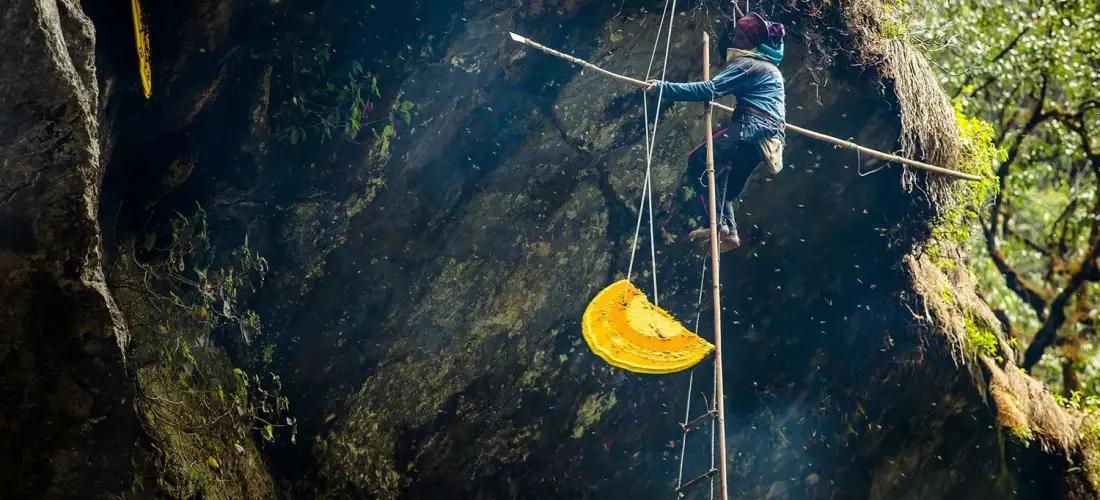
The Mad Honey Hunting Tour is one of Nepal's most extraordinary and culturally immersive adventure experiences, offering a rare glimpse into an ancient tradition practiced exclusively by the Gurung tribe of the Lamjung and Mustang districts. This 4-day journey takes you deep into the remote hill villages of the Annapurna foothills, where indigenous honey hunters risk their lives scaling towering cliffs with handmade rope ladders and bamboo tools to harvest wild honey from the world's largest honeybees - Apis dorsata laboriosa.
What makes this honey truly extraordinary is its psychoactive properties. The bees of the Lamjung region feed heavily on the nectar of Rhododendron luteum and other grayanotoxin-rich rhododendron species that bloom across the Himalayan slopes. The resulting honey contains grayanotoxins - naturally occurring compounds that, when consumed in small quantities, can produce mild hallucinogenic effects, as well as potential medicinal benefits including relief from hypertension, diabetes, and certain inflammatory conditions. This "mad honey," known locally as Maula or Bish Maha, has been harvested and used for centuries - and watching its collection firsthand is an experience unlike any other on earth.
Beginning with a scenic drive from Kathmandu to the highland village of Ghanpokhara in Lamjung District, the tour immerses you in the landscape, lifestyle, and living traditions of the Gurung community. The itinerary is intentionally compact yet deeply enriching, combining cultural encounters, breathtaking natural scenery, and the visceral thrill of witnessing honey hunters scale sheer cliff faces hundreds of meters above the valley floor.
The Lamjung District sits in the lap of the Annapurna Himalayan range, offering dramatic scenery that rivals any trekking destination in Nepal. The drive from Kathmandu winds through the mid-hills of Gandaki Province, ascending through terraced farmlands, cascading waterfalls, and dense subtropical forests of rhododendron, oak, and pine.
Ghanpokhara village, perched at approximately 1,600 to 1,800 meters above sea level, provides sweeping panoramic views of the Annapurna massif, Manaslu, Himalchuli, and Baudha Himal. The village itself is a living museum of traditional Gurung architecture - stone-and-timber homes with slate rooftops, intricately carved wooden doorways, and terraced gardens producing millet, maize, and seasonal vegetables.
The honey harvesting sites are typically located on towering limestone and granite cliff faces above deep river gorges carved by glacial tributaries. These cliffs are draped with enormous wild honeybee colonies - some containing tens of thousands of bees - whose combs hang in massive golden clusters beneath rocky overhangs. The sight of these cliffs, the sound of swarming bees, and the smell of wood smoke rising from the hunters' signal fires all combine to create an atmosphere of profound wildness and ancient ceremony.
The Gurung people of Lamjung have practiced cliff honey hunting for over 2,000 years, and their methods have remained virtually unchanged throughout the centuries. The honey hunters - known as Kulung - use hand-twisted rope ladders made from bamboo and lokta plant fibers, long bamboo poles tipped with cutting blades (called tangos), and woven baskets lowered on ropes to collect the honeycomb sections as they fall.
Before the harvest begins, the hunters conduct a ceremonial offering to the cliff gods and forest spirits, a ritual rooted in animist and Hindu-Buddhist traditions that permeate Gurung cultural life. Flowers, fruits, and rice are laid at the base of the cliff, prayers are chanted, and the blessing of the forest deities is sought to ensure a safe and bountiful harvest.
The hunt itself is a breathtaking display of courage, skill, and ancestral knowledge. As the lead hunter ascends the rope ladder - often hundreds of meters above the ground - his partners below manage the ropes and signal fires. The smoke from burning green vegetation is used to calm and drive the bees away from the combs, allowing the hunter to wedge his tangle beneath the comb, dislodge it, and lower the dripping honeycomb sections into the waiting baskets below.
Beyond the honey hunt itself, this tour is a meaningful cultural journey into the traditions, beliefs, and daily rhythms of the Gurung community. The Gurung are one of Nepal's most celebrated indigenous peoples, with a proud martial heritage, rich oral folklore, and vibrant shamanistic and Buddhist spiritual practices.
During your stay in Ghanpokhara, you will have the opportunity to visit local homes, share meals with Gurung families, and learn about the social significance of mad honey in the community's medicine, trade, and ceremony. Elders may share stories of past hunts, the changing seasons, and the careful stewardship of cliff colonies - traditions of conservation and respect for the natural world that have sustained the practice across generations.
Village life unfolds at a gentle pace: women weave at hand looms, children play in the terraced fields, and the smell of dal bhat and roasting millet drifts from kitchen fires in the evenings. Prayer flags flutter above the rooftops, mani walls line the village paths, and the occasional rhythm of a madal drum drifts through the air. These quiet, intimate moments are as valuable as any dramatic cliff-top spectacle.
The Mad Honey Hunting Tour is seasonal, as the honey harvest is determined by the blooming cycles of the rhododendron species that give mad honey its distinctive properties. There are two primary honey harvesting seasons in Nepal:
The spring harvest is the most famous and widely visited. As rhododendrons bloom across the Himalayan hillsides from March onward, the bees produce the highest concentrations of grayanotoxin-rich honey. This is the season most associated with the potent, hallucinogenic qualities of mad honey. Weather in the Lamjung hills during this period is generally pleasant, with mild temperatures, blooming forests, and clear morning skies, although afternoon clouds and occasional rain showers are common by late April and May. Spring is also the peak trekking season in Nepal, so advance booking is strongly recommended.
A second, smaller harvest typically occurs in the autumn months following the monsoon. The autumn honey is generally less potent than the spring variety but is prized for its flavor and medicinal properties. Weather during this period is excellent - clear skies, crisp mountain air, and superb visibility across the Himalayan panorama make it one of the most beautiful times to travel in Nepal. Autumn also coincides with major Nepali festivals including Dashain and Tihar, offering additional cultural richness to the experience.
Outside these windows - particularly during the monsoon (June to September) - honey hunting is not practiced, and the trails to cliff sites can be extremely dangerous due to heavy rainfall, leeches, landslides, and poor visibility. Winter visits (December to February) are possible but cold temperatures and the absence of honey hunting activity make them less rewarding for this specific tour.
The Lamjung District sits in the middle hills of the Gandaki Province at elevations ranging from approximately 800 to 2,000 meters. Unlike the extreme altitudes of the Everest or Annapurna high-altitude treks, the Mad Honey Tour operates at a moderate elevation where weather conditions are considerably more temperate, though still variable.
During the spring season, daytime temperatures in Ghanpokhara typically range from 15°C to 25°C (59°F to 77°F), while nights can be cool at 8°C to 14°C (46°F to 57°F). Mornings are usually clear and bright, ideal for hiking to the cliff sites, while afternoons may bring clouds and occasional light rain - particularly in April and May as the pre-monsoon system begins to establish itself.
Autumn temperatures are similarly mild, ranging from 12°C to 22°C (54°F to 72°F) during the day and slightly cooler at night. The post-monsoon air is exceptionally clear, and mountain views are outstanding during this period. The terrain around the harvesting sites can be steep, wet, and slippery at certain times of year, and appropriate footwear with good grip is essential.
The Mad Honey Hunting Tour is considered moderately challenging, though it is well within reach of most reasonably fit travelers with no specialized mountaineering experience required. Key factors contributing to the tour's demands include:
No specialized fitness training is required for this tour, though a basic level of cardiovascular fitness and a willingness to hike on uneven terrain for several hours are important.
Mad honey is a powerful natural substance that must be approached with respect and awareness. The grayanotoxins it contains can cause a range of effects including dizziness, nausea, vomiting, low blood pressure, slowed heart rate, and in rare cases of excessive consumption, more serious cardiovascular effects. These symptoms are dose-dependent, and small amounts - typically half a teaspoon or less - are generally considered safe for healthy adults.
Your guides and the Gurung hunters are highly experienced in advising appropriate quantities and will supervise any tasting opportunities. Under no circumstances should participants attempt to purchase and consume large quantities of mad honey without proper guidance. The honey is never consumed on an empty stomach, and alcohol should not be combined with it. Responsible and informed tasting is a legitimate part of the cultural experience, but participant wellbeing is always the priority.
Accommodation during the Mad Honey Hunting Tour is provided in local guesthouses or community homestays in Ghanpokhara village. Rooms are simple and clean, typically featuring twin or double beds with foam mattresses, wool blankets, and cotton pillows. Attached or shared bathroom facilities with cold water are standard, though some homestays offer solar-heated water on request.
Staying in community homestays is strongly encouraged, as it directly supports the local Gurung economy and provides an intimate and authentic experience of village life that no hotel or resort can replicate. Sharing meals and evening conversations with your host family is an intrinsic and deeply memorable part of the overall journey. For those who prefer slightly more comfortable accommodation, basic guesthouse facilities with private rooms are available in nearby larger villages and can be arranged upon request.
Meals during the Mad Honey Hunting Tour are provided primarily through homestays and local teahouses, offering a delicious and nourishing introduction to traditional Gurung and Nepali cuisine. The food is freshly prepared, predominantly vegetarian, and extraordinarily satisfying after a day of hiking and sightseeing.
The centerpiece of every meal is dal bhat - the quintessential Nepali combination of steamed rice, lentil soup, and vegetable curry, often accompanied by pickled vegetables (achar), spinach or seasonal greens, and papadam. Other common offerings include dhido (a traditional buckwheat or millet porridge), momos (steamed or fried dumplings), noodle soups, fried eggs, sel roti (a traditional fried rice bread), honey-drizzled flatbreads, and seasonal fruits.
Dietary preferences including vegetarian, vegan, and gluten-free requirements can typically be accommodated with advance notice. Alpine Club of Himalaya coordinates meal arrangements to ensure participants are well-fed and energized throughout the tour.
Staying adequately hydrated is important throughout this tour, particularly on the long hiking day to the harvesting site. Filtered or boiled water is available at your homestay or guesthouse and is the recommended and environmentally responsible alternative to single-use plastic bottles, which are increasingly discouraged in rural Nepal.
Carrying a refillable water bottle and water purification tablets or a personal filtration device (such as a LifeStraw or SteriPEN) is strongly recommended. Your guide will carry additional water on hiking days and will remind participants to drink regularly. At least 2 to 3 liters of water per day is advised, with higher intake on the strenuous harvest day.
Alpine Club of Himalaya provides licensed, experienced guides for all Mad Honey Hunting Tours. Your trekking guide will be fluent in English and deeply knowledgeable about the cultural traditions, ecology, and logistics of the honey hunting experience. In addition, a local Gurung community liaison accompanies every group, serving as a cultural interpreter and facilitating respectful, meaningful interactions with the honey hunters and village community.
Porters are available for those who prefer not to carry their own daypack during the hike to the harvesting site. All porters employed by Alpine Club of Himalaya are paid fair wages, supplied with appropriate gear, and operate under ethical working conditions in accordance with the standards of responsible tourism.
While the Mad Honey Hunting Tour does not require the same suite of permits as a high-altitude Himalayan trek, certain documents and entry permissions may be necessary depending on the specific location of the harvesting sites visited. Alpine Club of Himalaya handles all permit logistics on behalf of participants, including:
All foreign nationals entering Nepal are required to hold a valid passport with at least six months of validity from the date of entry. A tourist visa is required and can be obtained on arrival at Tribhuvan International Airport in Kathmandu or in advance through Nepal's Department of Immigration online portal. Tourist visas are available for 15, 30, or 90 days, with the 30-day visa being appropriate for most participants. Visa fees are USD 30 for 15 days, USD 50 for 30 days, and USD 125 for 90 days (fees subject to change).
Travel insurance is mandatory for all participants joining the Mad Honey Hunting Tour with Alpine Club of Himalaya. While the tour operates at moderate altitude, the remote terrain, potential bee exposure, and physical demands of the harvest day hike make comprehensive coverage essential. Your insurance policy should include:
Reputable providers including World Nomads, IMG, and Global Rescue offer policies suitable for adventure tours in Nepal. Alpine Club of Himalaya will assist with insurance-related communication and claims in the event of any emergency during the tour.
The Lamjung hill villages, while remote and tranquil, are increasingly connected to basic communication infrastructure. Mobile network coverage (Nepal Telecom and Ncell) is available in most parts of the route, though signal strength varies depending on terrain. WhatsApp messaging and basic internet browsing are generally functional in Ghanpokhara village, though speeds are slow and video calls are unreliable.
Electricity is available in Ghanpokhara through the national grid and local micro-hydro installations. Charging mobile phones, cameras, and other devices is generally possible at your homestay or guesthouse, though access to power outlets may be limited. Bringing a portable power bank is strongly recommended to ensure your devices remain charged throughout the tour, particularly for photography on the harvest day.
Alpine Club of Himalaya accepts last-minute bookings for the Mad Honey Hunting Tour subject to availability and the scheduling of active harvests. Because honey hunting is a seasonal and community-organized activity, availability can be limited during peak spring and autumn periods, and early booking is strongly advised.
For last-minute inquiries, participants are encouraged to contact Alpine Club of Himalaya directly via phone, email, or WhatsApp for real-time availability updates. Our team can organize transportation, accommodation, and guide arrangements on short notice and will confirm the status of active harvests before departure. Participants must ensure that their passport, visa, and travel insurance are in order before any last-minute booking is confirmed.
Prior to departure, Alpine Club of Himalaya offers a comprehensive online trip briefing for all confirmed participants. Conducted via Zoom or similar video platforms, this pre-tour session covers the tour itinerary, logistics of the Kathmandu-to-Lamjung drive, cultural etiquette around the Gurung community and honey hunting ceremony, packing recommendations, health and safety guidelines including bee allergy protocols and mad honey safety, and an overview of accommodation and meal arrangements.
The online briefing also provides an opportunity to meet your trekking guide virtually, ask questions, and ensure that all permits, insurance documentation, and personal gear are in order before you travel. The session is free for all confirmed participants and is highly recommended as a preparation tool for making the most of your time in Lamjung.
Should you need to cancel your booking for the Mad Honey Hunting Tour, please notify Alpine Club of Himalaya in writing via email or official communication as early as possible. The following cancellation charges apply:
In the rare event that Alpine Club of Himalaya must cancel the tour - due to the absence of an active honey harvest, extreme weather, community restrictions, or unforeseen safety concerns - participants will be offered either a full refund of all payments made or the option to reschedule to a future available harvest date at no additional cost.
Alpine Club of Himalaya cannot be held responsible for cancellations, delays, or additional expenses arising from force majeure events including earthquakes, landslides, flooding, political unrest, epidemics, airspace closures, or airline disruptions. In such cases, participants are responsible for any additional personal costs including extra accommodation, rearranged transport, or insurance claims. Comprehensive travel insurance covering trip cancellation and force majeure events is strongly recommended for all participants.
The Mad Honey Hunting Tour is more than an adventure - it is a window into one of the world's most ancient and extraordinary living traditions, practiced by a community whose bond with the land, the bees, and the sacred cliffs of their ancestors spans millennia. Approaching this experience with curiosity, humility, and respect for the Gurung people and their cultural heritage is the foundation of a truly meaningful journey.
Alpine Club of Himalaya is committed to ensuring that this tour is conducted responsibly, ethically, and sustainably - supporting the local economy, preserving cultural traditions, and minimizing environmental impact. We work directly with Gurung community members, honey hunters, and local leaders to ensure that tourism serves the community on its own terms, and that participants leave with not only incredible memories but a genuine appreciation for the people and place that made them possible.
Please ensure that your gear is appropriate and well-tested, your health preparation is complete, and your documentation is in order before departure. Our team is available at every stage to answer questions, address concerns, and help you prepare for one of the most unforgettable experiences Nepal has to offer.
Your adventure begins early in the morning as you leave Kathmandu and travel toward the beautiful hill village of Ghanpokhara in Lamjung District. The scenic drive follows the Prithvi Highway, passing through picturesque towns such as Mugling, Dumre, and Besisahar. Along the journey, you will witness terraced farmlands, flowing rivers, traditional settlements, and panoramic views of the Himalayan foothills.
After reaching the road-head near Ghanpokhara, a short walk leads you to the village. Ghanpokhara is one of the oldest Gurung settlements in Nepal and serves as a gateway to the traditional mad honey hunting region. Upon arrival, you will check into a local lodge and enjoy authentic village hospitality.
The remainder of the day is dedicated to cultural immersion. Meet local honey hunters, learn about their traditions, and gain insight into their unique way of life. As evening approaches, enjoy spectacular sunset views over the surrounding hills and mountains.
A traditional Gurung dinner prepared with locally sourced ingredients will be served. Overnight stay at a local lodge in Ghanpokhara.
Max. Elevation
2,100 m
Duration
6–8 Hours
Accommodation
Local Lodge/Homestay
Meals
Lunch, Dinner
Airport pickup and drop-off services (if required as per itinerary)
Private transportation from Kathmandu to Ghanpokhara and return to Kathmandu
Experienced English-speaking tour guide throughout the trip
Local honey hunting guide and community liaison
All ground transportation, fuel charges, road taxes, and parking fees
3 nights accommodation at local lodge/homestay in Ghanpokhara on a twin-sharing basis
Meals as specified in the itinerary
Traditional Gurung cultural experience and village interaction
Guided visit to the honey hunting site
Observation of the complete honey hunting process
Demonstration of traditional honey extraction techniques
Local support staff during honey hunting activities
First aid kit carried by the guide
Government taxes and service charges
Official company service fees
Although the Mad Honey Hunting Tour is not a strenuous trek, participants will spend time traveling through rural mountain areas, walking on uneven trails, and observing honey hunting activities near cliffs and forests. Proper packing will ensure comfort, safety, and enjoyment throughout the journey.
A daypack of approximately 20–30 liters is recommended.
Carry:
A duffel bag or suitcase for transportation and a small daypack for daily activities is usually sufficient for this 4-day Mad Honey Hunting Tour. No technical climbing or specialized trekking equipment is required.
D
Daniel Müller
Germany
May 11, 2026
S
Sophie Martin
France
Mar 1, 2026
J
James Wilson
United Kingdom
Jan 5, 2026
24/7 Support
Need help? we're at your service
Associated With


We Accept Cards

Office of the company registrar License: 66813/066/067 || Tourism Industry Division License:1142
All content and photography within our website is copyright & may not be reproduced without our permission.
Develop By: IT Sansaar