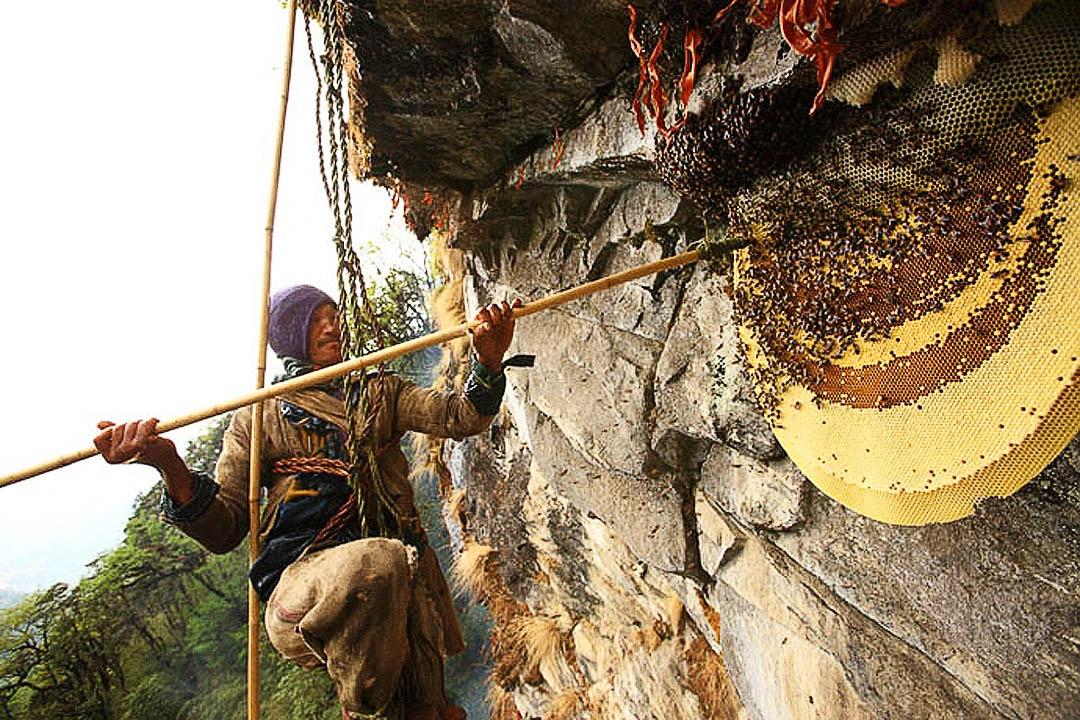
The Mad Honey Hunting Trek in Nepal is one of the most unique cultural adventure experiences in the Himalayas, offering travelers an extraordinary opportunity to witness an ancient tradition that has survived for centuries. Unlike conventional trekking routes that focus primarily on reaching high mountain passes or base camps, this journey focuses on cultural immersion, ethnographic exploration, and interaction with indigenous communities—specifically the Gurung people of central Nepal. The highlight of this trek is the rare opportunity to observe traditional cliff honey harvesting, a practice where skilled local hunters collect wild honey from giant Himalayan honeybee nests located on steep, vertical cliffs.
This honey, commonly known as “Mad Honey,” is produced by the Himalayan giant honeybee (Apis laboriosa), one of the largest honeybee species in the world. These bees build massive hives on cliffs at elevations between 1,500 and 3,000 meters, feeding on rhododendron and other wildflowers. The resulting honey contains natural grayanotoxins, which can produce mild psychoactive effects when consumed in controlled amounts. For centuries, local communities have used this honey for medicinal, ritualistic, and cultural purposes.
The trek begins in Kathmandu, the cultural and historical heart of Nepal, where travelers explore UNESCO World Heritage Sites and prepare for the journey ahead. From there, the route moves into the mid-hills of the Annapurna region, passing through Besisahar, Bhulbhule, Chamche, and eventually reaching remote honey hunting villages. The experience is not just about trekking; it is about witnessing a living tradition that connects nature, spirituality, and survival.
Unlike heavily commercialized trekking routes like Everest Base Camp or Annapurna Circuit, this trek remains relatively untouched, offering a more authentic and raw Himalayan experience. Travelers get to stay in local homestays, interact closely with villagers, and observe cultural rituals that accompany the honey harvesting process. The combination of scenic landscapes, cultural depth, and rare ethnographic experiences makes this trek one of Nepal’s most distinctive adventure products.
Best Season for Mad Honey Hunting Trek
The best seasons for the Mad Honey Hunting Trek are spring (March to May) and autumn (September to November), when weather conditions are stable, skies are clear, and trekking trails are at their most accessible. During spring, the entire mid-hill region of Nepal becomes vibrant with blooming rhododendrons, magnolias, and wildflowers, which are the primary nectar sources for Himalayan giant honeybees. This not only enhances the scenic beauty of the trek but also makes it the peak honey harvesting season in many villages. Spring is also when most traditional honey hunting ceremonies take place, making it the ideal time for travelers seeking authentic cultural observation.
Autumn, on the other hand, is the most popular trekking season in Nepal overall. After the monsoon rains, the atmosphere becomes crystal clear, offering stunning views of the Annapurna and Lamjung Himalayan ranges. The weather is dry, stable, and comfortable, making trekking conditions ideal. Villages are active, trails are safe, and transportation is reliable during this period.
Winter (December to February) is also possible for this trek, but temperatures can be colder, especially in the mornings and evenings. However, since this trek does not reach extreme altitudes, winter trekking remains feasible for well-prepared travelers. The honey hunting activities, however, may be less frequent depending on local community schedules.
The monsoon season (June to August) is generally not recommended due to heavy rainfall, slippery trails, leeches, and possible landslides in the lower hill regions. Although the landscape becomes lush and green during this time, visibility is often poor, and transportation delays are common.
Overall, spring and autumn provide the perfect balance of cultural activity, safety, weather conditions, and scenic beauty, making them the most suitable periods for this trek.
Accommodation During the Trek
Accommodation on the Mad Honey Hunting Trek varies depending on the location and altitude. In Kathmandu, travelers stay in standard tourist hotels ranging from budget to luxury categories. These hotels provide modern amenities such as private bathrooms, Wi-Fi, hot showers, and comfortable bedding, ensuring a smooth transition before and after the trekking journey.
Once the trek begins in the rural regions, accommodation becomes simpler and more traditional. In Besisahar and Chamche, trekkers usually stay in basic lodges or teahouses. These lodges offer twin-sharing rooms with simple beds, blankets, and shared bathroom facilities. While facilities are modest, they are clean and sufficient for a comfortable night's rest.
As the trek progresses into more remote honey hunting areas, accommodation shifts to community homestays. These homestays are one of the highlights of the trek, offering a deeply immersive cultural experience. Guests stay in traditional Gurung houses made of stone and wood, often sharing space with local families. Rooms are simple, sometimes with mattresses on wooden floors, but they provide warmth, safety, and a unique opportunity to experience local hospitality firsthand.
Electricity may be limited or solar-powered in remote villages, and heating is usually provided by traditional firewood stoves. Despite the simplicity, the warmth of local hospitality makes accommodation one of the most memorable aspects of the trek.
Meals and Food
Meals on the Mad Honey Hunting Trek are simple, nutritious, and locally prepared. In Kathmandu, meals are typically based on hotel arrangements, often including breakfast with optional lunch and dinner in local restaurants offering Nepali and international cuisine.
During the trekking days, meals are provided in lodges and homestays. The most common and traditional meal is Dal Bhat, a nutritious combination of rice, lentil soup, seasonal vegetables, pickles, and sometimes meat. This dish is the staple diet of Nepalese trekking regions and provides high energy for long walking days.
Other available meals include noodles, pasta, fried rice, soups, eggs, chapati, and potatoes. Breakfast usually consists of items such as bread, eggs, porridge, pancakes, and tea or coffee. Lunch is typically eaten along the trail or at small teahouses, while dinner is served in the evening at the accommodation.
Food variety decreases as you move deeper into remote villages, but meals remain fresh and locally sourced. Vegetarian options are widely available, and special dietary requirements can often be accommodated with prior notice. Tea, coffee, and hot lemon drinks are commonly served throughout the trek.
Overall, meals are designed to provide sufficient energy for trekking while offering an authentic taste of rural Nepalese cuisine.
Permits Required
The Mad Honey Hunting Trek requires certain trekking permits depending on the exact route and region. Typically, trekkers need a Trekkers’ Information Management System (TIMS) card and local conservation or municipal entry permits, especially if the route overlaps with protected or regulated trekking zones.
If the route passes near Annapurna Conservation Area regions, an Annapurna Conservation Area Permit (ACAP) may also be required. These permits help regulate tourism, ensure safety, and contribute to local conservation and community development projects.
Most trekking agencies arrange all necessary permits on behalf of travelers, making the process smooth and hassle-free. Travelers are usually required to provide passport copies and passport-sized photographs for permit processing.
Guide and Porter Services
A licensed trekking guide is highly recommended and often mandatory for this trek due to its remote nature and cultural sensitivity. The guide not only ensures navigation and safety but also provides valuable cultural interpretation, helping travelers understand the significance of honey hunting traditions and local customs.
In honey hunting villages, local experts or hunters often join the expedition to explain traditional techniques and rituals. These individuals are deeply respected within their communities and play a vital role in preserving this ancient practice.
Porters are optional but recommended for carrying heavy luggage, especially during longer trekking days. They typically carry 10–15 kg per person, allowing trekkers to enjoy the journey more comfortably. Guides and porters are insured, trained in first aid, and familiar with emergency procedures.
Drinking Water
Drinking water is available throughout the trek but must be treated before consumption. In Kathmandu and larger towns, bottled water is widely available. However, in rural trekking areas, it is recommended to use filtered, boiled, or purified water.
Most lodges provide boiled drinking water for a small fee. Trekkers are encouraged to carry reusable water bottles and purification tablets or portable water filters to minimize plastic waste and ensure safe hydration.
Hydration is extremely important during trekking, especially in warm or humid conditions in the lower hills.
Travel Insurance
Travel insurance is strongly recommended and often mandatory for participation in this trek. The insurance policy should cover trekking activities, medical emergencies, and emergency helicopter evacuation.
Although the trek does not reach extreme altitudes, remote locations and limited road access mean that emergency evacuation may require helicopter assistance in rare cases. Therefore, comprehensive insurance coverage ensures safety and peace of mind.
Transport
Transportation for this trek includes private vehicles, tourist buses, and local jeeps. The journey begins with airport pickup in Kathmandu, followed by sightseeing transport within the city.
From Kathmandu to Besisahar, travelers typically use a private car or tourist bus. From Besisahar onward, rugged terrain requires local jeep transport to reach Bhulbhule or nearby villages.
Return transport follows the same route, with options to return to either Kathmandu or Pokhara depending on traveler preference. Roads in rural Nepal can be bumpy and winding, but they offer scenic views of rivers, hills, and villages along the way.
Difficulty Level
The Mad Honey Hunting Trek is considered moderate in difficulty. It does not involve extreme altitude or technical climbing, but it does require consistent walking for 4–6 hours per day on uneven terrain.
The trails include uphill and downhill sections, forest paths, stone steps, and river crossings. Physical fitness and basic trekking experience are helpful but not mandatory. Beginners with good stamina can comfortably complete this trek.
The most challenging aspects are long walking days, changing weather conditions, and basic accommodation rather than altitude or technical difficulty.
Altitude Sickness
Altitude sickness is generally not a major concern on this trek, as the maximum elevation remains around 2,000 meters. This is well below the typical altitude threshold where Acute Mountain Sickness (AMS) becomes common.
However, trekkers may still experience mild fatigue, dehydration, or exhaustion due to continuous walking. Proper hydration, pacing, and rest are important to maintain energy levels.
Since the altitude gain is gradual and relatively low, most travelers adapt easily without requiring special acclimatization days.
Cancellation Policy
Cancellation by the Participant
If you decide to cancel your booking for the Mad Honey Hunting Tour in Nepal please notify Alpine Club of Himalaya in writing (via email or official communication) as early as possible. The following cancellation charges apply:
- 60 days or more before trek start date: 20% cancellation fee of the total trip cost
- 30 to 59 days before trek start date: 50% cancellation fee of the total trip cost
- Less than 30 days before departure: No refund; 100% of the trip cost is non-refundable
These fees cover administrative costs, permits, pre-arranged logistics, and potential losses caused by late cancellations.
Cancellation by the Organizer
In the rare circumstance that Alpine Club of Himalaya must cancel the trek due to unforeseen or uncontrollable events such as extreme weather, natural disasters, or safety concerns in the region, you will be offered either:
- A full refund of all payments made
OR
- The option to reschedule your trek for a future available date at no additional cost
Your safety is our highest priority, and cancellations are only made when absolutely necessary.
Force Majeure Clause
Alpine Club of Himalaya cannot be held responsible for cancellations, delays, or extra expenses resulting from force majeure events, including but not limited to:
- Earthquakes, floods, landslides
- Political unrest, strikes, or border closures
- Epidemics, pandemics, or other health emergencies
- Airspace closures, airline cancellations, or flight delays
In such cases, participants are responsible for any additional personal costs such as extra accommodation, changed flights, or insurance claims. We strongly recommend that all trekkers purchase comprehensive travel insurance covering trip cancellations, medical emergencies, and force majeure events before joining the trek.