E
Emily Carter
Australia
Jun 1, 2026

Everything was well arranged - from travel to homestay and guided honey hunting observation. The cultural rituals added deep meaning to the experience. Highly recommended for adventure seekers.
Destination
Nepal
Duration
7 Days
Best Weather
March, April, May, September, October & November
Accommodation
Hotel and Guesthouse
Meals
Breakfast, Lunch, Dinner
Transportation
Private vehicle / Flights
Group
Min. 1 Pax
Difficulty
Easy
Activities
Trekking, Day Tour
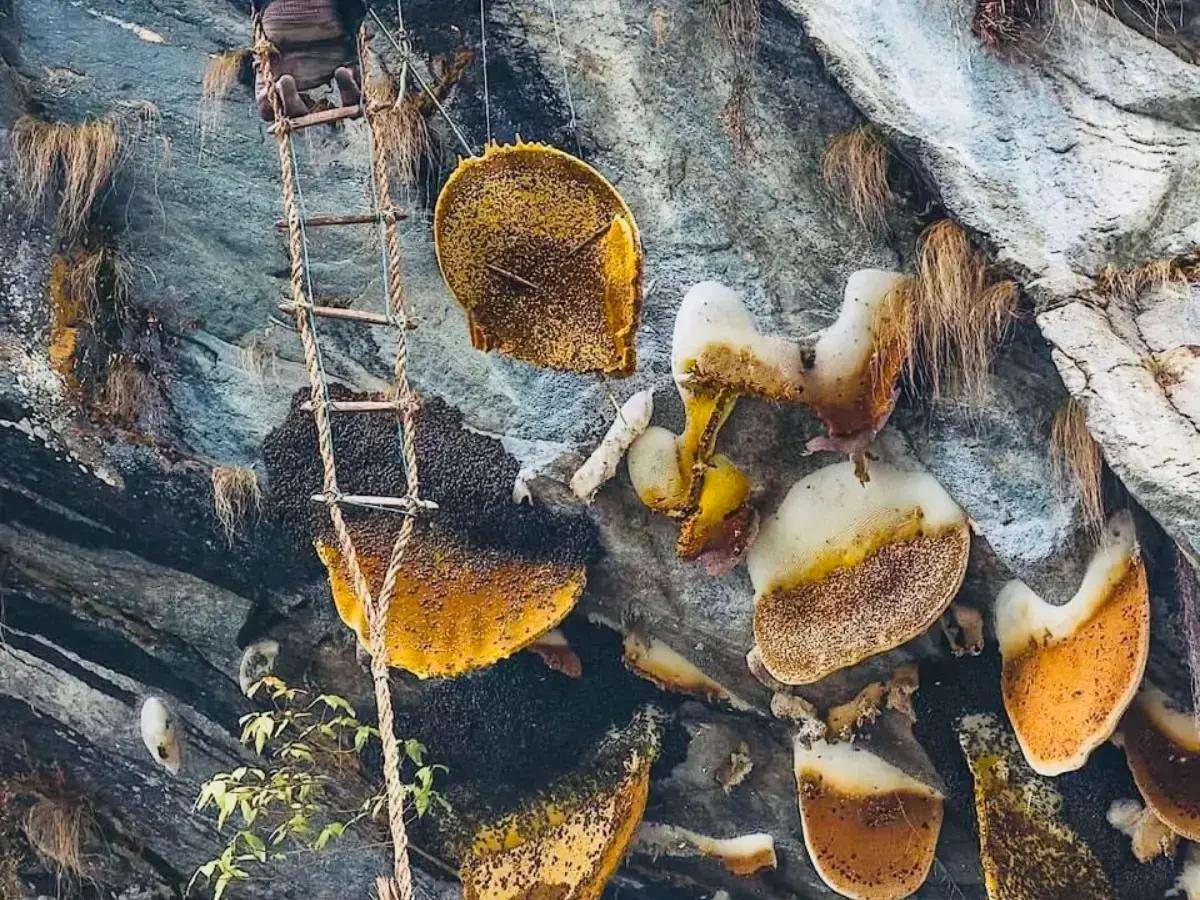
The Mad Honey Hunting tour is a rare cultural and adventure experience set in the mid-hills of Nepal, where travelers witness the ancient tradition of harvesting wild honey from steep Himalayan cliffs. Practiced by the Gurung communities, this expedition is not just about observation but also about understanding a deep-rooted cultural heritage that combines shamanic rituals, ecological knowledge, and extreme mountain skills. The journey passes through scenic villages, terraced farmlands, and forested hills, offering a blend of cultural immersion and soft trekking in the Annapurna foothills.
The best time to undertake this tour is during spring (March to May) and autumn (September to November). In spring, the forests are vibrant with rhododendron blooms, and honey bee activity is high, making it an ideal season for witnessing honey harvesting. Autumn offers stable weather, clear mountain views, and comfortable trekking conditions. Winter (December–February) can be cold in villages but still doable, while the monsoon season (June–August) is generally avoided due to heavy rain, landslides, and slippery trails.
Accommodation during the trip varies depending on the location. In Kathmandu, travelers stay in comfortable tourist-standard hotels with modern amenities. In Besisahar, accommodation is typically in lodges or boutique guesthouses offering basic comfort. In the Gurung villages such as Ghalegaun or Bhujung, guests stay in traditional community homestays, where local families provide simple but clean rooms. These homestays offer an authentic cultural experience, with shared bathrooms and traditional village hospitality rather than luxury facilities.
Meals are included throughout most of the journey and are freshly prepared using local ingredients. In cities, meals include a mix of Nepali and international cuisine. During the trek and village stay, food is simple and nutritious, mainly consisting of dal bhat (rice, lentils, vegetables), seasonal greens, soups, eggs, and locally grown organic produce. Breakfast, lunch, and dinner are provided daily during the trekking portion, and special welcome and farewell dinners are arranged in Kathmandu. Vegetarian meals are easily available upon request.
This tour does not require high-altitude trekking permits like restricted area or conservation permits used in major Himalayan expeditions. However, travelers may need to pay local community entry fees or village conservation charges, which support the Gurung communities hosting the experience. These formalities are typically arranged by the trekking operator, ensuring a smooth and hassle-free journey.
A licensed, experienced cultural guide accompanies the group throughout the journey. The guide plays an essential role in explaining local traditions, coordinating with villagers, ensuring safety, and managing logistics. In the honey hunting region, additional local experts and hunters assist in organizing the observation experience. These guides are deeply familiar with terrain conditions, cultural practices, and emergency procedures, making the journey both safe and informative.
Safe drinking water is available in villages and lodges, but travelers are advised not to drink untreated tap or stream water. Bottled water is available in lower regions, while in villages, boiled or filtered water is commonly provided. It is highly recommended to carry a reusable bottle along with water purification tablets or a portable filter to reduce plastic waste and ensure safe hydration throughout the trek.
Travel insurance is strongly recommended and should include coverage for medical emergencies, accidents, trip cancellations, and evacuation. Although this is not a high-altitude expedition, insurance is still important due to the remote nature of the villages and limited medical facilities in the region. In case of emergencies, evacuation to Kathmandu or Pokhara may be required.
Transportation includes a combination of private vehicles and four-wheel-drive jeeps. The journey begins with a drive from Kathmandu to Besisahar along the Prithvi Highway, followed by off-road jeep travel into the hill villages. Roads beyond Besisahar can be rough, narrow, and unpaved, especially during monsoon or early spring. All transport is arranged in advance to ensure comfort and safety during long driving hours through mountainous terrain.
This tour is classified as easy to moderate. It does not involve technical climbing or high-altitude trekking, making it suitable for beginners and cultural travelers. Daily walking ranges from 2 to 6 hours on village trails and forest paths. Some sections may include steep ascents or descents, but overall the trek is manageable for anyone with basic fitness and a willingness to walk.
Altitude sickness is generally not a concern on this itinerary, as the maximum elevation is around 2,000 meters (6,562 feet). This is well below the typical risk zone for acute mountain sickness. Most travelers experience no altitude-related issues. However, mild fatigue can occur due to walking on uneven terrain and changing elevations, so maintaining hydration and a steady pace is still recommended.
If you decide to cancel your booking for the Mad Honey Hunting Tour in Nepal please notify Alpine Club of Himalaya in writing (via email or official communication) as early as possible. The following cancellation charges apply:
These fees cover administrative costs, permits, pre-arranged logistics, and potential losses caused by late cancellations.
In the rare circumstance that Alpine Club of Himalaya must cancel the trek due to unforeseen or uncontrollable events such as extreme weather, natural disasters, or safety concerns in the region, you will be offered either:
Your safety is our highest priority, and cancellations are only made when absolutely necessary.
Alpine Club of Himalaya cannot be held responsible for cancellations, delays, or extra expenses resulting from force majeure events, including but not limited to:
In such cases, participants are responsible for any additional personal costs such as extra accommodation, changed flights, or insurance claims. We strongly recommend that all trekkers purchase comprehensive travel insurance covering trip cancellations, medical emergencies, and force majeure events before joining the trek.
Upon your arrival at Tribhuvan International Airport in Kathmandu, you will be warmly welcomed by a representative and transferred to your hotel. After check-in and some time to rest, you will attend a mandatory pre-expedition briefing conducted by your licensed cultural guide. During the briefing, you will learn about the traditional honey hunting culture of the Gurung communities, safety regulations, photography etiquette, and environmental conservation practices. The guide will also explain that the exact honey hunting schedule may vary depending on weather conditions, bee activity, and the decisions of local shamans and hunters.
If time permits, you may explore the colorful streets of Thamel, famous for its restaurants, handicraft shops, and cultural atmosphere.
Max. Elevation
1,400 m / 4,593 ft
Duration
Airport transfer approximately 30 minutes
Accommodation
Hotel in Kathmandu
Meals
Welcome Dinner
Airport arrival and departure transfers by private vehicle.
2 nights hotel accommodation in Kathmandu on a twin-sharing basis.
2 nights accommodation in Besisahar at a lodge, guesthouse, or boutique resort.
3 nights accommodation in a traditional Gurung community homestay in Ghalegaun or Bhujung.
Daily breakfast throughout the trip.
All lunches and dinners during the tour as specified in the itinerary.
Welcome dinner in Kathmandu.
Farewell dinner in Kathmandu.
Professional English-speaking cultural guide throughout the trip.
Experienced local honey hunting guide and community liaison.
All ground transportation as per the itinerary.
Private vehicle transfer between Kathmandu and Besisahar.
Private 4WD jeep transportation between Besisahar and the honey hunting villages.
Community entrance fees and local village permits where applicable.
Honey hunting observation and cultural program arrangements.
Participation in traditional honey tasting ceremony.
Observation of shamanic rituals and honey hunting preparations.
Traditional Gurung cultural performance (Rodhi program).
Guide's salary, accommodation, meals, transportation, and insurance.
Government taxes and service charges.
First-aid kit carried by the guide.
Official completion certificate (if provided by the operator).
E
Emily Carter
Australia
Jun 1, 2026
M
Marco Rossi
Italy
Jan 6, 2026
D
Daniel Müller
Germany
Jan 2, 2026
24/7 Support
Need help? we're at your service
Associated With


We Accept Cards

Office of the company registrar License: 66813/066/067 || Tourism Industry Division License:1142
All content and photography within our website is copyright & may not be reproduced without our permission.
Develop By: IT Sansaar