A
Ananya Sharma
Mumbai, India
Apr 8, 2026

The extra rest days built into the leisurely itinerary were a lifesaver. We felt strong all the way to Base Camp, and taking off from Gorak Shep in a helicopter felt like being in a movie.
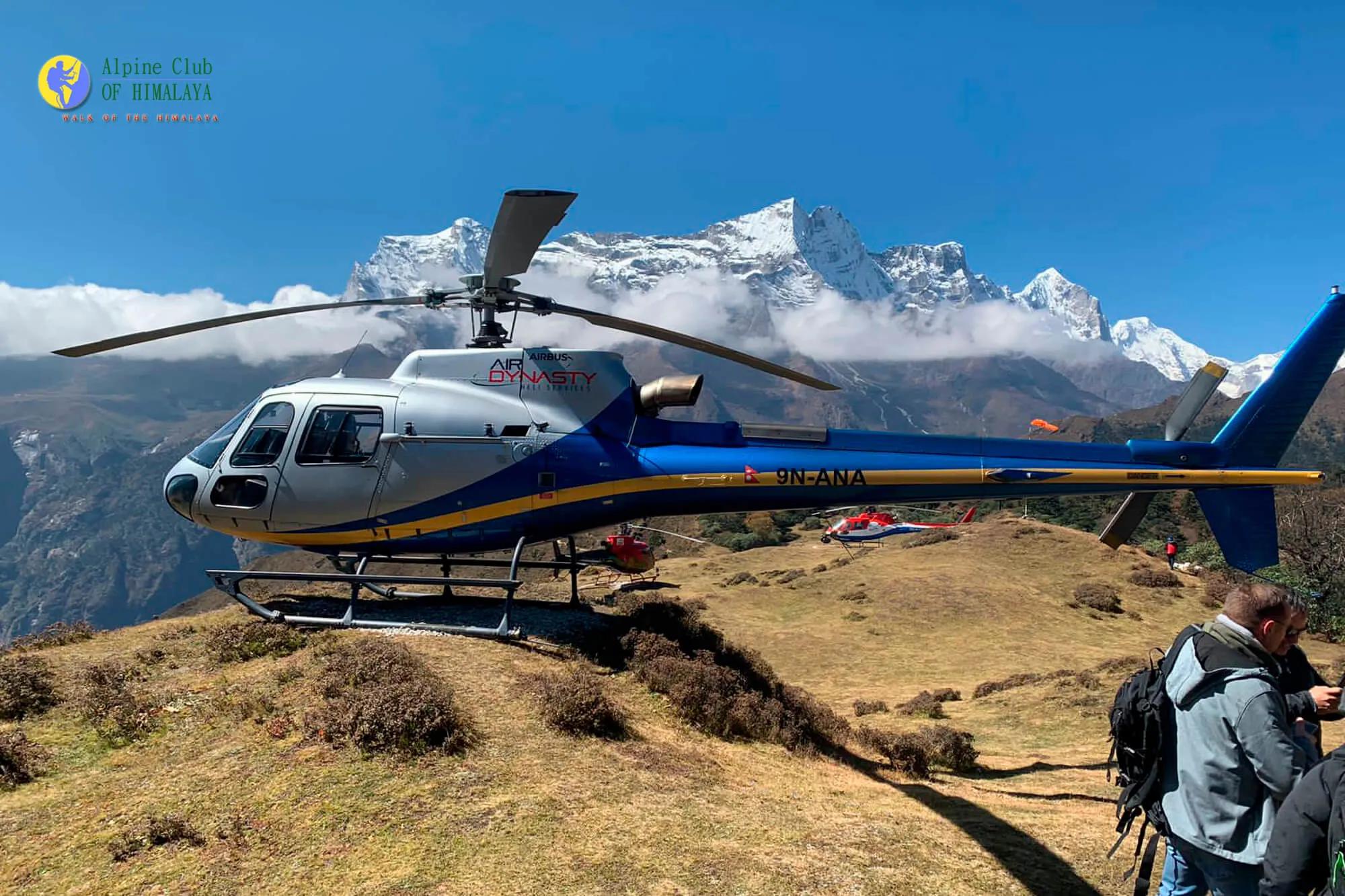
Destination
Nepal
Duration
12 Days
Best Weather
March, April, may, September, October & November
Max Altitude
5364 (Everest Base Camp)
Accommodation
3* Accommodation in Kathmandu and Tea House/Basic Guest House
Meals
Full Board during Trek and Breakfasts, Welcome and Farewell meals in Kathmandu
Group
Min. 1 Pax
Difficulty
Easy
Activities
Trekking, Helicopter Tour
The Everest Base Camp Leisurely Trek with Helicopter Return is a carefully designed 12-day adventure that combines the breathtaking grandeur of the Himalayas with cultural immersion, historical significance, and a comfortable trekking experience. This trek allows participants to explore the heart of the Khumbu region, walking along the same trails that legendary climbers Sir Edmund Hillary and Tenzing Norgay Sherpa once journeyed, while also enjoying a relaxed pace suitable for trekkers with little or no high-altitude experience.
Starting from Lukla, the trail winds through lush valleys, terraced landscapes, and traditional Sherpa settlements before reaching the dramatic high-altitude terrain of Everest Base Camp (5,364 meters). Trekkers traverse forests of pine, rhododendron, and juniper, cross suspension bridges over turquoise glacial rivers, and pass through picturesque villages such as Namche Bazaar, Tengboche, and Dingboche. Along the way, the trail offers panoramic views of some of the most iconic Himalayan peaks, including Everest (8,848 m), Lhotse (8,516 m), Ama Dablam (6,812 m), Nuptse (7,861 m), and Thamserku (6,623 m).
This leisurely itinerary is designed to prioritize acclimatization and comfort, allowing trekkers to take in the scenery, interact with local Sherpa communities, and learn about their vibrant culture and Buddhist traditions. Staying in comfortable teahouses and lodges, travelers enjoy warm meals, cozy accommodations, and scenic views of the mountains at every stop. The trek also passes through Sagarmatha National Park, a UNESCO World Heritage Site, offering opportunities to observe high-altitude flora, fauna, and the natural beauty of the Khumbu region.
A highlight of this trek is the helicopter return from Everest Base Camp to Kathmandu, providing a spectacular aerial perspective of the Himalayas and the Khumbu Valley, while saving time and avoiding the long return journey on foot. This option makes the trek accessible to a broader range of adventurers, including those with limited time or seeking a less physically demanding return.
With the Alpine Club of Himalaya, trekkers receive expert guidance from experienced, licensed local guides and porters who ensure safety, cultural insights, and smooth logistics. All trekking permits, including the Sagarmatha National Park Permit and TIMS Card, are arranged in advance, along with domestic flights, accommodation, and meals, allowing participants to focus on the adventure rather than planning.
The Everest Base Camp Leisurely Trek with Helicopter Return is more than a trek—it is a journey through Nepal’s most iconic landscapes, blending adventure, culture, and history. From crossing suspension bridges over rushing rivers to watching the sun illuminate the peaks of Everest and Lhotse, every step brings a new story. This trek is perfect for travelers seeking a memorable Himalayan experience, offering both the challenge of high-altitude trekking and the comfort of a leisurely, well-supported itinerary with the Alpine Club of Himalaya.
The Everest region has a rich history of mountaineering, trade, and cultural significance. Western attention was first drawn to the area in the early 20th century during British reconnaissance expeditions to Mount Everest, with Sherpa villages like Namche Bazaar serving as vital hubs for climbers and traders. The legendary first successful ascent of Everest in 1953 by Sir Edmund Hillary and Tenzing Norgay Sherpa cemented the Khumbu region’s place in global mountaineering history.
The trails to Everest Base Camp were historically used by traders moving between Nepal and Tibet, carrying salt, wool, and other goods. Along these routes, trekkers encounter traditional Sherpa settlements, Buddhist monasteries such as Tengboche Monastery, and stone mani walls, reflecting centuries of spiritual and cultural heritage. The trek passes through the Sagarmatha National Park, a UNESCO World Heritage Site, preserving both the natural beauty and the history of Himalayan exploration.
The combination of trekking along paths steeped in history, interacting with Sherpa communities, and experiencing the natural environment that supported legendary expeditions makes this journey historically significant and culturally immersive.
The best time to undertake the Everest Base Camp Leisurely Trek with Helicopter Return is during spring (March to May) and autumn (September to November). These seasons provide stable weather, clear skies, and breathtaking views of the Himalayan peaks, including Everest, Lhotse, Nuptse, and Ama Dablam, making photography and sightseeing ideal.
The Alpine Club of Himalaya recommends planning your trek during spring or autumn for the best combination of safety, comfort, scenery, and cultural experiences. The company also assists with flexible trekking dates, domestic flights, and accommodations to match the optimal trekking season.
The Everest Base Camp Leisurely Trek with Helicopter Return is classified as a moderate-level trek, making it suitable for both first-time high-altitude trekkers and those with prior trekking experience. The total distance covered is approximately 60–65 kilometers round-trip from Lukla to Everest Base Camp, with daily walking durations ranging from 4 to 7 hours. The trail passes through diverse terrain, including well-maintained forest paths, village trails, rocky moraines, glacier sections, and steep ascents in the higher elevations. Trekkers reach a maximum altitude of 5,364 meters at Everest Base Camp, while most villages along the route, such as Namche Bazaar and Dingboche, are between 2,800–4,400 meters. The trek involves gradual uphill climbs, ridge walking, and some moderately steep sections but does not require technical climbing or mountaineering skills, making it accessible to adventurers with a moderate level of trekking experience who are comfortable with high-altitude conditions.
Although this trek is considered moderate, good physical fitness is essential for a safe and enjoyable experience. Trekkers should have strong cardiovascular endurance, leg strength, and joint stability to manage long days of walking on uneven terrain, rocky paths, and occasional icy or slippery sections. Daily trekking can last 4–7 hours, so prior preparation such as hiking, jogging, stair climbing, or other cardio workouts is highly recommended to build stamina. Flexibility, balance, and mental endurance are important to cope with the variable weather, altitude changes, and physical demands of high-altitude trekking. The itinerary is designed to allow gradual acclimatization, with rest days at key villages like Namche Bazaar and Dingboche, reducing the risk of altitude sickness. Experienced Alpine Club of Himalaya guides accompany all trekkers, monitoring health, suggesting rest periods, and providing guidance to maintain a comfortable pace. With proper preparation and guidance, this trek offers a rewarding, safe, and unforgettable Himalayan experience suitable for a wide range of trekkers.
Proper acclimatization is a critical part of the Everest Base Camp Leisurely Trek with Helicopter Return, even though it is designed as a moderate trek. The itinerary is carefully structured with gradual altitude gain, allowing the body sufficient time to adjust to lower oxygen levels at higher elevations. As trekkers move from the temperate forests of Lukla through Namche Bazaar, Tengboche, and Dingboche to the alpine landscapes of Gorak Shep and Everest Base Camp, the trail is paced to minimize the risk of altitude sickness. Overnight stays at Namche Bazaar, Dingboche, and Gorak Shep are strategically planned to support natural acclimatization, while rest days and short excursions follow the “climb high, sleep low” principle, widely recommended for safe high-altitude trekking.
Trekkers are encouraged to maintain a steady pace, stay well-hydrated, and take regular rest breaks throughout the trek. Adequate sleep, balanced meals, and avoiding alcohol and heavy exertion at high elevations further help the body adapt. Guides from the Alpine Club of Himalaya monitor trekkers closely for early signs of altitude-related issues and provide advice on pacing, hydration, and preventive measures. With proper acclimatization practices, trekkers can enjoy the majestic Himalayan views safely while minimizing the risks associated with high-altitude trekking.
Safety is a top priority on the Everest Base Camp Leisurely Trek, and the route is supported by comprehensive emergency and evacuation plans. All trekkers are accompanied by experienced, licensed guides trained in first aid, altitude awareness, and emergency response, ensuring that any illness, injury, or altitude-related problem is addressed promptly.
For serious medical situations, emergency helicopter evacuation can be arranged from accessible points along the trail, subject to weather and visibility conditions. Communication is maintained via mobile networks or satellite devices when needed, ensuring rapid coordination with rescue services and medical facilities in Lukla, Namche Bazaar, or Kathmandu. Guides carry first-aid kits and oxygen supplies to manage minor injuries, headaches, or common trekking-related discomforts.
Trekkers are strongly advised to have comprehensive travel and trekking insurance covering high-altitude trekking and emergency evacuation. With these precautions, trained staff, and established procedures, the Everest Base Camp Leisurely Trek is conducted with a strong focus on safety, preparedness, and peace of mind, allowing trekkers to fully immerse themselves in the Himalayan adventure.
The Alpine Club of Himalaya plays a pivotal role in ensuring that the Everest Base Camp Leisurely Trek is safe, well-organized, and memorable. As a leading trekking and mountaineering company in Nepal, the organization manages all aspects of the trek, from itinerary planning and logistical arrangements to on-ground execution, prioritizing safety, comfort, and guest satisfaction.
One of the key responsibilities of the Alpine Club of Himalaya is the provision of experienced, government-licensed trekking guides, trained in altitude management, first aid, and emergency evacuation. These guides monitor the health and pace of trekkers, provide cultural and environmental insights, and ensure that every trekker acclimatizes safely while navigating the challenging high-altitude terrain.
The company also handles all logistical arrangements, including domestic flights, helicopter return, ground transportation, trekking permits, accommodations, and meals along the route. By coordinating with reliable teahouses and local service providers, the Alpine Club of Himalaya ensures that trekkers enjoy comfortable stays, hygienic food, and authentic Himalayan experiences even in remote areas.
In addition, the Alpine Club of Himalaya promotes responsible trekking practices, such as eco-friendly behavior, waste management, and supporting local communities, ensuring that the adventure benefits both trekkers and the region. With professional guidance, safety protocols, and on-ground support, the Alpine Club of Himalaya guarantees that the Everest Base Camp Leisurely Trek is not only an unforgettable journey through the Himalayas but also a safe, ethical, and professionally managed experience from start to finish.
The Everest Base Camp Leisurely Trek involves inherent high-altitude risks, including altitude sickness, harsh weather, and challenging terrain. Effective risk management is critical to ensure a safe trekking experience. The Alpine Club of Himalaya implements multiple safety measures, including:
· Gradual altitude gain with strategic rest days to minimize the risk of Acute Mountain Sickness (AMS).
· Continuous health monitoring by trained guides, who are licensed and experienced in altitude awareness, first aid, and emergency procedures.
· Detailed pre-trek briefings to educate trekkers on potential hazards, safe pacing, and signs of altitude sickness.
· Emergency protocols for evacuation by helicopter or rapid descent in case of serious illness or injury.
· Backup communication systems using mobile networks and satellite devices in areas with limited coverage.
These risk management strategies ensure that trekkers can focus on the adventure while knowing that safety and emergency preparedness are a priority throughout the journey.
Safety and security are central to the planning and operation of the Everest Base Camp Leisurely Trek, and the Alpine Club of Himalaya emphasizes professional guidance, ethical practices, and traveler support. Experienced trekking guides continuously monitor the health and wellbeing of participants, adjusting trekking pace, rest periods, and hydration as needed. The team carries first-aid kits, oxygen cylinders, and emergency supplies, and maintains coordination with local rescue services in case of medical emergencies.
Trekking in the Khumbu region also requires awareness of environmental risks, such as steep ridges, glacier crossings, and variable trail conditions. The Alpine Club of Himalaya ensures that all trekkers are briefed on safety protocols, trail etiquette, and responsible trekking practices, including waste management, respect for wildlife, and adherence to local regulations. Travelers are also advised to maintain personal security, carry essential travel documents, and follow guidance on altitude, weather, and terrain conditions.
By combining professional supervision, emergency preparedness, and risk awareness, the Everest Base Camp Leisurely Trek is conducted with the highest standards of safety and security, allowing trekkers to enjoy the Himalayas confidently and responsibly.
Altitude sickness, also known as Acute Mountain Sickness (AMS), is a common concern for trekkers in the high Himalayas, including those on the Everest Base Camp Leisurely Trek with Helicopter Return, where elevations reach up to 5,364 meters at Everest Base Camp. As altitude increases, the oxygen level in the air decreases, and the body requires time to adjust to reduced oxygen availability. While this trek is designed to be moderate and includes gradual acclimatization days, proper preparation, awareness, and adherence to safety practices are essential to ensure a safe and enjoyable experience.
Early symptoms of altitude sickness often include headache, fatigue, dizziness, nausea, shortness of breath, loss of appetite, and disrupted sleep. These symptoms are generally mild when identified early but can worsen if ignored. More severe forms of altitude illness, such as High-Altitude Pulmonary Edema (HAPE) or High-Altitude Cerebral Edema (HACE), are rare on this itinerary but require immediate descent and medical attention.
Preparation for altitude begins before the trek. Trekkers are advised to maintain good cardiovascular fitness, build stamina through activities like hiking, jogging, or stair climbing, and ensure overall physical readiness for daily walks of 4–7 hours at high elevations. During the trek, it is crucial to stay well-hydrated, eat balanced meals, and avoid alcohol or smoking, particularly at higher altitudes. The itinerary is carefully designed with overnight stops at increasing elevations, allowing the body to gradually adjust, and includes specific “climb high, sleep low” days to improve acclimatization.
Guides from the Alpine Club of Himalaya play a central role in monitoring the health of trekkers, observing for early signs of altitude-related issues, and providing advice on pacing, hydration, and rest. If mild symptoms appear, rest, hydration, and reduced exertion are usually effective. In case of severe symptoms, immediate descent to a lower altitude is the most effective intervention, and emergency evacuation arrangements, including helicopter support, are available if required.
The Everest Base Camp Leisurely Trek with Helicopter Return traverses an extraordinary range of environments, reflecting the unique ecological diversity of the Khumbu region. The trek begins in Lukla (2,860 m), where the climate is temperate, with relatively mild temperatures, fertile river valleys, and lush greenery. As trekkers ascend toward Namche Bazaar, Tengboche, and Dingboche, the climate gradually transitions through subalpine and alpine zones, with cooler temperatures, thinner air, and increasingly rugged terrain.
At higher elevations, especially near Gorak Shep and Everest Base Camp (5,364 m), the climate becomes harsh and alpine, with cold temperatures, strong winds, and the possibility of snowfall even outside of winter months. Weather in the high Himalayas can change rapidly, shifting from clear, sunny skies to sudden fog, snow, or rain. Spring (March to May) and autumn (September to November) are the most favorable seasons for trekking, offering stable weather, moderate temperatures, and clear panoramic views of Everest, Lhotse, Nuptse, Ama Dablam, and surrounding peaks. During the monsoon (June to August), trails can become slippery, and visibility may be reduced due to cloud cover, while winter (December to February) brings frost, freezing temperatures, and snow at higher altitudes.
The diversity of climates along the trek provides an engaging experience, as trekkers move from verdant river valleys and terraced fields in lower regions to stark high-altitude landscapes of moraine, glaciers, and rocky ridges in the upper Khumbu.
The Khumbu region is rich in unique flora and fauna due to its wide elevation range and varied climate zones. Lower sections of the trek are characterized by temperate forests, including pine, rhododendron, oak, and birch, which bloom in vibrant colors during spring. Shrubs, mosses, and alpine flowers such as primulas and blue poppies appear as the trail reaches higher altitudes, particularly above the tree line near Gorak Shep and the EBC area.
Wildlife in the region is equally diverse. Birdwatchers may spot Himalayan monals, blood pheasants, snowcocks, sunbirds, and bulbuls, while mammals such as Himalayan tahr, musk deer, snow leopards (rare), red pandas (rare), and langurs inhabit the forests, cliffs, and high pastures. Smaller species, including rodents and Himalayan marmots, are commonly seen at alpine elevations.
The fragile ecosystems along the Everest trail are preserved through responsible trekking practices. The Alpine Club of Himalaya emphasizes eco-friendly trekking, minimal waste, and respect for wildlife, ensuring that trekkers leave a minimal impact on the environment. This combination of changing climates, stunning alpine landscapes, diverse plant life, and unique wildlife makes the Everest Base Camp Leisurely Trek not only a visual delight but also an enriching natural experience for trekkers.
The Everest Base Camp Leisurely Trek with Helicopter Return stands out for several reasons:
· Leisurely Itinerary: Unlike standard Everest Base Camp treks, this 12-day itinerary is designed for relaxed pacing, allowing trekkers to acclimatize properly and enjoy the scenery, culture, and mountain views without rushing.
· Helicopter Return: One of the most distinctive features is the helicopter flight back to Kathmandu from Everest Base Camp, offering spectacular aerial views of Everest, Lhotse, Nuptse, and the Khumbu Valley, while saving time and reducing the physical strain of the return journey.
· Cultural Immersion: Trekkers stay in traditional Sherpa villages, observe Buddhist rituals, visit monasteries, and engage with local communities, gaining insight into the unique Khumbu culture.
· Iconic Himalayan Views: The trek offers close-up panoramas of some of the world’s tallest peaks, including Everest, Lhotse, Ama Dablam, Nuptse, and many surrounding peaks, providing endless photo opportunities and unforgettable vistas.
· Accessible for Beginners: The well-established trails and comfortable teahouse accommodations make this trek suitable for first-time high-altitude trekkers, combining adventure with safety and convenience.
· Scenic Diversity: The journey covers diverse landscapes—from lush lowland forests and river valleys to high alpine meadows, glacier moraines, and rugged high-altitude terrain—offering a comprehensive Himalayan experience.
With the guidance of the Alpine Club of Himalaya, trekkers enjoy a perfect blend of adventure, history, culture, and comfort, making this trek a unique and unforgettable Himalayan experience.
The Everest Base Camp Leisurely Trek with Helicopter Return is designed to provide a balanced, high-altitude trekking experience that combines adventure, culture, and comfort, making it ideal for first-time high-altitude trekkers as well as experienced hikers seeking a more relaxed pace. Trekkers can expect a journey through breathtaking Himalayan landscapes, vibrant Sherpa villages, glacial valleys, and historic trails once traversed by legendary climbers like Sir Edmund Hillary and Tenzing Norgay.
The trek begins with a scenic flight from Kathmandu to Lukla, offering stunning views of snow-capped peaks, deep valleys, and terraced hillsides. From Lukla, the trail follows well-marked paths through the Khumbu region, passing lush pine and rhododendron forests, suspension bridges over roaring rivers, and picturesque villages such as Phakding, Namche Bazaar, and Tengboche. Along the way, trekkers experience local Sherpa culture, visit Buddhist monasteries, interact with villagers, and witness traditional lifestyles that have persisted for centuries.
As the trek ascends, the scenery changes dramatically from temperate forests to alpine landscapes, with the air becoming thinner and the environment more rugged. Trekkers will traverse moraine trails, rocky ridges, and high-altitude valleys, gradually acclimatizing to elevations above 5,000 meters at Everest Base Camp. The highlight of the trek is the panoramic views of Everest, Lhotse, Nuptse, Ama Dablam, and other towering peaks, along with the glacial expanse of the Khumbu Icefall. A short hike to Kala Patthar provides arguably the best close-up view of Mount Everest and is one of the most photogenic points on the trek.
The itinerary is designed to allow a leisurely pace with adequate rest, enabling trekkers to absorb the natural beauty and cultural richness without rushing. The inclusion of a helicopter return from Everest Base Camp to Kathmandu adds a unique convenience, allowing trekkers to avoid the physically demanding return journey while enjoying stunning aerial perspectives of the Khumbu region, glaciers, and high mountain ridges.
Trekkers can expect comfortable accommodation in well-managed teahouses, nutritious meals, and professional guide and porter support throughout the journey. The Alpine Club of Himalaya ensures that safety, acclimatization, and emergency preparedness are prioritized, giving trekkers peace of mind to fully enjoy the adventure.
In short, the trek offers a safe, rewarding, and unforgettable high-altitude experience, combining breathtaking Himalayan views, cultural immersion, physical challenge, and logistical convenience. Trekkers leave with memories of towering peaks, serene glaciers, warm Sherpa hospitality, and the sheer majesty of the world’s highest mountains, making this journey an experience that will last a lifetime.
The Everest Base Camp Leisurely Trek with Helicopter Return begins with a scenic domestic flight from Kathmandu to Lukla, which is the most efficient and time-saving way to reach the trailhead. This short flight, approximately 25–30 minutes, offers breathtaking aerial views of the Himalayas, including Mount Everest, Lhotse, and the surrounding peaks, providing an unforgettable start to the adventure. For trekkers who prefer road travel or in case of flight delays due to weather, the Alpine Club of Himalaya can arrange alternative transfers, including private vehicles or a combination of road and domestic flights, ensuring flexibility and safety. The return journey is made uniquely convenient with a helicopter flight from Everest Base Camp to Kathmandu, allowing trekkers to enjoy stunning aerial perspectives of the Khumbu region, glaciers, and high mountain ridges, while avoiding the physically demanding return trek.
Along the trek, trekkers stay in comfortable, well-managed teahouses and lodges, carefully selected by the Alpine Club of Himalaya to provide clean rooms, warm bedding, and hygienic facilities. Accommodation ranges from twin-sharing rooms in teahouses at lower elevations to cozy lodges in higher villages such as Dingboche, Gorak Shep, and Lobuche. While the focus is on comfort, the emphasis remains on authentic Himalayan experiences, allowing trekkers to enjoy local hospitality and cultural immersion without luxury distractions. The helicopter return eliminates the need for strenuous overnight stays on the way back, adding convenience and safety to the journey.
Meals are included throughout the trek to ensure trekkers receive nutritious, energy-rich food to sustain long trekking days at high altitudes. Breakfasts, lunches, and dinners typically include a mix of Nepali cuisine, pasta, soups, rice, noodles, eggs, and locally sourced vegetables, with options for vegetarian or specific dietary requirements arranged by Alpine Club of Himalaya. Regular tea and coffee breaks are provided along the trail, allowing trekkers to rest, hydrate, and enjoy the Himalayan scenery. In addition, local dishes offer a taste of Sherpa culture, enhancing the cultural and culinary experience of the trek.
Clean drinking water is available at teahouses along the route, and trekkers are encouraged to use water purification methods such as filters, iodine tablets, or boiling to ensure safety. The Alpine Club of Himalaya provides guidance on hydration and water safety practices, emphasizing the importance of drinking sufficient water daily to prevent dehydration and support acclimatization at high altitudes. It is recommended to carry refillable water bottles or hydration packs, reducing plastic waste and contributing to environmentally responsible trekking practices.
To ensure a safe, enjoyable, and well-supported trekking experience, the Alpine Club of Himalaya provides professional guides and porters throughout the Everest Base Camp Leisurely Trek. The trekking team includes:
The staff-to-trekker ratio typically follows the standard of one porter for every two trekkers and one assistant guide for every ten trekkers, ensuring sufficient support for all participants. Guides carry first-aid kits, oxygen, and emergency equipment and maintain constant communication to coordinate any required assistance or evacuation. This professional support allows trekkers to focus on the adventure, explore the mountains safely, and fully enjoy the breathtaking scenery of the Everest region.
While trekking to Everest Base Camp, modern connectivity is limited, but basic access to WiFi and electricity is available at many teahouses along the trail. Lower villages such as Namche Bazaar, Tengboche, and Dingboche offer WiFi for a small fee, usually sufficient for checking emails, messaging, or light social media use. As trekkers ascend to higher elevations, WiFi becomes scarce or unreliable, particularly at remote locations such as Gorak Shep or near Everest Base Camp.
Electricity is generally available through solar power or small generators, allowing travelers to charge phones, cameras, and other devices, though power may be limited during peak usage times. The Alpine Club of Himalaya advises trekkers to carry portable power banks and USB charging cables to ensure devices remain functional during long trekking days.
To trek in the Everest region, including the Everest Base Camp Leisurely Trek, trekkers are required to obtain two essential permits:
Both permits are strictly enforced along the trail, and carrying original copies is essential for smooth passage through checkpoints. When booking with the Alpine Club of Himalaya, these permits are arranged in advance, so trekkers can focus on their journey without worrying about administrative formalities. This not only ensures compliance with local regulations but also allows for safe and seamless trekking experiences in the Everest region.
The Everest Base Camp Leisurely Trek with Helicopter Return typically begins with a scenic flight from Kathmandu to Lukla, which serves as the main gateway to the Everest region. The flight offers breathtaking aerial views of the Himalayan peaks, deep river valleys, terraced hillsides, and glacial landscapes, making it an unforgettable start to the trek. The journey lasts approximately 30–40 minutes and lands at Tenzing-Hillary Airport (Lukla, 2,860 m), known for its short runway and challenging approach, surrounded by towering mountains.
While the Kathmandu–Lukla flight is the fastest and most popular option, it is important to note that flights can occasionally be delayed or canceled due to unpredictable mountain weather, such as low clouds, strong winds, or fog. The Alpine Club of Himalaya continuously monitors flight schedules and works closely with airlines to minimize delays and provide safe alternatives when required.
The Alpine Club of Himalaya ensures that all flight or helicopter arrangements are pre-booked, safe, and efficiently coordinated, including luggage handling, airport pickups, and necessary permits. Whether flying commercially or via helicopter, travelers can enjoy a smooth start and finish to their Everest Base Camp journey, with the added assurance of professional support and contingency planning in case of weather-related delays.
The Government of Nepal has announced changes to flights operating to Lukla Airport due to heavy traffic congestion at Kathmandu Airport. Currently, most flights will depart from Ramechhap Airport, which is about 130 km from Kathmandu (3–4 hours’ drive), until further notice.
As an alternative, helicopter flights can be arranged on a shared basis for 5 people, with an additional cost of USD 500 per person one-way. Alpine Club of Himalaya will assist in coordinating groups for helicopter transfers, but availability cannot be fully guaranteed.
The drive to Ramechhap and subsequent flight to Lukla is generally reliable, except in cases of bad weather cancellations. Travelers are advised to inform us in advance of their preferred alternatives to ensure smooth arrangements for their journey to or from Lukla.
With over two decades of experience in the Himalayan trekking and adventure industry, Alpine Club of Himalaya has built a solid reputation as one of Nepal’s most trusted and professional trekking companies. We are a government-licensed operator, widely recognized for delivering safe, reliable, and personalized trekking experiences across the Himalayas.
Our experienced team of local, English-speaking guides and altitude-trained staff brings unmatched knowledge of the Khumbu region. We understand the terrain, weather patterns, and cultural landscape—ensuring that every trekker receives expert guidance throughout the journey.
Here’s why trekkers and global agencies consistently choose Alpine Club of Himalaya:
· Over 20 years of operational excellence in Nepal’s trekking and adventure tourism
· Trusted by international travel agencies and partners worldwide
· Highly customizable itineraries tailored to your fitness level, interests, and schedule
· All-inclusive service covering permits, domestic flights, accommodations, meals, and more
· Strict safety protocols with proper acclimatization planning and emergency preparedness
· 24/7 on-ground support team for logistics and communication
· Experienced guides and porters available on request for solo female travelers and women-only groups
· Genuine hospitality, ethical practices, and deep-rooted connections with local communities
At Alpine Club of Himalaya, we believe that every trek should be more than just a journey—it should be a transformative experience. When you travel with us, you’re not just a guest—your part of our Himalayan family.
The Everest Base Camp Leisurely Trek with Helicopter Return can be arranged even for last-minute bookings, making it accessible for travelers with flexible schedules or unexpected opportunities to trek. The Alpine Club of Himalaya specializes in efficiently organizing treks on short notice, including flight bookings, permits, accommodations, and guide arrangements. While early booking is recommended to secure preferred dates, flights, and teahouse accommodations, last-minute bookings are possible due to the company’s well-established local networks and logistical expertise. Trekkers can enjoy a fully supported Himalayan experience without compromise, even when planning their adventure close to departure.
Before the trek begins, all participants receive a comprehensive online briefing from the Alpine Club of Himalaya. This briefing provides essential information about the trek, including:
· Itinerary overview with daily elevations, walking times, and key highlights
· Preparation guidelines for physical fitness, trekking gear, clothing, and essential equipment
· Safety protocols, including altitude sickness awareness, emergency procedures, and weather considerations
· Cultural guidance and local etiquette to ensure respectful interactions with Sherpa communities
· Practical information such as flight schedules, luggage restrictions, and permit documentation
The online briefing ensures that trekkers are well-prepared, confident, and informed before departing for Nepal. It also provides an opportunity to ask questions, clarify concerns, and receive personalized advice tailored to individual fitness levels and trekking experience.
The Everest Base Camp Leisurely Trek with Helicopter Return can be booked as either a private trek or a group trek, catering to different preferences and travel styles:
The Alpine Club of Himalaya ensures that both private and group bookings are managed with high-quality logistics, permits, accommodations, and support, providing a safe, enjoyable, and unforgettable Himalayan adventure.
1 - Devo Boutique Hotel, Thamel, Kathmandu (or similar)
2 - Tribhuvan International Airport (TIA), Kathmandu
3 - Alpine Club of Himalaya Pvt. Ltd
4 - Within Thamel, Kathmandu
Before starting the Everest Base Camp Leisurely Trek with Helicopter Return, it is crucial to ensure that all trekking gear is properly tested, well-fitted, and suitable for high-altitude conditions. Untested boots, improper layering systems, or unfamiliar technical equipment can lead to discomfort, blisters, fatigue, or safety risks while navigating rocky trails, glacier moraines, and high mountain passes. Similarly, your daypack should be checked for weight distribution, load-bearing capacity, and comfort to prevent unnecessary strain on your back and shoulders during long trekking days.
Proper physical preparation is equally important. Trekkers should build cardiovascular endurance, strengthen leg muscles, and practice hiking with a weighted backpack to prepare for the moderate to high-altitude conditions of the Everest region. Acclimatization is built into the itinerary, but pre-trek fitness ensures smoother adaptation, reduces the risk of altitude-related issues, and allows participants to enjoy the breathtaking scenery fully.
Clear communication with the Alpine Club of Himalaya is key to a safe, seamless, and enjoyable trekking experience. Our experienced guides and support team are available at every stage, offering advice on equipment, acclimatization strategies, and addressing any last-minute concerns. Trekkers are encouraged to contact Alpine Club of Himalaya before or during the trek to ensure all preparations are complete, allowing you to focus on the adventure, the Himalayan landscapes, and the unique cultural experiences along the route.
If you need to cancel your booking for the Everest Base Camp Leisurely Trek with Helicopter Return, please notify Alpine Club of Himalaya in writing via email or official communication as early as possible. The following cancellation charges apply:
These charges reflect the advance bookings, permits, accommodations, and logistical arrangements made to ensure a smooth trekking experience.
In rare circumstances, Alpine Club of Himalaya may need to cancel the trek due to extreme weather, natural disasters, political unrest, or other safety concerns in the Everest region. In such cases, participants will be offered either:
Safety is our highest priority, and any cancellations made by the organizer are only done to protect trekkers from potentially dangerous conditions.
Alpine Club of Himalaya cannot be held responsible for any cancellations, delays, or additional expenses caused by unforeseen events beyond our control, including:
· Natural disasters such as earthquakes, floods, or landslides
· Political unrest, strikes, or border closures
· Epidemics, pandemics, or other public health emergencies
· Airspace closures, airline cancellations, or flight delays
In such scenarios, trekkers are responsible for any extra personal costs, including additional accommodations, rescheduled flights, or insurance claims.
We strongly recommend that all participants purchase comprehensive travel insurance that covers trip cancellations, medical emergencies, and force majeure events. Proper insurance ensures peace of mind, financial protection, and safety while trekking through the challenging yet awe-inspiring landscapes of the Everest region.
By following these guidelines, preparing carefully, and coordinating with Alpine Club of Himalaya, trekkers can enjoy a safe, smooth, and unforgettable Everest Base Camp Leisurely Trek with Helicopter Return, fully immersed in the majestic Himalayan mountains and Sherpa culture.
Your adventure begins with a flight into Kathmandu, the vibrant capital of Nepal, surrounded by rolling hills and glimpses of distant Himalayan peaks. Upon arrival at Tribhuvan International Airport, you will be warmly welcomed by a representative from the Alpine Club of Himalaya. They will assist you with airport formalities and transfer you to your hotel.
The remainder of the day is free to relax, acclimatize, and explore the city at your own pace. Kathmandu is a bustling hub of culture, history, and Himalayan charm. You may take a stroll in Thamel, the popular tourist district, browse local handicrafts, or simply enjoy a cup of Nepali tea while watching the mountains in the distance.
In the evening, enjoy a welcome dinner arranged by Alpine Club of Himalaya, where you will meet your guides, receive an overview of the trek, and learn about the cultural, historical, and environmental aspects of the Everest region. This orientation ensures you start your journey informed and prepared.
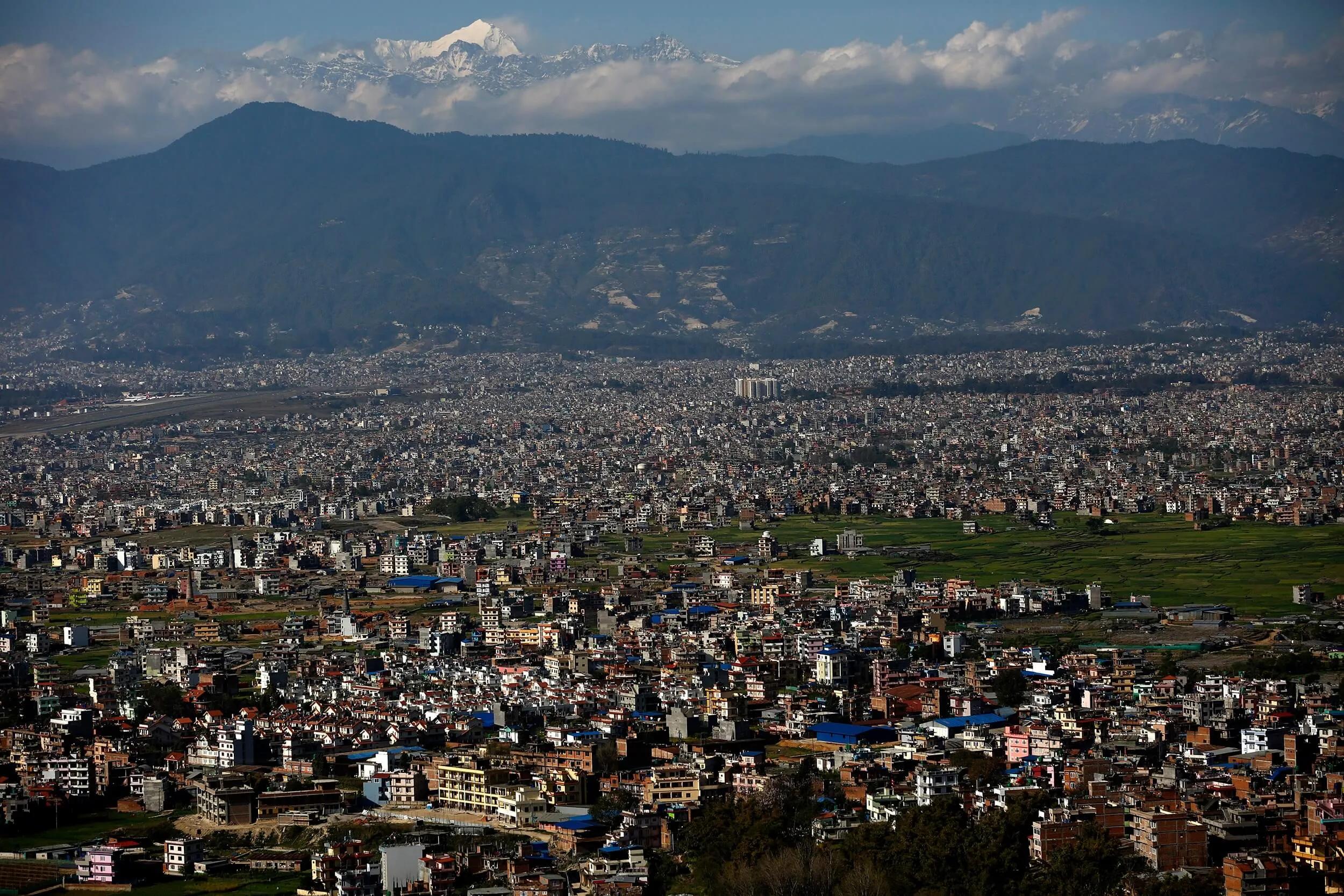
Max. Elevation
1,400 meters / 4,593 feet
Accommodation
Hotel
Meals
Welcome Dinner
Airport pickups and drop-offs by private vehicle for your convenience
Three nights’ accommodation in Kathmandu on a twin-sharing basis, including breakfast (3-star standard)
Kathmandu valley sightseeing in a private vehicle with an English-speaking tour guide
Entrance fees for sightseeing and monument visits included in the itinerary
Best available teahouse accommodations throughout the Everest trek, offering comfort and local hospitality
All meals during the trek: breakfast, lunch, and dinner prepared freshly at teahouses
Welcome and farewell dinners in Kathmandu to celebrate the start and end of your adventure
Domestic flights between Kathmandu and Lukla aboard regular Twin Otter planes, ensuring safe and scenic travel
Helicopter flight from Kalapatthar to Lukla and to Kathmandu in a sharing basis with all departure taxes
An experienced, English-speaking, and government-licensed trek leader plus an assistant guide for every 10 trekkers to provide expert support
Porter service with one porter provided for every two trekkers to carry your main luggage, allowing you to trek with a light daypack (every 2 trekkers-1 porter)
Full staff costs including salaries, insurance, equipment, domestic airfare, food, and accommodation for guides and porters
Use of down jackets and sleeping bags during the trek (to be returned after trip completion) for your comfort and warmth
A complimentary Alpine Club of Himalaya t-shirt and trekking map as souvenirs
All necessary permits and paperwork, including National Park Permit and TIMS (Trekkers’ Information Management system)
A comprehensive medical kit carried by your trek leader for safety and first aid support
All applicable government and local taxes for a transparent pricing structure
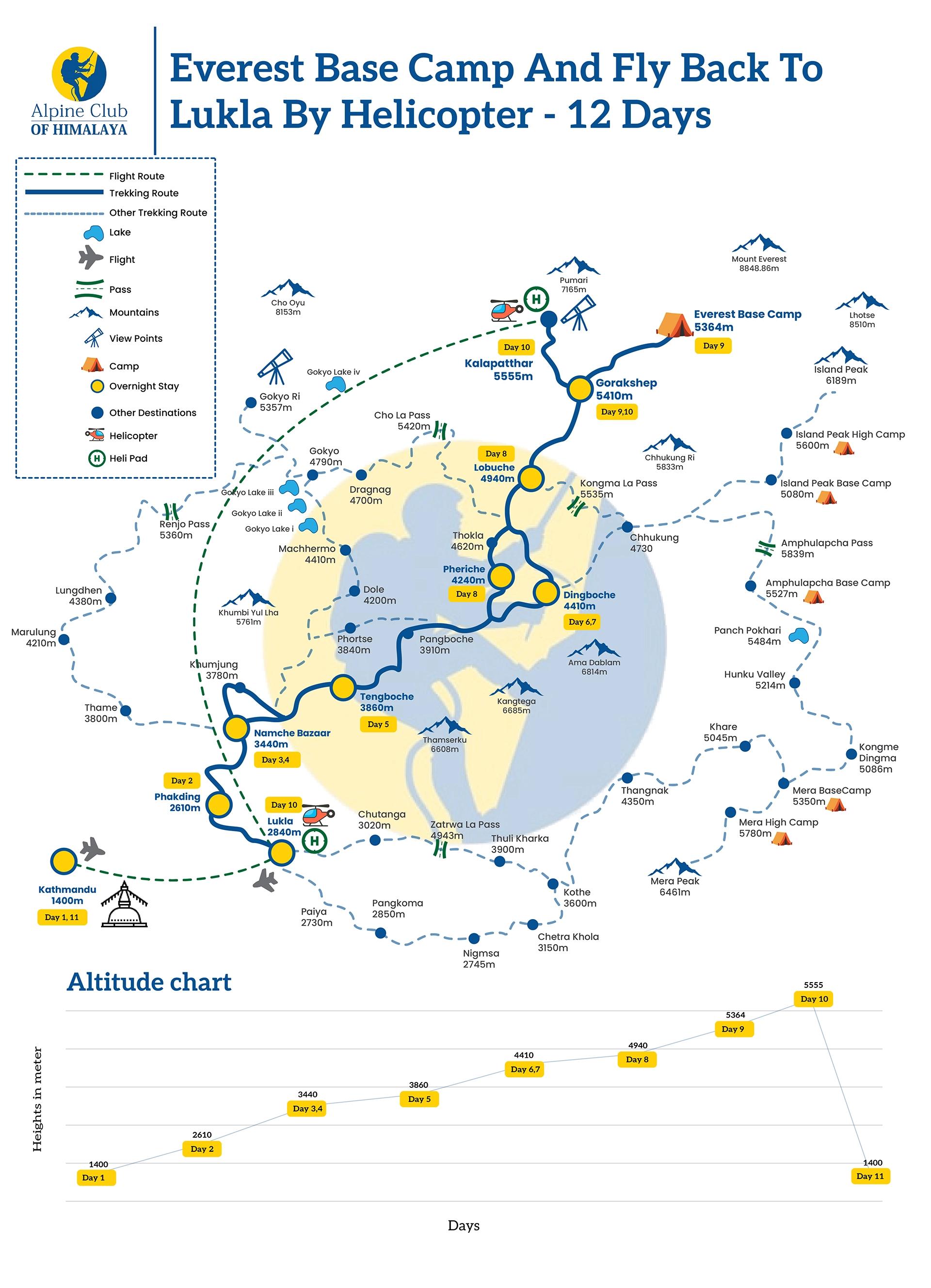
Click on map to view in fullscreen
Essential Trekking Gear and Packing List
Proper preparation is critical for a safe, enjoyable, and memorable trekking experience in the Everest region. The Everest Base Camp Leisurely Trek with Helicopter Return, organized by the Alpine Club of Himalaya, covers high-altitude terrain, unpredictable weather, and remote villages. A well-planned gear list ensures comfort, safety, and convenience while trekking through one of the world’s most spectacular mountain landscapes.
Clothing
· Base Layers: Moisture-wicking thermal tops and bottoms are essential for keeping the body dry and warm at high altitudes. Avoid cotton, as it retains sweat.
· Insulating Layer: Fleece jackets, down jackets, or synthetic insulated jackets to provide warmth during cold mornings, evenings, and at high elevations like Gorak Shep and Kala Patthar.
· Outer Layer: Waterproof and windproof shell jackets and pants are necessary to protect against snow, rain, and strong Himalayan winds. Breathable fabrics are recommended to prevent overheating.
· Trekking Pants and Shorts: Lightweight and quick-drying pants for lower elevations, with additional warmer layers for high-altitude sections.
· Hiking Shirts: Long and short-sleeved trekking shirts made of breathable, moisture-wicking material.
· Gloves: Insulated gloves for cold conditions and lightweight inner gloves for dexterity.
· Hat and Buff/Scarf: A warm hat for cold nights and sun protection hat for daytime, along with a neck gaiter or buff to protect from sun, wind, and dust.
· Socks: Thermal trekking socks for high altitudes and lightweight socks for lower elevations. Bring extra pairs.
· Underwear: Moisture-wicking and comfortable for multi-day trekking.
Footwear
· Trekking Boots: Sturdy, waterproof, and broken-in hiking boots with good ankle support and traction for rocky and icy terrain.
· Camp Shoes: Lightweight shoes or sandals to wear in tea houses and during evenings.
· Gaiters: Optional, but useful for snow, mud, and loose scree.
Accessories
· Backpack: 35–50L daypack for daily essentials, water, camera, snacks, and extra clothing.
· Duffel Bag: Larger bag (provided by Alpine Club of Himalaya for porters to carry your main gear) for your main luggage.
· Sleeping Bag: Rated to at least -15°C, provided by Alpine Club of Himalaya, to ensure warmth in guesthouses and lodges at high altitude.
· Trekking Poles: Recommended for stability, reducing stress on knees, and assisting with steep ascents and descents.
· Water Bottles and Hydration System: At least 2 liters capacity; water purification tablets or filter recommended.
Health and Safety
· Sunscreen: SPF 50+ to protect from intense high-altitude UV rays.
· Sunglasses: UV-protective, preferably glacier glasses for high-altitude snow glare.
· First Aid Kit: Include personal medications, band-aids, blister treatment, pain relievers, antiseptic, and altitude sickness medication if prescribed.
· Hand Sanitizer and Wet Wipes: For hygiene on long trekking days.
· Headlamp/Flashlight: With spare batteries for lodges with limited electricity or night walks.
Technology and Communication
· Camera or Smartphone: To capture Himalayan landscapes and cultural experiences.
· Portable Charger/Power Bank: Essential, as electricity in remote lodges can be limited or intermittent.
· Ncell SIM Card: Provided by Alpine Club of Himalaya for group communication, local calls, and mobile data.
· GPS/Map App: Optional for navigation support, although guides lead all trekking groups.
Miscellaneous
· Travel Documents: Passport, visa, travel insurance, permits, and copies of emergency contacts.
· Snacks: Energy bars, nuts, or chocolates for high-energy trekking days.
· Notebook and Pen: For journaling or recording experiences.
· Plastic Bags/Stuff Sacks: For keeping gear dry in case of rain or snow.
Provided by Alpine Club of Himalaya
· Sleeping Bag and Down Jacket: To keep warm at high-altitude lodges.
· ACH Duffel Bag: For carrying main trekking gear by porters.
· Trekking Guides and Porters: Experienced guides lead and monitor trekkers, while porters carry heavy gear, following ethical and responsible practices.
· First Aid Kit and Altitude Monitoring: Guides carry emergency medical kits and track acclimatization.
Tips for Packing
· Pack Light: Porters carry your main luggage; only essential items go into your daypack.
· Layering is Key: Weather in the Everest region changes rapidly; layered clothing allows for easy adaptation.
· Label All Gear: Clearly mark luggage and personal items for easy identification.
· Check Weather: Consult Alpine Club of Himalaya for seasonal advice on clothing and gear before departure.
By following this essential gear and packing list, trekkers can fully enjoy the Everest Base Camp Leisurely Trek with Helicopter Return, focusing on the awe-inspiring Himalayan landscapes, Sherpa culture, and personal achievement, while minimizing discomfort, risk, or logistical challenges. Proper preparation ensures a safe, comfortable, and unforgettable trekking experience under the guidance of Alpine Club of Himalaya.
A
Ananya Sharma
Mumbai, India
Apr 8, 2026
D
David Miller
London, UK
Mar 12, 2026
R
Raman
Chennai, India
Nov 28, 2025
C
Carlos Mendez
Madrid, Spain
Nov 15, 2025
24/7 Support
Need help? we're at your service
Associated With


We Accept Cards

Office of the company registrar License: 66813/066/067 || Tourism Industry Division License:1142
All content and photography within our website is copyright & may not be reproduced without our permission.
Develop By: IT Sansaar