L
Laura & Marco Rossi
Italy
Jun 14, 2026

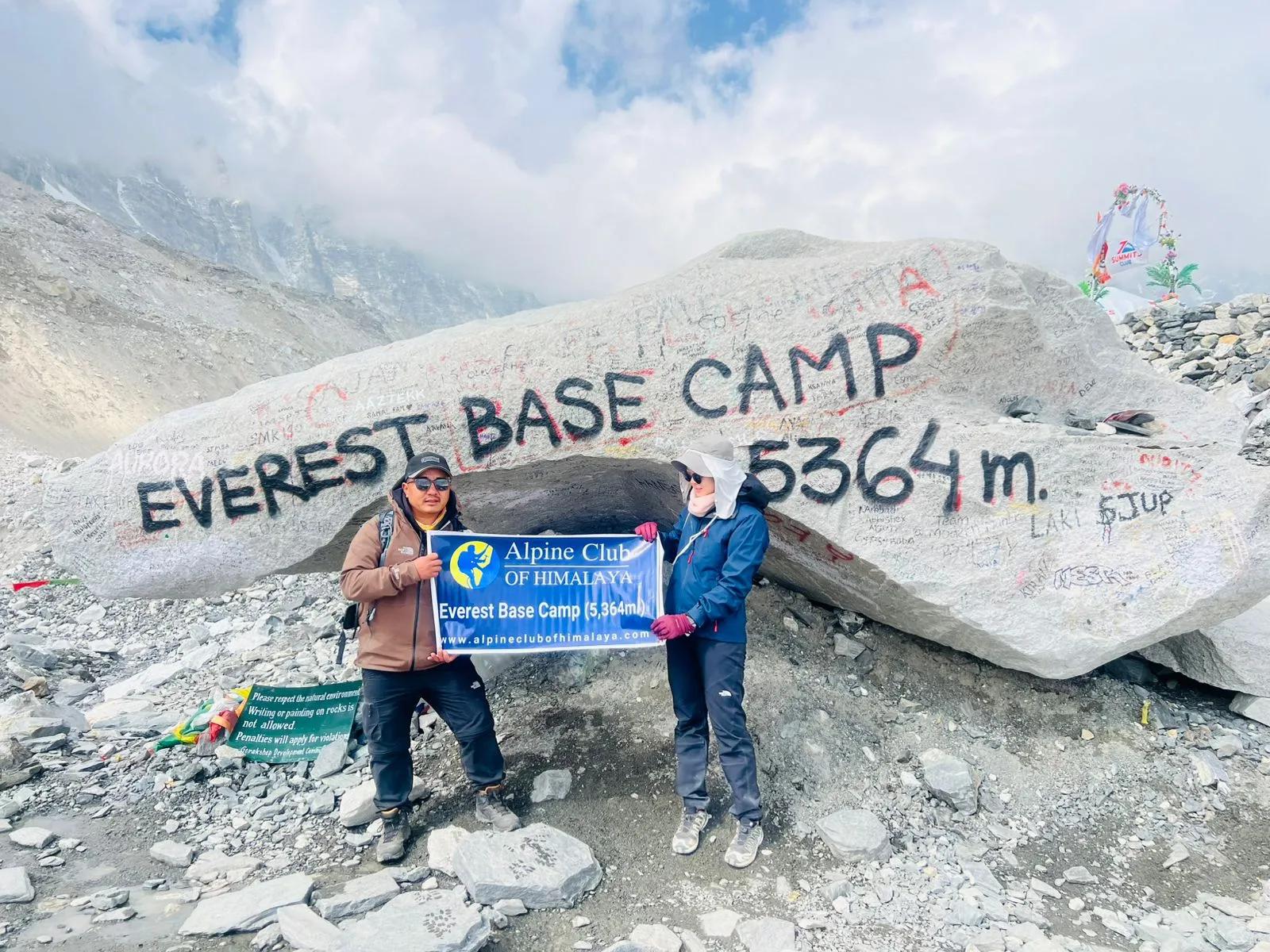
This is not a typical honeymoon—it’s an epic adventure. Every day brought new challenges and beautiful scenery. Reaching Everest Base Camp together was a dream come true.
Destination
Nepal
Duration
16 Days
Best Weather
March, April, May, September, October & November
Accommodation
Hotel and Guesthouse
Meals
Breakfast, Lunch, Dinner
Transportation
Private vehicle / Flights
Group
Min. 1 Pax
Difficulty
Strenuous
Activities
Trekking
The Everest Base Camp Honeymoon Trek is a unique adventure designed for couples who want to combine romance with one of the world’s most iconic trekking experiences. The journey follows the classic Everest Base Camp route through the Khumbu region, passing Sherpa villages, suspension bridges, monasteries, and dramatic Himalayan landscapes, ultimately reaching Everest Base Camp (5,364m) and Kala Patthar (5,555m). Unlike a standard trek, this honeymoon version focuses on comfort, shared experiences, and memorable moments for couples while still maintaining the spirit of high-altitude adventure.
The best time for the Everest Base Camp Honeymoon Trek is spring (March to May) and autumn (September to November). These seasons offer the most stable weather conditions, clear skies, and breathtaking mountain visibility. Spring brings blooming rhododendron forests and slightly warmer temperatures, making the trail colorful and romantic. Autumn, on the other hand, is known for crystal-clear Himalayan views and fresh post-monsoon air, ideal for photography and long scenic walks. Winter is extremely cold, especially above 4,000 meters, while the monsoon season is not recommended due to heavy rainfall, cloudy skies, and difficult trail conditions.
Accommodation is arranged to provide both comfort and authenticity. In Kathmandu, couples stay in a 5-star hotel such as Aloft or similar, offering modern luxury, privacy, and comfort after international travel. During the trek, accommodation is mainly in comfortable mountain lodges and teahouses, with better-quality lodges such as Yeti Mountain Lodge in lower regions like Lukla, Phakding, and Namche Bazaar. Where available, private twin-sharing rooms are arranged for couples to ensure privacy. As altitude increases, accommodation becomes more basic due to limited infrastructure, but rooms remain clean, warm, and safe.
Meals during the trek are provided on a full-board basis (breakfast, lunch, and dinner), ensuring couples receive sufficient energy for long trekking days. The food is freshly prepared at each lodge and includes a mix of Nepali, Tibetan, and simple international dishes. The most common and nutritious meal is dal bhat, along with options such as soups, noodles, pasta, rice dishes, potatoes, eggs, and pancakes. In Kathmandu, breakfast is included along with a special farewell dinner, often arranged as a celebratory experience for couples. Meals are designed to be filling, hygienic, and suitable for high-altitude trekking.
To enter the Everest region, two main permits are required the Sagarmatha National Park Entry Permit and the Khumbu Pasang Lhamu Rural Municipality Permit. These permits are mandatory for all trekkers and allow access to protected areas within the Everest region. When booking through a trekking company, all permits are arranged in advance, ensuring a smooth and hassle-free journey for couples without administrative stress during the trek.
A licensed, experienced trekking guide is essential for the Everest Base Camp Honeymoon Trek. The guide ensures safety, navigation, altitude monitoring, and provides cultural insights about the Sherpa people and Himalayan region. For couples, the guide also helps manage pacing, comfort, and special moments along the trail. Porters are assigned to carry most of the luggage, usually shared between two trekkers. This allows couples to walk comfortably with only a light daypack. All guides and porters are insured, trained, and experienced in high-altitude trekking conditions.
Safe drinking water is available throughout the trek but must always be treated before consumption. Trekkers can use boiled water provided by teahouses, water purification tablets, or filter bottles. Bottled water is available in lower regions but becomes expensive and environmentally harmful at higher altitudes, so it is discouraged. Staying properly hydrated is extremely important for altitude adaptation, and couples are advised to drink water regularly throughout the day to reduce the risk of altitude sickness.
Travel insurance is mandatory for this trek due to the high-altitude environment and remote location. The insurance must cover trekking up to at least 6,000 meters, emergency helicopter evacuation, medical treatment, trip cancellation, and delays. Since Everest Base Camp lies in a remote region with no road access, helicopter evacuation is the only rapid emergency option, making comprehensive insurance essential for safety and peace of mind for couples.
The journey begins with international arrival in Kathmandu, followed by sightseeing and preparation. The main transport includes a scenic 30-minute flight from Kathmandu to Lukla, one of the most thrilling mountain flights in the world. The return flight follows the same route. Private vehicles are used for airport transfers and sightseeing in Kathmandu. In some cases, flights may operate from Ramechhap airport depending on weather and air traffic conditions, which may require an additional road transfer from Kathmandu.
The Everest Base Camp Honeymoon Trek is classified as moderate to challenging. While it does not require technical climbing skills, it demands good physical fitness, endurance, and mental preparation. Couples will walk for 5–8 hours per day over varied terrain, including steep ascents, rocky paths, and high-altitude sections. The primary challenge is not distance but altitude, as oxygen levels decrease significantly above 3,000 meters. The itinerary is designed with gradual ascent and acclimatization days to help couples adjust safely.
Altitude sickness is one of the main concerns during the trek, especially as elevations exceed 3,000 meters. It occurs when the body struggles to adapt to reduced oxygen levels. Symptoms may include headache, dizziness, nausea, fatigue, and difficulty sleeping. The honeymoon itinerary includes acclimatization days in Namche Bazaar and Dingboche to minimize risk. Couples are encouraged to walk slowly, stay hydrated, avoid alcohol, and communicate any discomfort to their guide. In rare cases of severe AMS, immediate descent or helicopter evacuation may be required.
If you cancel your booking, the following fees apply:
These charges cover pre-arranged expenses such as permits, domestic flights, and accommodations.
If Alpine Club of Himalaya must cancel the trek due to weather, natural disaster, political unrest, or safety concerns:
Your safety is always our top priority.
In rare situations where Alpine Club of Himalaya must cancel the trek due to unavoidable circumstances such as natural disasters, extreme weather, or safety concerns, trekkers will be offered one of the following options:
Such cancellations are made only when absolutely necessary, and always with your safety as the top priority. We ensure transparency and support throughout the process.
Alpine Club of Himalaya cannot be held liable for any delays, cancellations, or extra costs arising from force majeure events, including but not limited to:
In these cases, any personal costs incurred-such as hotel accommodation, rerouted transportation, or travel insurance claims—will be the responsibility of the participant.
We strongly advise all trekkers to purchase comprehensive travel insurance before joining the Everest and Sherpa Homeland Trek. This should include coverage for high-altitude trekking, emergency evacuation, trip cancellations, and force majeure situations to safeguard your investment and peace of mind.
Upon arrival at Tribhuvan International Airport in Kathmandu, you will be warmly welcomed by a representative from Alpine Club of Himalaya and transferred to your hotel. During your scenic flight into Nepal, enjoy breathtaking aerial views of the Himalayan range, lush green hills, and terraced farmlands. After hotel check-in, the remainder of the day is free to relax and recover from your journey. If time permits, explore the vibrant streets of Thamel, Kathmandu’s famous tourist district filled with traditional shops, restaurants, cafés, and cultural attractions. This is also a good opportunity to prepare for the trek and attend a pre-trek briefing with your guide.
Max. Elevation
1,400 meters / 4,593 feet
Duration
None
Accommodation
5-Star Hotel (Aloft Kathmandu or Similar)
Meals
Not Included
Airport arrival and departure transfers by private vehicle.
3 nights accommodation in Kathmandu at a 5-Star Hotel (Aloft Kathmandu or similar) on a twin-sharing basis.
Guided sightseeing tour of Kathmandu Valley including private transportation.
Entrance fees for all sightseeing monuments and UNESCO World Heritage Sites mentioned in the itinerary.
Round-trip domestic flights between Kathmandu and Lukla.
All necessary airport taxes for domestic flights.
Accommodation during the trek in selected mountain lodges, guesthouses, and teahouses.
Yeti Mountain Lodge accommodation in Lukla, Phakding, and Namche Bazaar.
Daily breakfast during hotel stays in Kathmandu.
Full-board meals during the trek (Breakfast, Lunch, and Dinner).
Seasonal fresh fruits after dinner during the trek.
Experienced, English-speaking, government-licensed trekking guide.
Assistant guide for larger groups where required.
Strong and reliable porter service (1 porter for every 2 trekkers).
Guide and porter salaries, insurance, meals, accommodation, and transportation.
Sagarmatha National Park Entry Permit.
Khumbu Pasang Lhamu Rural Municipality Entry Permit.
Comprehensive first-aid medical kit carried by the guide.
Pulse oximeter for regular oxygen saturation monitoring during the trek.
Sleeping bag and down jacket (available on request and to be returned after the trek).
Trekking map and trip completion certificate.
Government taxes and official service charges.
Farewell cultural dinner in Kathmandu after the trek.
24/7 emergency support from Alpine Club of Himalaya throughout the trip.
Proper preparation is essential for a safe and comfortable Everest Base Camp Trek. Temperatures can range from warm and pleasant in Kathmandu to well below freezing at higher elevations near Everest Base Camp and Kala Patthar. Layered clothing is highly recommended.
L
Laura & Marco Rossi
Italy
Jun 14, 2026
O
Olivia & Daniel Foster
Australia
Jan 14, 2026
24/7 Support
Need help? we're at your service
Associated With


We Accept Cards

Office of the company registrar License: 66813/066/067 || Tourism Industry Division License:1142
All content and photography within our website is copyright & may not be reproduced without our permission.
Develop By: IT Sansaar