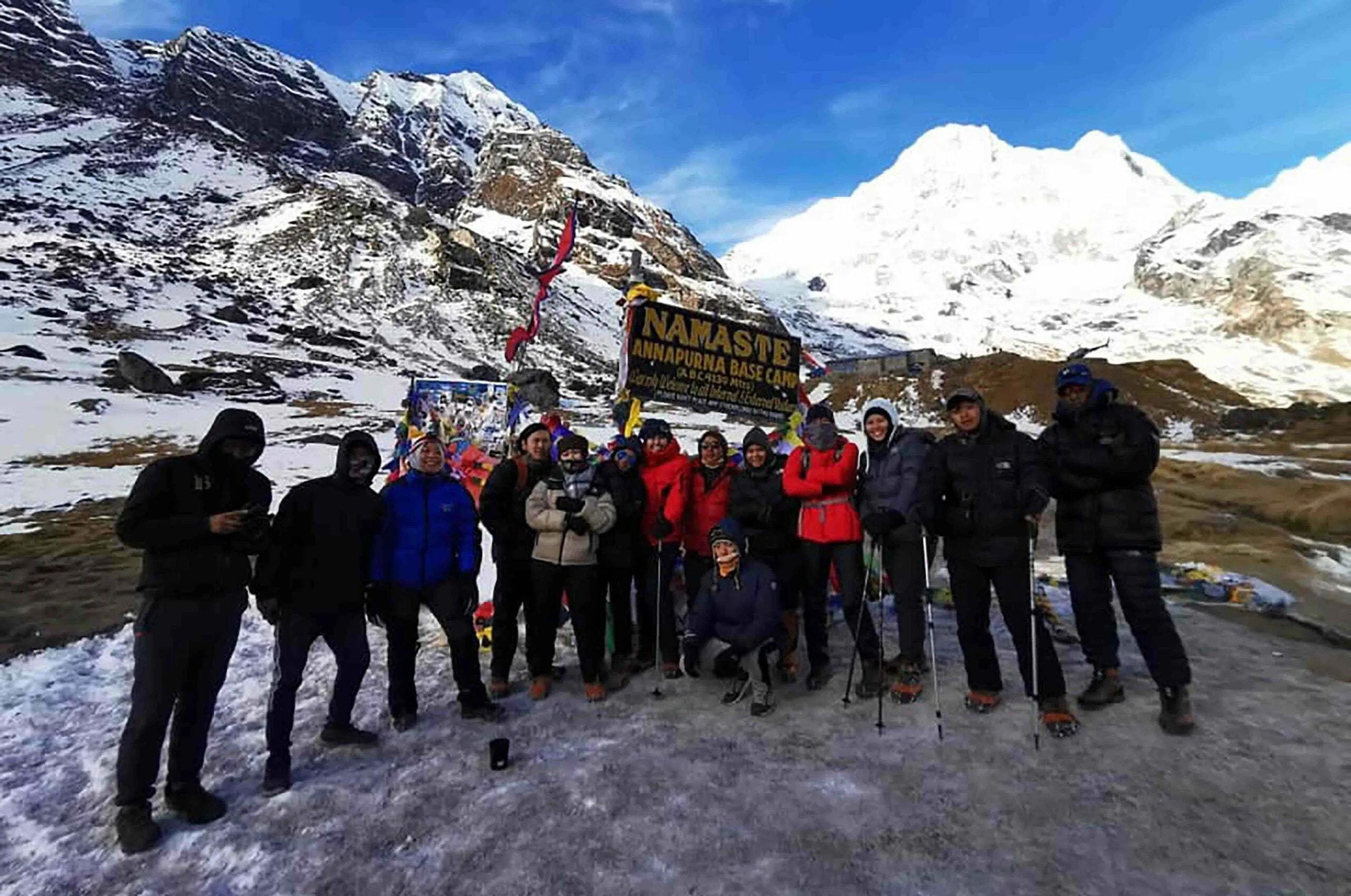
The Annapurna Base Camp Trek with Helicopter Return is one of the most rewarding short treks in Nepal, combining breathtaking Himalayan landscapes, rich cultural encounters, and an unforgettable aerial experience. This 9-day journey offers an excellent blend of scenic trekking and luxurious comfort, allowing trekkers to enjoy the classic route to Annapurna Base Camp without the need for a long descent on foot. Managed professionally by the Alpine Club of Himalaya, this adventure presents exceptional views of Annapurna I, Machhapuchhre, Hiunchuli, and other snow-capped peaks, while taking you through a range of landscapes—from terraced farmlands and lush forests to glacial valleys and the iconic Annapurna Sanctuary.
The trek begins with your arrival in Kathmandu, followed by a short flight to the beautiful lake city of Pokhara. This route leads you through charming Gurung villages such as Ghandruk and Chhomrong, where traditional Nepali culture and Himalayan hospitality create memorable experiences. As the journey progresses, you walk through bamboo forests, narrow ravines, glacial rivers, and scenic high-altitude landscapes, with each day offering new angles of the mighty Annapurna range.
Reaching Annapurna Base Camp (4,130m) is a deeply rewarding moment, where towering peaks rise dramatically around you in all directions. The sunrise from the base camp is one of the most spectacular in the Himalayas. To make your experience even more special, you return to Pokhara by helicopter—saving time and avoiding the long return trail while enjoying an extraordinary aerial view of the mountains, deep valleys, hillside villages, and lush landscapes below.
With expert guidance, proper logistics, and high-quality service, the Alpine Club of Himalaya ensures a safe, comfortable, and enriching trekking experience suitable for both beginners and experienced hikers. This itinerary is perfect for those seeking a short yet powerful Himalayan adventure filled with natural beauty, cultural immersion, and the unique thrill of a helicopter flight over the Annapurna region.
Best Time to Visit
Choosing the right time to trek plays a big role in your overall experience. The Annapurna Base Camp Trek with Helicopter Return can be done throughout the year, but each season offers a unique atmosphere and scenery. Here’s what to expect in different seasons:
· Spring (March to May)
Spring is one of the most popular seasons for the Annapurna Base Camp Trek. The weather is mild, the skies are clear, and the entire region comes alive with blooming rhododendrons and lush greenery. Daytime temperatures are comfortable, making it ideal for trekking. The mountain views are breathtaking, and this is also a great time to enjoy the helicopter flight with excellent visibility.
· Autumn (September to November)
Autumn is considered the best time for trekking in Nepal, including the Annapurna Base Camp route. The monsoon rains clear the dust and haze, leaving behind bright blue skies and crystal-clear mountain views. Temperatures are moderate, and the weather is stable, which makes trekking and helicopter flights smooth and safe. This season also brings a festive atmosphere, as Nepal celebrates major cultural festivals like Dashain and Tihar.
· Winter (December to February)
Winter offers a quieter and more peaceful trekking experience with fewer crowds. The mountain scenery is exceptionally clear, especially after fresh snowfall. However, the temperatures can be very cold, especially at higher altitudes, and some trails might be icy or slippery. This season is suitable for experienced trekkers who are well-prepared for the cold weather.
· Monsoon (June to August)
The monsoon season is not ideal for the Annapurna Base Camp Trek due to heavy rainfall, slippery trails, and poor visibility. Leeches are common on the lower parts of the trail, and clouds often cover the mountain peaks. However, the landscape is lush and green, and if you don’t mind the rain, it can still be a rewarding experience. The helicopter flight during this season depends on weather conditions and visibility.
Overall, spring and autumn are the best seasons for the Annapurna Base Camp Trek with Helicopter Return, offering clear skies, beautiful scenery, and comfortable temperatures for both trekking and flying.
Difficulty Level
The trek is considered moderate in difficulty. You’ll walk for about 5–6 hours a day on average, covering both uphill and downhill trails. While the trek doesn’t require technical climbing, it involves steep ascents and descents that can be physically demanding. The altitude at Annapurna Base Camp reaches 4,130 meters, which can cause mild altitude-related symptoms for some trekkers. However, proper acclimatization and a steady pace help make the journey manageable for most people with average fitness levels.
Physical Fitness and Requirements
To complete the Annapurna Base Camp Trek with Heli Return, you should have a good level of physical fitness and stamina. Regular walking, jogging, or light hiking before the trip can help prepare your body for the trek. Mental preparation is equally important, as the trail involves several long days of walking. No prior trekking experience is required, but a positive attitude and determination will make a big difference.
It’s also important to have the right gear and clothing, including sturdy trekking boots, warm layers, a quality sleeping bag, and a waterproof jacket. Staying hydrated, eating well, and getting enough rest each day will help you stay strong and enjoy the trek comfortably.
Altitude Sickness and Preparations
Trekking to Annapurna Base Camp (4,130m) involves gaining significant altitude in a short period, which can cause altitude sickness for some trekkers. Symptoms may include headache, nausea, dizziness, shortness of breath, and difficulty sleeping. In most cases, mild symptoms can be managed with proper precautions.
Preparations to Prevent Altitude Sickness:
- Acclimatize properly: Spend a night or two at lower altitudes like Pokhara before starting the trek.
- Ascend gradually: Follow the recommended trek itinerary and avoid rushing to higher altitudes.
- Stay hydrated: Drink plenty of water throughout the trek.
- Avoid alcohol and smoking: These can worsen altitude sickness symptoms.
- Eat light meals: Focus on high-carbohydrate foods to maintain energy levels.
- Listen to your body: If symptoms worsen, descend immediately and seek medical attention if needed.
- Carry medication: Some trekkers use prophylactic medicine like acetazolamide (Diamox) after consulting a doctor.
Being physically fit, taking rest days, and following these precautions can significantly reduce the risk of altitude sickness and help you enjoy the trek safely.
Safety and Security
The Annapurna Base Camp Trek with Helicopter Return is generally safe for trekkers when proper precautions are taken. Here are key safety tips:
- Hire a guide or join a trekking company: Professional guides provide local knowledge, ensure correct routes, and assist during emergencies.
- Weather awareness: Check daily weather forecasts, especially for the helicopter flight, as flights can be canceled due to poor visibility or strong winds.
- Proper gear: Wear sturdy trekking boots, carry warm clothing, and use trekking poles to prevent slips and injuries.
- Health precautions: Carry a first-aid kit, any personal medications, and travel insurance covering trekking and helicopter evacuation.
- Secure accommodation: Stay in reputable teahouses or lodges along the trail.
- Communication: Mobile network is available in some areas, but carrying a SIM card with coverage or a satellite phone for emergencies is recommended.
- Respect local customs: Be mindful of cultural practices in villages, which enhances safety and the trekking experience.
By following these safety measures and being prepared, trekkers can enjoy the Annapurna Base Camp Trek with Helicopter Return confidently and make the experience truly memorable.
Environment – Flora and Fauna
The Annapurna Base Camp Trek with Helicopter Return takes you through one of the most diverse ecological zones in Nepal. Along the trail, trekkers will experience a range of landscapes, from lush subtropical forests to alpine meadows.
- Flora: The lower regions are filled with dense forests of oak, rhododendron, and bamboo. In spring, the rhododendrons bloom in vibrant reds, pinks, and whites, creating spectacular scenery. As you ascend, the vegetation becomes sparse, with hardy shrubs and alpine flowers near the base camp.
- Fauna: The Annapurna region is home to various wildlife species. Trekkers may spot Himalayan monkeys, colorful birds, musk deer, and even the elusive snow leopard in higher and more remote areas. Birds like pheasants, eagles, and parakeets are common in the forested sections. This rich biodiversity makes the trek an excellent experience for nature enthusiasts and photographers.
Climate and Weather
The climate on the Annapurna Base Camp Trek changes significantly with altitude and season:
- Lower Regions (Siwai to Chhomrong): Temperatures are mild to warm during the day and cool at night. Rainfall is higher during the monsoon season.
- Mid-Altitude Regions (Dovan to Deurali): Temperatures drop as you climb. Nights can be cold, and early mornings often have frost in spring and autumn.
- High-Altitude Regions (Deurali to ABC): The weather is cold, with temperatures often dropping below freezing at night, especially in winter. Snowfall is possible from late autumn to early spring.
Seasonal Variations:
- Spring (March–May): Pleasant temperatures, blooming rhododendrons, clear skies.
- Autumn (September–November): Crisp air, stable weather, clear mountain views.
- Winter (December–February): Cold, possible snow, fewer trekkers, clear visibility.
- Monsoon (June–August): Heavy rainfall, slippery trails, cloud-covered peaks, lush green landscapes.
Understanding the climate and being prepared with appropriate clothing and gear is essential for a safe and enjoyable trekking experience.
What to Expect from the Annapurna Base Camp Trek with Helicopter Return
The Annapurna Base Camp Trek with Helicopter Return offers a thrilling combination of adventure, natural beauty, and luxury. This short yet scenic trek takes you deep into the heart of the Annapurna Himalayas, surrounded by snow-covered peaks, lush forests, and traditional mountain villages.
During the trek, you’ll walk along peaceful trails through rhododendron forests, waterfalls, and charming Gurung settlements before reaching Annapurna Base Camp (4,130m)—a spectacular natural amphitheater encircled by towering mountains such as Annapurna I, Annapurna South, and Machhapuchhre (Fishtail).
After exploring the base camp and soaking in the views, you’ll take a helicopter flight back to Pokhara, enjoying incredible aerial views of the entire Annapurna range. This breathtaking flight not only saves days of walking back but also provides a once-in-a-lifetime Himalayan experience. In just 8 days, you’ll complete one of Nepal’s most iconic treks while enjoying comfort and adventure in equal measure.
Is the Annapurna Base Camp Trek with Helicopter Return Suitable for You?
The Annapurna Base Camp Heli Return Trek is suitable for those looking for a mix of adventure and comfort, but it may not be ideal for everyone. Before choosing this trip, consider the following:
- The trek involves several days of uphill and downhill walking, so a moderate level of physical fitness is required.
- You’ll reach high altitudes (up to 4,130 meters), which may cause mild altitude sickness; being aware of the symptoms and taking precautions is important.
- The helicopter flight adds extra cost, so it’s best suited for those with a flexible budget.
- The trip lasts 8 days, so you’ll need enough time to complete it comfortably.
- Beginners can join the trek with proper preparation, but those completely new to hiking might want to start with an easier, shorter trek first.
Preparation Tips for Annapurna Base Camp Trek with Helicopter Return
Proper preparation helps make your trek enjoyable, safe, and memorable. Here’s how to get ready:
- Build physical fitness: Start light exercises, walking, or hiking regularly a few weeks before the trek to improve stamina.
- Understand the route: Learn about the trail, weather, and altitude conditions to be mentally prepared.
- Pack the right gear: Bring warm clothing, a quality sleeping bag, sturdy trekking shoes, and rain protection.
- Health and insurance: Ensure you’re in good health, have necessary vaccinations, and carry travel insurance that covers high-altitude trekking and helicopter evacuation.
- Altitude awareness: Recognize symptoms of altitude sickness and stay hydrated. Spending an extra night in Pokhara before the trek can help with acclimatization.
- Hire a guide: A professional guide ensures safety, local insights, and smoother travel.
- Budget planning: Include costs for permits, accommodation, meals, and the helicopter flight.
Accommodation
During the Annapurna Base Camp Trek with Heli Return to Pokhara – 9 Days, trekkers stay in comfortable teahouses and mountain lodges throughout the route. These teahouses provide essential amenities such as clean beds, warm blankets, and shared or private bathrooms depending on the location. In popular stops like Chhomrong, Ghandruk, and Deurali, accommodation quality is slightly better, offering hot showers and cozy dining areas. The lodges focus on comfort and warmth while keeping you close to the natural beauty of the Annapurna region.
Transportation
This trip combines road travel, trekking, and an exciting helicopter flight. You begin with a short flight from Kathmandu to Pokhara, which saves time and offers amazing views of the Himalayas. From Pokhara, a private vehicle takes you to Nayapul or Siwai, the starting point of the trek. After completing the trek and reaching Annapurna Base Camp, your return is made easy and scenic with a 20-minute helicopter flight back to Pokhara. From Pokhara, you either fly or drive back to Kathmandu, depending on your preference. This flexible combination of transport options makes the journey smooth, convenient, and time-efficient.
Meals
Meals are provided at teahouses along the trekking route, typically including breakfast, lunch, and dinner. You can enjoy a variety of dishes such as the popular Nepali dal bhat, noodle soups, pasta, fried rice, potatoes, and seasonal vegetable dishes. Some teahouses also serve simple continental meals. Eating fresh and nutritious food is important during the trek, and most meals are prepared using locally sourced ingredients to help maintain your energy at higher altitudes.
Drinking Water
Safe drinking water is available at most teahouses in the form of boiled or filtered water. Trekkers are encouraged to carry a reusable water bottle and use water purification tablets or portable filters for added safety. Staying hydrated is essential throughout the trek, especially as you gain altitude.
Guide and Porter
For the Annapurna Base Camp Trek with Heli Return, hiring a professional guide and porter is highly recommended. Guides offer valuable insights about the mountains, ensure the correct route, and provide assistance in case of altitude-related issues. Porters help carry your luggage, allowing you to trek comfortably with minimal weight. The Alpine Club of Himalaya provides experienced, friendly, and trained guides and porters to ensure your journey is safe, enjoyable, and well-managed from start to finish.
Wi-Fi and Electricity
Electricity is available in most teahouses through solar or small hydropower systems, allowing you to charge your devices for a small fee. Wi-Fi services are available in key stops such as Chhomrong, Sinuwa, Deurali, and some locations near base camp, though the connection may be slow at times. To stay prepared, it is wise to bring a fully charged power bank and keep your essential gadgets protected from the cold.
Permits
Trekking to Annapurna Base Camp requires two main permits, which are mandatory for all foreign trekkers:
- Annapurna Conservation Area Permit (ACAP):
- This permit is required to enter the Annapurna Conservation Area, which covers the entire trekking region.
- It helps support conservation efforts and local communities.
- The fee varies depending on nationality and the duration of your stay.
- Trekkers’ Information Management System (TIMS) Card:
- The TIMS card is issued by the Nepal Tourism Board and is required for all independent or guided trekkers.
- It ensures that trekkers are registered for safety purposes and helps authorities monitor trekking traffic in the region.
At Alpine Club of Himalaya, we assist trekkers with obtaining all necessary permits before starting the journey, ensuring a smooth and hassle-free trekking experience.
Optional permits: In some areas, a Local Area Permit may also be required for villages along the trail, depending on your specific route. Your guide will provide full assistance in securing any additional permits.
Travel Insurance
For the Annapurna Base Camp Trek with Helicopter Return, having comprehensive travel insurance is essential. Your insurance should cover medical emergencies, hospital treatment, accidents or injuries during trekking, high-altitude evacuation including helicopter rescue, and trip cancellations or delays. It is important to ensure that your policy explicitly includes trekking at high altitudes and helicopter flights, as standard travel insurance may not cover these activities.
Passport and Visa
All foreign nationals need a valid passport with at least six months’ validity from the date of entry into Nepal. Most travelers can obtain a tourist visa on arrival at Tribhuvan International Airport in Kathmandu or at land border crossings. Tourist visas are available for 15, 30, or 90 days, and visa fees vary depending on nationality and duration of stay. Carrying passport-sized photos is recommended for the visa application and permit processes. Alpine Club of Himalaya advises trekkers to check visa requirements and prepare all travel documents well in advance to ensure a smooth start to the trek.
Last-Minute Booking
Alpine Club of Himalaya accommodates last-minute bookings for the Annapurna Base Camp Trek with Helicopter Return, depending on availability. Trekkers are advised to confirm their spots as early as possible to secure accommodations, permits, and helicopter flights. Even with a short notice, the team ensures all logistics, permits, and travel arrangements are managed efficiently for a hassle-free experience.
Online Briefing
Before the trek begins, Alpine Club of Himalaya provides a detailed online briefing for all trekkers. This briefing covers the itinerary, trekking route, safety guidelines, altitude precautions, packing list, and what to expect on the helicopter return. It helps trekkers prepare mentally and physically, ensuring a smooth and enjoyable journey through the Annapurna region.
Final Notes
Before starting your 8-day Annapurna Base Camp Trek with Helicopter Return, it is essential to ensure all necessary travel and trekking preparations are in place. This trek offers a perfect mix of adventure, natural beauty, and cultural encounters in the heart of the Himalayas, combining trekking through the Annapurna Sanctuary with a scenic helicopter return from base camp.
The trek spans diverse climates—from warm valleys to chilly high-altitude mornings—so proper preparation is crucial. Trekkers should pack suitable multi-day trekking gear, including layered clothing for both cold and warm conditions. Ensure your trekking boots are well broken in, and that your backpack, clothing, and other equipment are tested for comfort and durability. While the trek is considered moderate in difficulty and does not require technical skills, it involves long hours of uphill and downhill walking at varying altitudes. Maintaining a good level of physical fitness will make your journey more enjoyable and reduce fatigue.
Alpine Club of Himalaya is committed to providing high-quality service, safety, and personalized support before, during, and after your trek. Our experienced team is always available to assist with questions regarding equipment, accommodations, trail conditions, helicopter arrangements, or itinerary adjustments, ensuring your trekking experience is safe, smooth, and memorable.
Cancellation Policy
Cancellation by the Participant
If you need to cancel your booking for the 8-day Annapurna Base Camp Trek with Helicopter Return, you must inform Alpine Club of Himalaya in writing, either via official email or a signed letter. Cancellation charges are based on the date we receive your notice relative to your scheduled trek start date:
- 60 days or more prior to departure: 20% of the total trek cost will be deducted to cover pre-booking and administrative expenses.
- 30 to 59 days prior to departure: 50% of the total trek cost will be charged.
- Less than 30 days prior to departure: No refund will be provided; the full amount is non-refundable.
These charges cover upfront expenses such as domestic transport, lodge reservations, trekking permits, and helicopter arrangements.
Cancellation by the Organizer
In rare cases where Alpine Club of Himalaya must cancel the trek due to circumstances beyond our control—such as extreme weather, natural disasters, political unrest, or safety concerns—you will be offered either:
- A full refund of all payments made, or
- The option to reschedule your trek for a future available date.
Cancellations by the organizer are only made when absolutely necessary, prioritizing your safety above all else.
Force Majeure Clause
Alpine Club of Himalaya will not be held responsible for any disruptions, delays, or cancellations caused by events considered force majeure, including:
- Natural disasters (earthquakes, landslides, severe floods)
- Political unrest, strikes, protests, or government-imposed travel restrictions
- Epidemics, pandemics, or public health emergencies
- Airline delays, cancellations, airspace closures, or transport strikes
Any additional expenses incurred in these situations—such as extended accommodations, rescheduled flights, or emergency medical costs—are the responsibility of the participant.
For this reason, we strongly recommend obtaining comprehensive travel insurance that covers trip cancellation, interruption, emergency evacuation, high-altitude medical care, and other unforeseen situations before traveling to Nepal.