E
Emily Rogers
Australia
May 27, 2026

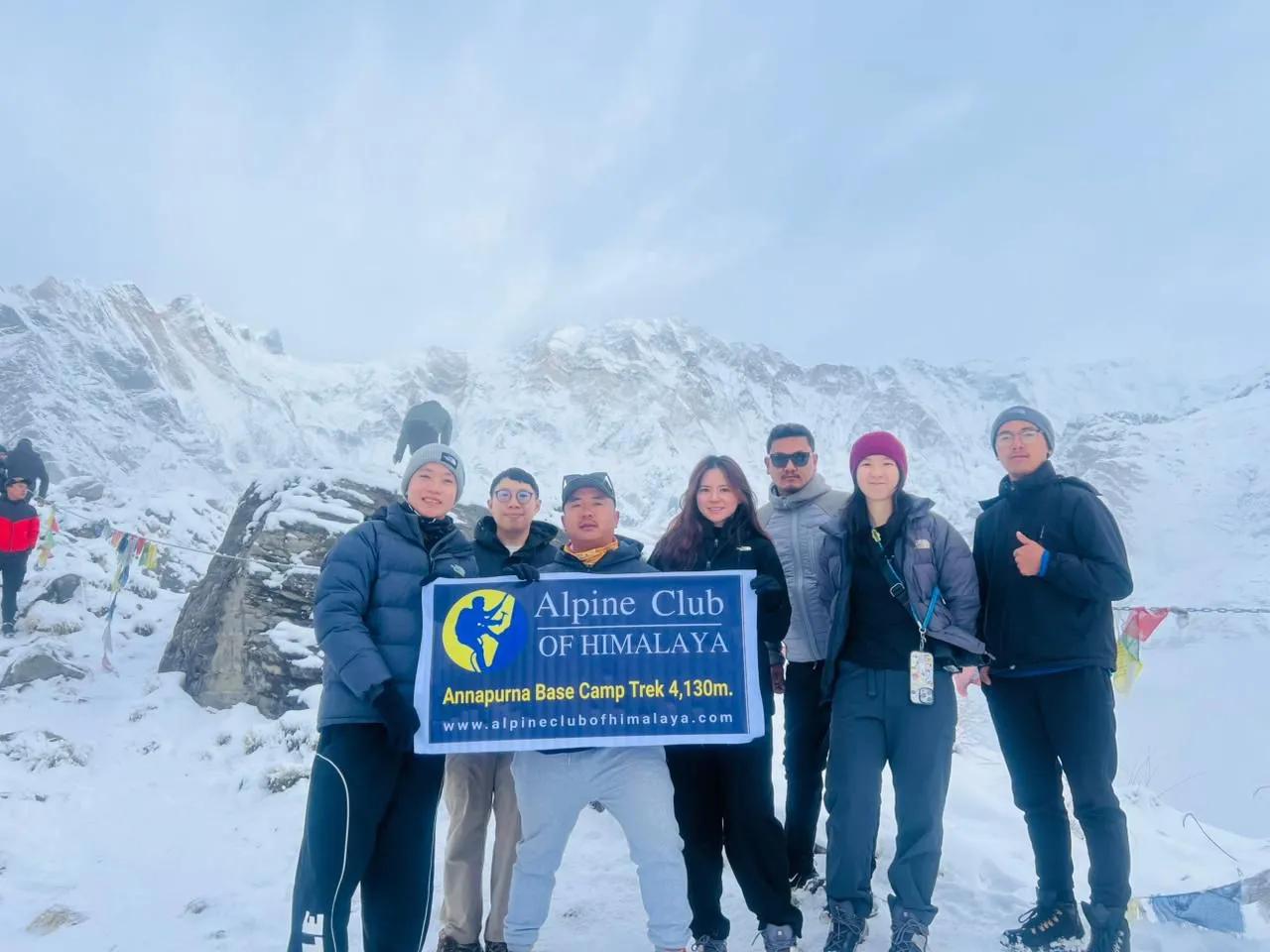
Flying between Kathmandu and Pokhara made the trip smooth and stress-free. Annapurna Base Camp itself was magical, surrounded by snow-capped peaks. Excellent organization from start to finish.
Destination
Nepal
Duration
11 Days
Best Weather
March, April, May, September, October & November
Max Altitude
4130m (Annapurna Base Camp)
Accommodation
Hotel and Guesthouse
Meals
Breakfast, Lunch, Dinner
Transportation
Private vehicle / Flights
Group
Min. 1 Pax
Difficulty
Strenuous
Activities
Trekking
The Annapurna Base Camp Trek is one of the most popular and accessible trekking routes in Nepal. It takes you deep into the Annapurna Sanctuary – a high-altitude glacial basin surrounded by some of the world's tallest peaks. For travelers who have around eleven days and want a genuine Himalayan experience without the length of a longer expedition, this is one of the best options available.
The trek leads to the base of Annapurna I, which stands at 8,091 meters and is the tenth highest mountain in the world. The Annapurna massif is remarkable – it holds thirteen peaks above 7,000 meters and sixteen more above 6,000 meters. Standing at Annapurna Base Camp at 4,130 meters, you are completely surrounded by this wall of mountains, and the feeling is something difficult to put into words.
Your journey begins and ends in Pokhara, Nepal's scenic lakeside city set against a panorama of the Annapurna and Dhaulagiri ranges. The 11-day itinerary includes a domestic flight between Kathmandu and Pokhara in both directions, which saves time and also gives you spectacular aerial views of the Himalayas along the way.
From Pokhara, the trail moves through terraced farmlands, quiet Gurung villages, dense rhododendron and oak forests, and gradually into the high alpine terrain of the Modi Khola valley. Each day on the trail brings a noticeable change in landscape, culture, and altitude – and that gradual shift is a big part of what makes this trek so rewarding.
This short Annapurna Base Camp trek is designed for trekkers who want to experience the best of the Annapurna region – the mountain views, the forest trails, the village culture, and the sanctuary itself – within a well-paced, time-efficient eleven-day itinerary.
The Short Annapurna Base Camp Trek – 11 Days is designed specifically for travelers who want a fulfilling Himalayan experience without committing to a longer journey. Here is what makes this itinerary worth choosing.
The trek is well-suited to people with limited time. In eleven days, you cover the essential highlights of the Annapurna trekking corridor – from the lower Gurung villages to the high alpine sanctuary – without feeling rushed. The daily distances are manageable, and the itinerary builds in enough rest and acclimatization to keep the pace comfortable.
The mountain views on this route are exceptional. From Annapurna Base Camp, you are enclosed within a natural amphitheater of peaks – Annapurna I at 8,091 meters, Machhapuchhre at 6,997 meters, Hiunchuli, Gangapurna, Annapurna South, and more. There are few places in the world where you can stand surrounded by mountains of this scale in every direction.
The landscapes along the trail change continuously. You walk through subtropical forest, terraced farmland, bamboo groves, and rhododendron forest before entering the open alpine terrain above Deurali. The variety keeps the trek interesting throughout.
The cultural experience is genuine and unhurried. The lower sections of the trail pass through traditional Gurung villages like Ghandruk and Chhomrong, where local life continues much as it always has. The hospitality at the teahouses along the route is warm and personal, and the food is simple, freshly prepared, and satisfying.
Unlike more technical mountain routes, the ABC trek requires no climbing skills or prior mountaineering experience. It is achievable for anyone in reasonable physical condition who is prepared to walk for five to seven hours a day on varied mountain terrain.
The inclusion of a domestic flight between Kathmandu and Pokhara in both directions is a practical and time-saving advantage. The flight takes around thirty minutes compared to roughly seven hours by road, and the aerial view of the Himalayas on a clear day is a highlight in itself.
The Annapurna Base Camp trek is not only about mountains and altitude. The trail passes through the homeland of the Gurung and Magar communities – indigenous hill peoples of central Nepal who have lived in these valleys for generations. Their culture is woven into the landscape: the stone-built villages, the terraced hillsides, the carved doorways of the teahouses, the sound of local festivals drifting up from a valley below.
The Gurung people are known throughout Nepal for their warmth, resilience, and long tradition of service in the Gurkha regiments. Many trekking guides and porters on this route come from these communities, and walking with them adds a layer of local knowledge and personal connection that no guidebook can replicate.
The natural environment along the route is equally rich. The entire trekking corridor falls within the Annapurna Conservation Area, one of the most biodiverse protected areas in Nepal. The forests between Nayapul and Chhomrong are home to langur monkeys, Himalayan monals, and a wide variety of birdlife. In spring, the rhododendron forests burst into color – red, pink, and white blooms covering the hillsides from mid-March through April. The contrast between these lush lower forests and the bare, glaciated terrain near Annapurna Base Camp is striking.
The Annapurna Base Camp trek can be done at various times of year, but the experience varies considerably by season. The two most popular and reliable windows are spring and autumn.
Spring is one of the best times to trek to Annapurna Base Camp. The days are long, temperatures are mild at lower elevations, and the rhododendron forests are in full bloom. The mountain views are generally clear, especially in the mornings, and the trails are alive with color and activity. This is the peak trekking season, so the trails are busier, but the conditions are excellent.
Autumn is equally popular and often considered the clearest season for mountain views. The monsoon ends in late September, leaving the air clean and the visibility sharp. Days are warm and sunny, nights are cool, and the overall conditions are ideal for high-altitude trekking. The forests take on warm autumnal tones, and the peaks stand out brilliantly against a deep blue sky.
Winter trekking is possible on this route, though it requires more preparation. Temperatures drop significantly at higher altitudes, and snow can make the upper sections of the trail more challenging. That said, the trails are quieter, the skies are often clear, and the mountains look spectacular against the winter light. Trekkers need proper cold-weather gear and should be prepared for the possibility of trail closures near Annapurna Base Camp during heavy snowfall.
The monsoon season brings heavy rainfall, leeches on the lower trails, and persistent cloud cover that often blocks mountain views. Most trekkers avoid this period for those reasons. However, if you do trek during the monsoon, the landscapes are lush and green, the trails are quieter, and there is a certain atmosphere to the forest that is unique to this time of year.
All meals during the trekking days are served at local teahouses along the route. The food is freshly prepared, filling, and varied enough to keep you well-fueled through the daily walks. In Pokhara, breakfast is included at your hotel on the days you are there.
The foundation of the trekking diet is Dal Bhat – a traditional Nepali meal of steamed rice, lentil soup, cooked vegetables, and pickles. It is nutritious, locally sourced, and surprisingly satisfying after a long day on the trail. Most teahouses offer unlimited refills, and many trekkers come to rely on it as their go-to meal. Other common options include pasta, noodles, fried rice, soups, Tibetan bread, eggs, and pancakes.
At higher elevations, the menu becomes simpler and prices rise, but meals remain hearty and the standard of hygiene is generally maintained. Breakfast and dinner are typically eaten at your teahouse, while lunch is taken at a teahouse along the trail during the day's walk.
Staying properly hydrated is important at altitude. You should aim to drink between three and four liters of water per day, increasing slightly as you gain elevation. Bottled water is available at most teahouses along the route, though prices rise as you go higher.
A more practical and environmentally responsible approach is to carry a reusable water bottle and use either water purification tablets or a portable filtration system. Most teahouses also sell boiled or filtered water for a small fee. Reducing the use of single-use plastic bottles is something we actively encourage, both for the benefit of the environment and the conservation of the trail.
The Annapurna Base Camp trek is graded as moderate. You do not need mountaineering experience or technical skills, but you do need a reasonable level of cardiovascular fitness and the ability to walk for five to seven hours a day on varied mountain terrain.
The trail involves regular uphill and downhill sections, stone steps, and occasionally steep or uneven paths. Your body will adapt to the demands of the trail over the first couple of days, but arriving already fit will make a significant difference to your comfort and enjoyment throughout the trek.
In the weeks before your trip, regular walking, jogging, stair climbing, or cycling will help prepare your legs and lungs for the daily effort. If you have any pre-existing medical conditions, particularly those related to the heart, lungs, or joints, it is advisable to consult a physician before committing to the trek.
The guides at Alpine Club of Himalaya set a manageable pace and build in adequate rest stops and acclimatization days to make the journey safe and enjoyable for trekkers of varying fitness levels.
This trek is rated moderate, which means it is accessible to first-time trekkers with good fitness as well as to experienced hikers looking for a shorter Himalayan route. No ropes, harnesses, or technical climbing equipment are required at any point.
The highest point on the trek is Annapurna Base Camp at 4,130 meters. While this altitude is not extreme by Himalayan standards, it is high enough for some trekkers to feel the effects of reduced oxygen. Symptoms of mild altitude sickness – headache, fatigue, or slight breathlessness – can occur, particularly on the days approaching and arriving at base camp. The itinerary is structured to allow gradual altitude gain, and your guide will monitor how you are feeling throughout.
Most trekkers who arrive in reasonable physical condition and follow the guide's pace find the trek demanding but very much manageable. The sense of achievement at Annapurna Base Camp makes the effort entirely worthwhile.
Weather in the Annapurna region changes quickly, particularly at higher altitudes. Even during the best trekking seasons, mornings near Annapurna Base Camp can be cold, and afternoon clouds can roll in rapidly. Packing the right clothing and being prepared for variable conditions is important regardless of when you travel.
During spring and autumn, daytime temperatures at lower elevations are mild and comfortable. As you gain altitude, temperatures drop noticeably, and nights can be cold even in the peak seasons. Winter brings the possibility of snowfall on the upper trail, while the monsoon months introduce rain, slippery paths, and leeches at lower elevations.
Aside from weather, the main challenges on this trek are the long walking days, the accumulated fatigue of consecutive trekking days, and the potential for altitude-related symptoms. Coming prepared, pacing yourself, and communicating openly with your guide about how you are feeling will address most of these concerns.
The Alpine Club of Himalaya team monitors conditions throughout the trek and follows established safety protocols. Route adjustments are made when necessary, and your safety always takes priority over adherence to a fixed schedule.
In Pokhara, you will stay in a comfortable 3-star hotel on a twin-sharing basis with breakfast included. The hotel is well-located and provides a relaxed, convenient base for your arrival and departure days.
During the trek, accommodation is in traditional mountain teahouses. These are family-run lodges that provide basic but clean rooms, shared toilet facilities, and a warm communal dining area. They are not luxury establishments, but they are comfortable, welcoming, and very much part of the trekking experience. The food served at teahouses is freshly cooked and the hospitality is genuine.
Room availability can vary during the peak trekking seasons, particularly at popular stops like Ghandruk, Chhomrong, and Machhapuchhre Base Camp. Private rooms may be available on request at most teahouses, subject to availability, at a small additional cost.
All ground transfers during the trip are handled by Alpine Club of Himalaya using private vehicles. The type of vehicle depends on group size and may include cars, jeeps, vans, or minibuses. All vehicles are comfortable and in good condition.
Domestic flights between Kathmandu and Pokhara are included in both directions. The flight takes approximately thirty minutes, compared to roughly six to seven hours by road. Beyond the time saving, the flight offers superb views of the Himalayan range on clear days and is genuinely enjoyable in its own right. All flight logistics, including transfers to and from the airport, are managed by our team.
Every trek with Alpine Club of Himalaya is led by an experienced, government-licensed trekking guide. Your guide is responsible for your safety on the trail, navigation, communication at teahouses, and sharing knowledge about the local landscape, culture, and communities you pass through. A good guide makes a significant difference to the quality of the trekking experience, and our guides bring both expertise and genuine enthusiasm to their work.
Porters carry your main duffel bag – up to 10 to 12 kilograms per trekker – so that you can walk with just a light daypack. This makes the daily walking considerably more comfortable, particularly on longer or steeper days.
All our guides and porters are properly trained, insured, and paid fair wages in line with responsible trekking standards. Their wellbeing is something we take seriously, and we encourage our trekkers to treat them with the same respect and consideration they would extend to any other team member.
WiFi and electricity are available at most teahouses on the lower and mid-altitude sections of the trek, including villages like Ghandruk and Chhomrong. At these stops, you can usually find a reliable enough connection to send messages and check emails, though internet speeds are modest. Most teahouses charge a small fee for WiFi use.
As you ascend toward Bamboo, Deurali, and Annapurna Base Camp, both electricity supply and internet connectivity become less consistent. Power outages are common at higher elevations. Most teahouses allow you to charge devices for a small fee when power is available.
It is strongly recommended that you carry a portable power bank with sufficient capacity to last a few days. If staying connected during the trek is important for you, a local Nepali SIM card with a data plan offers a more reliable backup option than depending on teahouse WiFi.
Two official permits are required for the Annapurna Base Camp trek. The first is the Annapurna Conservation Area Permit (ACAP), which is issued by the Annapurna Conservation Area Project and contributes to conservation efforts within the protected area. The second is the Trekkers' Information Management System card, commonly known as the TIMS card, which is a safety and registration document maintained by the Nepal Tourism Board.
Both permits are mandatory and will be checked at multiple checkpoints along the route. Alpine Club of Himalaya arranges both permits on your behalf as part of the trek package. You are required to carry your permits with you throughout the trek.
Comprehensive travel insurance is not optional for this trek – it is a genuine requirement. The Annapurna region is remote, and in a medical emergency, helicopter evacuation is often the only viable means of transport. Your insurance policy must cover emergency helicopter evacuation, medical expenses, and ideally trip cancellation and personal belongings.
Make sure your policy explicitly covers trekking at altitudes up to 4,500 meters. Some standard travel insurance policies exclude high-altitude activities, so it is worth checking the details carefully before purchasing. A copy of your insurance policy, including the emergency contact number, must be submitted to Alpine Club of Himalaya before your trek begins.
All foreign nationals except citizens of India must hold a valid passport and a Nepalese tourist visa to enter Nepal. Your passport should be valid for at least six months from the date of your arrival in Nepal.
Tourist visas can be obtained on arrival at Tribhuvan International Airport in Kathmandu and are available to most nationalities. They are issued for 15, 30, or 90 days. You will need a passport-sized photograph and will be asked to complete a brief arrival form. Visa fees are paid in cash (US dollars, Euros, or Nepali Rupees are accepted) or by card at the airport.
It is advisable to keep a photocopy of your passport and visa separately from the originals during the trek. Alpine Club of Himalaya will verify your documentation as part of the pre-departure process to ensure everything is in order for both entry and the trekking permit application.
Not all treks are planned months in advance, and we understand that. The Short Annapurna Base Camp Trek – 11 Days can in many cases be arranged at short notice, provided that domestic flights, trekking permits, and teahouse accommodations along the route are still available.
Our team manages all the logistics, from airport transfers and permit applications to guide and porter arrangements and teahouse bookings, so last-minute travelers do not need to worry about the details. To confirm a last-minute booking quickly, trekkers should be ready to provide passport copies, travel insurance details, and payment as soon as possible.
Please note that last-minute availability is not guaranteed, especially during the busy spring and autumn seasons when both flights and popular teahouses fill up quickly. We recommend reaching out to us as early as you can, even if it is only a few days before your intended start date.
Before your trek begins, Alpine Club of Himalaya conducts a detailed online briefing session with all trekkers. This pre-departure meeting is designed to make sure you arrive well-prepared and confident about what lies ahead.
The briefing covers the day-by-day itinerary, packing lists and gear recommendations for the conditions you will encounter, health and acclimatization guidance, information about the Gurung and Magar communities along the route, permit and documentation requirements, and emergency communication and safety procedures.
It is also an opportunity to ask questions directly to your guide before the trek starts. Trekkers who come to the briefing with questions – about fitness, gear, altitude, or anything else – always leave feeling more prepared and more at ease about the journey ahead.
Alpine Club of Himalaya arranges pickup and drop-off at the following locations in Kathmandu, depending on where you are staying and your flight schedule.
• Devo Boutique Hotel, Thamel, Kathmandu (or a similar centrally located hotel)
• Tribhuvan International Airport, Kathmandu
• Alpine Club of Himalaya office
• Any location within the Thamel area, Kathmandu
Please confirm your preferred pickup point and timing with our team during the pre-departure briefing or upon booking.
A few practical things are worth keeping in mind before you begin the Annapurna Base Camp trek. The mountain environment changes quickly, and being well-prepared makes the difference between a trek that is comfortable and one that is unnecessarily difficult.
Pack clothing in layers. Temperatures can range from warm and sunny in the lower valleys to genuinely cold at night near Annapurna Base Camp, sometimes within the same day. A good layering system – moisture-wicking base layers, an insulating mid-layer, and a waterproof outer shell – covers most conditions you are likely to encounter.
Wear your trekking boots before the trip. A new pair of boots on day one is one of the most common causes of blisters and discomfort on long treks. Break them in properly beforehand.
The Alpine Club of Himalaya team is available before, during, and after your trek. If you have questions about gear, trail conditions, health, or itinerary details at any point, do not hesitate to ask. We are here to make sure your time in the Annapurna region is safe, enjoyable, and memorable.
If you need to cancel your booking, you must inform Alpine Club of Himalaya in writing by email or signed letter. The following terms apply based on the date we receive your cancellation notice relative to your scheduled trek departure date.
• 60 days or more before departure: A cancellation fee of 20% of the total trek cost will be applied to cover pre-booking and administrative costs.
• 30 to 59 days before departure: A cancellation fee of 50% of the total trek cost will be charged.
• Less than 30 days before departure: The full amount paid is non-refundable.
These fees reflect the costs we incur in advance when securing domestic flights, teahouse reservations, trekking permits, guide arrangements, and other logistics that are confirmed well before your arrival.
In the rare event that Alpine Club of Himalaya needs to cancel a trek due to circumstances beyond our control – such as extreme weather, natural disaster, political instability, or safety concerns – you will be offered either a full refund of all payments made or the option to reschedule your trek to a future available date. Cancellations on our part are made only when absolutely necessary, and your safety is always the first consideration.
Alpine Club of Himalaya cannot be held liable for delays, alterations, or cancellations resulting from events beyond our control. These include natural disasters such as landslides, earthquakes, floods, or avalanches; severe or unexpected weather; political unrest or government restrictions; health emergencies or pandemics; airline or transport cancellations; and any other events that could reasonably be described as force majeure.
In such situations, we will always prioritize your safety and will make every reasonable effort to adjust the itinerary or provide suitable alternatives. However, any additional costs incurred as a result of force majeure events are the responsibility of the trekker. No refunds are provided for services missed due to force majeure. We strongly recommend that all trekkers purchase comprehensive travel insurance that covers trip cancellations, interruptions, and emergencies arising from unforeseen circumstances.
Your journey for the Short Annapurna Base Camp Trek Including Pokhara Flight – 11 Days begins with arrival in Kathmandu. After landing at Tribhuvan International Airport, you will be received by a representative from Alpine Club of Himalaya and transferred to your hotel.
The rest of the day is free to rest after your flight. You can also take a short walk around Thamel, a lively tourist area with shops, cafés, and trekking gear stores. This is your first introduction to Nepal’s atmosphere before starting the Annapurna trekking route in Nepal.
Max. Elevation
1,400 m
Accommodation
Hotel in Kathmandu
Meals
Welcome Dinner
All ground transportation as per itinerary in a comfortable private vehicle for smooth travel
3 nights hotel accommodation in Kathmandu on twin-sharing basis with breakfast
2 nights hotel accommodation in Pokhara (3-star category, twin-sharing) with breakfast
Guided city tours in Kathmandu and Pokhara with entrance fees included
Kathmandu–Pokhara–Kathmandu domestic flight included for faster travel access
Private/shared jeep transfer from Pokhara to Jhinu and return for trek start and end
5 nights accommodation in clean, locally run teahouses during the trek
All meals during trek (breakfast, lunch, dinner) with tea/coffee included per meal
Welcome and farewell dinner in Kathmandu
icensed, English-speaking trekking guide throughout the journey
Porter service on 1:2 basis (one porter for two trekkers)
Staff costs covered (salary, insurance, meals, accommodation, equipment)
Down jacket and sleeping bag provided (returnable after trek)
Complimentary duffel bag, trekking map, and company T-shirt
Annapurna Conservation Area Permit (ACAP) and TIMS card included
First-aid kit carried by guide for basic safety support
All government taxes, service charges, and local fees included
Driver expenses (salary, food, accommodation) included
Fuel, road taxes, and parking fees included
Packing the right gear is one of the most important things you can do to prepare for the Annapurna Base Camp trek. You do not need to overpack, but you do need to cover the essentials. Himalayan weather shifts quickly, and having the right clothing and equipment makes a real difference to your comfort and safety on the trail.
A layering system works best in the mountains. For base layers, bring two sets of thermal tops and bottoms along with two to three moisture-wicking t-shirts and at least one full-sleeved lightweight trekking shirt. For insulation, a fleece jacket or pullover and a warm down jacket will cover most cold conditions you encounter. Your outer layer should be both waterproof and windproof – a good rain jacket and waterproof trekking pants are essential. Two pairs of convertible trekking pants and one pair of lightweight shorts are sufficient for the lower trail sections.
For undergarments and socks, bring four to five pairs of moisture-wicking underwear, three to four pairs of warm wool or fleece trekking socks, and two to three pairs of liner socks. Women should pack appropriate sports support as well.
Sturdy, waterproof trekking boots that are already broken in are the single most important item you will pack. Lightweight camp shoes or sandals are useful for evenings at the teahouse. Gaiters are optional but can be helpful in snow or on dusty sections of the upper trail.
Bring a warm wool or fleece beanie for cold nights and early mornings, and a sun hat or wide-brimmed cap for sunny sections of the lower trail. A buff or neck gaiter is useful for both warmth and dust. UV sunglasses rated category three or four are important at altitude where sun intensity increases. For your hands, lightweight inner gloves (fleece or wool) combined with insulated, waterproof outer gloves or mittens will cover the range of temperatures on this route.
Carry a 25 to 30 liter daypack with a rain cover for your essentials during the day's walk. Your main luggage goes into a duffel bag, which your porter carries. A sleeping bag rated to minus 10 degrees Celsius is recommended – these can be rented in Pokhara or Kathmandu if you prefer not to bring your own. A reliable headlamp with spare batteries is essential, as teahouse lighting is often dim or unreliable. Trekking poles are optional but many trekkers find them particularly helpful on steep descents. Bring one or two reusable water bottles or a hydration bladder with a combined capacity of two to three liters, along with water purification tablets or a small filter. A quick-dry towel and a small padlock for your bag round out the essentials.
Keep toiletries simple and biodegradable where possible. Biodegradable soap and shampoo, a toothbrush and toothpaste, wet wipes, and hand sanitizer cover the basics. Sunscreen with SPF 40 or higher and SPF lip balm are important – the sun is intense at altitude and reflected off snow. Bring any feminine hygiene products you need, along with toilet paper and nail clippers.
Carry any personal prescription medications you take regularly. For the trek itself, a basic first aid kit should include blister treatment such as moleskin and adhesive dressings, mild painkillers, antiseptic cream, bandages, anti-diarrheal tablets, and oral rehydration salts. Insect repellent is useful on the lower trail. Diamox (acetazolamide) can help prevent or reduce altitude sickness symptoms, but it should only be taken after consulting a doctor before your trip.
Carry your passport with your Nepal visa and keep photocopies stored separately. Your travel insurance documents – particularly the emergency contact number – should be easily accessible. Bring sufficient cash in Nepali Rupees for daily expenses such as snacks, extra drinks, hot showers, charging fees, and tips. Your trekking permits (TIMS and ACAP) are arranged by Alpine Club of Himalaya. It is useful to carry a printed or downloaded copy of your itinerary and emergency contact numbers.
Lightweight crampons or microspikes can be useful if you are trekking in winter or encounter snow on the upper trail. A portable power bank and a travel adapter (Type C, D, or M) are practical for keeping devices charged. Waterproof dry bags or stuff sacks protect your gear and keep things organized inside your duffel. A few personal snacks, a small amount of reading material, and a basic sewing kit are worth considering for longer evenings at the teahouse.
If you prefer not to bring certain items from home, Alpine Club of Himalaya can arrange rentals for sleeping bags, down jackets, trekking poles, and other equipment at reasonable rates. Most gear can also be rented or purchased in Pokhara, which is your last opportunity for a gear check before the trek begins.
Your porter carries your main duffel bag, so keep only what you need for the walking day in your daypack – water, snacks, a rain jacket, your camera, and personal items. Always carry your rain jacket within easy reach, as mountain weather can change without warning. A gear check in Pokhara before departure is a good habit and gives you time to pick up anything you may have forgotten.
Packing thoughtfully and sensibly ensures you are comfortable, prepared, and free to focus on what matters – the mountains, the trail, and the experience of being in the Annapurna region.
E
Emily Rogers
Australia
May 27, 2026
M
Marco Rossi
Italy
Apr 27, 2026
24/7 Support
Need help? we're at your service
Associated With


We Accept Cards

Office of the company registrar License: 66813/066/067 || Tourism Industry Division License:1142
All content and photography within our website is copyright & may not be reproduced without our permission.
Develop By: IT Sansaar