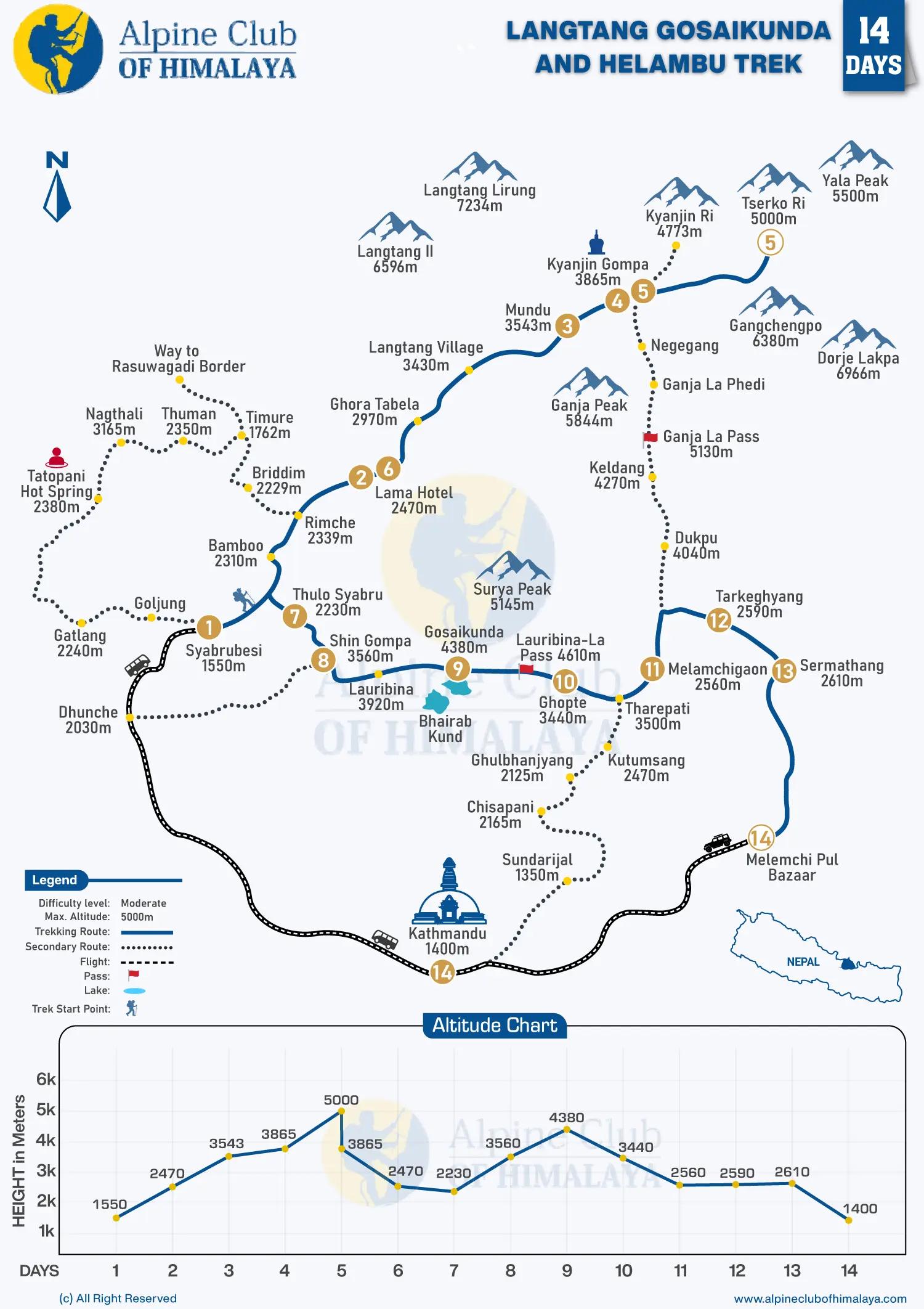
The Langtang Gosaikunda and Helambu Trek is a mesmerizing journey through the pristine landscapes of Nepal, offering a perfect blend of natural beauty, cultural richness, and spiritual significance. Organized by Alpine Club of Himalaya, this 14-day trek combines the stunning Langtang Valley, the sacred Gosaikunda Lake, and the lush Helambu region, providing trekkers with an unforgettable experience in the Himalayas.
The trek begins with a scenic drive from Kathmandu to Syabrubesi, where the adventure officially starts. The trail winds through dense rhododendron and oak forests, charming Tamang and Sherpa villages, cascading waterfalls, and panoramic Himalayan vistas. Along the way, trekkers have the opportunity to explore Buddhist monasteries, ancient chortens, mani walls, and culturally significant sites.
One of the highlights of this trek is Gosaikunda, a high-altitude glacial lake of immense religious importance for Hindus and Buddhists alike. Trekkers will also traverse the Laurebina Pass, which offers breathtaking views of the surrounding peaks and marks the transition to the Helambu region, famous for its terraced fields, traditional villages, and rich Sherpa culture.
The trek offers a well-paced itinerary, allowing for proper acclimatization and exploration. Accommodation ranges from comfortable teahouses and lodges to monasteries where available, with all meals included except on the last day when only breakfast is provided. The route covers a diverse elevation range from 1,550 meters in Syabrubesi to 4,460 meters at Gosaikunda, making it suitable for trekkers with moderate fitness levels who are looking for an immersive Himalayan experience.
Best Time for Trek
The best time for trekking in Nepal is during the spring (March to May) and autumn (September to November) seasons, when the weather is stable, temperatures are moderate, and mountain views are at their finest. Spring brings pleasant warmth, blooming rhododendrons, and clear morning skies, making it ideal for nature lovers and photographers. Autumn offers crisp air, excellent visibility, and comfortable walking conditions after the monsoon has cleared the dust from the atmosphere. These months provide the safest and most enjoyable trekking experience, with dry trails, minimal rainfall, and reliable conditions for high-altitude passes or remote routes. While winter can be suitable for lower-altitude treks and summer is good for certain rain-shadow areas, spring and autumn remain the most recommended seasons for the best overall trekking experience.
Mountain Views During the Trek
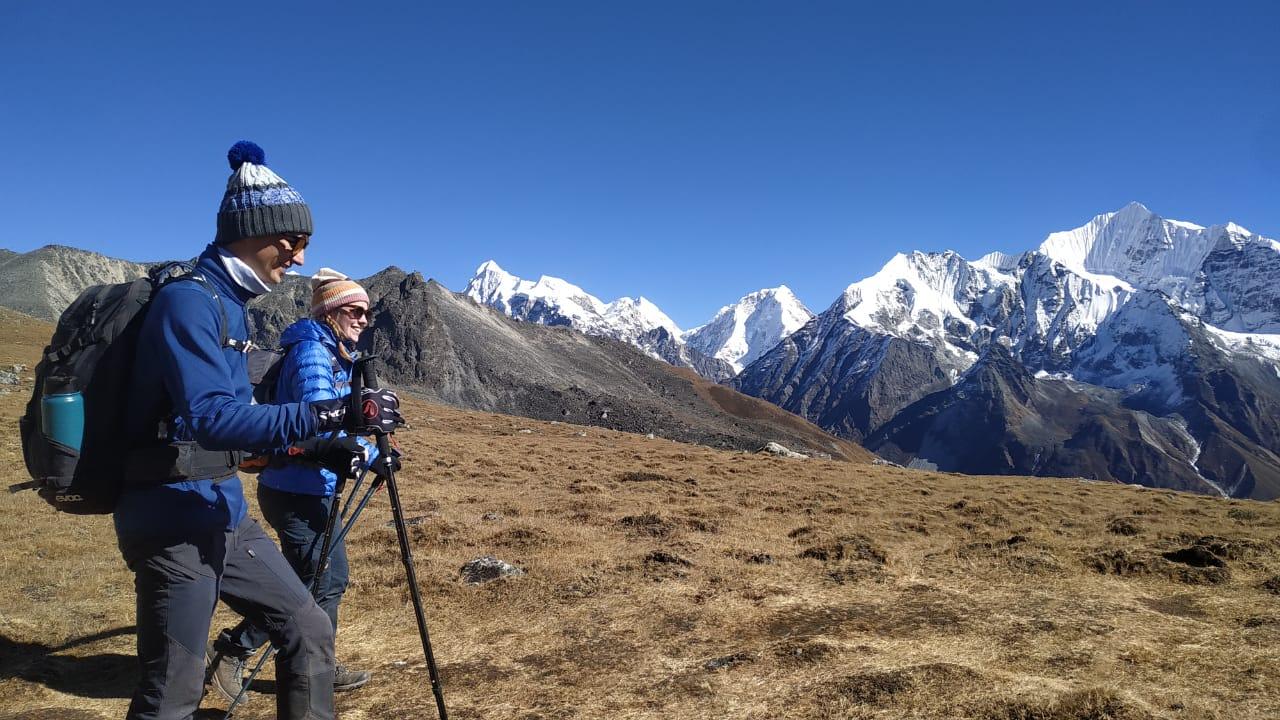
The Langtang–Gosaikunda–Helambu Trek offers some of the finest Himalayan scenery close to Kathmandu, making it a perfect option for trekkers who want breathtaking mountain views without traveling too far. Throughout the trek, you will witness a diverse range of landscapes—from lush forests and deep valleys to high-altitude lakes and expansive snow-covered peaks. The Langtang Valley presents dramatic views of Langtang Lirung and surrounding peaks, while the Gosaikunda region offers pristine alpine lake reflections and panoramic Himalayan skylines. Crossing the Lauribina La Pass opens up some of the most spectacular vantage points of the journey, and the Helambu region provides a peaceful backdrop of rolling hills with distant mountain horizons. This combination of close-up Himalayan panoramas, sacred lakes, and serene landscapes makes the 14-day trek one of the most visually stunning routes in Nepal.
1. Langtang Valley Mountain Views
· Close-up views of Langtang Lirung (7,227m) dominating the valley.
· Stunning panoramas of Gangchempo, Dorje Lakpa, Yala Peak, and Langshisa Ri.
· Wide open landscapes with glaciers, rugged ridges, and snow-clad summits.
2. Kyanjin Gompa Region
· 360-degree Himalayan views from Kyanjin Ri and Tserko Ri.
· Spectacular sunrise and sunset views over the Langtang range.
· Crystal-clear views of icefalls, glaciers, and towering peaks.
3. Scenic Ascent Toward Gosaikunda
· Changing landscapes from forests to rocky high-altitude terrain.
· Far-reaching views of Manaslu, Ganesh Himal, and portions of the Tibetan plateau on clear days.
· Pristine alpine lakes reflecting nearby snow peaks—one of the most photogenic parts of the trek.
4. Lauribina La Pass (4,610m)
· One of the highest and most rewarding viewpoints of the entire route.
· Sweeping panoramas of the Annapurna Range, Ganesh Himal, and Langtang peaks.
· Unforgettable sunrise views with golden light illuminating the Himalayan skyline.
5. Helambu Region Mountain Scenery
· Views of Dorje Lakpa (6,966m), Gaurishankar, and Jugal Himal.
· A mix of distant snow-capped mountains and lush rolling hills.
· Peaceful, less-crowded landscapes offering a calmer trekking atmosphere.
Difficulty Level
The difficulty level of this trek is considered moderate, making it suitable for trekkers with a reasonable level of fitness and some previous hiking experience. The trail includes a mix of gentle paths, uphill climbs, and occasional steep sections that require steady pacing. Although the daily walking hours can range from five to seven hours, most of the route follows well-established trails used by local villagers. Altitude can add an extra level of challenge, especially on higher sections, so maintaining a comfortable walking rhythm and staying hydrated is important. With proper preparation, good trekking gear, and a positive mindset, most trekkers find the journey enjoyable and manageable without needing advanced technical skills.
Physical Fitness and Requirements
A good level of physical fitness is recommended for this trek, as you will be walking for several consecutive days across varying terrain. Regular exercise before the trip, such as walking, jogging, cycling, or short hikes, will help improve stamina and ensure a more comfortable experience on the trail. Trekkers should be able to walk for several hours with a light backpack and handle gradual ascents at a steady pace.
It is also important to be mentally prepared for changing weather, basic accommodations, and long walking days. Carrying essential gear such as sturdy trekking shoes, warm layers, rain protection, and personal medications will ensure safety and comfort throughout the journey. With adequate preparation and a healthy level of fitness, trekkers can fully enjoy the scenic beauty, cultural encounters, and rewarding nature of this adventure.
Weather and Environment
The weather and environment along the trekking route vary depending on the season, altitude, and terrain, creating a diverse and memorable experience for trekkers. In the lower regions, the climate is generally mild with warmer temperatures, lush forests, and farmland landscapes. As you move higher, the air becomes cooler and the vegetation changes to alpine shrubs, open meadows, and rugged mountain terrain. Spring and autumn offer the most stable weather, with clear skies, comfortable temperatures, and excellent visibility of the surrounding peaks. During winter, higher areas can be quite cold with snowfall, while monsoon months bring rain, slippery trails, and cloudy views, although the lower valleys become beautifully green. Regardless of the season, the Himalayan environment is ever-changing, so trekkers should be prepared for sudden weather shifts and enjoy the unique natural beauty each elevation presents.
Altitude Sickness and Preparation
Altitude sickness is a potential concern when trekking in higher Himalayan regions, and understanding how to prevent it is an important part of preparing for a safe journey. As you gain elevation, the air becomes thinner, which can make breathing slightly more difficult and cause symptoms such as headache, fatigue, loss of appetite, or dizziness if your body does not acclimatize properly.
To reduce the risk, it is essential to walk at a steady pace, stay hydrated, eat well, and allow your body enough time to adjust during the ascent. Following proper acclimatization schedules, avoiding rapid elevation gain, and listening to your guide’s advice significantly lower the chances of altitude-related problems.
Trekkers should also prepare by maintaining good physical fitness, learning basic symptoms, and carrying necessary medication such as Diamox if recommended by a medical professional. With the right precautions, awareness, and gradual pacing, most trekkers safely adapt to the altitude and enjoy the journey without major difficulties.
Evacuation Procedure
In case of emergencies, a well-organized evacuation procedure ensures your safety throughout the trek. If you experience severe altitude symptoms, injuries, or any medical condition that requires urgent attention, your guide will assess the situation and take immediate action. This usually begins with descending to a lower altitude, which is the most effective first response to altitude-related issues.
If the condition does not improve or requires quick medical support, your guide will coordinate with the local rescue team and arrange a helicopter evacuation when available. Communication is maintained through phone networks or satellite devices depending on the location. Travel insurance that covers high-altitude trekking and helicopter rescue is essential, as it allows the evacuation process to proceed without delays.
With experienced staff, professional coordination, and established rescue protocols, trekkers can rely on a safe and efficient response in any unexpected situation.
Meals
During the trek, you will enjoy freshly prepared meals that provide the energy and nutrition needed for long walking days. Teahouses and lodges along the route serve a variety of traditional Nepali and continental dishes, giving you both local taste and familiar options. Breakfast typically includes items such as porridge, eggs, pancakes, bread, tea, or coffee. Lunch is usually taken at small settlements along the trail, with choices like dal bhat, fried rice, noodles, soups, or pasta. Dinner is served at your overnight lodge with similar hearty options prepared warm and fresh. We ensures that meals are hygienic, nutritious, and suitable for trekkers, helping you maintain strength and comfort throughout the journey. Special dietary preferences can be accommodated when available.
Accommodation
Accommodation during the trek is generally based in comfortable and welcoming teahouses or guesthouses run by local families. These accommodations offer simple rooms with twin beds, warm blankets, and shared or private bathrooms depending on the region. While lower-altitude villages may provide more amenities, higher-elevation lodges become more basic due to remote conditions. The cozy dining halls often feature wood-fired heaters where trekkers gather to relax after a long day. We select clean, safe, and reliable teahouses along the route to ensure comfort and a pleasant stay. Although the facilities are simple, the friendly atmosphere and authentic local hospitality make the accommodation experience one of the highlights of trekking in Nepal.
Drinking Water
Safe drinking water is essential during the trek, and several options are available along the route. Bottled water can be purchased in most villages, but using refillable bottles is highly recommended to reduce plastic waste. Many teahouses provide boiled water, which is one of the safest and most eco-friendly choices. Trekkers may also use water purification tablets, iodine drops, or portable filters for additional convenience and safety. It is important to stay hydrated, especially at higher altitudes, so carrying a reusable water bottle and refilling it regularly is strongly advised. Alpine Club of Himalaya encourages eco-conscious practices and helps ensure that trekkers have access to safe and clean drinking water throughout the journey.
Transportation
Transportation for the trek is arranged to ensure a smooth and comfortable journey from the moment you leave Kathmandu until you return. Depending on the route, the trip usually begins with a private vehicle or tourist bus that takes you to the starting point of the trek, offering scenic views of hills, rivers, and traditional settlements along the way.
During the trek itself, all travel is done on foot while your guide manages logistics and ensures that your movements between villages follow a planned schedule. At the end of the trek, a pre-arranged vehicle will be waiting to take you back to Kathmandu or your next destination. Female Guide Holiday manages all transportation arrangements carefully, choosing reliable drivers and safe routes so that your journey is comfortable, well-organized, and stress-free from start to finish.
Wi-Fi and Electricity
Wi-Fi and electricity are available at most teahouses along the trekking route, although the speed and reliability can vary depending on the altitude and remoteness of the area. In lower regions, Wi-Fi is usually stronger and may be free or available for a small charge, while in higher villages it is often paid and slower due to limited connectivity. Electricity is generally available throughout the trek, allowing you to charge phones, cameras, and power banks, but charging fees may apply in remote lodges where energy is generated through solar or micro-hydro sources. It is highly recommended to carry a fully charged power bank and extra batteries, especially for high-altitude sections where electricity access may be limited. Alpine Club of Himalaya ensures that trekkers are informed in advance about expected facilities so you can prepare accordingly for a smooth and comfortable experience.
Guide and Porter
Trekking with a professional guide and porter arranged by Alpine Club of Himalaya enhances safety, comfort, and cultural understanding throughout the journey. Your licensed, experienced guide leads the route each day, ensures your pace is comfortable, manages accommodation and meals, and provides valuable insights about the landscape, villages, and traditions along the trail. Guides are also trained in first aid and altitude awareness, making them crucial for overseeing your well-being at higher elevations. Porters carry a portion of your luggage, allowing you to walk freely with only a light daypack, reducing fatigue and helping you enjoy the trek more fully. Each porter typically carries up to 20–25 kg in total, and the company ensures ethical treatment, proper equipment, and fair wages for all support staff. Having a guide and porter not only improves safety and comfort but also creates meaningful interactions with the local community.
TIMS and Permits
- TIMS Card (Trekkers’ Information Management System): Required for safety monitoring and rescue coordination.
- Langtang National Park Entry Permit: Mandatory for entry into the protected Langtang National Park.
- Local Area Permit (Helambu Region): May be required depending on the route; issued by the rural municipality.
- All permits arranged by Alpine Club of Himalaya before the trek.
- Guide carries all permits for verification at checkpoints.
- Ensures a smooth, hassle-free trekking experience with no administrative delays.
Permissions and Restrictions
Trekking in the Langtang, Gosaikunda, and Helambu regions requires trekkers to follow certain permissions and restrictions to ensure safety, environmental preservation, and respect for local culture. The area falls under a protected national park, which means camping, wildlife disturbance, off-trail hiking, and littering are strictly prohibited. Trekkers must follow designated trails and respect village customs, religious sites, monasteries, and local rules. Drone usage is restricted in most parts of the national park and requires special approval from authorities. Open fires are not allowed due to forest conservation and wildfire risks. Checkpoints along the trail verify permits, and trekkers are expected to comply with these inspections. Alpine Club of Himalaya ensures trekkers are fully informed about these regulations so that the journey remains safe, responsible, and environmentally friendly.
- Follow designated trekking routes; off-trail hiking is restricted.
- No open fires or wildlife disturbance inside Langtang National Park.
- Drone usage requires special authorization.
- Respect monasteries, religious sites, local customs, and village rules.
- Permit checks are mandatory at official checkpoints.
Why Choose This Trek?
The Langtang Gosaikunda Helambu Trek is an exceptional journey that combines natural beauty, cultural immersion, and adventure, making it ideal for trekkers with moderate experience. This trek takes you through lush valleys, dense alpine forests, serene high-altitude lakes, and remote traditional villages, offering some of the most scenic landscapes in Nepal. Along the route, you will enjoy breathtaking panoramic views of iconic Himalayan peaks, including Langtang Lirung, Ganesh Himal, and Annapurna ranges, providing endless opportunities for photography and nature appreciation.
Culturally, the trek passes through Sherpa, Tamang, and other traditional communities, where you can explore monasteries, Chortens, Mani walls, and experience authentic local customs. The gradual ascent and moderate daily walking hours ensure proper acclimatization, making the trek achievable and enjoyable for those with good fitness levels.
Alpine Club of Himalaya provides complete support throughout the trek, including:
· Experienced professional guides for navigation, safety, and cultural insights.
· Skilled porters to carry luggage, allowing you to trek comfortably with only a daypack.
· Safe accommodations in teahouses and lodges along the route.
· Nutritious meals tailored for trekking energy needs.
· Assistance with all necessary permits and official paperwork.
This trek offers a unique opportunity to witness spiritual lakes, majestic mountains, and vibrant Himalayan culture in one journey. With stunning landscapes, rich traditions, and well-organized support from Alpine Club of Himalaya, the Langtang Gosaikunda Helambu Trek is truly a once-in-a-lifetime adventure that blends nature, culture, and adventure seamlessly.
Travel Insurance
Comprehensive travel insurance is essential for the Langtang Gosaikunda Helambu Trek, as it provides protection against unexpected situations that may arise in remote mountain areas. Your insurance should include high-altitude trekking coverage up to at least 5,000 meters, along with emergency evacuation by helicopter, which is crucial in case of altitude sickness or other medical emergencies. It is also recommended that your policy covers trip cancellation, loss of luggage, medical treatment, and flight delays, as these issues can occur in Nepal's mountain regions. Alpine Club of Himalaya strongly advises all trekkers to secure a reliable insurance policy before arriving in Nepal, as emergency services in the Himalayas can be costly without proper coverage. Carrying a printed copy of your insurance details is important because it allows quick action if an evacuation becomes necessary.
Passport and Visa
All foreign travelers entering Nepal must possess a valid passport and visa before starting the trek. Your passport should be valid for at least six months from the date of entry and include at least one blank page for visa stamps. Most nationalities can obtain a Visa on Arrival at Tribhuvan International Airport in Kathmandu or at major land border entry points. Tourists can choose from 15-day, 30-day, or 90-day tourist visas, depending on their travel plan. The visa process is simple and involves filling out a form, submitting a passport photo, and paying the visa fee. For those who prefer, an online application (eVisa) can be submitted prior to travel to save time upon arrival. Trekkers should keep their passport and visa secure throughout the journey, as these documents are required for hotel check-ins, domestic flights, and permit issuance.
Photography and Drone Policy
The Langtang Gosaikunda Helambu Trek offers extraordinary opportunities for photography, from snow-capped Himalayan peaks and alpine forests to high-altitude lakes, lush valleys, and traditional Sherpa and Tamang villages. Alpine Club of Himalaya encourages trekkers to capture these unforgettable moments while respecting local customs, wildlife, and environmental regulations.
Photography Guidelines:
- Trekkers are welcome to photograph landscapes, rivers, waterfalls, high-altitude lakes, and village life along the trail.
- Always seek permission before photographing local residents, especially in remote villages, monasteries, or religious sites, to respect cultural sensitivities.
- Wildlife photography should be conducted from a safe distance to avoid disturbing animals in the Langtang National Park and surrounding areas.
Drone Policy:
- Flying drones is strictly regulated in Nepal, particularly in protected areas such as Langtang National Park.
- Trekkers wishing to use drones must obtain proper permits from the Civil Aviation Authority of Nepal (CAAN). Permits are required for both recreational and professional drone use.
- Drone use without the necessary permits is prohibited and may result in fines, confiscation, or legal penalties.
- Alpine Club of Himalaya will assist with all drone procedures if you wish to fly, ensuring compliance with local regulations and safe operation.
Best Practices:
- Operate drones in open areas, away from crowded villages, cultural sites, and monasteries.
- Keep drones at a safe distance from wildlife and avoid flying over protected zones without authorization.
- Respect other trekkers by flying drones quietly and responsibly to minimize disruption.
By following these guidelines, trekkers can safely and responsibly capture stunning aerial and ground-level views while preserving the cultural integrity and natural beauty of the Langtang Gosaikunda and Helambu regions.
Last Minute Booking
Alpine Club of Himalaya welcomes last-minute bookings for the Langtang Gosaikunda Helambu Trek, allowing flexibility for travelers with dynamic schedules. While advanced reservations are recommended to secure accommodations and guide availability, the company is experienced in arranging high-quality trekking logistics even on short notice. Last-minute bookings include all necessary services such as transportation, permits, guides, porters, and meal arrangements. The team ensures that trekkers can join the journey safely and comfortably without compromising on the quality of the experience. With a professional support system and local network, last-minute travelers can still enjoy a fully organized, hassle-free trek while exploring the spectacular landscapes, culture, and high-altitude lakes of the region.
Online Briefing
Before the trek begins, Alpine Club of Himalaya provides a detailed online briefing for all participants. This session includes essential information about the itinerary, daily schedules, accommodations, meals, weather conditions, and altitude considerations. Trekkers are also briefed on safety measures, trekking etiquette, proper packing lists, and emergency procedures. The online briefing allows participants to ask questions directly to experienced guides and receive advice on physical preparation and health precautions. This pre-trek guidance ensures that all travelers feel confident, well-prepared, and fully informed about every aspect of the journey before leaving Kathmandu, making the trekking experience smoother, safer, and more enjoyable.
Pickup and Drop Points from Kathmandu:
1 - Devo Boutique Hotel, Thamel, Kathmandu (or similar)
2 - Tribhuvan International Airport (TIA), Kathmandu
3 - Alpine Club of Himalaya Pvt. Ltd
4 - Within Thamel, Kathmandu
Final Notes
Before beginning your Langtang Gosaikunda and Helambu Trek, it is essential to ensure that you are fully prepared in terms of fitness, gear, and logistics. Testing your trekking equipment in advance—particularly your hiking boots, backpack, clothing layers, and any technical gear—is highly recommended. Properly broken-in boots and familiar gear greatly reduce the risk of discomfort, blisters, or injuries during long walking days, especially when crossing high-altitude sections such as the Laurebina La Pass (4,610m) and descending into the Helambu valleys. Your backpack should fit comfortably, with the weight well-distributed, and you should feel confident carrying your daily essentials over extended distances.
Physical preparation is equally important. Engaging in regular training at least a few weeks before the trek—such as long walks, stair climbing, cardiovascular workouts, and strength exercises—will help build stamina and reduce fatigue at altitude. Good fitness not only supports your own comfort but also helps prevent altitude-related complications.
Clear communication with your trekking guide and the Alpine Club of Himalaya support team ensures a smooth and safe journey. Our team is always available to assist you with pre-departure questions, packing guidance, special requests, or any health-related concerns during the trek. Our priority is to make your Himalayan adventure enjoyable, memorable, and safe from start to finish.
Cancellation Policy – Langtang Gosaikunda and Helambu Trek – 14 Days
Cancellation by the Participant
If you need to cancel your booking for the Langtang Gosaikunda and Helambu Trek, please inform Alpine Club of Himalaya in writing (email or official communication). The following cancellation charges apply based on the number of days before the trek start date:
- 60 days or more prior to departure:
A cancellation fee of 20% of the total trip cost will be charged.
- 30 to 59 days before departure:
A cancellation fee of 50% of the total trip cost will be charged.
- Less than 30 days before departure:
No refund is provided, and the full trip cost becomes non-refundable.
These fees cover previously arranged logistics such as permits, accommodation bookings, transport arrangements, guide and porter preparations, and administrative expenses already incurred.
Cancellation by the Organizer
In rare cases where Alpine Club of Himalaya must cancel the Langtang Gosaikunda and Helambu Trek due to unavoidable or unforeseen circumstances—such as severe weather, natural disasters, or regional safety concerns—participants will be offered one of the following options:
- A full refund of all payments made
OR
- The option to reschedule the trek to any future available departure date
Trek cancellations initiated by the organizer are made only when absolutely necessary, always prioritizing the safety and well-being of trekkers and staff.
Force Majeure Clause
Alpine Club of Himalaya is not responsible for cancellations, delays, or additional expenses that arise due to force majeure events beyond its control, which may include:
- Natural disasters such as earthquakes, landslides, floods
- Political instability, strikes, or regional blockades
- Epidemics, pandemics, or sudden public health emergencies
- Flight cancellations, airspace restrictions, or major transportation disruptions
In such situations, trekkers will be responsible for any additional personal expenses, including extended accommodation, alternative transportation, or insurance claims. For this reason, all participants are strongly encouraged to purchase comprehensive travel insurance that covers trip cancellation, medical treatment, high-altitude evacuation, and force majeure-related incidents.