D
Daniel Schneider
Germany
May 21, 2026

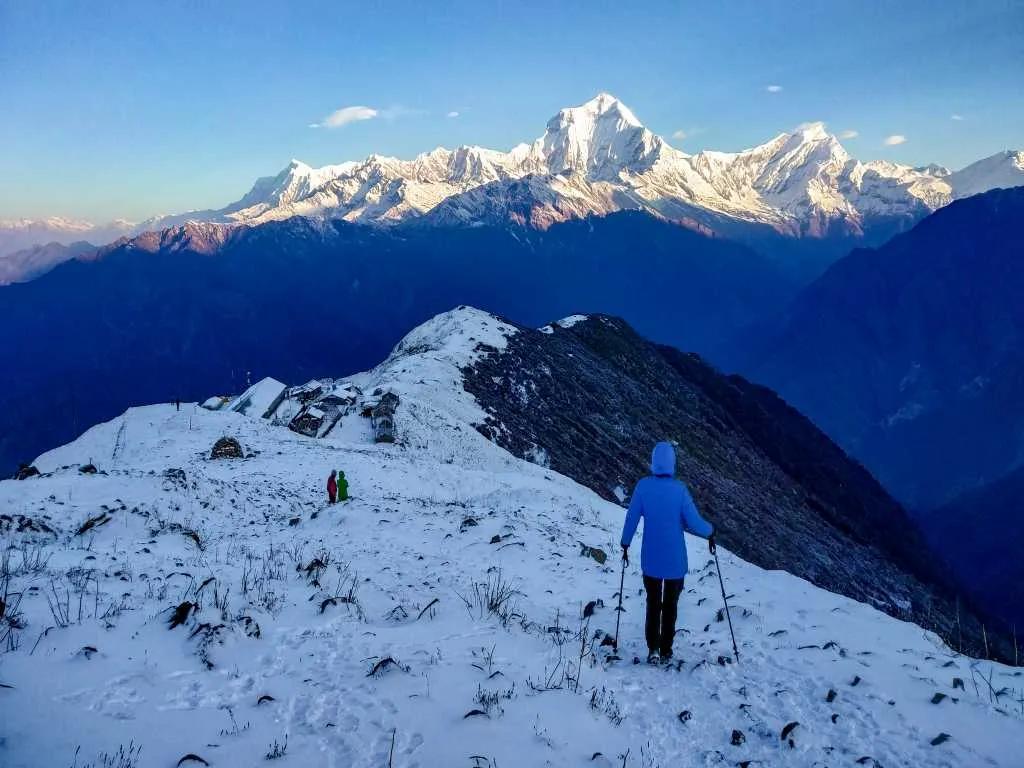
Khopra Ridge was one of the most beautiful viewpoints I have ever visited. The trek was well paced, and the side trip to Khayer Lake was a real highlight. The guides were professional and friendly throughout.
Destination
Nepal
Duration
10 Days
Best Weather
March, April, May, September, October & November
Accommodation
Hotel and Guesthouse
Meals
Breakfast, Lunch, Dinner
Transportation
Private vehicle
Group
Min. 1 Pax
Difficulty
Easy
Activities
Trekking
The journey begins with your arrival in Kathmandu, followed by a scenic drive to Pokhara, the gateway to the Annapurna Region. From Pokhara, a short drive takes you toward Ghandruk, a beautiful Gurung village, where the trekking section begins.
The trail gradually ascends through forests filled with oak, pine, and rhododendron trees. As you move higher, the landscape transforms into alpine terrain with wide ridges, open meadows, and dramatic mountain backdrops. Key highlights include Bayeli Kharka, Khopra Ridge, Khayer Lake, and the scenic descent toward Swanta and Ghorepani before reaching Poon Hill.
The trek ends with a sunrise hike to Poon Hill and a return journey via Ulleri back to Pokhara and Kathmandu.
The best time to trek Khopra Danda with Poon Hill is during spring and autumn, when weather conditions are stable and mountain visibility is at its best.
This is the most popular trekking season in Nepal. The skies are generally clear, offering stunning views of Annapurna and Dhaulagiri ranges. Temperatures are moderate, and the trails are dry and comfortable. It is also a great time for photography and stargazing due to clear night skies.
Spring brings colorful rhododendron blooms across the forests, making the trail especially scenic. The weather is mild, and the hills are covered with fresh greenery. This is also a great time for wildlife sightings and peaceful trekking conditions.
Winter is colder, especially at higher altitudes like Khopra Ridge and Khayer Lake. Snowfall may block some sections, but experienced trekkers can still enjoy clear skies and fewer crowds.
Monsoon brings heavy rainfall, slippery trails, and landslide risks. Visibility is poor, and trekking is generally not recommended during this season.
The Khopra Danda Trek including Poon Hill is a rewarding journey in the Annapurna Region that combines off-the-beaten-path adventure with iconic Himalayan viewpoints. This trek is designed for travelers who want a quieter, more authentic experience away from the crowded main trails, while still enjoying some of the most famous sunrise and mountain views in Nepal.
Khopra Danda (Khopra Ridge) is a community-based trekking route that supports local villages and promotes sustainable tourism. The trail passes through remote settlements, dense rhododendron forests, alpine ridges, and high mountain landscapes, offering a raw and unfiltered Himalayan experience. Unlike commercial trekking routes, this journey feels more intimate, where nature and local culture blend seamlessly.
Poon Hill, on the other hand, is one of the most celebrated viewpoints in the Annapurna Region, famous for its panoramic sunrise over the Annapurna and Dhaulagiri ranges. Together, Khopra Danda and Poon Hill create a perfect balance of peaceful wilderness and iconic mountain scenery.
For the Khopra Danda Trek including Poon Hill, trekkers must obtain official permits to enter the protected conservation area. These are mandatory and checked at multiple points along the route.
You will need:
These permits can be obtained in Kathmandu or Pokhara through the Nepal Tourism Board offices or authorized trekking agencies.
To apply, you typically need:
Your trekking agency or guide usually manages all permit arrangements, so you do not need to handle queues or paperwork directly.
Travel insurance is a crucial requirement for the Khopra Danda Trek including Poon Hill due to the remote and high-altitude nature of the route. As the trek includes challenging sections such as Khopra Ridge and Khayer Lake, trekkers must be prepared for unexpected situations like altitude sickness, injuries, weather delays, or emergency evacuations.
A comprehensive trekking insurance policy should cover high-altitude emergency evacuation, including helicopter rescue from remote mountain areas where road access is not available. It should also include full medical treatment and hospitalization coverage in case of illness or accidents during the trek. Since trekking plans in the Himalayas can be affected by weather or health conditions, trip cancellation and interruption coverage is also highly recommended.
In addition, the insurance must provide support for accidental injuries, emergency assistance, and repatriation to your home country if required. It is strongly advised to choose a trusted international insurance provider that clearly includes trekking activities in the Himalayas at altitudes above 4,000 meters. Without proper coverage, emergency rescue operations in remote areas can be extremely expensive and difficult to arrange.
All travelers planning the Khopra Danda Trek in Nepal must carry a valid passport with at least six months of validity remaining from the date of entry into the country. This is a mandatory immigration requirement and applies to all foreign visitors regardless of nationality.
A tourist visa is required to enter Nepal and is easily accessible for most travelers. It can be obtained either in advance from Nepalese embassies or consulates in your home country, or upon arrival at Tribhuvan International Airport in Kathmandu. The on-arrival visa process is straightforward and commonly used by international trekkers visiting Nepal.
Visa durations vary depending on your travel plans, with options for short-term and extended stays. If you decide to extend your trekking or travel period, visa extensions can be conveniently arranged in Kathmandu through the Department of Immigration. It is recommended to keep printed copies of your passport, visa, and important travel documents during the trek for safety and permit verification purposes.
During the Khopra Danda Trek, meals are served in local teahouses and community lodges along the trekking route. The food is simple but nourishing, carefully prepared to provide the energy needed for long trekking days in varying altitude conditions. Meals are typically fresh, locally sourced, and cooked in a homely style by local families.
Trekkers can enjoy a wide variety of dishes throughout the journey. The most common and highly recommended meal is the traditional Nepali set known as dal bhat, which includes rice, lentils, seasonal vegetables, and pickles, offering balanced nutrition and unlimited refills in many lodges. In addition to this, Tibetan-inspired dishes such as noodle soups, thukpa, and momos are widely available, especially in higher villages. Western-style options like pasta, fried rice, pancakes, omelets, and bread items are also served in many teahouses to cater to international visitors.
The Annapurna Region emphasizes sustainable tourism practices, including reducing plastic waste. As a result, bottled mineral water is discouraged or restricted in many parts of the trekking trail. Instead, trekkers are provided with access to boiled water from teahouses, filtered drinking water, and natural spring water sources.
However, natural spring water should not be consumed directly without treatment. To ensure safe hydration, trekkers are encouraged to use water purification methods such as tablets, chlorine drops, or portable filtration systems like UV purifiers. These methods are effective, lightweight, and widely used by trekkers, helping both to protect health and reduce environmental impact in the Himalayas.
Accommodation on the Khopra Danda Trek ranges from simple teahouses in remote villages to more comfortable community lodges in lower elevations. These accommodations are designed to provide trekkers with basic comfort, warmth, and rest after long walking hours through mountainous terrain.
Rooms are generally twin-sharing, although single rooms may be available in some locations depending on availability. The rooms are simple but clean, usually furnished with basic wooden beds, mattresses, pillows, and blankets. In lower sections of the trek, such as villages closer to Pokhara, facilities may include attached bathrooms and slightly more comfortable lodging options.
As the trail ascends toward higher elevations like Khopra Ridge, accommodation becomes more basic due to remoteness and limited resources. However, these lodges offer something far more valuable—stunning panoramic views of the Annapurna and Dhaulagiri ranges right from your doorstep. Hot showers are available in some places for an additional cost, although availability becomes limited at higher altitudes.
Electricity is available in most teahouses, but charging facilities may be limited or chargeable, especially in remote areas. Wi-Fi is available in certain lower villages, though connectivity is often slow or unreliable in higher regions. Despite these limitations, the simplicity of accommodation adds to the authentic Himalayan trekking experience, offering a close connection with local culture and mountain life.
For trekkers seeking a deeper wilderness experience, camping options may also be arranged in select sections of the route, allowing overnight stays under the open Himalayan sky surrounded by peaceful alpine landscapes.
If you decide to cancel your booking for the Khopra Danda Trek including Poonhill please notify Alpine Club of Himalaya in writing (via email or official communication) as early as possible. The following cancellation charges apply:
These fees cover administrative costs, permits, pre-arranged logistics, and potential losses caused by late cancellations.
In the rare circumstance that Alpine Club of Himalaya must cancel the trek due to unforeseen or uncontrollable events such as extreme weather, natural disasters, or safety concerns in the region, you will be offered either:
Your safety is our highest priority, and cancellations are only made when absolutely necessary.
Alpine Club of Himalaya cannot be held responsible for cancellations, delays, or extra expenses resulting from force majeure events, including but not limited to:
In such cases, participants are responsible for any additional personal costs such as extra accommodation, changed flights, or insurance claims. We strongly recommend that all trekkers purchase comprehensive travel insurance covering trip cancellations, medical emergencies, and force majeure events before joining the trek.
Upon arrival at Tribhuvan International Airport, you will be warmly welcomed by a representative of Alpine Club of Himalaya and transferred to your hotel in Kathmandu. After check-in, you can rest after your long journey or explore the vibrant tourist district of Thamel, known for its shops, cafes, and cultural atmosphere. In the evening, a short briefing session will be conducted regarding the trek itinerary, safety guidelines, altitude awareness, and preparation tips. Overnight stay at a 3-star hotel in Kathmandu.
Max. Elevation
1,400m
Duration
None
Accommodation
Hotel in Kathmandu
Meals
No meals
Airport pick-up and drop-off by a representative of Alpine Club of Himalaya
2 nights accommodation in Kathmandu (3-star hotel, twin sharing) with breakfast
2 nights accommodation in Pokhara (3-star hotel, twin sharing) with breakfast
Kathmandu–Pokhara–Kathmandu transportation by tourist bus
Necessary bus station transfers
Pokhara–Ghandruk shared jeep transfer and Ulleri–Pokhara return shared jeep transfer
Teahouse/lodge accommodation during the trek (twin sharing basis)
Three standard meals per day during the trek (breakfast, lunch, dinner)
Experienced, government-licensed English-speaking trekking guide
Required number of porters (1 porter for 2 trekkers), including salary, insurance, food, and accommodation
Assistant guide for groups of 8–10+ trekkers (for safety and group management)
Annapurna Conservation Area Permit (ACAP) fee
TIMS (Trekkers’ Information Management System) card fee
Trekking equipment (sleeping bag, down jacket, duffel bag, walking poles – returnable if provided)
Alpine Club of Himalaya trekking T-shirt
All government taxes, local taxes, fuel, road tax, and service charges
Oxygen saturation monitoring (pulse oximeter checks twice daily)
Emergency rescue coordination assistance (insurance must cover actual cost)
Farewell dinner in Kathmandu
Certificate of trek completion
To ensure a safe, comfortable, and enjoyable trekking experience, proper packing is very important. Below is a complete recommended equipment list for the Khopra Danda Trek.
D
Daniel Schneider
Germany
May 21, 2026
S
Sophie Laurent
France
Jan 29, 2026
J
James Walker
United Kingdom
Jan 19, 2026
24/7 Support
Need help? we're at your service
Associated With


We Accept Cards

Office of the company registrar License: 66813/066/067 || Tourism Industry Division License:1142
All content and photography within our website is copyright & may not be reproduced without our permission.
Develop By: IT Sansaar