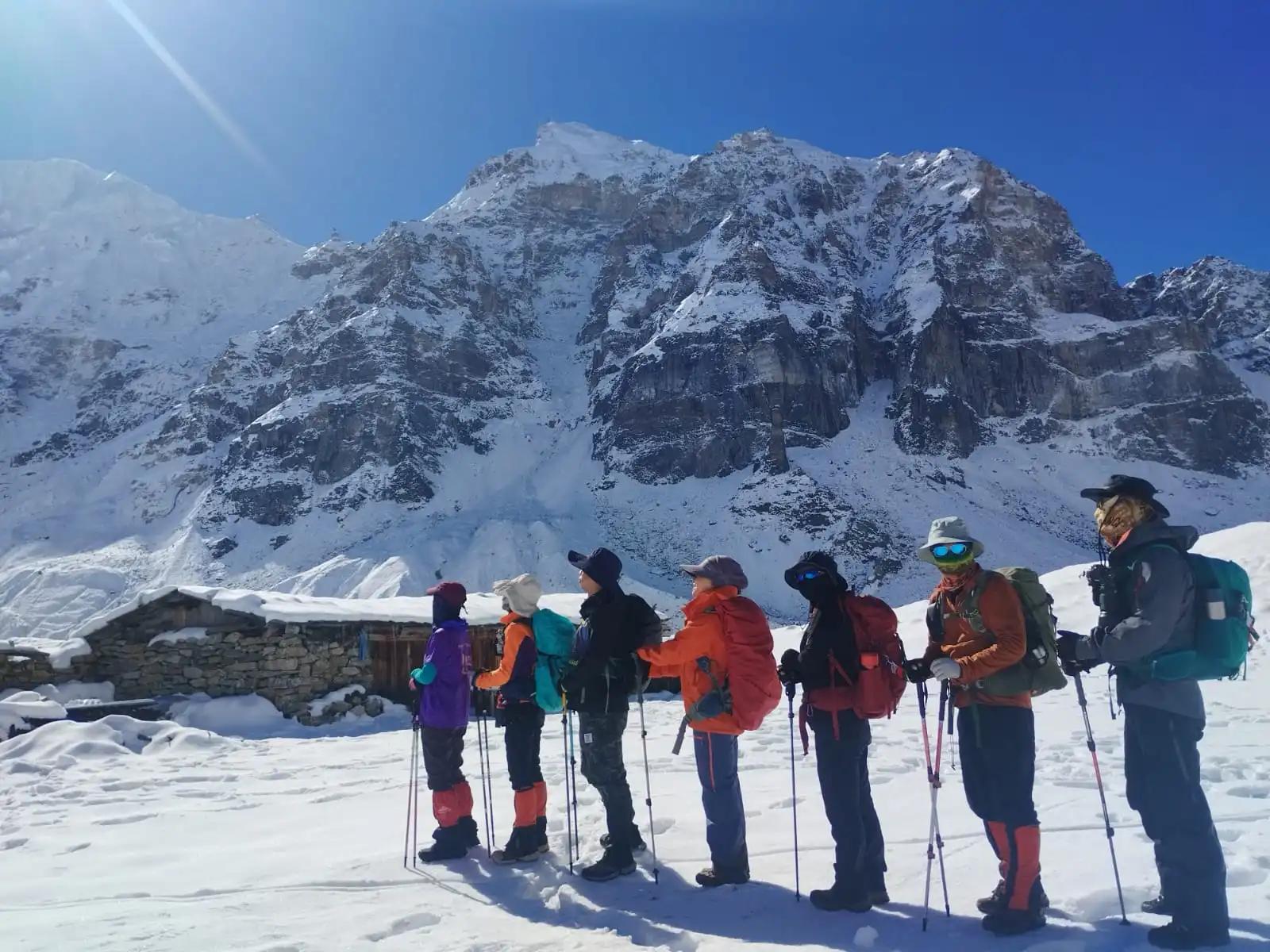
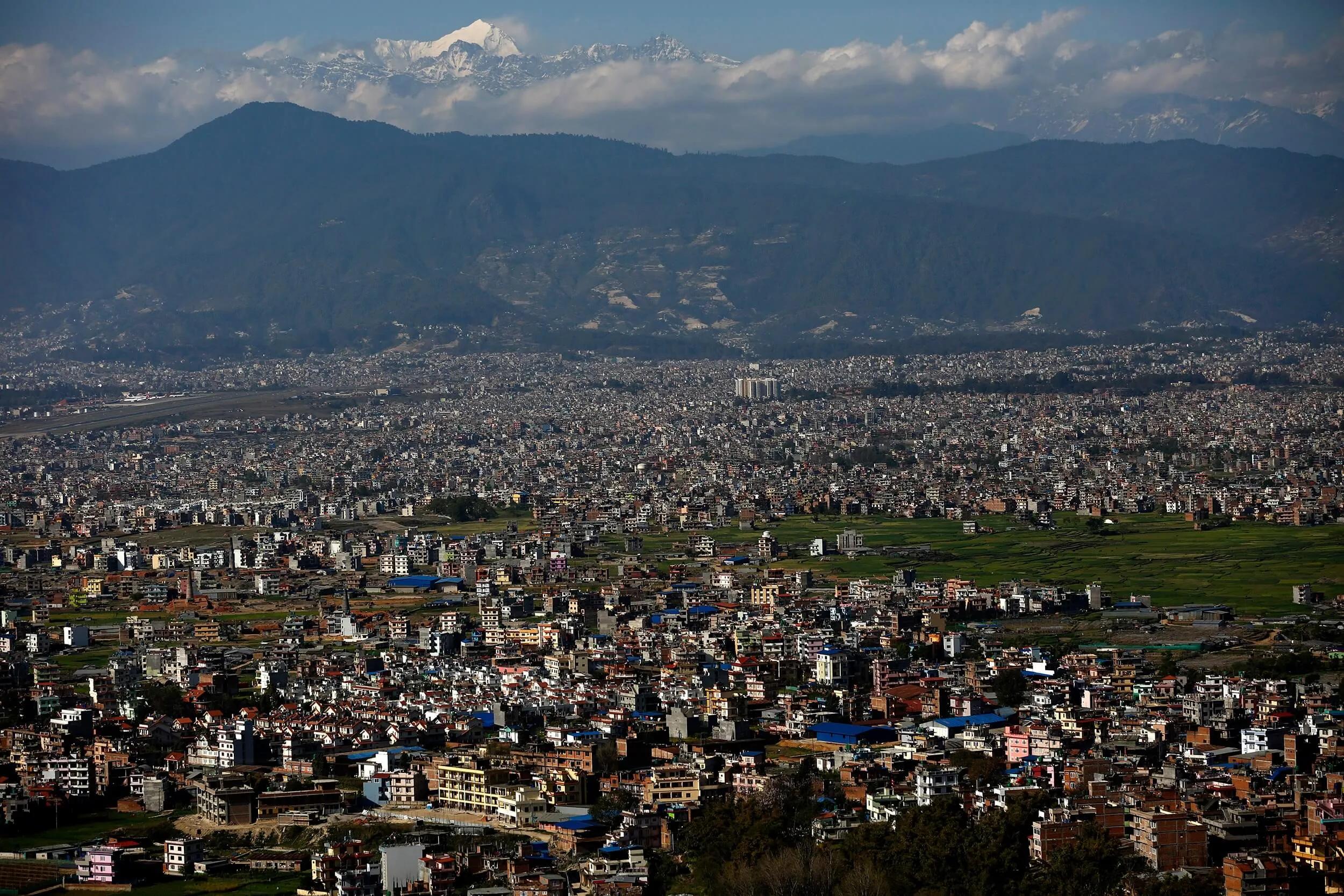
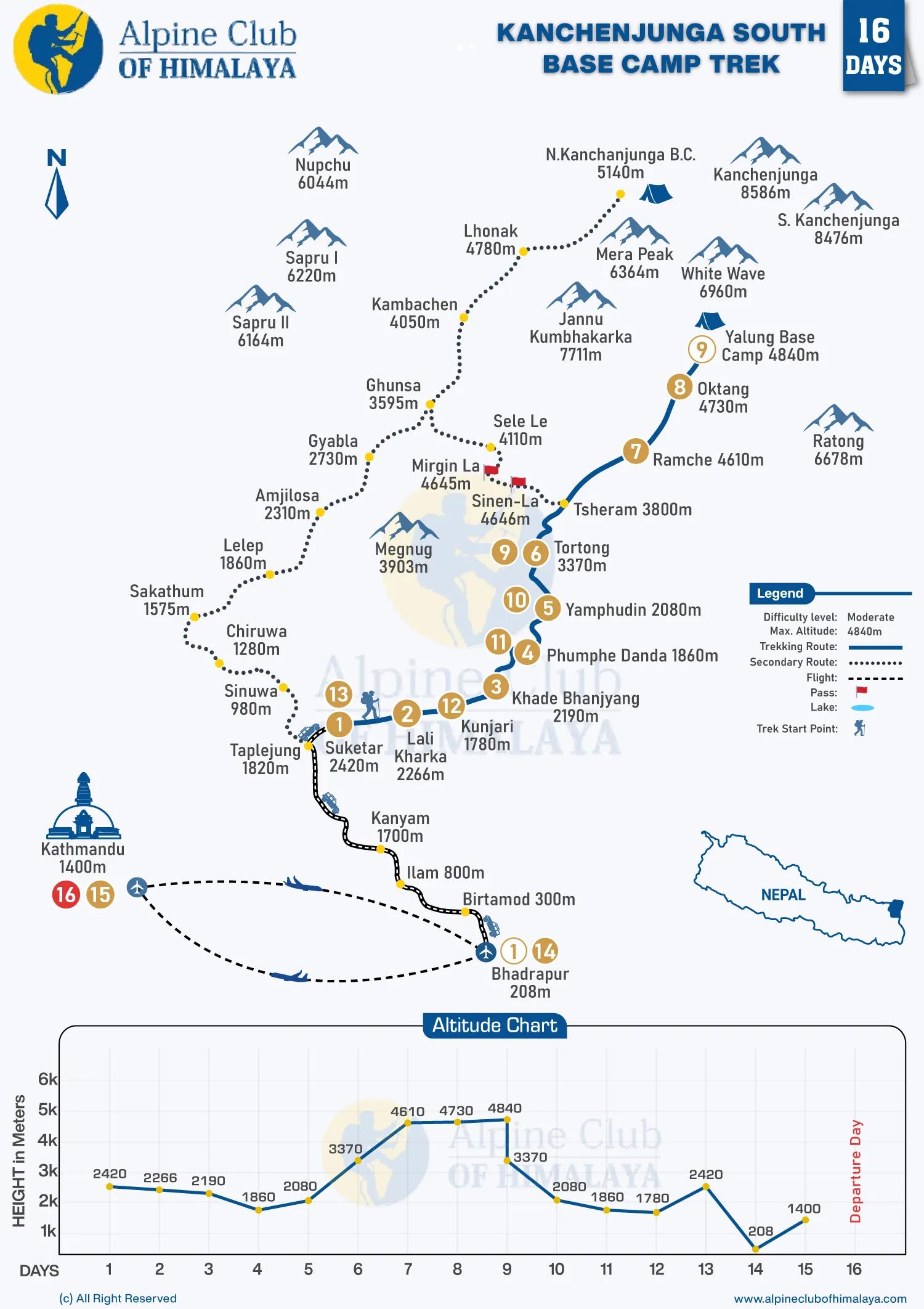
The Kanchenjunga South Base Camp Trek is a remarkable adventure through the remote and untouched landscapes of eastern Nepal. The trail leads from beautiful green hills and subtropical forests toward the high alpine valleys beneath Mount Kanchenjunga, the world’s third-highest mountain at 8,586 meters. With dramatic mountain scenery, peaceful villages, and diverse landscapes, this trek offers a unique experience away from Nepal’s more crowded trekking routes.
The 9-day journey is suitable for trekkers who want to explore the Kanchenjunga South Base Camp without committing to a long expedition around the entire Kanchenjunga region. As the trail gains altitude, the scenery changes from forests and traditional settlements to rugged mountain terrain, glaciers, and snow-covered peaks. The main destination is Ramche, located at around 4,610 meters (15,124 feet), on the southern side of Kanchenjunga. From this area, trekkers can admire the impressive Yalung Glacier and spectacular views of the Kanchenjunga massif. The combination of towering peaks, glacial valleys, and untouched wilderness creates some of the most memorable scenery of the trek. Beyond the mountains, the Kanchenjunga South Base Camp Trek is also a cultural journey. The route passes through remote Himalayan communities where local traditions and mountain lifestyles remain an important part of everyday life. The welcoming nature of the villagers adds a meaningful cultural dimension to the adventure.
Kanchenjunga is traditionally known as the “Five Treasures of Snow,” reflecting its five prominent peaks and its importance to local communities. For travelers looking for remote trails, extraordinary Himalayan views, and an authentic trekking experience, the Kanchenjunga South Base Camp Trek offers an unforgettable journey into one of Nepal’s least-explored mountain regions.
How Challenging Is the Kanchenjunga South Base Camp Trek?
The Kanchenjunga South Base Camp Trek is considered a moderate to challenging trek due to its remote trails, long walking days, steep ascents, and high-altitude terrain. The trek reaches around 4,610 meters (15,124 feet) at Ramche, so proper acclimatization and good physical fitness are important. Trekkers need to walk through forests, rocky paths, uneven terrain, and steep sections while gradually gaining altitude. Some days can be physically demanding, especially as the trail approaches the Kanchenjunga South Base Camp and Yalung Glacier. Although previous high-altitude trekking experience is helpful, experienced beginners with good fitness can also complete the trek with proper preparation. Regular walking, hiking, and cardiovascular training before the journey can help build the endurance required. The remoteness of the Kanchenjunga region is another factor that makes this trek more challenging than popular routes such as Everest or Annapurna. However, the peaceful trails, spectacular mountain scenery, and rewarding experience make the effort worthwhile.
Best Time to Visit Kanchenjunga South Base Camp Trek?
The best time for the Kanchenjunga South Base Camp Trek is during the spring and autumn seasons, particularly from March to May and September to November. These months offer stable weather, clearer skies, comfortable temperatures, and excellent visibility of the Himalayan peaks, making them ideal for trekking in the remote Kanchenjunga region.
Autumn Season
The autumn season, from September to November, is one of the best periods for the Kanchenjunga South Base Camp Trek. The monsoon rains clear the atmosphere, creating crisp mountain views and generally stable trekking conditions. The trails are surrounded by lush forests, while the clear skies provide excellent views of Mount Kanchenjunga and the surrounding Himalayan ranges. The cool and pleasant days are also ideal for long walks, while clear nights offer excellent opportunities for stargazing.
Spring Season
The spring season, from March to May, is another excellent time for the Kanchenjunga South Base Camp Trek. As winter comes to an end, the landscape becomes colorful with blooming rhododendrons and other wildflowers. The forests and highland pastures become greener, while mild daytime temperatures and clear mountain views create comfortable trekking conditions. You may also see herds of sheep and yaks grazing across the high-altitude pastures.
Monsoon Season
The monsoon season, from June to August, is generally less favorable for the Kanchenjunga South Base Camp Trek. Heavy rainfall can make trails muddy and slippery, while landslides and swollen rivers may create difficulties along the route. Clouds and rain can also significantly reduce mountain visibility. For a safer and more enjoyable trekking experience, most trekkers prefer to avoid this season.
Winter Season
The winter months, from December to February, bring cold temperatures and heavy snowfall to the higher elevations of the Kanchenjunga region. Snow can cover sections of the trail, making high-altitude areas more difficult to access. Freezing temperatures and limited visibility can also make the Kanchenjunga South Base Camp Trek more challenging. However, experienced trekkers with appropriate winter equipment may still consider lower sections of the region during suitable weather conditions.
Entry fee and Permits:
The following permits are required for trekking to Kanchenjunga Region.
Kanchenjunga Trek Permit Cost
- Kanchenjunga Conservation Area Project Entry Permit (KCAP) NRS 2,000 per person. There is no time limitation for the permit.
- Kanchenjunga Restricted Area Permit (RAP) USD 10 per person, per week.
Kanchenjunga Trek RAP Requirements
This permit must be processed through a valid local travel agency registered in Nepal. You will need a minimum of two trekkers in a group to obtain the permit.
You will need:
- Valid passport with at least six months remaining validity and a valid Nepal visa extending past the expiry date of your RAP.
- On the agency’s headed paper you need to supply details of
- Application
- Itinerary
- Insurance details for guide
- Online submission id (as provided by agency)
- Details of dollars
- E-copy of passport-sized photo
Note: All the trekking permits are handled by the Alpine Club of Himalaya.
Accommodation
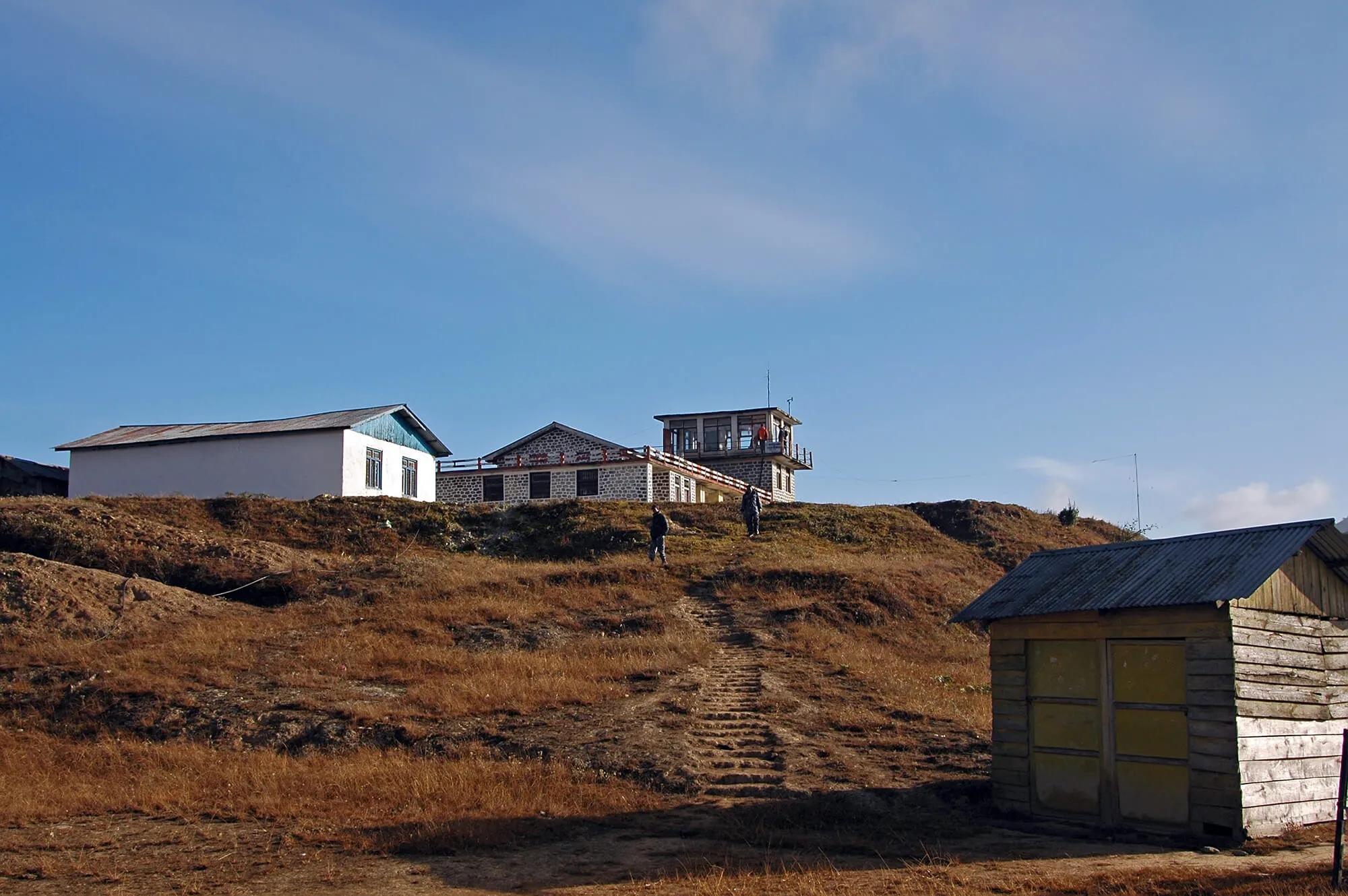
You will be accommodated in 3-star hotels in Kathmandu. During the trek, we will be staying at lodges/ teahouses providing basic facilities. At some locations, you will be staying in makeshift camps.
Meals and drinking water
Along the Kanchenjunga Trek, you will be provided with various Nepali and Tibetan ethnic cuisines. The region has several tea-house along the trail run by local inhabitants providing basic and minimal facilities. However, drinking water taps are accessible with natural water supplies all along the trekking trail that are untreated. So direct use of the water is not recommended. You may refill boiling water or cold filter water from any of the teahouses along the trail. If you buy a water purification tablet, chlorine drops or utilize SODIS (sunlight assisted) filtration procedures for further assurance, saving money, and reducing plastic pollution.
Travel Insurance
All clients participating in any activity must have travel insurance. Personal injury, death, hospital expenditures, repatriation fees, helicopter rescue. Any other disease covered by the insurance plan will be given. We highly advise you to acquire a comprehensive insurance plan from a trustworthy insurance company.
Passport & Visa
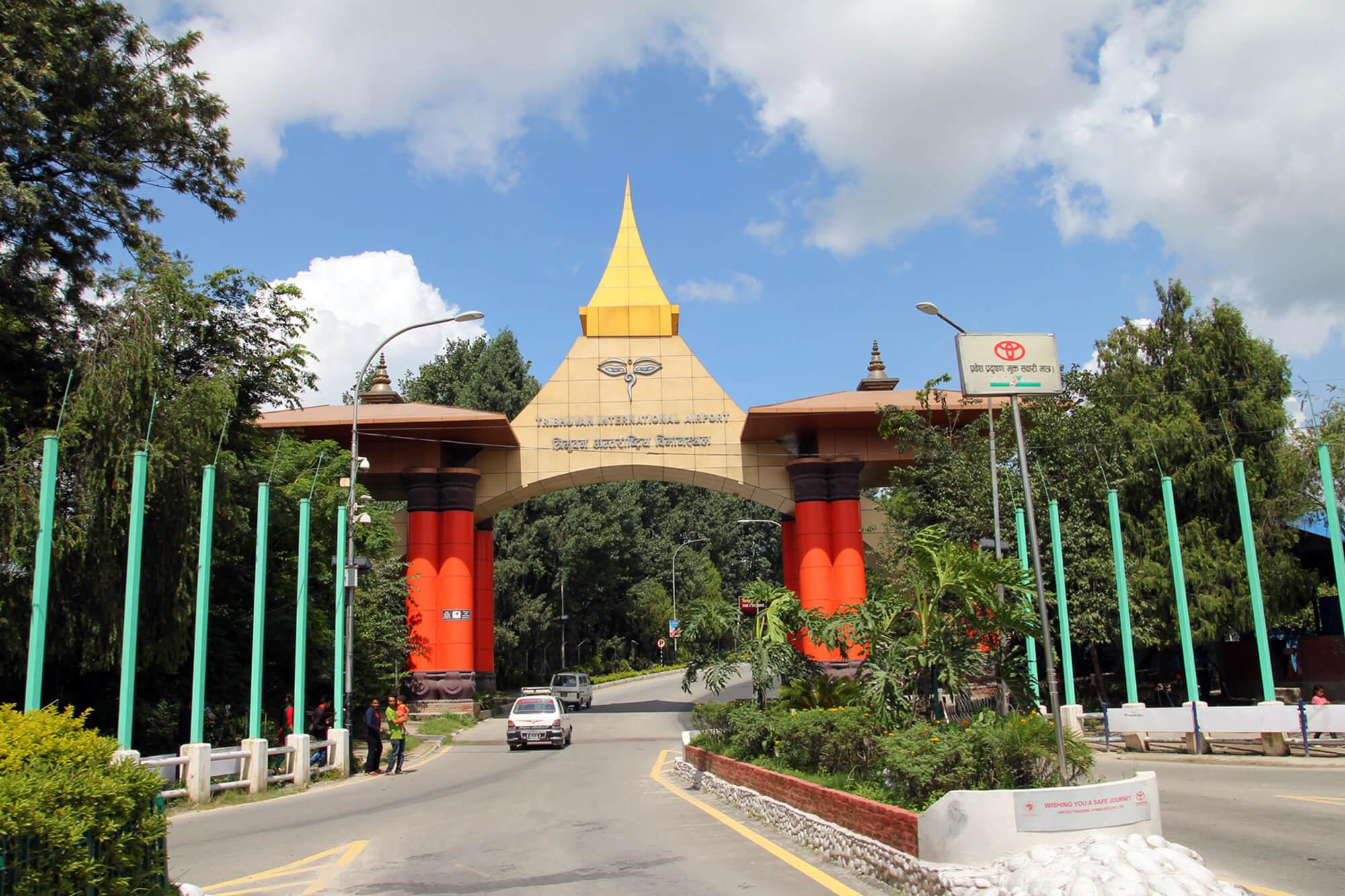
All travelers must carry a valid passport with at least six months of validity from the date of entry into Nepal. Most foreign nationals require a tourist visa, which can be obtained either in advance from a Nepalese Embassy or Consulate or upon arrival at Tribhuvan International Airport (TIA) in Kathmandu. For the most up-to-date visa information, eligibility, visa fees, and online application details, please visit the official website of the Department of Immigration, Nepal: https://www.immigration.gov.np/visa-information
Conclusion: A Journey Worth Taking
The Kanchenjunga South Base Camp Trek is a remarkable adventure that combines spectacular Himalayan scenery, rich local culture, and untouched natural beauty. Whether you are an experienced trekker or an adventurous first-time hiker, this journey offers an opportunity to explore one of Nepal’s most remote mountain regions. From breathtaking views of Mount Kanchenjunga and pristine forests to the warm hospitality of local communities, every part of the trek creates lasting memories.