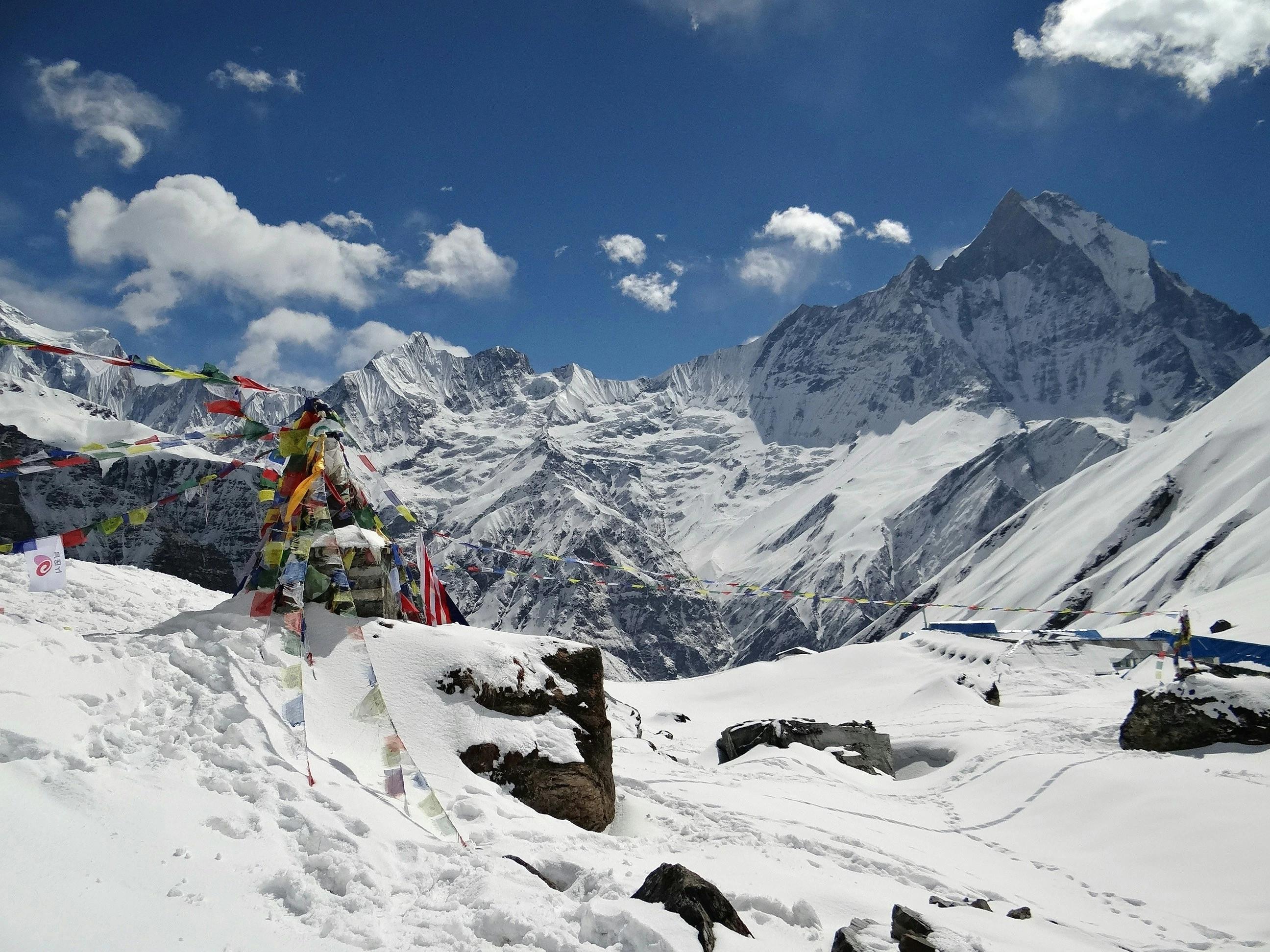
The Annapurna Base Camp and Mardi Himal Trek is a spectacular 13-day Himalayan adventure that combines two of Nepal's most iconic trekking routes into one unforgettable journey. Located within the Annapurna Conservation Area, this trek takes you through picturesque Gurung and Magar villages, lush rhododendron forests, terraced farmlands, alpine meadows, and glacial landscapes before reaching Annapurna Base Camp (4,130 m) and Mardi Himal Base Camp (4,500 m).
Along the trail, you'll enjoy breathtaking views of Annapurna I (8,091 m), Machhapuchhre (Fishtail), Hiunchuli, Annapurna South, Gangapurna, and several other Himalayan peaks. The journey also offers rich cultural experiences, comfortable teahouse stays, natural hot springs at Jhinu Danda, and the warm hospitality of local mountain communities.
Designed for trekkers with a moderate level of fitness, this adventure involves 5–8 hours of walking per day on well-established mountain trails. With no technical climbing required, it is suitable for both experienced hikers and enthusiastic beginners seeking a rewarding Himalayan experience.
Whether you're drawn by towering snow-capped mountains, authentic local culture, or the peaceful beauty of Nepal's high-altitude landscapes, the Annapurna Base Camp and Mardi Himal Trek offers the perfect balance of adventure, scenery, and unforgettable memories.
Best Time for the Annapurna Base Camp and Mardi Himal Trek
The Annapurna Base Camp and Mardi Himal Trek can be enjoyed throughout much of the year, but the experience varies significantly with the seasons. Weather, mountain visibility, trail conditions, and temperatures all influence the trekking experience. In general, spring (March to May) and autumn (September to November) are considered the best times to undertake this adventure, offering the most stable weather, comfortable temperatures, and breathtaking Himalayan panoramas.
Spring (March to May)
Spring is one of the most popular seasons for trekking in the Annapurna region. As winter fades, the hillsides come alive with blooming rhododendrons, magnolias, and colorful wildflowers, transforming the forests into vibrant landscapes. The trails are lush and green, while the days remain pleasantly warm, making long hours of walking comfortable.
Morning skies are usually clear, offering magnificent views of Annapurna I, Machhapuchhre (Fishtail), Hiunchuli, Annapurna South, Gangapurna, and surrounding peaks. Wildlife is also more active during this season, making it an excellent time for birdwatchers, photographers, and nature enthusiasts.
Daytime temperatures generally range between 10°C and 20°C at lower elevations, while nights become cooler as you approach Annapurna Base Camp and Mardi Himal Base Camp. Overall, spring provides an excellent balance of comfortable trekking conditions and spectacular natural beauty.
Autumn (September to November)
Autumn is widely regarded as the finest trekking season in Nepal. Following the summer monsoon, the atmosphere becomes exceptionally clean, creating crystal-clear mountain views and deep blue skies. The trails are generally dry, making hiking safer and more enjoyable.
Temperatures remain comfortable during the day, while cool evenings provide refreshing mountain air. This season also coincides with Nepal's major festivals, including Dashain and Tihar, allowing trekkers to witness local traditions, colorful celebrations, and authentic cultural experiences in mountain villages.
For those seeking the clearest Himalayan scenery and the most reliable weather, autumn is an outstanding choice for the Annapurna Base Camp and Mardi Himal Trek.
Winter (December to February)
Winter offers a completely different Himalayan experience. Snow often blankets the higher sections of the trail, creating peaceful white landscapes around Annapurna Base Camp, High Camp, and Mardi Himal Base Camp. The trekking routes become much quieter, allowing visitors to enjoy greater solitude.
While daytime hiking remains possible, nighttime temperatures frequently fall well below freezing at higher elevations. Heavy snowfall can occasionally affect access to the highest viewpoints, particularly around Mardi Himal Base Camp. Trekkers planning a winter adventure should carry proper cold-weather clothing and be prepared for changing mountain conditions.
Monsoon (June to August)
The monsoon season transforms the Annapurna region into a lush green paradise. Forests, waterfalls, rivers, and terraced hillsides appear at their most vibrant, creating beautiful scenery throughout the lower sections of the trek.
However, frequent rainfall can make trails muddy and slippery, while clouds often reduce mountain visibility. Leeches may be present in forested areas below approximately 2,500 meters, and occasional landslides can affect road travel to and from Pokhara. Trekkers choosing the monsoon season should carry quality waterproof clothing, backpack covers, and appropriate footwear.
Although trekking during the monsoon requires additional preparation, those seeking fewer crowds and greener landscapes may still enjoy a rewarding experience.
Meals During the Trek
Nutritious meals play an important role in maintaining energy throughout the Annapurna Base Camp and Mardi Himal Trek. Along the route, comfortable teahouses serve freshly prepared meals using locally available ingredients. The menu is surprisingly varied, allowing trekkers to enjoy both traditional Nepali cuisine and simple international dishes.
Breakfast usually includes Tibetan bread, toast, pancakes, chapati, porridge, muesli, eggs prepared in various styles, potatoes, tea, coffee, or hot chocolate. These energy-rich breakfasts provide an excellent start before a full day of trekking.Lunch and dinner menus commonly feature Dal Bhat, Nepal's traditional meal consisting of steamed rice, lentil soup, seasonal vegetables, curry, and pickles. Dal Bhat is highly recommended for trekkers because it offers balanced nutrition and unlimited refills in many teahouses. Other popular options include fried rice, noodles, pasta, vegetable curry, pizza, momos, soups, macaroni, spring rolls, and garlic soup, which many trekkers enjoy at higher elevations.As altitude increases, transporting supplies becomes more challenging, so menu choices may become slightly more limited near Annapurna Base Camp and Mardi Himal High Camp. Fresh ingredients are carried by porters, mules, or yaks, making every meal an impressive achievement considering the remote mountain environment.Trekkers are encouraged to carry energy bars, chocolates, dried fruits, nuts, or electrolyte drinks for additional energy during longer trekking days.
Accommodation
Accommodation during the Annapurna Base Camp and Mardi Himal Trek is provided in comfortable local teahouses and mountain lodges. Rooms are generally twin-sharing with basic beds, blankets, and shared bathroom facilities. Lower villages offer better amenities, while accommodation becomes simpler at higher elevations such as Annapurna Base Camp and High Camp. Warm dining halls provide a cozy place to relax and enjoy freshly prepared meals after each trekking day.
Drinking Water
Safe drinking water is available throughout the trek. Trekkers can purchase boiled or filtered water at teahouses or refill reusable bottles using water purification tablets or portable filters. Carrying a reusable bottle helps reduce plastic waste while trekking in the Annapurna Conservation Area. Staying hydrated by drinking 3–4 liters of water daily is recommended to support acclimatization.
Guide and Porter
A licensed trekking guide enhances your experience by providing navigation, cultural insights, safety support, and assistance during emergencies. Porters carry your main luggage, allowing you to trek comfortably with only a light daypack. One porter usually carries luggage for two trekkers, with a combined weight limit of around 20 kg.
Travel Insurance
Comprehensive travel insurance is strongly recommended for this trek. Your policy should include coverage for high-altitude trekking up to 4,500 meters, emergency medical treatment, helicopter evacuation, trip cancellation, and personal accidents. Always carry both digital and printed copies of your insurance documents during the trek.
Permits
The Annapurna Base Camp and Mardi Himal Trek requires an Annapurna Conservation Area Permit (ACAP), and additional permits may be required according to the latest government regulations. Permit checkpoints are located along the trail, so trekkers should carry their permits and passport throughout the journey.Our team at Alpine Club of Himalaya will arrange all the necessary trekking permits and complete the required paperwork, ensuring a smooth, convenient, and hassle-free trekking experience from the moment your adventure begins.
Acclimatization
Although the Annapurna Base Camp and Mardi Himal Trek follows a gradual ascent, proper acclimatization remains important as the trail reaches 4,500 meters above sea level. Most trekkers adjust well by maintaining a steady walking pace, drinking plenty of water, eating balanced meals, and getting enough rest throughout the journey.
Altitude sickness can affect anyone regardless of age or fitness level. Common symptoms include headache, dizziness, nausea, loss of appetite, unusual fatigue, and difficulty sleeping. If any of these symptoms occur, it is important to inform your guide immediately. Professional guides are trained to recognize the early signs of Acute Mountain Sickness (AMS) and will take appropriate action to ensure your safety, including additional rest or descending if necessary.
Safety and Security
The Annapurna region is one of Nepal's most popular and well-managed trekking destinations, making it a safe choice for both first-time and experienced trekkers. Well-marked trails, friendly local communities, and established teahouses provide a comfortable trekking environment throughout the journey.
However, mountain weather can change rapidly, particularly at higher elevations. Trekkers should always follow their guide's instructions, remain on designated trails, and carry appropriate clothing for changing conditions. A basic first-aid kit, adequate travel insurance, and proper preparation further contribute to a safe and enjoyable trekking experience. Choosing a reputable trekking company with experienced guides ensures additional peace of mind throughout your Himalayan adventure.
Physical Fitness and Requirements
The Annapurna Base Camp and Mardi Himal Trek is considered a moderate to moderately challenging adventure that is suitable for trekkers with a reasonable level of physical fitness. Participants should be prepared to walk approximately 5 to 8 hours each day on mountain trails that include gradual ascents, steep staircases, forest paths, and rocky terrain.
No previous mountaineering or technical climbing experience is required, making this trek suitable for beginners who are physically prepared. Regular walking, hiking, jogging, cycling, or other cardiovascular exercises for several weeks before the trip can significantly improve endurance and make the trek more enjoyable. With proper preparation, a positive attitude, and guidance from experienced trekking professionals, most healthy travelers can successfully complete this unforgettable Himalayan journey.
Passport and Visa
All foreign nationals (except Indian citizens) must carry a valid passport and obtain a tourist visa to enter Nepal. Your passport should have at least six months of validity from the date of entry.
Tourist visas can be obtained on arrival at Tribhuvan International Airport in Kathmandu or in advance from a Nepalese embassy or consulate. Visas on arrival are available for most nationalities and issued for 15, 30, or 90 days.
You will need passport-sized photographs and must complete the online visa form or fill it out upon arrival. It’s important to keep a photocopy of your passport and visa with you during the trek. The Alpine Club of Himalaya team recommends ensuring your documentation is complete to avoid any delays with entry or trekking permits.
Final Notes
Before beginning your Annapurna Base Camp and Mardi Himal Trek, it's important to be well prepared for a safe, enjoyable, and unforgettable Himalayan adventure. This 13-day journey combines two of Nepal's most iconic trekking routes, taking you through traditional mountain villages, lush forests, alpine landscapes, and the breathtaking viewpoints of Annapurna Base Camp (4,130 m) and Mardi Himal Base Camp (4,500 m).
Weather conditions vary throughout the trek, ranging from warm days in the lower hills to cold mornings and nights at higher elevations. Packing appropriate layered clothing, sturdy trekking boots, and essential trekking gear will help ensure a comfortable experience in changing mountain conditions.Although the trek is considered moderate, it involves several days of walking on steep stone staircases, forest trails, and high-altitude terrain. A good level of physical fitness, proper hydration, and a steady pace will help you complete the journey comfortably while enjoying every moment along the trail.Our team at Alpine Club of Himalaya is dedicated to making your adventure safe, seamless, and memorable. From arranging permits and accommodations to providing experienced guides, porters, and 24/7 support throughout the trek, we take care of every detail so you can focus on experiencing the incredible beauty of the Annapurna region with confidence.