Destination
Nepal
Duration
21 Days
Best Weather
March, April, May, September, October & November
Accommodation
Hotel and Guesthouse
Meals
Breakfast, Lunch, Dinner
Transportation
Private vehicle / Flights
Group
Min. 1 Pax
Difficulty
Strenuous
Activities
Trekking
Overview
The Amphu Lapcha Pass Trek – 21 Days is one of Nepal’s most challenging and visually stunning high-altitude adventures, perfectly suited for trekkers who want to explore untouched Himalayan valleys, technical mountain passes, and the dramatic landscapes of the Everest region. This itinerary also combines all **three major passes of Everest—Kongma La, Cho La, and Renjo La—**along with the remote and technically demanding Amphu Lapcha Pass, creating the ultimate expedition-style trekking journey. Offered by Alpine Club of Himalaya, this 21-day adventure provides a rare opportunity to enter the isolated Hinku Valley, move through glacial terrain, witness pristine lakes, and experience Sherpa culture far from the busy Everest Base Camp trails.
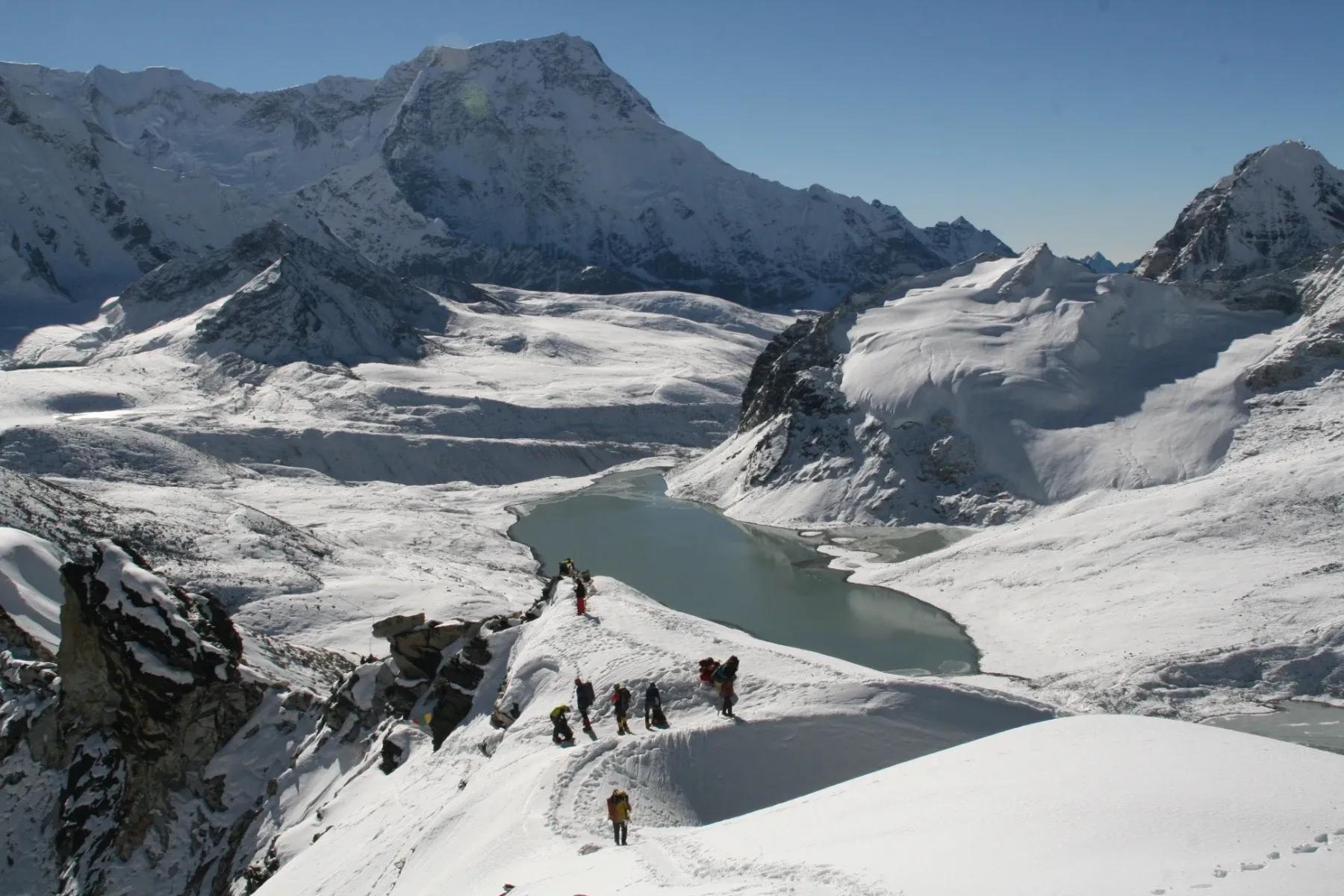
This route is ideal for trekkers searching for an adventure-heavy, crowd-free, and photography-rich experience in one of the most spectacular mountain regions on earth. It begins with a scenic flight to Lukla and leads through peaceful trails toward Chutanga, Thuli Kharka, and Khare—gateway to Mera Peak. As the journey continues deeper into the highlands, trekkers walk past frozen lakes, ancient rocks, and untouched alpine valleys. Crossing the strenuous Amphu Lapcha Pass requires proper gear, stability on ice, and strong determination; however, the reward is extraordinary panoramas of Ama Dablam, Baruntse, Everest, and the rugged Makalu region.
After joining the classic Everest trail from Chhukung, the adventure continues through Kongma La Pass, reaches Lobuche, moves toward Dzongla, and leads to the icy traverse of Cho La Pass before entering the Gokyo Valley. The turquoise lakes of Gokyo, views from Gokyo Ri, and the final crossing of Renjo La Pass create one of the most complete Himalayan experiences available. Each day introduces dramatic mountain scenery, serene landscapes, and meaningful cultural encounters while maintaining a steady pace for acclimatization.
The trek concludes with relaxing moments in Namche Bazaar, a walk to Lukla, and a scenic flight back to Kathmandu. With expert guidance, high-altitude support, and personalized care provided by Alpine Club of Himalaya, trekkers enjoy a well-organized, safe, and highly rewarding journey through one of the wildest corners of the Himalayas. The Amphu Lapcha Pass Trek is more than a long trek; it is a true Himalayan expedition combining adventure, technical challenge, and life-changing mountain experiences.
Best Time to Trek
The best time to do the Amphu Lapcha Pass Trek is during the spring (March to May) and autumn (September to November) seasons. These months offer the most stable weather, clear visibility, and safer conditions for crossing high passes like Amphu Lapcha, Kongma La, Cho La, and Renjo La. Since this is a technical and high-altitude trek, choosing the right season is extremely important for safety, comfort, and overall experience.
Spring Season (March – May)
Spring is one of the most popular times for high-altitude trekking in Nepal.
- Stable weather with mild to warm daytime temperatures
- Clear skies for excellent mountain photography
- Beautiful rhododendron forests in lower regions
- Ideal conditions for technical sections and glacier crossings
- Longer daylight hours for easier walking
This season offers comfortable trekking days and breathtaking views of Everest, Ama Dablam, Makalu, Baruntse, and Cho Oyu.
Autumn Season (September – November)
Autumn is the most recommended season for the Amphu Lapcha Pass Trek.
- Crystal-clear skies and outstanding visibility
- Dry trails and low chance of heavy snowfall
- Perfect for high passes due to stable and predictable weather
- Comfortable temperatures with cooler, fresh mountain air
- Best season for enjoying the dramatic landscapes of the Everest region
Autumn is especially ideal for trekkers who want the best panoramic views and the safest high-altitude environment.
Can You Trek in Winter or Summer?
While it’s possible, it’s not recommended due to safety risks:
- Winter (Dec–Feb): Heavy snow, icy trails, closed passes, and extremely low temperatures.
- Summer/Monsoon (Jun–Aug): Rain, slippery paths, poor visibility, high risk of landslides.
For a technical route like Amphu Lapcha Pass, these seasons increase difficulty significantly.
Difficulty Level – Amphu Lapcha Pass Trek (21 Days)
The Amphu Lapcha Pass Trek is considered very challenging and is suitable only for experienced trekkers with strong physical fitness and previous high-altitude trekking experience. This route involves long walking days, technical mountain sections, glacier travel, and crossings of some of the highest trekking passes in Nepal, including Amphu Lapcha, Kongma La, Cho La, and Renjo La.
Why This Trek Is Difficult
- High altitude: The trek takes you above 5,000 meters multiple times, increasing physical strain.
- Technical sections: Amphu Lapcha Pass requires the use of fixed ropes, crampons, harnesses, and ice axe support.
- Long, demanding walking hours: Many days involve 6–9 hours of trekking on steep, rocky, and glacial terrain.
- Remote locations: The initial part of the trek passes through isolated valleys with limited facilities.
- Unpredictable weather: Strong winds, snowfall, or sudden temperature drops can occur at higher altitudes.
Who This Trek Is Suitable For
- Trekkers with excellent fitness levels
- Individuals with prior experience above 4,500m
- Adventurous hikers comfortable with technical sections
- Those seeking a high-altitude expedition-style trek
This trek is adventurous, rewarding, and scenic, but it requires serious preparation and commitment.
Altitude Sickness & Preparation – Amphu Lapcha Pass Trek
Altitude sickness is one of the major concerns on this route because it involves high passes like Kongma La (5,540m), Cho La (5,367m), Renjo La (5,360m), and Amphu Lapcha (5,845m ±). Proper preparation and acclimatization are essential for a safe and enjoyable experience.
Understanding Altitude Sickness
Altitude sickness happens when your body struggles to adjust to decreasing oxygen levels. Common symptoms include:
- Headache
- Nausea or loss of appetite
- Shortness of breath
- Difficulty sleeping
- Fatigue
- Dizziness
If symptoms worsen, immediate rest and descent are necessary.
How to Prevent Altitude Sickness
Preventing altitude sickness on the Amphu Lapcha Pass Trek is essential because the route crosses multiple high passes and stays above 4,500 meters for many days. The best way to stay safe is to follow a steady pace, take acclimatization days seriously, and stay properly hydrated. Rest days in places like Khare and Gokyo help your body adjust naturally to the thin air. Walking slowly, drinking 3–4 liters of water per day, and eating enough nutritious food all support better acclimatization. Avoiding alcohol and smoking is important because they reduce your oxygen intake and slow your body’s adjustment to altitude. Many trekkers also carry medications like Diamox after consulting a doctor, especially when moving toward higher sections. Traveling with experienced guides ensures safe rope handling, better decision-making, and proper pacing in technical areas like Amphu Lapcha Pass.
Physical Preparation Before the Trek
Good preparation makes the trek safer and more enjoyable. Training should start at least 8–12 weeks before the journey. Focus on cardio exercises such as hiking, jogging, cycling, or swimming to build endurance. Strength training for legs and core helps with long, steep climbs, while practice hikes with a backpack prepare you for multi-hour walking days. Mental preparation is equally important, as staying positive and patient helps you manage challenges during long days at high altitude.
Physical Fitness and Trekking Requirements
The Amphu Lapcha Pass Trek requires a high level of physical fitness because the trail includes long walking days, steep ascents, glacier crossings, and technical sections. Trekkers should be comfortable walking 6–9 hours a day while carrying a daypack. Training should start at least 8–12 weeks before the trek, focusing on cardio exercises like hiking, jogging, cycling, and stair climbing to build endurance.
Strength training for the legs and core is essential for handling steep climbs and rough terrain. Experience in high-altitude trekking above 4,500 meters is highly recommended, and basic knowledge of using crampons, harnesses, and ropes is helpful for the Amphu Lapcha crossing. With good preparation and a strong mindset, trekkers can complete this demanding but rewarding journey confidently.
Acclimatization Required
Proper acclimatization is crucial for the Amphu Lapcha Pass Trek because the route crosses several high passes and reaches elevations above 5,000 meters multiple times. Well-placed acclimatization days in Khare and Gokyo help your body adapt gradually to lower oxygen levels, reducing the risk of altitude sickness.
A slow and steady pace, drinking plenty of water, and eating balanced meals are all key parts of safe acclimatization. Trekkers should avoid rushing, alcohol, and smoking, as they can interfere with oxygen intake and slow your body’s adjustment. With a planned itinerary that prioritizes gradual altitude gain, your body can adjust naturally, making the high-altitude journey safer and more enjoyable.
Environment and Climate
The environment and climate along the Amphu Lapcha Pass Trek vary from lush forests in the lower Everest region to rugged alpine terrain and icy high passes in the Hinku Valley. The weather changes quickly at altitude, with colder temperatures and stronger winds as you climb higher. Spring (March to May) and autumn (September to November) offer the most stable conditions, clear skies, and safe trail environments for crossing Amphu Lapcha, Kongma La, Cho La, and Renjo La. During these seasons, days are generally pleasant while nights can be cold, especially above 4,500 meters. Winter brings heavy snowfall and extremely low temperatures, while summer/monsoon introduces rain, slippery trails, and cloud cover. Understanding these climate patterns helps trekkers prepare properly with the right clothing, gear, and expectations for a safe and comfortable journey.
Flight Options to Lukla for Everest Region Trek
1. Direct Flight from Kathmandu to Lukla
The most common and fastest way to reach Lukla is by taking a direct mountain flight from Kathmandu’s Tribhuvan International Airport to Lukla’s Tenzing-Hillary Airport. This flight takes about 30-40 minutes and offers stunning aerial views of the Himalayas. However, it is highly weather-dependent and can be delayed or canceled due to fog, wind, or poor visibility.
2. Flight from Ramechhap to Lukla
As an alternative to flying from Kathmandu, some trekkers choose to take a scenic road journey (approximately 5-6 hours) to Ramechhap Airport and then fly to Lukla from there. This option can sometimes have better weather conditions for flying and fewer cancellations. The flight from Ramechhap to Lukla also lasts around 30 minutes and provides spectacular mountain views.
3. Overland Trekking Approach via Jiri or Salleri
For those who want to avoid flights or prefer a gradual start to their trek, it is possible to trek overland to Lukla from Jiri or Salleri. This approach adds several days to the journey but offers a rewarding experience through remote villages, lush forests, and diverse cultural settings before joining the main Everest trekking trail.
4. Helicopter Options
For trekkers seeking more flexibility, Alpine Club of Himalaya offers helicopter services to and from Lukla. Helicopter flights bypass weather-related delays, provide faster transfers, and offer a unique bird’s-eye view of Everest, Ama Dablam, and surrounding peaks, making the journey itself an extraordinary adventure. Group-sharing options are also available, providing cost-effective alternatives
Meals
Meals during the Amphu Lapcha Pass Trek are designed to keep you energized and healthy throughout the journey. Teahouses along the trail offer freshly prepared dishes such as rice, lentils, noodles, soups, Tibetan bread, pasta, potatoes, and seasonal vegetables. Breakfast typically includes porridge, eggs, pancakes, or toast with tea or coffee, while dinners are warm and filling to help your body recover after long trekking days. Eating enough calories is important at high altitude, so choosing warm, nutritious meals is always recommended. Trekkers can also enjoy occasional treats like momos and Sherpa stew in local lodges. Meals become simpler and more basic at higher elevations, but they are always warm, hygienic, and suitable for high-altitude conditions.
Drinking Water
Clean and safe drinking water is essential for staying hydrated at high altitude. Trekkers can refill bottles at teahouses, which provide boiled or filtered water. Carrying purification tablets or a portable filter is recommended so you can treat water from taps or natural sources when needed. Buying bottled water is possible in some villages, but it becomes expensive and less available at higher elevations. Staying hydrated helps with acclimatization, so drinking 3–4 liters of water daily is highly encouraged throughout the trek.
Accommodation
Accommodation during the trek is based on teahouse lodging, offering basic but comfortable rooms with twin beds, blankets, and shared facilities. In lower regions, rooms are warmer and more equipped, while higher-altitude teahouses are simpler due to the remote environment. Dining areas are heated, making evenings more comfortable for resting and socializing. Although facilities become more basic as you approach technical sections, you always have a clean place to sleep, warm meals, and a welcoming local atmosphere. Accommodation in Amphu Lapcha regions and remote valleys is more limited, but teahouses provide the essentials needed for a safe and restful night.
WiFi and Electricity
WiFi and electricity are available throughout most sections of the Amphu Lapcha Pass Trek, but the quality and reliability vary depending on altitude and remoteness. In lower villages like Lukla, Chutanga, Thuli Kharka, Namche Bazaar, and Gokyo, teahouses offer paid WiFi services that allow basic browsing, messaging, and social updates. However, the connection becomes weaker as you move into remote areas such as Khare, Kongme Dingma, Seto Pokhari, and Amphu Lapcha Base Camp, where WiFi is often unavailable due to limited infrastructure.
Electricity is generally provided through solar power or local hydro sources. Lower regions have regular charging facilities for phones, cameras, and power banks, usually for a small fee. As you climb higher, charging options become limited, and the power supply may be slower due to colder temperatures and lower energy capacity. Carrying extra power banks or a solar charger is highly recommended for uninterrupted use of your devices.
Overall, while WiFi and electricity are accessible during several parts of the trek, you should expect limited connectivity and slower charging in high-altitude and remote areas. This ensures you stay connected when possible while also enjoying the untouched wilderness of the Himalayas
Guide and Porter
A professional guide is highly recommended for this trek due to the technical nature of Amphu Lapcha Pass and the multiple high-altitude sections along the route. Your licensed trekking guide manages route navigation, altitude pacing, safety decisions, and communication with local lodges. Porters carry your main luggage, allowing you to walk comfortably with only a daypack. The porter support makes long days easier and helps conserve energy for demanding high passes.
For groups with more than 10 trekkers, an assistant guide is included to ensure safety, proper pacing, and additional support for the team. In addition, one porter is provided for every two trekkers, ensuring your belongings are carried safely while maintaining fair load distribution for the porter team.
Daily Activities
Each day on the trek combines trekking, rest, acclimatization, and cultural exploration.
Morning Activities:
- Guide: Wake trekkers, provide breakfast guidance, brief on the day’s route, highlight points of interest, pace the group according to fitness and acclimatization, and share knowledge about local culture, wildlife, and history.
- Porter: Carry luggage and trekking gear, prepare supplies, and ensure everything is ready for departure.
Midday Activities:
- Guide: Organize breaks for rest, hydration, and photography; arrange lunch stops; monitor trekkers for altitude sickness or fatigue; share insights about flora, fauna, and local culture.
- Porter: Continue transporting luggage, assist with extra gear, and prepare accommodation for arrival.
Evening Activities:
- Guide: Lead the group safely to the teahouse, check comfort and health, provide acclimatization tips, brief for the next day, and facilitate cultural experiences if possible.
- Porter: Deliver luggage to the correct rooms, assist with settling in, and coordinate with guide and teahouse staff for smooth operations.
Travel Insurance
Travel insurance is essential for the Amphu Lapcha Pass Trek because the route passes through high-altitude and remote areas where medical facilities are extremely limited. Your insurance must include helicopter evacuation, high-altitude coverage up to at least 6,000 meters, and emergency medical treatment. This ensures you receive quick rescue support in case of altitude sickness, injuries, or sudden health issues. Trekking without proper insurance can put you at risk, as rescue operations in the Himalayas are expensive and depend on rapid response. Always carry a copy of your insurance policy and share the details with your guide so they can act immediately during emergencies. Choosing a reputable insurance provider gives you peace of mind and makes your trek safer and more comfortable.
Passport and Visa
Travelers must carry a valid passport with at least six months’ validity from the date of arrival in Nepal. Most tourists can obtain a Nepal visa on arrival at Tribhuvan International Airport in Kathmandu or at designated border entry points. You can choose between 15, 30, or 90-day tourist visas depending on your travel plan. The process is simple: fill out the visa form, pay the visa fee, and submit your passport at the immigration desk. Make sure to keep a few passport-sized photos with you, as they may be required for trekking permits and documentation. Always keep your passport stored safely, preferably in a waterproof pouch, and carry copies of your passport and visa for backup during the trek.
Entry Permits and Trekking Authorization
Trekking in the Everest region, including the challenging Amphu Lapcha Pass Trek – 21 Days, requires several official permits to ensure compliance with local regulations and access to protected areas. These permits include:
- Sagarmatha National Park Entry Permit: This permit is mandatory to enter Sagarmatha National Park, the protected area encompassing Mount Everest, surrounding peaks, and the Khumbu region. It ensures sustainable tourism and conservation of the unique Himalayan ecosystem.
- Khumbu Pasang Lhamu Rural Municipality Permit: Required for all trekkers entering the Khumbu region, this permit has replaced the older TIMS card. It serves as proof of registration and is checked at various checkpoints along the trail.
Alpine Club of Himalaya manages all necessary permits and trekking authorizations on behalf of trekkers, ensuring that documentation is complete before departure. By handling permit arrangements in advance, the company guarantees a smooth, legal, and hassle-free journey through remote and protected areas, allowing trekkers to focus entirely on the adventure and scenic beauty of the Amphu Lapcha Pass Trek.
Mountain Views During the Trek
The Amphu Lapcha Pass Trek offers some of the most spectacular mountain views in the Everest region, making it a dream route for trekkers and photographers alike. From the start at Lukla and along the Hinku Valley, trekkers are greeted with panoramic vistas of Ama Dablam, Lhotse, Makalu, Baruntse, and Cho Oyu, rising dramatically above pristine alpine landscapes. Crossing Amphu Lapcha Pass provides awe-inspiring views of glaciers, steep ridges, and the surrounding peaks, while the passes of Kongma La, Cho La, and Renjo La offer unique perspectives of the Khumbu and Gokyo regions. Gokyo Ri presents a 360-degree panorama of turquoise lakes, towering mountains, and snowy peaks.
Throughout the trek, the combination of rugged high-altitude terrain, sparkling glacial rivers, and majestic Himalayan summits creates a constantly changing and breathtaking scenery. Whether its sunrise illuminating Ama Dablam or sunset casting golden hues on Everest, every day provides unforgettable mountain vistas that define the true essence of the Himalayas.
Last Minute Booking
Alpine Club of Himalaya accepts last-minute bookings for the Amphu Lapcha Pass Trek, subject to availability. Our team ensures that even late travelers can join the trek without compromising on safety, permits, or logistics. Early communication helps us arrange flights, accommodations, trekking permits, and necessary guides and porters efficiently. Last-minute bookings are ideal for flexible travelers who are ready to adjust plans but still want a fully supported, safe, and well-organized trekking experience.
Online Briefing
Before the trek, all trekkers receive a detailed online briefing from Alpine Club of Himalaya. This briefing covers itinerary details, packing guidance, safety instructions, altitude sickness awareness, and technical information about crossing passes like Amphu Lapcha, Kongma La, Cho La, and Renjo La. Online briefings ensure that every participant is fully prepared, understands trekking protocols, and knows what to expect during the journey. This preparation helps increase confidence, safety, and overall enjoyment on the trek.
Pickup and Drop Points from Kathmandu:
1 - Devo Boutique Hotel, Thamel, Kathmandu (or similar)
2 - Tribhuvan International Airport (TIA), Kathmandu
3 - Alpine Club of Himalaya Pvt. Ltd
4 - Within Thamel, Kathmandu
Final Notes
Before joining the Amphu Lapcha Pass Trek – 21 Days, it is essential to ensure that all your trekking gear is properly tested, well-fitted, and suitable for high-altitude conditions. Boots, jackets, sleeping bags, and technical equipment should be worn and adjusted in advance, as untested or poorly fitted gear can cause discomfort, reduce efficiency, or compromise safety at high altitude. It is equally important to test your backpack for load-bearing comfort, as the trek involves rugged terrain, glacial crossings, and varying elevations. Proper preparation, well-tested equipment, and clear communication with Alpine Club of Himalaya will ensure a safe, smooth, and successful Himalayan adventure.
Cancellation Policy
Cancellation by the Participant
If a participant chooses to cancel their booking for the Amphu Lapcha Pass Trek – 21 Days, they must notify Alpine Club of Himalaya in writing via email or official communication as early as possible. The following cancellation charges apply:
- 60 days or more before the trek start date: 20% of the total trip cost will be deducted.
- 30 to 59 days before the trek start date: 50% of the total trip cost will be charged.
- Less than 30 days before departure: 100% of the trip cost is non-refundable.
These charges cover administrative costs, permits, pre-arranged logistics, and potential opportunity losses due to late cancellations.
Cancellation by the Organizer
In the rare event that Alpine Club of Himalaya must cancel the Amphu Lapcha Pass Trek due to unforeseen or uncontrollable circumstances, such as natural disasters, extreme weather, or regional safety concerns, participants will be offered the following options:
- A full refund of all payments made.
- Or the option to reschedule the trek for a future available date.
The company prioritizes the safety of all trekkers and will only cancel under unavoidable conditions.
Force Majeure Clause
Alpine Club of Himalaya is not liable for cancellations, delays, or additional costs arising from force majeure events, including but not limited to:
· Earthquakes, floods, landslides, or other natural disasters.
· Political unrest, border closures, or travel restrictions.
· Epidemics, pandemics, or health emergencies.
· Airspace shutdowns, airline disruptions, or logistical delays.
In such cases, participants are responsible for any additional personal costs, such as accommodation, flight rebooking, or travel insurance claims. It is strongly recommended that all trekkers carry comprehensive travel insurance that covers high-altitude trekking, helicopter evacuation, and unforeseen events.
Detail Itineraries
Your journey begins in Kathmandu, the capital of Nepal, where Alpine Club of Himalaya warmly welcomes you at the airport. This day is reserved for rest, orientation, and initial preparation for the trek. Depending on your arrival time, you can relax, explore the nearby areas, or attend a briefing session with the trekking team. Kathmandu offers a unique blend of culture, history, and energy, setting the tone for the adventure ahead.
Max. Elevation
1,350m
Trip Highlight
- Experience one of Nepal’s most challenging and rewarding high-altitude trekking adventures.
- Explore the remote and untouched Hinku Valley with stunning alpine landscapes.
- Cross the demanding Amphu Lapcha Pass, known for its technical ice and rock terrain.
- Complete all three iconic Everest passes—Kongma La (5,540m), Cho La (5,367m), and Renjo La (5,360m).
- Enjoy panoramic views of Everest, Lhotse, Makalu, Ama Dablam, Baruntse, Cho Oyu, and many Himalayan giants.
- Walk through pristine high-altitude lakes, including the spectacular Gokyo Lakes.
- Climb Gokyo Ri (5,357m) for one of the best panoramic viewpoints in the Everest region.
- Trek through both remote valleys and popular Sherpa villages such as Khare, Chhukung, Lobuche, Dzongla, Gokyo, and Namche Bazaar.
- Discover the rich Sherpa culture, local lifestyles, monasteries, and traditional settlements.
- Enjoy less-crowded wilderness trails for the first half of the trek, offering peaceful natural surroundings.
- Traverse glaciers, rugged moraines, snowfields, and alpine passes with expert assistance from Alpine Club of Himalaya.
- Ideal for adventure seekers and photographers looking for diverse landscapes and dramatic Himalayan scenery.
- A complete high-altitude expedition experience without visiting Everest Base Camp, making the route unique and special.
Cost Include and Exclude
All airport and hotel transfers using a private car or van for comfortable and hassle-free transportation.
Three nights’ accommodation in Kathmandu at a 3-star hotel on a twin-sharing basis, including daily breakfast.
Kathmandu Valley city tour conducted with an experienced tour guide in a private vehicle.
Seventeen nights’ accommodation in local teahouses during the trek, based on a twin-sharing basis with shared bathroom facilities.
A professional, English-speaking trekking guide and a porter to support you throughout the journey.
All salary, meals, insurance, and lodging expenses for the guide and porter (one porter for every two trekkers).
Meals during the trek, including breakfast, lunch, dinner, and tea/coffee at mealtimes.
Welcome and farewell dinners in Kathmandu, along with breakfast during your stay in the city.
Everest Region National Park Permit and TIMS card required for the trek.
Round-trip airfare between Kathmandu and Lukla, including all applicable domestic airport taxes.
Down jacket and sleeping bag, provided for the duration of the trek (must be returned after completion).
ACH Kitbag and ACH T-shirt provided for your trekking preparation.
A guided city tour in Kathmandu with all entrance fees and private vehicle arrangements included.
Ncell SIM card with 20 GB data, provided once per group for communication during the trip.
Equipment and Packaging List
Packing and Trekking Gear List
1. Essential Documents
- Valid passport with at least six months’ validity
- Nepali visa (can be obtained on arrival)
- Trekking permits: Sagarmatha National Park Entry Permit, Khumbu Pasang Lhamu Rural Municipality Permit (handled by Alpine Club of Himalaya)
- Travel and medical insurance covering high-altitude trekking and helicopter evacuation
- Flight tickets (Kathmandu–Lukla–Kathmandu)
- Copies of passport, visa, permits, and insurance documents (keep separate from originals)
- Emergency contact information and Alpine Club of Himalaya contact details
2. Clothing
Upper Body
- Thermal base layers (tops and bottoms)
- Quick-dry t-shirts (3–4)
- Fleece or down jacket for warmth
- Waterproof and windproof trekking jacket
- Lightweight trekking shirts for warmer days
Lower Body
- Trekking pants (preferably quick-dry)
- Insulated or down pants for high altitudes
- Thermal leggings or long underwear
Accessories
- Warm hat / beanie
- Sun hat or cap
- Gloves (inner thermal and outer waterproof)
- Buff or neck gaiter
- Sunglasses with UV protection
- Trekking socks (wool or synthetic, multiple pairs)
- Comfortable underwear
3. Footwear
- Waterproof trekking boots (well-broken-in, high-ankle support)
- Lightweight camp shoes or sandals for evenings
- Gaiters (helpful for snow/rocky sections)
4. Technical / Climbing Gear
- Crampons (if not provided by Alpine Club of Himalaya)
- Ice axe (if crossing technical passes)
- Harness and carabiners (if required for Amphu Lapcha Pass, typically provided by the company)
- Trekking poles (highly recommended for stability)
- Headlamp with extra batteries
- Backpack rain cover
5. Sleeping and Camping Gear
- Sleeping bag rated to -15°C to -20°C for high-altitude nights
- Sleeping bag liner for extra warmth and hygiene
- Lightweight travel pillow
- Optional: Thermarest or inflatable sleeping mat (if not provided by teahouses/base camp)
6. Personal Items and Toiletries
- Sunscreen (SPF 50+) and lip balm with SPF
- Moisturizer and hand cream
- Personal medications and basic first aid
- Wet wipes / tissues
- Toothbrush and toothpaste
- Small quick-dry towel
- Hand sanitizer
- Personal hygiene items (female hygiene products if applicable)
7. Electronics
- Mobile phone and charger
- Power bank(s) or solar charger (limited electricity at high camps)
- Camera or GoPro with extra memory cards and batteries
- Travel adapter (Nepal uses Type C, D, and M plugs, 230V)
8. Optional Items
- Lightweight binoculars for wildlife and mountain views
- Notebook or journal
- Snacks, energy bars, or chocolate for high-energy days
- Water bottles or hydration bladder (2–3 liters capacity)
- Trekking maps or GPS device
9. Packing Tips
· Use a duffel bag or large trekking bag for porters (up to 20 kg)
· Carry a daypack (25–35 liters) with personal essentials, water, snacks, and warm clothing
· Pack clothes in layers for easy adjustment to changing temperatures
· Keep documents and valuables in a waterproof pouch or secure travel wallet
FAQ (Frequently Asked Question)
Related Trips
24/7 Support
Need help? we're at your service
Associated With



We Accept Cards

Office of the company registrar License: 66813/066/067 || Tourism Industry Division License:1142
All content and photography within our website is copyright & may not be reproduced without our permission.
Develop By: IT Sansaar